Gênesis 11
I tnalù dwata · Toque num versículo para ver as referências cruzadas.
I mdatah gumnè di Babél
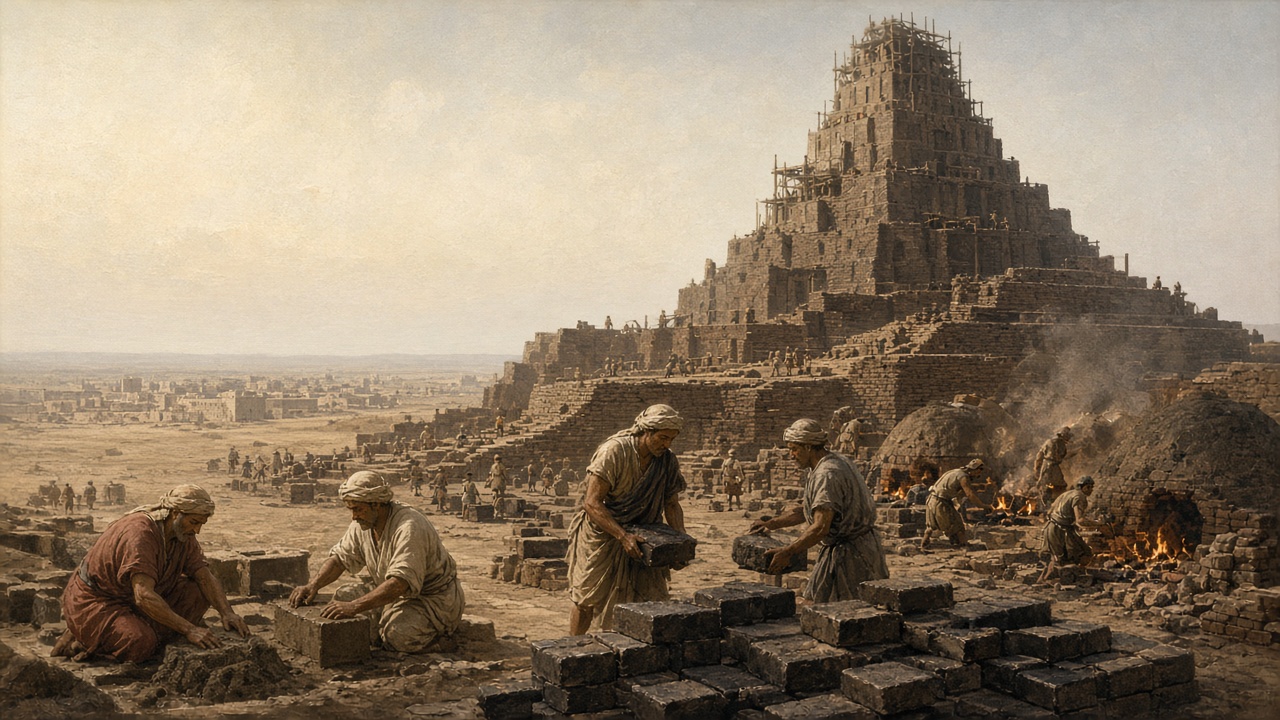
1Di kagatbuan nun alò satu bung talù, i talù kdee dad to di klamang i banwe. 2Na di kalngabla, magu ale gsen di gusut i duh kel di too datal na mabal tanà di Sinar, na mnè ale déén.
3Na kafnge én, stulen i dad to én, manla, “Gasil ito nan santifun i fitak na fkafagito di luben, fye mbaling too kmegeng na mgal, du fye nun imoito gumnè.”
Na du landè too batu di banwe atù, én baling santifunla fitak na fkafagla na fnadkatla i sfaltu. 4Kafnge én, manla, “Ani mimò ito bong banwe i nun bong mdatah gumnè gafat di langit, fye too mdengeg i dagitito na là ito masbalét di klamang i banwe.”
5Kabay Dwata i Amu, mdà kenen di langit, salu ditù du toon neye i bong banwe na i mdatah gumnè nimò i dad to ani. 6Na man Dwata i Amu, “I kdee dad to ani, du tasasatu nawala na alò satu talùla, ani fa alò katbù i fanla nimò. Na là mlo ani gaganla mimò i kdee kayèla nimò. 7Taman salu agu ditù na sansahalgu i talùla, du fye nun dee sahal talù, du fye là ale saglabat.”
8Taman sanbalét ale Dwata i Amu, mdà déén kel di klamang banwe, na én duenan tanlagla i kimòla i bong banwe. 9I banwe ani dnagit ku Babél, du sansahal Dwata i Amu i talù dad to déén, du fye mgimò dee sahal talù. Na mdà di Babél, sanbalétan i dad to di klamang banwe.
I dad bel Téra
27Ani i dagit i dad bel Téra. Téra ani i mà Abram, Nahor, na Haran. Na Haran ani i mà Lat. 28Di là fa mati Téra, mati i tingaan lagi dunan Haran di banwe gusutan dnagit Ur di Kaldi. 29Na Abram na Nahor tamwè ale yaan. I dagit yaan Abram Saray, na Nahor kenen, i dagit yaanan Milka, i tingà Haran. Na nun fa tingà Haran lagi dnagit ku Iskah. 30Na Saray ani là mngà, taman, landè dad ngaan.
31Na fagin Téra tingaan lagi Abram, na i fuan lagi Lat, tingà Haran, na tewen Saray yaan Abram. Na mdà ale di banwe Ur di Kaldi salu di banwe Kanaan. Kabay kakella di banwe Haran, mnè ale ditù. 32Na di banwe Haran gumati Téra. Di kfatin talwe latu lime i falin.
Você sabia?
Babel e o caminho desde Ur
- Viajantes, neste capítulo, se estabelecem numa planície em Sinar e constroem com tijolo cozido e betume, em vez de pedra e argamassa. Um dicionário trata Sinar como, provavelmente, a Babilônia ou o sul da Mesopotâmia, estendendo-se quase até o golfo Pérsico, diz que a torre de Babel foi construída ali e descreve os primeiros habitantes da terra como gente que fabricava tijolos e edificava cidades.Fontes: o próprio texto bíblico · Shinar
- A cidade inacabada recebe o nome de Babel porque, segundo a narrativa, ali o Senhor confundiu a língua do mundo inteiro e dispersou o povo. Um dicionário explica o nome como 'confusão' e sugere que a torre foi, provavelmente, pensada como um ponto de reunião na vasta planície de Sinar, depois de uma migração desde as terras altas da Armênia, para que os construtores não se dispersassem.Fontes: o próprio texto bíblico · Babel
- O capítulo termina com Terá saindo de Ur dos caldeus rumo a Canaã, com Abrão, Sarai e seu neto Ló, e estabelecendo-se depois em Harã, onde morre aos 205 anos; seu filho Harã já havia morrido em Ur. Um dicionário chama Ur de terra natal desse filho, a maior cidade de Sinar ou da Caldeia do norte, e um centro de comércio e poder político, e situa Harã, hoje Harran e chamada Charrã no Antigo Testamento grego e em Atos, junto ao Belik, afluente do Eufrates na Alta Mesopotâmia, onde Abrão permaneceu até a morte de Terá.Fontes: o próprio texto bíblico · Terah · Ur of the Chaldees · Haran
Notas escritas com auxílio de IA a partir de fontes abertas (Theographic Bible Metadata, CC BY-SA 4.0; Easton’s Bible Dictionary, domínio público) e revisadas antes de publicar.
Lugares deste capítulo
- Shinar · Hoje: Babylonia · 32.543, 44.422 · versículo 2
- Chaldea · 30.962, 46.104 · versículos 28, 31
- Canaan · 32.767, 35.333 · versículo 31
- Haran · Hoje: Harran · 36.864, 39.033 · versículos 31, 32
Só aparecem lugares com identificação de alta confiança (90% ou mais segundo as fontes acadêmicas reunidas pelo OpenBible). Mapa da época: DARE (Digital Atlas of the Roman Empire), CC BY 4.0; mapa atual: © colaboradores do OpenStreetMap; lugares: OpenBible.info (CC BY 4.0).
Créditos e licença desta tradução
I tnalù dwata
New Testament in Blaan, Sarangani
copyright © 1998 Wycliffe Bible Translators, Inc.
Language: Sarangani Blaan (Blaan, Sarangani)
Translation by: Wycliffe Bible Translators
Contributor: Wycliffe Bible Translators, Inc.
Copyright Information
© 1998, Wycliffe Bible Translators, Inc. All rights reserved.
This translation text is made available to you under the
terms of the Creative Commons License: Attribution-Noncommercial-No Derivative Works.
( http://creativecommons.org/licenses/by-nc-nd/3.0/ )
In addition, you have permission to port the text to different file formats, as long as you
do not change any of the text or punctuation of the Bible.
You may share, copy, distribute, transmit, and extract portions
or quotations from this work, provided that you include the above copyright
information:
You must give Attribution to the work.
You do not sell this work for a profit.
You do not make any derivative works that change any of the actual words or punctuation of the Scriptures.
Permissions beyond the scope of this license may be
available if you contact
us with your request.
The New Testament
in Blaan, Sarangani
© 1998, Wycliffe Bible Translators, Inc. All rights reserved.
This translation is made available to you under the terms of the
Creative Commons Attribution-Noncommercial-No Derivatives license 4.0.
You may share and redistribute this Bible translation or extracts from it in any format, provided that:
You include the above copyright and source information.
You do not sell this work for a profit.
You do not change any of the words or punctuation of the Scriptures.
Pictures included with Scriptures and other documents on this site are licensed just for use with those Scriptures and documents.
For other uses, please contact the respective copyright owners.
2015-03-17
Fonte: http://ebible.org/bps/ · eBible.org