Êxodo 14
I tnalù dwata · Toque num versículo para ver as referências cruzadas.
1Kafnge én, man Dwata i Amu ku Mosis, 2“Manam di dad bel Israél, mdà ale di Étam, na magu ale di mahal dalan mdadong di banwe Fi Hahirot, na flo mnè déén di kagatngà di banwe dnagit Migdol na di mahin. Na flo mnè ale di kilil mahin mdadong di banwe Baal Sifon. 3Du fandam Faraon kadang tatlas i dad bel Israél, na glifut ale, du i banwe gulandè to gsen di fuléla, na i mahin gsen di munala. 4Na kadang fgalgu i ulu Faraon, du fye tnafikan gamu, du fye gdawatgu kadang kdayen di kite i dad to i bong gnagangu di kfisangu ku Faraon na i dad sundalun, na kadang gadè i dad to di Idyif, Agu Dwata i Amu.”
Én gman Dwata.
Taman nimen i dad bel Israél i dad dek Dwata dale, na mnè ale flo di kilil mahin.
5Di kaklinge i harì di Idyif, là samfulê i dad bel Israél di banwe Idyif di kakubu tlu duh, bay fadlug ale fawag di Idyif, mguman i fandam Faraon, na i dad ganlalan gablà di dale. Hae, du manla, “Kan ku falohito lamwà i dad bel Israél? Tay, tabaling landè dad lifanito.” 6Taman fafatlagad i harì i snakayan nun dad kudà, na faginan i dad sundalun. 7Na lê faginan nam latu i too fye snakay damyol dad kudà, gagin i dademe snakay nun kudà gusmakay i dad ganlalan. 8Na tafgal Dwata i Amu, i nawa Faraon, i harì di Idyif, na tnafikla dad bel Israél, i dad to galwà di banwe Idyif. 9Na i dad sundalu di Idyif, gagin i kdee dad kudà, na i dad snakay, na dad mebe i snakay, tnafikla i dad bel Israél, na gnumahla ale di guftudla di kilil i mahin, mdadong di banwe Fi Hahirot na i banwe Baal Sifon.
10Na di kite i dad bel Israél, i harì na i dad sundalun, salu di dale, too sasè klikòla, na mkit ale mni tabeng di Dwata i Amu. 11Na manla ku Mosis, manla, “Nebem gami kè dini, du fye mati gami di banwe gulandè to, du talandè gulambangmi di Idyif. Tulenan gami ku tan i duenam mebe gami dini lamwà di banwe Idyif? 12Làmi kè gman di ge di kdéénito fa di Idyif, fye ku gami fbayà flifan di dad to Idyif? Fye fa ku gami fadlug flifan di dale, di mati gami dini di banwe gulandè to.” Én ugak i dad bel Israél.
13Kabay man Mosis di dad to, “Nang gamu likò. Nang gamu mila, bay fanak gamu, na teenyu kadang di duh ani, i nimò Dwata i Amu, du falwaan gamu di falel i dad to Idyif. I dad to Idyif i teenyu ani, kadang talàyu ale lêman teen. 14Dwata i Amu, kenen sa tlasito samfati dale, alò ito tatì fanak.”
Én gman Mosis.
15Kafnge én, talù Dwata i Amu di ku Mosis, manan, “Kan ku fnim di deg tabeng? Manam di dad bel Israél fadlug magu. 16Na tayalam i tugadam di tah i mahin, na kadang masatngà i mahin, na i gufaféan kadang mbaling kafag, du fye gifal i dad bel Israél di gukafag tanà. 17Fgalgu ulu i dad to di Idyif, du fye tnafikla gamu, du fye gdawatgu kadang kdayen di kite i dad to i bong gnagangu di kfisangu ku Faraon, na i dad sundalun, na i dad snakayan, na i dad to smakay i dad kudaan. 18Kadang, too gadè i dad to Idyif, agu i Dwata i Amu, di kitela i bong gnagangu di kfisangu ku Faraon, na i dad snakayan, na i dad to smakay i dad kudaan.”
Én gman Dwata.
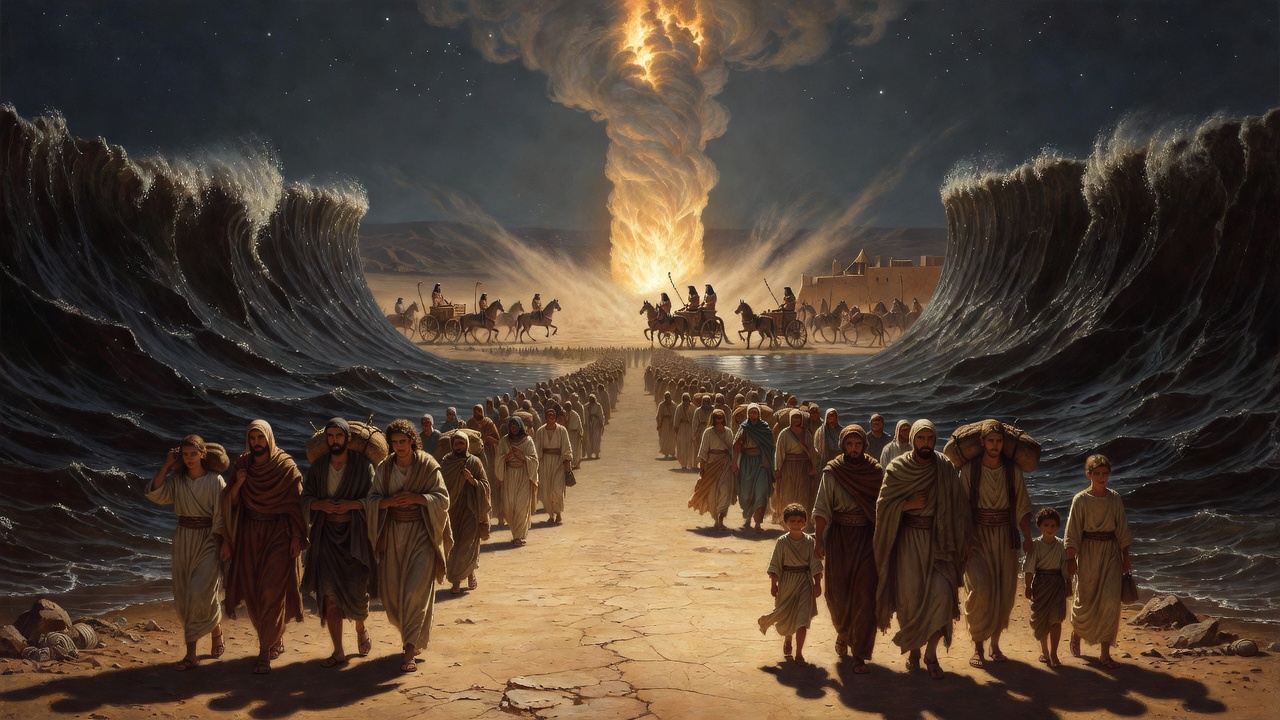
19Kafnge én, i kasaligan i Dwata, gal muna di dad bel Israél, mili kenen di gsen fulé. Na i labun kafbaweh i bong lahan gumnè, lê mili di fuléla, 20salu di gutngà i dad to Idyif, na i dad bel Israél. Na i labun gsen di dad to Idyif, too kifu, bay di balin, i labun gsen di dad bel Israél, too malwa. Taman tayud i butang là ale gasdadong. 21Na di butang én, tayal Mosis i sigalan di tah i mahin, na Dwata i Amu, lanwan i dalan di lam i mahin, du tayud i butang falyakan i mahin, fagu di kbal i bong nus fdu di gusut i duh. Na masatngà i mahin, na mbaling kafag i tanà di dalan én, 22na magu i dad bel Israél di mahin, di kafag tanà mgimò Dwata. Na i mahin mgimò gambet i diding di sbalà i kilil i dalan gumagula.
23Na tnafik ale i dad to Idyif magu di dalan di mahin. Hae, kdee dad kudà Faraon, na dad snakayan, na i dad to smakay i dad kudaan, lalòla i dad bel Israél di dalan di mahin. 24Di là fa mwal, lngalung Dwata i Amu mdà di lifoh na labun di dad sundalu i Idyif, na snamukan ale. 25Hae, snamukan ale, fagu di fafgalan katbiling i dad kliling dad snakayla, taman malima di kfilala dun. Na man i dad to Idyif, manla, “Samfulê ito, du Dwata i Amu, demeito sfati, du nsenan ale, na dnuenan ito.”
26Kafnge én, man Dwata i Amu di ku Mosis, “Lêmanam tayal i sigalam di tah i mahin, du fye masasulê i mahin na maglimun i dad to Idyif, na i dad snakayla, na i dad to smakay i dad kudà.” 27Taman tayal Mosis i sigalan di tah i mahin, na di kakwalan masasulê i mahin di tagnè kagkahan. Tilew i dad to Idyif mila di mahin, bay baling ale bat Dwata i Amu di mahin, na mlimas ale. 28Masasulê i mahin na mti maglimun i dad snakayla, na i dad kudàla. I kdee dad sundalu i harì i tmafik i dad bel Israél di lam i mahin, landè balù satu gdè mto, slame maglimun i mahin.
29Kabay i dad bel Israél tagifal ale di gukafag tanà di gutngà i mahin. Na di kwananla na di ibengla, i mahin tamgimò gine gambet i diding di sbalà i kilil i dalan atù. 30Na én kfagu Dwata i Amu falwà i dad bel Israél, di falel i dad to Idyif di duh én. Na teenla dad to Idyif tamati tidol di kilil i mahin. 31Na di kite i dad bel Israél, i bong gnagan Dwata i Amu, di kfisanan i dad to Idyif, mbaling ale likò kenen. Na taman smalig ale di kenen na di lifanan Mosis.
Você sabia?
Israel encurralado entre o faraó e o mar
- Israel recebeu ordem de voltar atrás e acampar diante de Pi-Hairote, entre Migdol e o mar, bem em frente a Baal-Zefom, para que o faraó pensasse que o deserto os havia encurralado. Pi-Hairote significa lugar onde crescem os juncos, embora a Septuaginta e o copta leiam fazenda, e Baal-Zefom significa Baal do norte.Fontes: o próprio texto bíblico · Pi-hahiroth · Baal-zephon
- O dicionário bíblico de Easton (1897) descreve Baal-Zefom como uma cidade egípcia à beira do golfo de Suez, provavelmente o atual Jebel Deraj ou Kulalah, na margem ocidental, e observa que Baal-zapuna, dos egípcios, era um lugar de culto. Alguns identificaram Pi-Hairote com Ajrud, uma fortaleza entre Etã e Suez. O verbete de Pi-Hairote acrescenta que a condição do istmo de Suez na época do Êxodo não é conhecida com exatidão, de modo que Pi-Hairote e os outros acampamentos de Israel no Egito não podem ser localizados com certeza; o istmo foi formado por depósitos do Nilo.Fontes: Baal-zephon · Pi-hahiroth
- O dicionário bíblico de Easton (1897) diz que o faraó do Êxodo foi provavelmente Menephtah I, o décimo quarto e mais velho filho sobrevivente de Ramsés II, e que ele residia em Zoã, onde ocorreram as entrevistas com Moisés e Arão registradas em Êxodo. O mesmo verbete ainda trata como questão aberta se esse rei foi Seti II ou seu pai Menephtah, e observa que alguns julgam que o peso das evidências favorece Seti II.Fontes: Pharaoh (of the Exodus)
Notas escritas com auxílio de IA a partir de fontes abertas (Theographic Bible Metadata, CC BY-SA 4.0; Easton’s Bible Dictionary, domínio público) e revisadas antes de publicar.
Lugares deste capítulo
Só aparecem lugares com identificação de alta confiança (90% ou mais segundo as fontes acadêmicas reunidas pelo OpenBible). Mapa da época: DARE (Digital Atlas of the Roman Empire), CC BY 4.0; mapa atual: © colaboradores do OpenStreetMap; lugares: OpenBible.info (CC BY 4.0).
Créditos e licença desta tradução
I tnalù dwata
New Testament in Blaan, Sarangani
copyright © 1998 Wycliffe Bible Translators, Inc.
Language: Sarangani Blaan (Blaan, Sarangani)
Translation by: Wycliffe Bible Translators
Contributor: Wycliffe Bible Translators, Inc.
Copyright Information
© 1998, Wycliffe Bible Translators, Inc. All rights reserved.
This translation text is made available to you under the
terms of the Creative Commons License: Attribution-Noncommercial-No Derivative Works.
( http://creativecommons.org/licenses/by-nc-nd/3.0/ )
In addition, you have permission to port the text to different file formats, as long as you
do not change any of the text or punctuation of the Bible.
You may share, copy, distribute, transmit, and extract portions
or quotations from this work, provided that you include the above copyright
information:
You must give Attribution to the work.
You do not sell this work for a profit.
You do not make any derivative works that change any of the actual words or punctuation of the Scriptures.
Permissions beyond the scope of this license may be
available if you contact
us with your request.
The New Testament
in Blaan, Sarangani
© 1998, Wycliffe Bible Translators, Inc. All rights reserved.
This translation is made available to you under the terms of the
Creative Commons Attribution-Noncommercial-No Derivatives license 4.0.
You may share and redistribute this Bible translation or extracts from it in any format, provided that:
You include the above copyright and source information.
You do not sell this work for a profit.
You do not change any of the words or punctuation of the Scriptures.
Pictures included with Scriptures and other documents on this site are licensed just for use with those Scriptures and documents.
For other uses, please contact the respective copyright owners.
2015-03-17
Fonte: http://ebible.org/bps/ · eBible.org