1 Coríntios 2
I tnalù dwata · Toque num versículo para ver as referências cruzadas.
I katdò Fol gablà di kfati Krayst
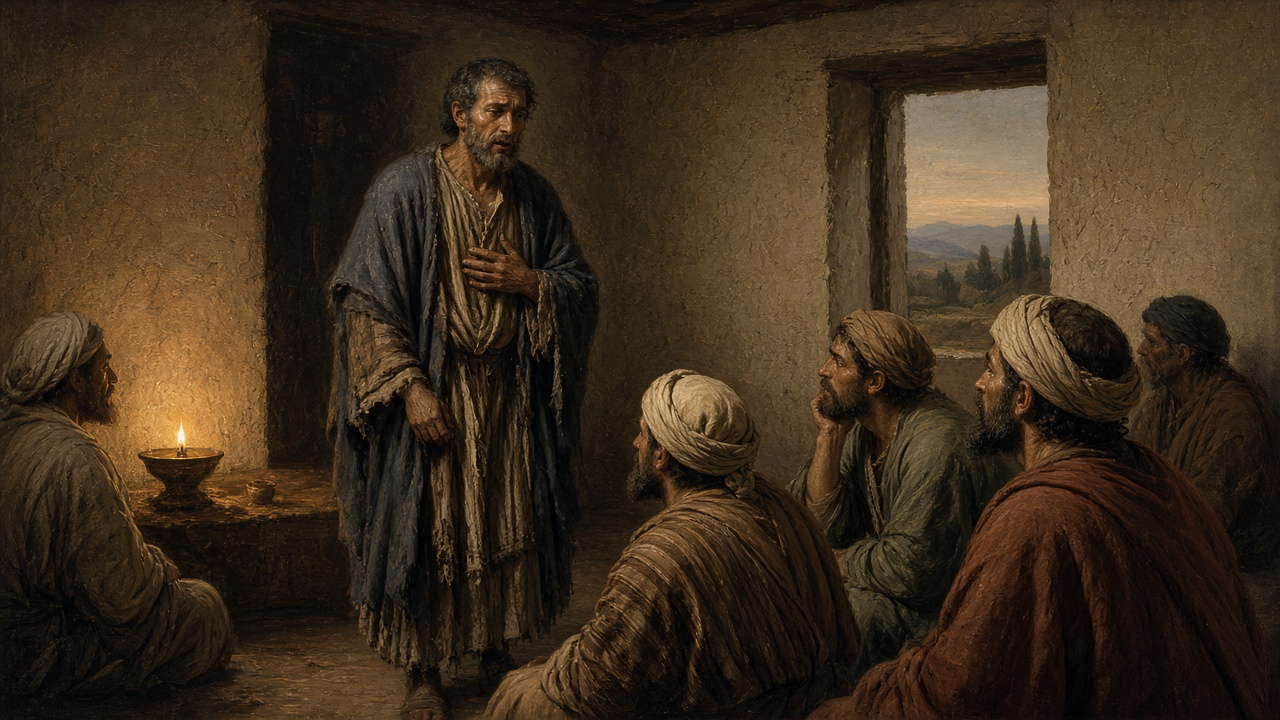
1Na dad flanekgu faglut, balù di tnanin ksalugu déén di gamu, di katdògu gamu gablà di mgimò Dwata fagu di ku Krayst, là agu fdatah i talùgu fagu di bong kfulung i dad to, bay toogu fbangal. 2Du tafandamgu i klogu déén di gamu, én alògu tdò gamu gablà ku Dyisas Krayst na i kfatin déén di krus.
3Na làgu gsalig i ktogu, du gadègu landè gnagangu samtulen i Fye Tulen ani. Na taman di kakelgu déén di gamu, too likò i nawagu. 4Na di ktulengu dun là sa salngad ktalù i dad to too fulung di tanà ani. Kabay i dad to flinge i tdògu toola teen i kaglutan du mdà di eneg Tulus Dwata. 5Na én kibògu dun, du fye i kafaglutyu ise ku mdà di gnadè i dad to fulung, bay fye ku én gumdaan di bong eneg Dwata.
I kfulung mdà di Tulus Dwata
6Na i dad to mgal i kafaglutla di Dwata, dunan i dad to gutamdòmi i mngalam tdò. Kabay i tdògu di dad to ani, ise ku tì mdà di fandam i dad to, ku demen mdà di dad mebe i banwe ani, du kadang satu duh lana sa i kfulungla. 7Kabay én kfulung mangu ani mdà sa di Dwata, du nun tagnean fandam di là fa mgimò i banwe, du fye nun alelito di kdatahan. Na i tafandaman laan fite dun di dad to, bay ani tafiten nan, na ani galmi tulen.
8Na i dad to mebe i dad banwe di tah tanà mdà di muna fa, làla glabat i tagnè fandam Dwata. Du ku glabatla, talàla nlansang di krus i Amuito too mdatah. 9Kabay balù ani nimò i dad to én, gdohò sa i gsulat di Tnalù Dwata, manan,
“Landè to lmen mite,
landè lmen mlinge,
na landè to lmen gamlabat
i kafye tafatlagad Dwata, du blén di dad to mbong nawa kenen.”
10Kabay i là fgadè Dwata di muna, tafgadean di gito fagu di Tulusan. I Tulusan ani, landè laan gadè, balù i fandam Dwata too mngalam. 11Too glut, landè to gmadè i fandam i demen to, bay alò i satu to gmadè i kenen fandam. Na salngad én Tulus Dwata, du kenen sa alò i gmadè i fandam Dwata. 12Na gito dad faglut di ku Dyisas, ise di kfulung i dad to di tah tanà i gumdà i kfulungito, bay mdà sa di Tulus Dwata i tafnè Dwata di nawaito, na kenen i fgadè di gito i kdee gablé Dwata di gito.
13Na taman i galmi tulen gablà di kdee gablé Dwata, ise ku tatì ktulen mdà di kfulung dad to di tah tanà ani, bay i tulenmi ku tan i tafgadè Tulus Dwata di gami. Na i gutamdòmi dun di dad to nun Tulus Dwata. 14Du i to là faglut, là sa mnè Tulus Dwata di nawan, na laan gdawat i tdò mdà di Tulus Dwata, du landè sa gukmamun dun. Na laan glabat, du alò Tulus Dwata i gmagan mubad dun di kenen. 15Kabay i to ku mnè Tulus Dwata di nawan mahal, du gamlabat kenen i btas i kdee fgadè Tulus Dwata di kenen, bay i kaglabatan dun, là glabat i dad to là faglut, du là mnè Tulus Dwata di dale.
16Too glut ani, du man di Tnalù Dwata,
“Simto gamlabat i fandam Dwata?
Na simto fakay tamdò kenen?”
Kabay gito dad ngà Dwata, tafgadè i Tulus Dwata di gito i fandam Krayst.
Você sabia?
Cristo crucificado e a sabedoria do Espírito
- Quem escreve diz que não veio com eloquência nem com sabedoria ao anunciar o testemunho de Deus. Havia resolvido nada saber enquanto estava com eles, a não ser Jesus Cristo e este crucificado, e veio em fraqueza, temor e grande tremor, para que a fé deles se apoiasse no poder de Deus e não na sabedoria humana.Fontes: o próprio texto bíblico
- A sabedoria falada entre os maduros não é a sabedoria desta era nem a dos seus governantes, que caminham para o nada. Ela é chamada de sabedoria misteriosa e oculta de Deus, destinada à glória antes do início dos tempos; esses governantes não a compreenderam, senão não teriam crucificado o Senhor da glória.Fontes: o próprio texto bíblico
- O capítulo diz que Deus revelou pelo Espírito o que está além da vista, da audição e da imaginação humanas. Só o próprio espírito de uma pessoa conhece os pensamentos dela, e só o Espírito de Deus conhece os pensamentos de Deus. A pessoa natural não aceita o que vem do Espírito, trata isso como loucura e não consegue entendê-lo, porque isso se discerne espiritualmente.Fontes: o próprio texto bíblico
Notas escritas com auxílio de IA a partir de fontes abertas (Theographic Bible Metadata, CC BY-SA 4.0; Easton’s Bible Dictionary, domínio público) e revisadas antes de publicar.
Créditos e licença desta tradução
I tnalù dwata
New Testament in Blaan, Sarangani
copyright © 1998 Wycliffe Bible Translators, Inc.
Language: Sarangani Blaan (Blaan, Sarangani)
Translation by: Wycliffe Bible Translators
Contributor: Wycliffe Bible Translators, Inc.
Copyright Information
© 1998, Wycliffe Bible Translators, Inc. All rights reserved.
This translation text is made available to you under the
terms of the Creative Commons License: Attribution-Noncommercial-No Derivative Works.
( http://creativecommons.org/licenses/by-nc-nd/3.0/ )
In addition, you have permission to port the text to different file formats, as long as you
do not change any of the text or punctuation of the Bible.
You may share, copy, distribute, transmit, and extract portions
or quotations from this work, provided that you include the above copyright
information:
You must give Attribution to the work.
You do not sell this work for a profit.
You do not make any derivative works that change any of the actual words or punctuation of the Scriptures.
Permissions beyond the scope of this license may be
available if you contact
us with your request.
The New Testament
in Blaan, Sarangani
© 1998, Wycliffe Bible Translators, Inc. All rights reserved.
This translation is made available to you under the terms of the
Creative Commons Attribution-Noncommercial-No Derivatives license 4.0.
You may share and redistribute this Bible translation or extracts from it in any format, provided that:
You include the above copyright and source information.
You do not sell this work for a profit.
You do not change any of the words or punctuation of the Scriptures.
Pictures included with Scriptures and other documents on this site are licensed just for use with those Scriptures and documents.
For other uses, please contact the respective copyright owners.
2015-03-17
Fonte: http://ebible.org/bps/ · eBible.org