Apocalipse 7
I Falami Kasafnè (New Testament) · Toque num versículo para ver as referências cruzadas.
I 144,000 bel dad to Israél
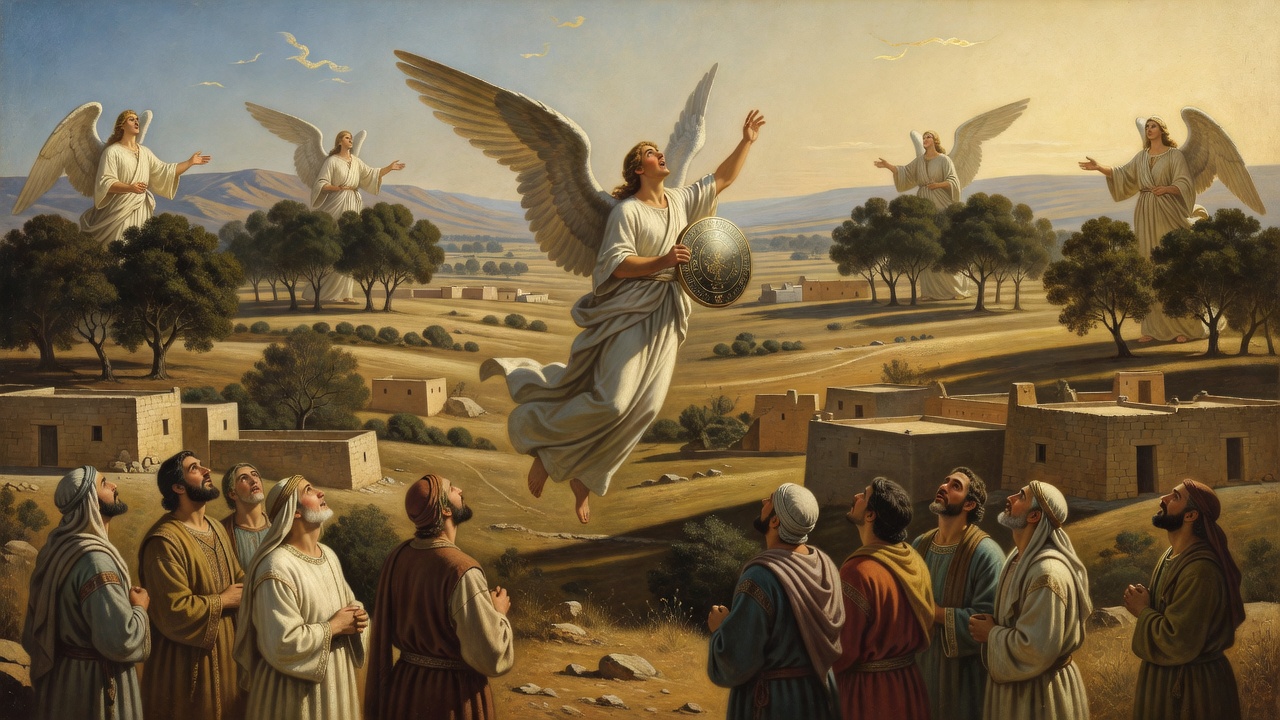
1Na kafnge ayé, lê nun teen-gu fat kasaligan i Dwata, yé gutadagla di fat syung i tanà, na nsangla i nus du fye là mbalan di tanà, di mahin, ku demen di dad kayu. 2Na lê nun teen-gu kasaligan i Dwata fdu di gusut i du salu tah. Na yé neben i gal gnamit mimò ilè di dad to nfun i too glut Dwata. Na fan-galan i talùan tamlo i dad fat kasaligan ayé gine ta banlé ktoo falmo i tanà na i mahin. 3Na manan dale, “Nangyu tayò falmo i tanà, na i mahin, na i dad kayu. Silangyu falmo ku ta mimò gami ilè di baweh i dad to snalig i Dwatato.” 4Na kafnge ayé, lê nun tmulen di do ku file kdee dad to i nun ilè, 144,000 i kdeela mdà di dad sfalò lwe lumbuk i dad bel Israél. 5Mdà di lumbuk Dyuda, 12,000, na mdà di lumbuk Rubén, lê 12,000, na mdà di lumbuk Gad, lê 12,000. 6Na mdà di lumbuk Asér, lê 12,000, na mdà di lumbuk Néftali, lê 12,000, na mdà di lumbuk Manasi, lê 12,000. 7Na mdà di lumbuk Simyun, lê 12,000, na mdà di lumbuk Libay, lê 12,000, na mdà di lumbuk Isakar, lê 12,000. 8Na mdà di lumbuk Sibulon, lê 12,000, na mdà di lumbuk Dyosip, lê 12,000, na mdà di lumbuk Bénhamin, lê 12,000.
I mlabung dad to smaul bukay
9Na kafnge ayé, lê nun teen-gu mlabung dad to i là gagan nse. Na mdà ale di dad sahal banwe, na di sahal gutambul, na di sahal adat, na di sahal talù. Na déé gutadagla di kanfe i trunu Ngà Bilibili. Na ta smaul ale bukay, na magot ale taglang palmira. 10Na fan-galla i talùla, manla, “Magdayen Dwatami i ta sudeng di trunu, na lê man i Ngà Bilibili, du dale gumdà i kagalwàmi.” 11Na sdulê tadag i kdee dad kasaligan Dwata salmibut di trunu, na di dad lwe falò fat tua, na di dad fat maltulus. Na fles ale lamfan di kanfe i trunu du mangamfù ale di Dwata, 12na ani manla, “Too ti glut. I Dwatato, too kenen gablà dmawat kafye, kdayen, kfulung, kfasalamat, afè, glal, na kgis kel di landè sen. Amén.”
13Na lê smalek satu tua di do, manan, “Simto i dad to smaul bukay ayé, na nè gumdàla?”
14Na tmimel agu, man-gu, “Wanta. Ge sa i gmadè ayé.”
Na lêan agu tnimel, manan, “Dale sa i gamfisan di sasè kaflayam. Ta nfukla saulla di litè i Ngà Bilibili, du fye too bukay. 15Taman, yé gutadagla di kanfe i trunu Dwata, na nimòla i knayèan mdu na kifuh déé di gumnèan. Na i sudeng di trunu ayé i kamlung dale du déé gumnèan di blengla. 16Na ta là ale bitil ku demen malinum. Ta là maflayam ale di kinit du, na i dademe init, 17du i Ngà Bilibili déé di trunu, yé i mifat dale, na nalakan ale salu di dad sfut éél mlé nawa. Na nifu Dwata dad lwak maloh di matala.”
Você sabia?
As tribos seladas e a grande multidão
- Apocalipse 7 apresenta o número dos selados como 144.000, doze mil de cada uma das tribos de Israel nomeadas no capítulo. Israel era outro nome de Jacó, o segundo dos filhos gêmeos de Isaque e Rebeca; o Easton's Bible Dictionary (1897) explica o nome de Jacó como alguém que segue os calcanhares de outro, ou um suplantador.Fontes: o próprio texto bíblico · Jacob (Israel)
- Embora Rúben fosse o filho mais velho de Jacó e Lia, a lista dos selados começa com Judá e depois nomeia Rúben. A lista inclui também tanto José como Manassés; Manassés era o filho mais velho de José, e Jacó adotou a ele e a seu irmão Efraim como seus próprios filhos.Fontes: o próprio texto bíblico · Reuben · Manasseh (son of Joseph)
- Depois do selamento, a visão mostra uma multidão grande demais para ser contada, de toda nação, tribo, povo e língua, de pé diante do trono e do Cordeiro, com vestes brancas e ramos de palmeira nas mãos. Um dos anciãos diz que eles saíram da grande tribulação e lavaram as suas vestes, tornando-as brancas no sangue do Cordeiro.Fontes: o próprio texto bíblico
Notas escritas com auxílio de IA a partir de fontes abertas (Theographic Bible Metadata, CC BY-SA 4.0; Easton’s Bible Dictionary, domínio público) e revisadas antes de publicar.
Créditos e licença desta tradução
I Falami Kasafnè (New Testament)
New Testament in Blaan, Koronadal
copyright © 1995 Wycliffe Bible Translators, Inc.
Language: Koronadal Blaan (Blaan, Koronadal)
Translation by: Wycliffe Bible Translators, Inc.
Copyright Information
© 1995, Wycliffe Bible Translators, Inc. All rights reserved.
This translation text is made available to you under the
terms of the Creative Commons License: Attribution-Noncommercial-No Derivative Works.
( http://creativecommons.org/licenses/by-nc-nd/3.0/ )
In addition, you have permission to port the text to different file formats, as long as you
do not change any of the text or punctuation of the Bible.
You may share, copy, distribute, transmit, and extract portions
or quotations from this work, provided that you include the above copyright
information:
You must give Attribution to the work.
You do not sell this work for a profit.
You do not make any derivative works that change any of the actual words or punctuation of the Scriptures.
Permissions beyond the scope of this license may be
available if you contact
us with your request.
The New Testament
in Blaan, Koronadal
© 1995, Wycliffe Bible Translators, Inc. All rights reserved.
This translation is made available to you under the terms of the
Creative Commons Attribution-Noncommercial-No Derivatives license 4.0.
You may share and redistribute this Bible translation or extracts from it in any format, provided that:
You include the above copyright and source information.
You do not sell this work for a profit.
You do not change any of the words or punctuation of the Scriptures.
Pictures included with Scriptures and other documents on this site are licensed just for use with those Scriptures and documents.
For other uses, please contact the respective copyright owners.
2014-08-06
Fonte: http://ebible.org/bpr/ · eBible.org