Ezequiel 8
Bibeli Gusunɔn Gari · Toque num versículo para ver as referências cruzadas.
1Wɔ̃ɔ nɔɔbɑ tiɑsen suru nɔɔbɑ tiɑsen sɔ̃ɔ nɔɔbuse sɔɔ, Esekiɛli u sɔ̃ win dirɔ kɑ Yudɑn ɡuro ɡurobu. Yerɑ Yinni Gusunɔn dɑm nùn yɔɔwɑ. 2Yerɑ u mɛɛrɑ u wɑ ɡɑ̃ɑnu kurɑmɑ nu kɑ tɔnu weenɛ. Win pɔrɑn tem ɡiɑ yɑ sɑ̃ɑ nɡe dɔ̃ɔ mɑ win wɔllu ɡiɑ yɑ bɑllimɔ nɡe sii ɡɑn te bɑ wɔriɑsiɑ. 3Mɑ u ɡɑ̃ɑnu dɛmiɑ nɡe nɔmɑ u kɑ wi, Esekiɛlin seri nɛnuɑ. Kɑ̃si te sɔɔ, Gusunɔn Hunde nùn suɑ wɔllɔ mɑ u kɑ nùn dɑ Yerusɑlɛmuɔ. U deemɑ yen kɔnnɔ ɡe ɡɑ wɑ̃ɑ sɔ̃ɔ yɛ̃sɑn nɔm ɡeu ɡiɑ bɑ bwɑ̃ɑroku ɡɑɡu yɔ̃rɑsie ɡe ɡɑ Gusunɔn nisinu seeye. 4Mɑ Gusunɔ Isirelibɑn Yinnin yiikon yɑm bururɑm nùn kure mi nɡe mɛ u rɑɑ mu wɑ wɔwɑɔ. 5U nɛɛ, tɔnun bii, ɑ mɛɛrio sɔ̃ɔ yɛ̃sɑn nɔm ɡeu ɡiɑ.
Mɑ u mɛɛrɑ. U wɑ yɑ̃ku yerun duu yerɔ bwɑ̃ɑroku ɡɑɡɑ yɔ̃ ɡe ɡɑ Gusunɔn nisinu seeye. 6Mɑ Yinni Gusunɔ u nɛɛ, tɔnun bii, ɑ wɑ ye yɑ koorɑmɔ mi? Wee Isirelibɑ bɑ bũnu sɑ̃ɑmɔ bu kɑ mɑn ɡirɑ nɛn sɑ̃ɑ yerun di. N ǹ mɑɑ ye tɔnɑ, kon kpɑm nun ɡɑm sɔ̃ɔsi.
7Mɑ u mɑɑ nùn suɑ u kɑ dɑ tɔɔwɔ sɑ̃ɑ yerun yɑɑrɑn kɔnnɔwɔ. Mɑ u wɔru ɡɑɡu wɑ ɡɑnɑɔ. 8Gusunɔ u nɛɛ, tɔnun bii, ɑ ɡɑnɑ ye yɑbo.
Mɑ u ye yɑbɑ u deemɑ kɔnnɔ ɡɑɡɑ wɑ̃ɑ mi. 9U nɛɛ, ɑ duo kpɑ ɑ wɑ kom kɔ̃sum mɛ tɔn be, bɑ mɔ̀ mini.
10U duɑ mi. Ye u wɑ wee, yɛɛ yi yi rɑ kɑbiri kɑ yɛɛ kɔ̃si ɡɛɛn weenɑsii bɑ kuɑ ɡɑni sɔɔ bɑ kɑ sikerenɑ kɑ sere mɑɑ bũnu kpuro ni bɑ rɑ sɑ̃. 11Mɑ u Isirelibɑn ɡuro ɡurobu wɑ tɔnu wɑtɑ kɑ wɔkuru yɛɛn weenɑsii yi kpuron wuswɑɑɔ. Mɑ Yɑɑsɑniɑ Sɑfɑnin bii u wɑ̃ɑ be sɔɔ. Bukuro ben bɑɑwure u turɑre kɑ ɡɑ̃ɑnu nɛni yè sɔɔ bɑ rɑ turɑre dɔ̃ɔ doke. Mɑ turɑren wiisu bɔkuɑ wɔllɔ tuku tuku. 12Yinni Gusunɔ u bikiɑ u nɛɛ, tɔnun bii, ɑ wɑ ye Isirelibɑn ɡuro ɡurobu bɑ mɔ̀ ɑsiri sɔɔ? Ben bɑɑwure u win bũu yeru mɔ. Mɑ bɑ tii ɡɑfɑrɑ kuɑmmɛ bɑ mɔ̀, nɛ, Yinni Gusunɔ nɑ ǹ bu wɑɑmɔ. Domi nɑ ben tem deri.
13U nɛɛ, ɑ nɑ ɑ mɑɑ wɑ ye bɑ mɔ̀ ye yɑ yeni kere.
14Mɑ u kɑ nùn dɑ win sɑ̃ɑ yerun kɔnnɔwɔ ɡe ɡɑ sɔ̃ɔ yɛ̃sɑn nɔm ɡeu ɡiɑ mɛɛrɑ. U deemɑ tɔn kurɔbɑ sɔ̃ bɑ bũu wi bɑ mɔ̀ Tɑmusi swĩiyɑmmɛ. 15Yerɑ u mɑɑ nɛɛ, ɑ wɑ nɡe mɛ mi n sɑ̃ɑ? Tɛ̃, ɑ nɑ ɑ mɑɑ ɡɑm wɑ ye yɑ yeni kere.
16Mɑ u nùn suɑ u kɑ dɑ sɑ̃ɑ yerun yɑɑrɑɔ yɑ̃ku yeru kɑ dii dɛɛrɑrun kɔnnɔn bɑɑ sɔɔ. Miyɑ u tɔmbu yɛndɑ nɔɔbu wɑ bɑ sɑ̃ɑ yeru biru kisi bɑ yiire sɔ̃ɔ yɑri yeru ɡiɑ bɑ sɔ̃ɔ sɑ̃ɑmɔ. 17Gusunɔ u mɑɑ nɛɛ, wunɛn tii ɑ wɑ ye bɑ mɔ̀. Yenibɑ kpuron kobu yɑ ǹ Yudɑbɑ turɑ, mɑ bɑ mɑɑ kɔ̃sɑ mɔ̀ bɑ ɡoonɑmɔ tem mɛ sɔɔ bu kɑ nɛn mɔru seeyɑ. Adɑmɑ beyɑ bɑ tii wɛ̃ru dɛkɑ sɔkumɔ. 18Nɛn tii kon bu ye bɑ kuɑ kɔsie kɑ nɛn mɔru bɑkɑ. Nɑ ǹ bu mɛɛrimɔ kɑ wɔnwɔndu. Bɑ koo wuri kowɑ kɑ dɑm bu kɑ mɑn somiru kɑnɑ. Adɑmɑ nɑ ǹ bu swɑɑ dɑkimɔ.
Yerusɑlɛmun sɛɛyɑsiɑbu
Você sabia?
Idolatria Revelada no Templo de Jerusalém
- Enquanto estava sentado em sua casa com os anciãos exilados de Judá, Ezequiel teve uma visão na qual foi elevado entre a terra e o céu e transportado diretamente para o templo em Jerusalém.Fontes: o próprio texto bíblico · Jerusalem
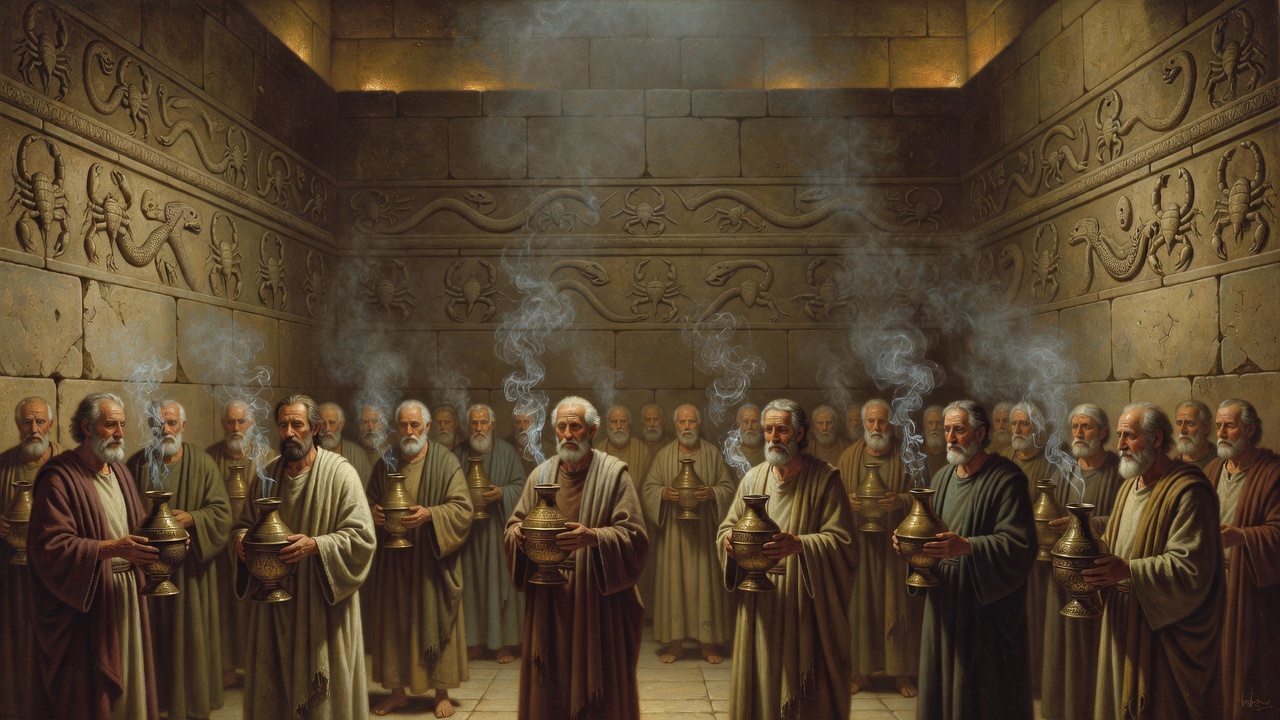
- Nas câmaras ocultas do pátio do templo, foram mostrados a Ezequiel setenta anciãos de Israel—incluindo Jazanias, filho de Safã—queimando incenso diante de gravuras na parede de criaturas rastejantes e animais detestáveis.Fontes: o próprio texto bíblico · Jaazaniah · Shaphan
- A visão descreve vários ritos estrangeiros praticados dentro do recinto sagrado, como mulheres lamentando pelo deus Tamuz na porta norte e vinte e cinco homens de costas para o templo curvando-se para o leste em adoração ao sol.Fontes: o próprio texto bíblico
Notas escritas com auxílio de IA a partir de fontes abertas (Theographic Bible Metadata, CC BY-SA 4.0; Easton’s Bible Dictionary, domínio público) e revisadas antes de publicar.
Lugares deste capítulo
- Jerusalem · 31.777, 35.234 · versículo 3
Só aparecem lugares com identificação de alta confiança (90% ou mais segundo as fontes acadêmicas reunidas pelo OpenBible). Mapa da época: DARE (Digital Atlas of the Roman Empire), CC BY 4.0; mapa atual: © colaboradores do OpenStreetMap; lugares: OpenBible.info (CC BY 4.0).
Créditos e licença desta tradução
Bibeli Gusunɔn Gari
The Holy Bible in the Baatonum language of Benin, also called the Bariba language
copyright © 2013 SIM
Language: Bariba (Baatonum)
Translation by: SIM International
Bariba, Bibeli Gusunɔn Gari
This translation, published by the UEEB/SIM au Benin, was published in 1996.
If you are interested in obtaining a printed copy, please contact the SIM at SIM, BP 15, Parakou, Benin.
This translation text is made available to you under the
terms of the Creative Commons License: Attribution-Noncommercial-No Derivative Works.
( http://creativecommons.org/licenses/by-nc-nd/3.0/ )
In addition, you have permission to port the text to different file formats, as long as you
do not change any of the text or punctuation of the Bible.
You may share, copy, distribute, transmit, and extract portions
or quotations from this work, provided that you include the above copyright
information:
You must give Attribution to the work.
You do not sell this work for a profit.
You do not make any derivative works that change any of the actual words or punctuation of the Scriptures.
Permissions beyond the scope of this license may be
available if you contact
us with your request.
This translation is made available to you under the terms of the
Creative Commons Attribution-Noncommercial-No Derivatives license 4.0.
You may share and redistribute this Bible translation or extracts from it in any format, provided that:
You include the above copyright and source information.
You do not sell this work for a profit.
You do not change any of the words or punctuation of the Scriptures.
Pictures included with Scriptures and other documents on this site are licensed just for use with those Scriptures and documents.
For other uses, please contact the respective copyright owners.
2014-09-10
Fonte: http://ebible.org/bba/ · eBible.org