Ezequiel 46
Bibeli Gusunɔn Gari · Toque num versículo para ver as referências cruzadas.
1Nɛ, Yinni Gusunɔ nɑ nɛɛ, sɑ̃ɑ yerun yɑɑrɑ sɔɔkɑɑn kɔnnɔ ɡe ɡɑ wɑ̃ɑ sɔ̃ɔ yɑri yeru ɡiɑ, ɡɑ ko n kɛnuɑwɑ sɔ̃ɔ nɔɔbɑ tiɑ yè sɔɔ bɑ rɑ sɔmburu ko. Adɑmɑ bɑ koo ɡu kɛniɑwɑ tɔ̃ɔ wɛ̃rɑruɡiru sɔɔ kɑ sere mɑɑ suru kpɑo ù n yɑrɑ. 2Isirelibɑn kpɑro u koo duwɑ sɑɑ kɔnnɔ ɡe ɡɑ wɑ̃ɑ tɔɔwɔn di kpɑ u nɑ u yɔ̃rɑ kɔnnɔ ɡen kɑdirin bɔkuɔ sɑnɑm mɛ yɑ̃ku kowobu bɑ nùn yɑ̃ku dɔ̃ɔ mwɑɑrɑruɡiru kɑ siɑrɑbun yɑ̃kuru kuɑmmɛ. Sɑɑ ye sɔɔ, u ko n yiirewɑ kɔnnɔ ɡen mi. Yen biru kpɑ u yɑri. Bɑ ǹ kɔnnɔ ɡe kɛnumɔ sere yokɑ. 3Isirelibɑ bɑ koo nɑ bu kpunɑwɑ bu Yinni Gusunɔ bɛɛrɛ wɛ̃ kɔnnɔ ɡen mi tɔ̃ɔ wɛ̃rɑruɡiru sɔɔ kɑ sere mɑɑ suru kpɑo bɑɑwure sɔɔ.
4Tɔ̃ɔ wɛ̃rɑruɡii te sɔɔ, sinɑ boko u koo yɑ̃ku dɔ̃ɔ mwɑɑrɑruɡiru ko kɑ yɑ̃ɑ kpɛmminu nɔɔbɑ tiɑ kɑ sere mɑɑ yɑ̃ɑ kinɛ teeru. Ni kpuro nu kun ɑlebu ɡɑɑ mɔ. 5U koo mɑɑ ɑlikɑmɑn som kilo tɛnɑ sɔndi yɑ̃ɑ kinɛru bɑɑteren wɔllɔ kɑ sere mɑɑ ɡum ditiri nɔɔbɑ tiɑ som mɛn wɔllɔ. Som mɛ u kĩwɑ u koo sɔndi yɑ̃ɑ kpɛmminu wɔllɔ. 6Suru kpɑo ù n yɑrɑ, u koo nɑɑ kinɛ kpɛndu ɡowɑ te tɑ ǹ ɑlebu mɔ kɑ yɑ̃ɑ kpɛmminu nɔɔbɑ tiɑ kɑ yɑ̃ɑ kinɛ teeru, ni kpuro nu kun ɑlebu mɔ. 7Mɛyɑ u koo mɑɑ ɑlikɑmɑn som kilo tɛnɑ sɔndi nɑɑ kinɛru bɑɑteren wɔllɔ kɑ yɑ̃ɑ kinɛru bɑɑteren wɔllɔ. U koo ɡum ditiri nɔɔbɑ tiɑ doke som mɛ sɔɔ kpɑ u yɑ̃ɑ kpɛmmii nin wɔllɔ som sɔndi mɛ u kĩ. 8Ben kpɑro u koo duwɑ sɑɑ dii yɑɑrɑn kɔnnɔn di. Min diyɑ u koo mɑɑ kɑ yɑri. 9Adɑmɑ Isirelibɑ bɑ̀ n mɑn sɑ̃ɑru nɑ tɔ̃ɔ bɑkɑru ɡɑru sɔɔ, be bɑ duɑ sɑɑ kɔnnɔ ɡe ɡɑ wɑ̃ɑ sɔ̃ɔ yɛ̃sɑn nɔm ɡeu ɡiɑn di, bɑ koo yɑriwɑ kɑ kɔnnɔ ɡe ɡɑ wɑ̃ɑ sɔ̃ɔ yɛ̃sɑn nɔm dwɑru ɡiɑ. Be bɑ mɑɑ duɑ sɑɑ kɔnnɔ ɡe ɡɑ wɑ̃ɑ sɔ̃ɔ yɛ̃sɑn nɔm dwɑru ɡiɑn di, bɑ koo yɑriwɑ kɑ kɔnnɔ ɡe ɡɑ wɑ̃ɑ sɔ̃ɔ yɛ̃sɑn nɔm ɡeu ɡiɑ. Goo kun yɑriɔ kɔnnɔ ɡe u kɑ duɑn di. 10Ben kpɑro u koo du sɑnɑm mɛ bɑ duɔ kpɑ u yɑri sɑnɑm mɛ bɑ yɑriɔ.
Yɑ̃kunun woodɑ
11Tɔ̃ɔ bɑkɑnun sɑnɑm, bɑ̀ n yɑ̃kuru mɔ̀ kɑ nɑɑ kinɛru kɑ yɑ̃ɑ kinɛru, ɑlikɑmɑn som kilo tɛnɑ bɑ ko n dɑ sɔndi sɑbe nin bɑɑteren wɔllɔ kɑ ɡum ditiri nɔɔbɑ tiɑ. Adɑmɑ ǹ n yɑ̃ɑ kinɛ kpɛndun nɑ bɑ kɑ mɔ̀, som mɛ̀n nɔɔ bɑ kĩwɑ bɑ koo kɑ nɑ.
12Ben kpɑro ù n ɡɔ̃ru doke u yɑ̃ku dɔ̃ɔ mwɑɑrɑruɡiru ǹ kun mɛ siɑrɑbun yɑ̃kuru ko, bɑ ko n dɑ nùn kɔnnɔ ɡe ɡɑ wɑ̃ɑ sɔ̃ɔ yɑri yeru ɡiɑ kɛniɛwɑ. U koo tu kowɑ nɡe mɛ u rɑ ko tɔ̃ɔ wɛ̃rɑruɡiru sɔɔ. Ù n yɑrɑ u doonɑ kpɑ bu kɔnnɔ ɡe kɛnɛ.
13Tɔ̃ɔ bɑɑtere bɑ ko n dɑ Yinni Gusunɔ yɑ̃ku dɔ̃ɔ mwɑɑrɑruɡiru kuewɑ kɑ yɑ̃ɑru wɔ̃ɔ tiɑɡiru te tɑ ǹ ɑlebu ɡɑɑ mɔ. Bɑ ko n dɑ tu kowɑ bururu bɑɑtere. 14Bururu bɑɑtere, bɑ ko n dɑ yɑ̃kuru kowɑ kɑ som kilo nɔɔbu ye bɑ burinɑ kɑ ɡum ditiri yiru. Mɛyɑ bɑ ko n dɑ tu ko tɔ̃ɔ bɑɑtere sere kɑ bɑɑdommɑɔ. 15Nɡe mɛyɑ bururu bɑɑtere bɑ ko n dɑ Yinni Gusunɔ yɑ̃ku dɔ̃ɔ mwɑɑrɑruɡiru kue kɑ yɑ̃ɑ kinɛ kpɛndu kɑ som kɑ sere mɑɑ ɡum. Mɛyɑ bɑ ko n dɑ tu ko sere kɑ bɑɑdommɑɔ.
Ye n sɑ̃ɑ Isirelibɑn kpɑron
bibuɡiɑ
16Amɛniwɑ nɛ, Yinni Gusunɔ nɑ ɡeruɑ. Nɑ nɛɛ, Isirelibɑn kpɑro ù n win bibun turo tem kɑ̃, tem mɛ, mu koo kowɑ bii win bibun bweseruɡim. 17Adɑmɑ ù n win yoo tem kɑ̃, yɑkiɑbun wɔ̃ɔ ɡɑ̀ n turɑ yoo wi, u ǹ ko n mɑɑ tem mɛ mɔ. Sɑɑ ye sɔɔ, mu koo kowɑ wi, kpɑro wiɡim. Win bibu tɔnɑwɑ bɑ koo kpĩ bu win tem tubi di. 18Kpɑro wi, u ku rɑɑ win tɔmbu tem mwɑɑri. Ye u koo win bibu wɛ̃ kpuro u de yɑ n wee win mɔrun di. Kpɑ nɛn tɔmbu sɔɔ ɡoo u ku rɑɑ kɑ win tem biɑ.
Sɑ̃ɑ yerun doo koo yeru
19Durɔ wi, u kɑ Esekiɛli dɑ dirɔ te tɑ wɑ̃ɑ yɑ̃ku kowobun sɔ̃ sɑ̃ɑ yerɔ. U duɑ sɑɑ kɔnnɔ ɡe ɡɑ wɑ̃ɑ sɔ̃ɔ yɛ̃sɑn nɔm ɡeu ɡiɑn di. Yen sɔɔ mi, ɑyeru ɡɑrɑ wɑ̃ɑ sɔ̃ɔ duu yeru ɡiɑ. 20Mɑ u nùn sɔ̃ɔwɑ u nɛɛ, ɑye te, tɑ sɑ̃ɑwɑ mi yɑ̃ku kowobu bɑ ko n dɑ torɑnun yɑ̃ku yɑɑ yike kpɑ bu som mɛ bɑ kɑ yɑ̃kunu kuɑ sɔmɛ. Nɡe mɛyɑ bɑ ǹ mɑɑ kɑ yi dɔɔ tɔɔwɔ Isirelibɑ bu sere ye bɑbiri. Domi yɑ sɑ̃ɑwɑ Yinni Gusunɔɡiɑ.
21Yen biru u mɑɑ kɑ nùn dɑ yɑɑrɑ tɔɔkɑɑɔ. Mɑ bɑ dɑ yen ɡoonu nnɛ ye kpuron mi. Mɑ u deemɑ bɑ bɑtumɑ ɡɑɑ wĩɑ ɡoo ten bɑɑteren mi. 22Bɑtumɑ yen bɑɑyeren dɛ̃ɛbu bu sɑ̃ɑwɑ ɡɔm soonu weeru mɑ yen yɑsum mɑɑ sɑ̃ɑ ɡɔm soonu tɛnɑ. Ye nnɛ ye kpuro yɑ nɛwɑ. 23Bɑ ɡɑnɑ kuɑ bɑ kɑ ye nnɛ ye kpuro sikerenɑ. Mɑ bɑ dosu ɡirɑ ɡɑnɑ ye sɔɔ. 24Mɑ durɔ wi, u nùn sɔ̃ɔwɑ u nɛɛ, yɑ sɑ̃ɑwɑ mi sɑ̃ɑ yee ten sɔm kowobu bɑ ko n dɑ yɑɑ yike ye tɔmbɑ kɑ yɑ̃kuru nɑ.
Dɑɑ te tɑ yɑrimɔ
sɑɑ sɑ̃ɑ yerun di
Você sabia?
Adoração, Deveres Reais e Cozinhas do Templo
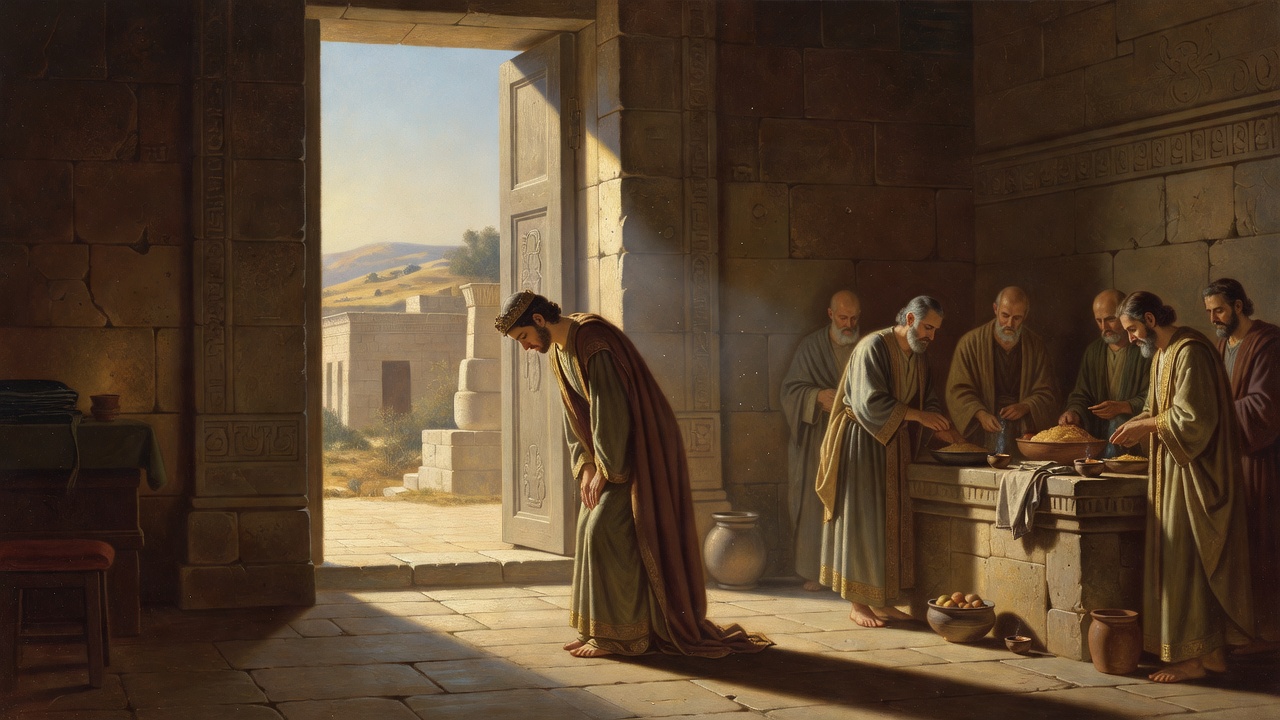
- A porta oriental do átrio interior permanecia fechada durante os seis dias de trabalho, sendo aberta apenas no sábado e no dia da lua nova. O príncipe devia permanecer junto ao batente da porta e adorar no limiar enquanto os sacerdotes ofereciam os seus sacrifícios, e a porta ficava aberta até a tarde.Fontes: o próprio texto bíblico
- Durante as festas fixas, os adoradores que entravam pela porta norte deviam sair pela porta sul, e os que entravam pelo sul deviam sair pelo norte. Além disso, as leis de propriedade proibiam expressamente que o príncipe tomasse as terras do povo, devendo dar herança a seus filhos apenas de seus próprios bens.Fontes: o próprio texto bíblico
- A visão detalha áreas de cozinha distintas no templo: câmaras especiais a oeste para os sacerdotes cozinharem as ofertas pelo pecado e pela culpa, e quatro átrios menores nos cantos do pátio externo, onde os ministros do templo preparavam os sacrifícios oferecidos pelo povo.Fontes: o próprio texto bíblico
Notas escritas com auxílio de IA a partir de fontes abertas (Theographic Bible Metadata, CC BY-SA 4.0; Easton’s Bible Dictionary, domínio público) e revisadas antes de publicar.
Créditos e licença desta tradução
Bibeli Gusunɔn Gari
The Holy Bible in the Baatonum language of Benin, also called the Bariba language
copyright © 2013 SIM
Language: Bariba (Baatonum)
Translation by: SIM International
Bariba, Bibeli Gusunɔn Gari
This translation, published by the UEEB/SIM au Benin, was published in 1996.
If you are interested in obtaining a printed copy, please contact the SIM at SIM, BP 15, Parakou, Benin.
This translation text is made available to you under the
terms of the Creative Commons License: Attribution-Noncommercial-No Derivative Works.
( http://creativecommons.org/licenses/by-nc-nd/3.0/ )
In addition, you have permission to port the text to different file formats, as long as you
do not change any of the text or punctuation of the Bible.
You may share, copy, distribute, transmit, and extract portions
or quotations from this work, provided that you include the above copyright
information:
You must give Attribution to the work.
You do not sell this work for a profit.
You do not make any derivative works that change any of the actual words or punctuation of the Scriptures.
Permissions beyond the scope of this license may be
available if you contact
us with your request.
This translation is made available to you under the terms of the
Creative Commons Attribution-Noncommercial-No Derivatives license 4.0.
You may share and redistribute this Bible translation or extracts from it in any format, provided that:
You include the above copyright and source information.
You do not sell this work for a profit.
You do not change any of the words or punctuation of the Scriptures.
Pictures included with Scriptures and other documents on this site are licensed just for use with those Scriptures and documents.
For other uses, please contact the respective copyright owners.
2014-09-10
Fonte: http://ebible.org/bba/ · eBible.org