Daniel 9
Bibeli Gusunɔn Gari · Toque num versículo para ver as referências cruzadas.
1Sɑɑ ye Dɑrusi, Asuresin bii, Mɛdin bweseru u bɑndu dii Bɑbilonin temɔ, 2win bɑndun wɔ̃ɔ ɡbiikuu sɔɔ, Dɑniɛli u tirenu mɛɛrimɔ mɑ u ɡirɑri mi Yinni Gusunɔ u win sɔmɔ Yeremi sɔ̃ɔwɑ u nɛɛ, wɔ̃ɔ wɑtɑ kɑ wɔkurɑ Yerusɑlɛmu yɑ ko n sɑ̃ɑ bɑnsu. 3Mɑ u nɔɔ bɔkuɑ u sɑɑki deewɑ u tii torom wisi nuku sɑnkirɑnun sɔ̃. Mɑ u kɑnɑru koosi Yinni Gusunɔn mi ɡiɑ, 4u win tɔmbun torɑnu tuubɑ mɔ̀.
U nɛɛ, Yinni Gusunɔ, ɑ kpɑ̃ mɑ sɑ nun nɑsie. A rɑ wunɛn nɔɔ mwɛɛru yibie kpɑ ɑ wunɛɡibu kĩru sɔ̃ɔsi be bɑ nun kĩ bɑ wunɛn woodɑbɑ mɛm nɔɔwɑmmɛ. 5Sɑ torɑ, sɑ dɑɑ kɔ̃sɑ kuɑ, sɑ sɑ̃ɑ nuku kɔ̃suruɡibu, sɑ wunɛn ɡɑri yinɑ, sɑ mɑɑ wunɛn woodɑbɑ sɑrɑ. 6Sɑ ǹ wunɛn sɔmɔbu swɑɑ dɑki sɑnɑm mɛ bɑ bɛsɛn sinɑmbu kɑ bɛsɛn wiruɡibu kɑ bɛsɛn bɑɑbɑbɑ kɑ bɛsɛn tɔmbu kpuro wunɛn ɡɑri sɔ̃ɔwɑ. 7Yinni Gusunɔ, ɑ sɑ̃ɑwɑ ɡemɡii. Bɛsɛrɑ sɑ torɑ. Mɑ sɑ wɑ̃ɑ sekuru sɔɔ ɡisɔ bɛsɛ Yudɑbɑ kɑ be bɑ wɑ̃ɑ Yerusɑlɛmuɔ kɑ Isirelibɑ kpuro be ɑ yɑrinɑsiɑ tontondeɔ kɑ turukuɔ yèn sɔ̃ sɑ ǹ nun mɛm nɔɔwɛ. 8Yinni, wee sɑ sekuru sɔɔwɑ bɛsɛ kɑ bɛsɛn sinɑmbu kɑ bɛsɛn wiruɡibu kɑ bɛsɛn bɑɑbɑbɑ. Domi sɑ nun torɑri. 9Gusunɔ bɛsɛn Yinni, ɑ sun suuru kuo wunɛn wɔnwɔndun sɑɑbu bɑɑ mɛ sɑ wunɛn ɡɑri yinɑ. 10Sɑ ǹ mɑɑ wunɛn ɡere swɑɑ dɑki su sere nɛɛ, sɑ ko wunɛn woodɑbɑ swĩi ye wunɛn sɔmɔbu bɑ sun nɔɔsiɑ. 11Mɛyɑ bɛsɛ Isirelibɑ kpuro sɑ wunɛn woodɑbɑ sɑrɑ, sɑ ǹ wunɛn ɡere swɑɑ dɑki. Sɑ torɑ. Yen sɔ̃nɑ bɔ̃ri yi ɑ derɑ wunɛn sɔm kowo Mɔwisi u yoruɑ woodɑn tireru sɔɔ yi sun di. 12Nɡe mɛyɑ ɑ derɑ wunɛn ɡɑri yi koorɑ yi ɑ nɛɛ, kɑɑ bɛsɛ kɑ bɛsɛn wiruɡibu kuɑ. A derɑ Yerusɑlɛmu yɑ nɔni swɑ̃ɑru wɑ tèn bweseru bɑ ǹ wɑɑre ɡɑm. 13Wɑhɑlɑ ye kpuro, yɑ sun deemɑ nɡe mɛ Mɔwisi u yoruɑ woodɑn tireru sɔɔ. Kɑ mɛ, sɑ ǹ bɛsɛn dɑɑ kɔ̃sɑ deri su wunɛn ɡem swĩi kpɑ su wunɛn kĩi ɡeeru kɑsu. 14Gusunɔ bɛsɛn Yinni, wɑhɑlɑ ye ɑ nɛɛ, sɑ ko wɑ, yerɑ yɑ sun deemɑ. Ye ɑ kuɑ kpuro yɑ sɑ̃ɑwɑ dee dee. Bɛsɛrɑ sɑ ǹ nun mɛm nɔɔwɛ.
15Gusunɔ bɛsɛn Yinni, ye ɑ sun yɑrɑmɑ Eɡibitin tem di, wunɛn dɑm mu sɔ̃ɔsirɑ. A yĩsiru yɑrɑ te tɑ wɑ̃ɑ sere kɑ ɡisɔ. Adɑmɑ bɛsɛ, sɑ durum kɑ dɑɑ kɔ̃sɑ kuɑ ɡem ɡem. 16Tɛ̃ Yinni, nɑ nun kɑnɑmɔ wunɛn durom sɔ̃, ɑ de wunɛn mɔru yu doonɑ wunɛn wuu Yerusɑlɛmun min di, ɡe ɡɑ wɑ̃ɑ wunɛn ɡuu te ɑ ɡɔsɑn wɔllɔ. Domi be bɑ sun sikerenɛ bɑ Yerusɑlɛmu kɑ bɛsɛ wunɛn tɔmbu ɡɛmɑ bɛsɛn torɑnu kɑ bɛsɛn bɑɑbɑbɑn dɑɑ kɔ̃sɑn sɔ̃. 17Gusunɔ, ɑ nɛn nɔɔ swɑɑ dɑkio kpɑ ɑ nɛn kɑnɑru nɔ. A wunɛn sɑ̃ɑ yee te tɑ bɑnsu sɑ̃ɑ mi mɛɛrio wunɛn yĩsirun sɔ̃. 18Gusunɔ nɛn Yinni, ɑ swɑɑ dɑkio ɑ nɔ. A nɔni seeyo ɑ wuu ɡe bɑ kɑ wunɛn yĩsiru sokumɔ mɛɛri nɡe mɛ ɡɑ bɑnsu kuɑ. Sɑ yɛ̃ mɑ bɛsɛn dɛɛrɑrɑ kun turɑ su kɑ nun ɡɑ̃ɑnu ɡɑnu kɑnɑ. Adɑmɑ wunɛn wɔnwɔn bɑkɑrun sɔ̃nɑ sɑ nun yeni kɑnɑmɔ. 19Yinni, ɑ bɛsɛn kɑnɑru nɔɔwɔ kpɑ ɑ sun suuru kuɑ. A bɛsɛn ɡere swɑɑ dɑkio kpɑ ɑ ko ye sɑ bikiɑ. A ku de n tɛ wunɛn yĩsirun sɔ̃. Domi wunɑ ɑ wuu ɡe kɑ tɔn be kpuro mɔ.
Gɑbiriɛ u kɑ̃siru tubusiɑ
20Sɑnɑm mɛ Dɑniɛli u kɑnɑ te mɔ̀ u ɡɑri ɡerumɔ u ǹ kpɑ, u wi kɑ win tɔmbun torɑnu tuubɑ mɔ̀, mɑ u Gusunɔ win Yinni kɑnɑmɔ win sɑ̃ɑ yee dɛɛrɑ ten sɔ̃, yerɑ durɔ wi, Gɑbiriɛ wi u rɑɑ wɑ win kɑ̃si ɡbiikiru sɔɔ, u nùn yɔ̃ɔsimɑ kɑ dɑm u surɑ win bɔkuɔ sɑɑ yè sɔɔ bɑ rɑ yokɑn yɑ̃kuru ko. 22U kɑ nùn ɡɑri kuɑ u nɛɛ, nɑ nɑwɑ wunɛn mi, n kɑ nun kɑ̃si te tubusiɑ. 23Sɑɑ yèn di ɑ wunɛn kɑnɑru toruɑ, Gusunɔ u tu mwɑ. Yen sɔ̃nɑ nɑ nun win ɡɑri sɔ̃ɔbu nɑ, domi Gusunɔ u nun kĩ. Ǹ n mɛn nɑ, ɑ swɑɑ dɑkio n nun kɑ̃si te tubusiɑ. 24Sɑɑ nɔɔbɑ yirun nɔn wɑtɑ kɑ wɔkurɑ Gusunɔ u himbɑ kuɑ yu doonɑ u sere wunɛn tɔmbu kɑ wunɛn wuu dɛɛrɔ yɑkiɑ torɑnu kɑ kɔ̃sɑ kpuron di. Yen biru, u koo bu ben torɑnu suuru kuɑ kpɑ u bu ɡem wɛ̃ sere kɑ bɑɑdommɑɔ. Gusunɔn sɔmɔbun ɡɑri kɑ kɑ̃sinun bɑɑ yɑ koo doonɑ kpɑ tɔn dɛɛro ɡoo u ko sunɔ. 25Ǹ n mɛn nɑ, ɑ bwisikuo kpɑ ɑ tubu. Sɑɑ mìn di bɑ woodɑ wɛ̃ bu Yerusɑlɛmu sɔmɛ bu bɑni, sere wiruɡii wi Gusunɔ u ɡɔsɑ u kɑ nɑ, yɑ koo kowɑ sɑɑ nɔɔbɑ yirun nɔn nɔɔbɑ yiru. Yen biru, bɑ koo yen swɛɛ sɔmɛ kɑ yen ɡbɑ̃rɑru sɑɑ nɔɔbɑ yirun non wɑtɑ kɑ yiru sɔɔ. Sɑɑ ye, yɑ ko n sɑ̃ɑwɑ wɑhɑlɑn sɑɑ. 26Sɑɑ nɔɔbɑ yirun nɔn wɑtɑ kɑ yiru ye, yɑ̀ n doonɑ, bɑ koo wiruɡii wi Gusunɔ u ɡɔsɑ ɡo. Goo sɑri wi u koo kɑ nùn yinɑ. Kpɑ sunɔ kpɑo kɑ win tɑbu kowobu bu wuu ɡe, kɑ sɑ̃ɑ yee te wisire bu kɔsuku kpɑ bɑ n ɑsɔrɔ mɔ̀ sere Gusunɔ u rɑ kɑ nùn kpeerɑsiɑ nɡe mɛ u yi. 27Wiruɡii wi, u ko n kɑ tɔn dɑbiru nɔɔ tiɑ sɑ̃ɑ sere sɑɑ nɔɔbɑ yiru. Sɑɑ itɑ kɑ bɔnun biru, u koo de yɑ̃kunu kɑ ɑbɔnu nu kpe kpɑ u ɡɑ̃ɑ kɔ̃sunu ko sɑ̃ɑ yerɔ nìn bweseru ɡoo kun koore sere kɑm koo bi Yinni Gusunɔ u yi win sɔ̃ bu kɑ nùn deemɑ.
Dɑniɛli u tɔnu wɑ
Tiɡirin dɑɑrɔ kɑ̃siru sɔɔ
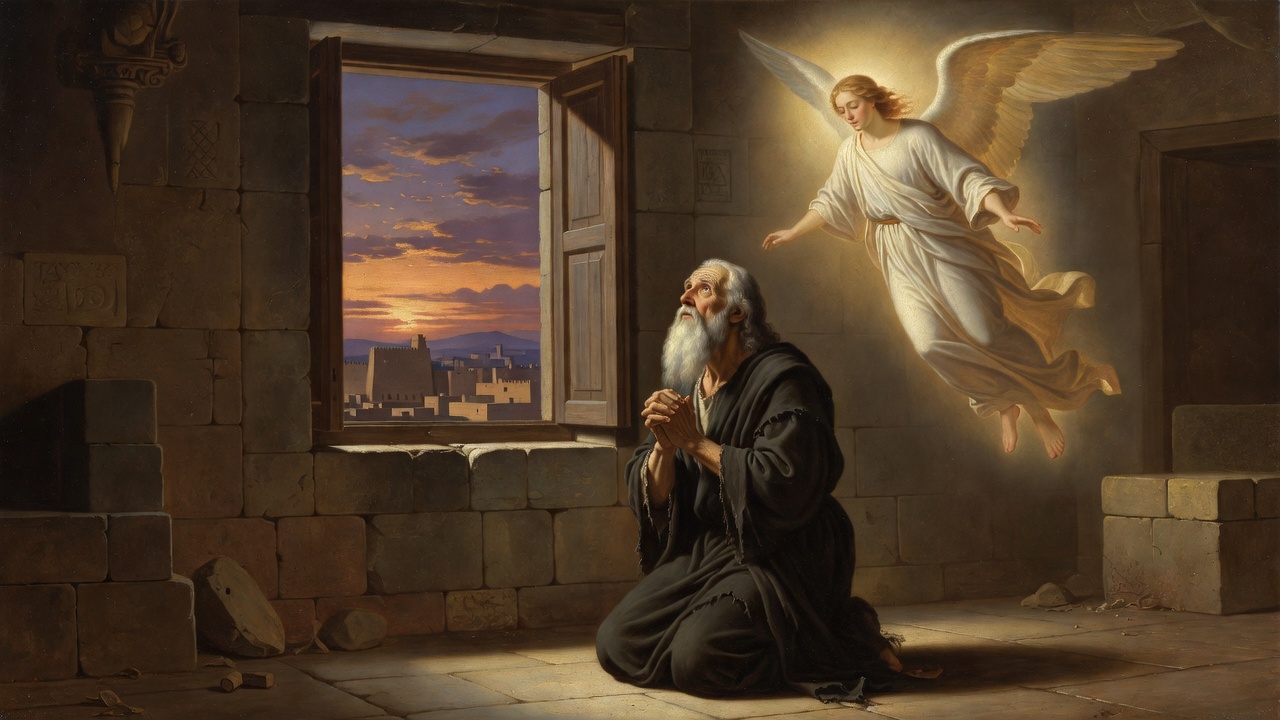
Você sabia?
A Oração de Daniel e as Setenta Semanas
- Daniel compreendeu, a partir dos livros sagrados com a profecia de Jeremias, que a desolação de Jerusalém duraria setenta anos. Essa constatação o levou a buscar a Deus com profunda intercessão, jejum, pano de saco e cinzas, confessando os pecados de seu povo.Fontes: o próprio texto bíblico · Jeremiah
- Enquanto Daniel ainda orava na hora do sacrifício da tarde, o anjo Gabriel — cujo nome significa "Campeão de Deus" — veio até ele para lhe dar entendimento. Gabriel transmitiu a profecia sobre as "setenta semanas" decretadas para a cidade santa e para o povo.Fontes: o próprio texto bíblico · Gabriel
- Em sua oração de confissão, Daniel reconheceu que a destruição de Jerusalém e o exílio do povo cumpriam diretamente a maldição e o juramento escritos na Lei de Moisés.Fontes: o próprio texto bíblico · Moses
Notas escritas com auxílio de IA a partir de fontes abertas (Theographic Bible Metadata, CC BY-SA 4.0; Easton’s Bible Dictionary, domínio público) e revisadas antes de publicar.
Lugares deste capítulo
- Chaldea · 30.962, 46.104 · versículo 1
- Jerusalem · 31.777, 35.234 · versículos 2, 7, 12, 16, 20, 25
- Egypt · 30.129, 31.308 · versículo 15
- Most Holy Place · Hoje: on Mount Moriah · 31.778, 35.236 · versículo 24
Só aparecem lugares com identificação de alta confiança (90% ou mais segundo as fontes acadêmicas reunidas pelo OpenBible). Mapa da época: DARE (Digital Atlas of the Roman Empire), CC BY 4.0; mapa atual: © colaboradores do OpenStreetMap; lugares: OpenBible.info (CC BY 4.0).
Créditos e licença desta tradução
Bibeli Gusunɔn Gari
The Holy Bible in the Baatonum language of Benin, also called the Bariba language
copyright © 2013 SIM
Language: Bariba (Baatonum)
Translation by: SIM International
Bariba, Bibeli Gusunɔn Gari
This translation, published by the UEEB/SIM au Benin, was published in 1996.
If you are interested in obtaining a printed copy, please contact the SIM at SIM, BP 15, Parakou, Benin.
This translation text is made available to you under the
terms of the Creative Commons License: Attribution-Noncommercial-No Derivative Works.
( http://creativecommons.org/licenses/by-nc-nd/3.0/ )
In addition, you have permission to port the text to different file formats, as long as you
do not change any of the text or punctuation of the Bible.
You may share, copy, distribute, transmit, and extract portions
or quotations from this work, provided that you include the above copyright
information:
You must give Attribution to the work.
You do not sell this work for a profit.
You do not make any derivative works that change any of the actual words or punctuation of the Scriptures.
Permissions beyond the scope of this license may be
available if you contact
us with your request.
This translation is made available to you under the terms of the
Creative Commons Attribution-Noncommercial-No Derivatives license 4.0.
You may share and redistribute this Bible translation or extracts from it in any format, provided that:
You include the above copyright and source information.
You do not sell this work for a profit.
You do not change any of the words or punctuation of the Scriptures.
Pictures included with Scriptures and other documents on this site are licensed just for use with those Scriptures and documents.
For other uses, please contact the respective copyright owners.
2014-09-10
Fonte: http://ebible.org/bba/ · eBible.org