Atos 4
Bibeli Gusunɔn Gari · Toque num versículo para ver as referências cruzadas.
Piɛɛ kɑ Yohɑnu wuun wiruɡibun wuswɑɑɔ
1Nɡe mɛ Piɛɛ kɑ Yohɑnu bɑ kɑ tɔn be ɡɑri mɔ̀, yɑ̃ku kowobu bɑ tunumɑ kɑ sɑ̃ɑ yerun kɔ̃sobun tɔnwero kɑ mɑɑ Sɑdusibɑ. 2Bɑ mɔru bɑrɑ yèn sɔ̃ ɡɔro be, bɑ tɔmbu keu sɔ̃ɔsimɔ bɑ Yesun seebu ɡɔrin di kpɑrɑmɔ bi bu sɔ̃ɔsimɔ mɑ tɔmbɑ koo se ɡɔrin di. 3Yen sɔ̃nɑ bɑ bu mwɑ bɑ bɛrisi pirisɔm sɔɔ sere sisiru, domi yokɑ kuɑ kɔ. 4Adɑmɑ tɔn dɑbinu be bɑ ɡɑri yi nuɑ bɑ nɑɑnɛ doke. Mɑ ben ɡeerɑ sosi sere bɑ kuɑ tɔnu nɔrɔbun subɑ nɔɔbun (5.000) sɑkɑ.
5Yen sisiru wuun wiruɡibu kɑ ɡuro ɡurobu kɑ mɑɑ woodɑ yɛ̃robu bɑ mɛnnɑ Yerusɑlɛmuɔ. 6Bɑ mɛnnɑ kɑ yɑ̃ku kowo tɔnwero wi bɑ rɑ nɛɛ Ani kɑ mɑɑ Kɑifɑ kɑ Yohɑnu kɑ Alesɑndu kɑ be kpuro be bɑ sɑ̃ɑ yɑ̃ku kowo tɔnwerobun bweseru. 7Bɑ ɡɔro be yɔ̃rɑsiɑ ben wuswɑɑɔ mɑ bɑ bu bikiɑm wɔri bɑ nɛɛ, kɑ weren yiikowɑ nɡe kɑ yĩsi terɑ̀ i kɑ yeni kuɑ.
8Sɑnɑm mɛyɑ Piɛɛ wi u Hunde Dɛɛro yibɑ u bu wisɑ u nɛɛ, bɛɛ wiruɡibu kɑ ɡuro ɡurobu, 9ì n sɔm ɡeerun ɡɑri bikiɑmɔ te sɑ yɛmɔ kuɑ kɑ nɡe mɛ u kɑ bɛkurɑ, 10n weenɛ bɛɛ kpuro kɑ mɑɑ Isirelibɑ kpuro i n yɛ̃ mɑ durɔ wi i wɑɑmɔ u yɔ̃ bɛɛn wuswɑɑɔ, u bɛkurɑwɑ mɑm mɑm kɑ Yesu Kirisi Nɑsɑrɛtiɡiin yĩsirun dɑm, wi i kpɑre dɑ̃ɑ bunɑnɑru wɔllɔ mɑ Gusunɔ nùn seeyɑ ɡɔrin di. 11Yesu wiyɑ, kpee te bɛɛ bɑnɔbu i yinɑ, mɑ tɑ kuɑ ɡɑni ɡɔmburun dɑm. 12Fɑɑbɑɡii ɡoo sɑri mɑ n kun mɔ wi. Domi Gusunɔ kun mɑɑ tɔmbu yĩsiru ɡɑru wɛ̃ hɑnduniɑ sɔɔ te bɑ koo soku bu kɑ fɑɑbɑ wɑ.
13Sɑnɑm mɛ bɑ ɡiɑ mɑ Piɛɛ kɑ Yohɑnu bɑ sɑ̃ɑwɑ bwɛ̃ɛbwɛ̃ɛbu, bɑ ǹ mɑɑ keu kue, ben wɔruɡɔrɑ bu biti kuɑ, mɑ bɑ tubɑ mɑ bɑ rɑɑ wɑ̃ɑ kɑ Yesu sɑnnu. 14Ye bɑ durɔ wi u bɛkurɑ wɑ u yɔ̃ kɑ Piɛɛ kɑ Yohɑnu sɑnnu, bɑ ǹ fɛɛ wɑ bu ɡɑri ɡɛɛ ɡere. 15Yen sɔ̃nɑ bɑ bu sɔ̃ɔwɑ bɑ nɛɛ, bu yɑrio mɛnnɔ yee ten min di. Ye bɑ yɑrɑ, be bɑ wɑ̃ɑ mi, bɑ wesiɑnɑ 16bɑ nɛɛ, mbɑ sɑ ko kɑ durɔ be ko. Domi Yerusɑlɛmuɡibu kpuro bɑ yɛ̃ mɑ bɑ sɔm dɑmɡii bɑkɑru kuɑ, sɑ ǹ kpɛ̃ su ye siki. 17Adɑmɑ su bu ɡerusi su nɛɛ, bu ku rɑɑ mɑɑ ɡoo ɡɑ̃ɑnu sɔ̃ kɑ yĩsi te, kpɑ ɡɑri yi, yi ku mɑɑ kpɑrɑrɑ tɔmbun suunu sɔɔ.
18Yerɑ bɑ kpɑm bu sokɑ mɑ bɑ bu yinɑri bu mɑɑ ɡɑri ɡere ǹ kun mɛ bu wɑɑsu ko kɑ Yesun yĩsiru. 19Adɑmɑ Piɛɛ kɑ Yohɑnu bɑ bu sɔ̃ɔwɑ bɑ nɛɛ, bɛɛn tii i bwisikuo i wɑ ǹ n koo Gusunɔ wɛ̃re su bɛɛ mɛm nɔɔwɑ, kpɑ su nùn deri. 20Domi bɛsɛ sɑ ǹ kpɛ̃ sɑ kun ɡeruɑ ye sɑ wɑ kɑ ye sɑ nuɑ.
21Bɑ kpɑm bu ɡerusi ɡem ɡem, mɑ bɑ bu yɔ̃su. Bɑ ǹ swɑɑ wɑ ye bɑ koo kɑ bu sɛɛyɑsiɑ yèn sɔ̃ tɔmbu kpurowɑ bɑ Gusunɔ siɑrɑmɔ ye yɑ koorɑn sɔ̃. 22Domi durɔ wi bɑ bɛkiɑ kɑ mɑɑmɑɑki mi, u wɔ̃ɔ weeru kere.
Nɑɑnɛ dokeobɑ wɔruɡɔru kɑnɑmɔ
23Ye bɑ Piɛɛ kɑ Yohɑnu yɔ̃su bɑ kpɑ, bɑ wurɑ ben berusebun mi, mɑ bɑ bu kpuro sɑɑriɑ ye yɑ̃ku kowo tɔnwerobu kɑ ɡuro ɡurobɑ bu sɔ̃ɔwɑ. 24Sɑnɑm mɛ bɑ ɡɑri yi nuɑ, be kpuro bɑ kɑ nɔɔ tiɑ Gusunɔ kɑnɑ, bɑ nɛɛ, Yinni, wunɑ ɑ wɔllu kɑ tem kɑ nim wɔ̃ku tɑkɑ kuɑ kɑ ye yɑ wɑ̃ɑ mi sɔɔ kpuro. 25Wunɑ ɑ mɑɑ ɡeruɑ kɑ Hunde Dɛɛron bɑɑ sɑɑ bɛsɛn sikɑdo Dɑfidi wunɛn sɔm kowon nɔɔn di ɑ nɛɛ,
“Mbɑn sɔ̃nɑ tɔn tukobu bɑ mɔru bɑrɑ.
Mbɑn sɔ̃nɑ tɔmbɑ bwisikumɔ ye yɑ ǹ koorɔ.
26Hɑnduniɑn sinɑmbɑ seewɑ.
Mɑ wiruɡibɑ mɛnnɑ bu kɑ Yinni Gusunɔ kɑ win Kirisi tɑbu ko.”
27Geemɑ, wuu ɡeni sɔɔrɑ Herodu kɑ Pɔnsu Pilɑti kɑ tɔn tukobu kɑ mɑɑ Isirelibɑ, be kpuro bɑ mɛnnɑ bɑ kɑ Yesu wunɛn sɔmɔ dɛɛro wi ɑ kuɑ Kirisi tɑbu kuɑ. 28Mɛyɑ bɑ yɑbu bɑɑyere kuɑ ye ɑ rɑɑ yi wunɛn dɑm kɑ wunɛn himbɑ sɔɔ. 29Yen sɔ̃ tɛ̃, Yinni ɑ ben ɡerusibu lɑɑkɑri koowo, kpɑ ɑ de bɛsɛ wunɛn sɔm kowobu su wunɛn ɡɑri yi kpɑrɑ kɑ wɔruɡɔru. 30A wunɛn nɔmu dɛmiɔ ɡu tɔmbu bɛkiɑ, ɑ de yĩrenu kɑ sɔm mɑɑmɑɑkiɡinu nu koorɑ kɑ wunɛn sɔmɔ dɛɛro Yesu win yĩsiru.
31Ye bɑ kɑnɑru kuɑ bɑ kpɑ yɑm mi bɑ mɛnnɛ mi, mu yĩirɑ diki diki. Be kpuro bɑ Hunde Dɛɛro yibɑ, mɑ bɑ Gusunɔn ɡɑri wɑɑsu wɔri kɑ wɔruɡɔru.
Nɑɑnɛ dokeobun mɔɔ teeru
32Nɑɑnɛ dokeo be kpuro bɑ wɑ̃ɑ nɔɔ tiɑ sɔɔ mɑm mɑm. Goo sɑri wi u ɡeruɑ ɡɑ̃ɑ ni u mɔ wiɡinɑ, bɑ ye kpuro mɛnnɑwɑ bɑ mɔ sɑnnu. 33Kɑ yiiko bɑkɑ ɡɔro be, bɑ kɑ Yinni Yesun seebu ɡɔrin din seedɑ dimɔ, mɑ Gusunɔn durom bɑkɑm wɑ̃ɑ be kpuro sɔɔ. 34Goo sɑri be sɔɔ wi u sɑ̃ɑru mɔ. Domi be bɑ ɡbenu mɔ ǹ kun mɛ yɛnusu, bɑ ye kpuro dɔrikirɑwɑ mɑ bɑ kɑ yen ɡobi nɑ 35bɑ ɡɔrobu wɛ̃, mɑ bɑ ɡobi yi bɔnu kuɑ nɡe mɛ bɑɑwuren bukɑtɑ nɛ.
36Nɡe mɛyɑ Yosɛfu Lefi kuɑ wi bɑ mɑrɑ Sipuɔ, wi ɡɔrobɑ mɑɑ mɔ̀ Bɑɑnɑbɑsi, yĩsi ten tubusiɑnɑ dɑm kɛ̃ɔ. 37U tem mɔ mɑ u mu dɔrɑ u kɑ mɛn ɡobi nɑ u ɡɔrobu wɛ̃.
Você sabia?
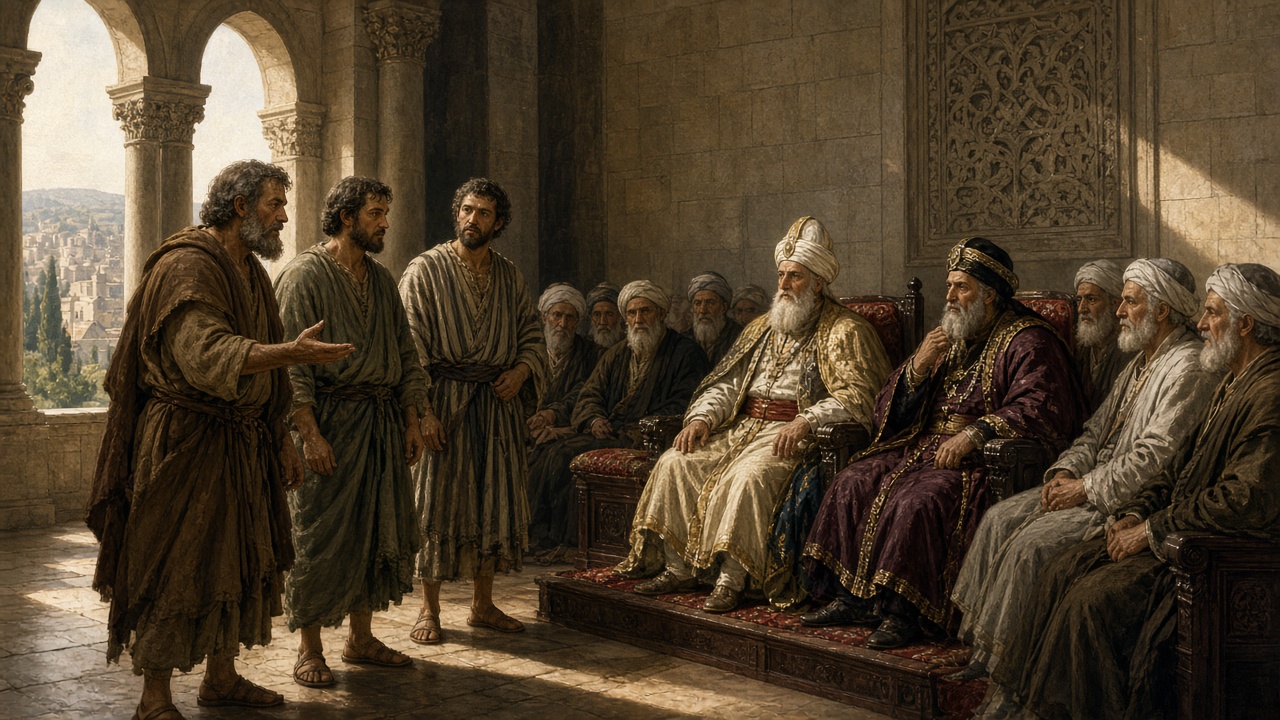
Pedro e João diante do Sinédrio
- Os sacerdotes, o capitão da guarda do templo e os saduceus prenderam Pedro e João porque eles ensinavam o povo e anunciavam em Jesus a ressurreição dos mortos. Caifás, que participou da assembleia no dia seguinte, pertencia aos saduceus.Fontes: o próprio texto bíblico · Caiaphas
- Anás, chamado aqui de sumo sacerdote, ocupou esse cargo de 7 a 14 d.C., até que um procurador romano o depôs. Caifás, que havia se casado com a filha de Anás, foi elevado ao cargo em 25 d.C.; mesmo assim, alguns judeus ainda podiam considerar Anás o sumo sacerdote legal, pois a lei mosaica tratava o ofício como vitalício, e Anás provavelmente era presidente ou auxiliar do Sinédrio. João e Alexandre, parentes do sumo sacerdote e de outro modo desconhecidos, estavam sentados com eles.Fontes: o próprio texto bíblico · Annas · John (Relative of the High Priest) · Alexander (Son of Simon)
- Pedro, pescador de Betsaida, e João, também pescador e filho de Zebedeu, foram levados perante os governantes, os anciãos e os escribas. O conselho admirou-se da ousadia deles ao perceber que eram homens sem instrução e comuns, e notou que haviam estado com Jesus.Fontes: o próprio texto bíblico · Simon Peter · John the Apostle
Notas escritas com auxílio de IA a partir de fontes abertas (Theographic Bible Metadata, CC BY-SA 4.0; Easton’s Bible Dictionary, domínio público) e revisadas antes de publicar.
Lugares deste capítulo
- Jerusalem · 31.777, 35.234 · versículos 5, 16
- Nazareth · 32.702, 35.298 · versículo 10
- Cyprus · 35.000, 33.000 · versículo 36
Só aparecem lugares com identificação de alta confiança (90% ou mais segundo as fontes acadêmicas reunidas pelo OpenBible). Mapa da época: DARE (Digital Atlas of the Roman Empire), CC BY 4.0; mapa atual: © colaboradores do OpenStreetMap; lugares: OpenBible.info (CC BY 4.0).
Créditos e licença desta tradução
Bibeli Gusunɔn Gari
The Holy Bible in the Baatonum language of Benin, also called the Bariba language
copyright © 2013 SIM
Language: Bariba (Baatonum)
Translation by: SIM International
Bariba, Bibeli Gusunɔn Gari
This translation, published by the UEEB/SIM au Benin, was published in 1996.
If you are interested in obtaining a printed copy, please contact the SIM at SIM, BP 15, Parakou, Benin.
This translation text is made available to you under the
terms of the Creative Commons License: Attribution-Noncommercial-No Derivative Works.
( http://creativecommons.org/licenses/by-nc-nd/3.0/ )
In addition, you have permission to port the text to different file formats, as long as you
do not change any of the text or punctuation of the Bible.
You may share, copy, distribute, transmit, and extract portions
or quotations from this work, provided that you include the above copyright
information:
You must give Attribution to the work.
You do not sell this work for a profit.
You do not make any derivative works that change any of the actual words or punctuation of the Scriptures.
Permissions beyond the scope of this license may be
available if you contact
us with your request.
This translation is made available to you under the terms of the
Creative Commons Attribution-Noncommercial-No Derivatives license 4.0.
You may share and redistribute this Bible translation or extracts from it in any format, provided that:
You include the above copyright and source information.
You do not sell this work for a profit.
You do not change any of the words or punctuation of the Scriptures.
Pictures included with Scriptures and other documents on this site are licensed just for use with those Scriptures and documents.
For other uses, please contact the respective copyright owners.
2014-09-10
Fonte: http://ebible.org/bba/ · eBible.org