Salmos 120
Azərbaycan dilində Müqəddəs Kitab · Toque num versículo para ver as referências cruzadas.
Məzmur 120
Ziyarət nəğməsi.
1Dar gündə Rəbbi səslədim,
O mənə cavab verdi.
2Dedim: «Ya Rəbb, yalançı dodaqlardan,
Fitnəkar dillərdən canımı qurtar».
3Ey fitnəkar dil, sənə nə veriləcək?
Bu işinin əvəzi nə ilə ödəniləcək?
4Cəngavərin iti oxları ilə,
Süpürgə ağacının odlu közləri ilə!
5Yazıq canım, Meşekdə qərib olmuşam,
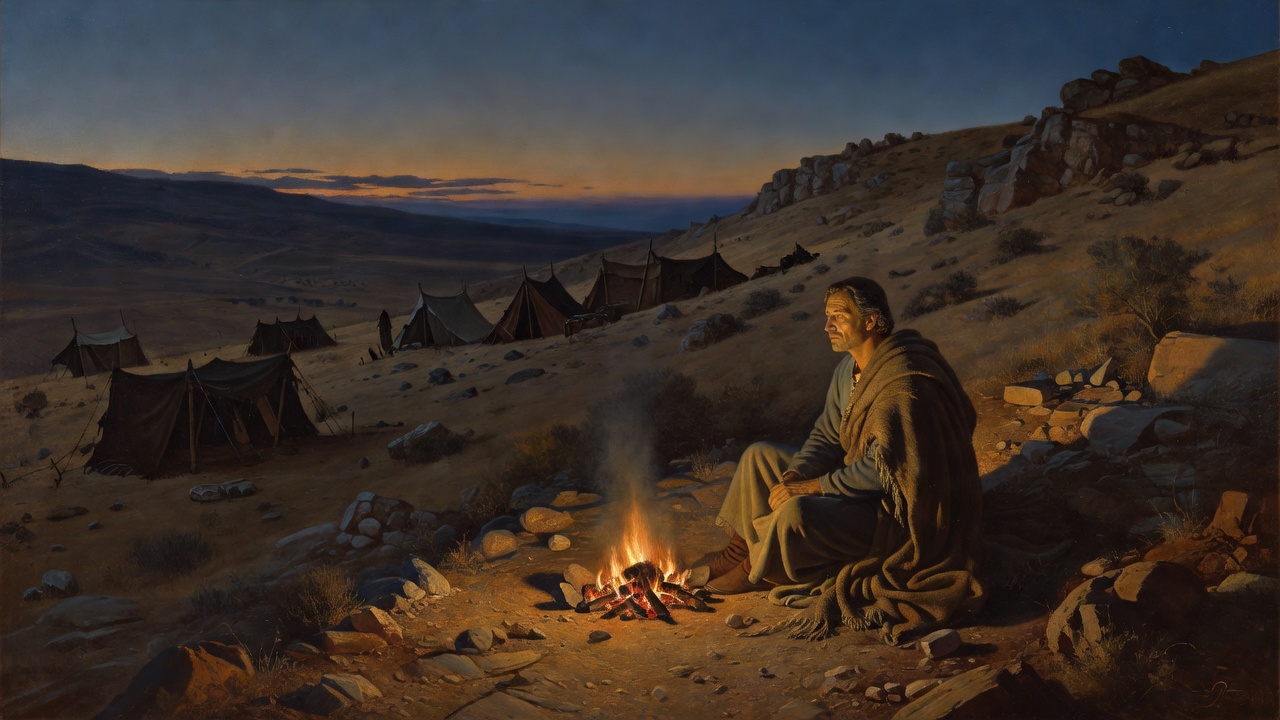
Qedar çadırlarında yaşayıram!
6Mənim belə yerdə,
Sülhə nifrət edənlərin içində yaşamağım bəsdir.
7Mən sülh sevirəm, buna görə danışıram,
Onlarsa müharibə üçün çalışır.
Você sabia?
Um clamor por paz no exílio
- O Salmo 120 inicia a série de quinze "cânticos de peregrinação" (ou de subidas), começando com um clamor pessoal por libertação de lábios mentirosos e de um ambiente hostil.Fontes: o próprio texto bíblico
- O salmista lamenta habitar em Meseque e entre as tendas de Quedar. Meseque associava-se a povos do norte perto dos mares Negro e Cáspio, enquanto Quedar referia-se a tribos nômades que viviam em tendas pretas no noroeste da Arábia; juntos, simbolizam terras distantes e estrangeiras, longe da comunidade de adoração.Fontes: Meshech · Kedar · o próprio texto bíblico
Notas escritas com auxílio de IA a partir de fontes abertas (Theographic Bible Metadata, CC BY-SA 4.0; Easton’s Bible Dictionary, domínio público) e revisadas antes de publicar.
Lugares deste capítulo
- Jerusalem · 31.777, 35.234 · versículo 1
- Kedar · 29.811, 39.868 · versículo 5
- Meshech · Hoje: about 200 km around Gordion · 39.655, 31.994 · versículo 5
Só aparecem lugares com identificação de alta confiança (90% ou mais segundo as fontes acadêmicas reunidas pelo OpenBible). Mapa da época: DARE (Digital Atlas of the Roman Empire), CC BY 4.0; mapa atual: © colaboradores do OpenStreetMap; lugares: OpenBible.info (CC BY 4.0).
Créditos e licença desta tradução
Azərbaycan dilində Müqəddəs Kitab
The Holy Bible in the Azerbaijani language, also known as the Azeri language, of Azerbaijan, Iran, Iraq, Syria, and Turkey
Copyright © 2008 Müqəddəs Kitab Sirkəti
Language: Azeri (Azerbaijani, South)
Translation by: Institute for Bible Translation
Contributor: Bible Society of Azerbaijan
This translation text is made available to you under the
terms of the Creative Commons License: Attribution-Noncommercial-No Derivative Works.
( http://creativecommons.org/licenses/by-nc-nd/3.0/ )
In addition, you have permission to port the text to different file formats, as long as you
do not change any of the text or punctuation of the Bible.
You may share, copy, distribute, transmit, and extract portions
or quotations from this work, provided that you include the above copyright
information:
You must give Attribution to the work.
You do not sell this work for a profit.
You do not make any derivative works that change any of the actual words or punctuation of the Scriptures.
Permissions beyond the scope of this license may be
available if you contact
us with your request.
This translation is made available to you under the terms of the
Creative Commons Attribution-Noncommercial-No Derivatives license 4.0.
You may share and redistribute this Bible translation or extracts from it in any format, provided that:
You include the above copyright and source information.
You do not sell this work for a profit.
You do not change any of the words or punctuation of the Scriptures.
Pictures included with Scriptures and other documents on this site are licensed just for use with those Scriptures and documents.
For other uses, please contact the respective copyright owners.
2018-11-09
Fonte: http://ebible.org/azb/ · eBible.org