Jó 17
Azərbaycan dilində Müqəddəs Kitab · Toque num versículo para ver as referências cruzadas.
1Taqətim kəsilir, günlərim batır,
Məni məzar gözləyir.
2Həqiqətən, ətrafıma rişxəndçilər yığılır,
Gözüm onların düşmənçiliyini görür.
3Ey Allah, Öz hüzurunda mənə zəmanət ver.
Başqa kim var ki, mənə zamin dursun?
4Çünki onların qəlbini anlayış üçün bağladın,
Ona görə onlara zəfər qazandırmayacaqsan.
5Pul üçün dostlarını satanın
Övladlarının işığı sönəcək.
6Allah məni insanların dilinə saldı,
Üzümə tüpürdülər.
7Gözümün nuru kədərdən qaraldı,
Bütün əzalarım kölgə kimi qaldı.
8Buna əməlisaleh insanlar mat qalıb,
Günahsızlar allahsızlara qarşı çıxır.
9Saleh insanlar öz yolunu tutur,
Əlitəmiz olanlar getdikcə güclənir.
10Amma hamınız qayıdıb gəlsəniz,
Aranızdan bir hikmətli insan tapmaram.
11Günlərim ötüşdü,
Fikirlərim, arzularım pərən-pərən düşdü.
12Onlar gecəni gündüzə çevirir,
“Zülmətə işıq yaxındır” deyir.
13Əgər ölülər diyarını evimdir deyə gözləsəm,
Yatağımı qaranlıqda sərsəm,
14Qəbirə “atam sənsən”,
Qurda “anam-bacım sənsən” desəm,
15Ümidim hara gedər?
Mənim ümidimi kim görər?
16Ümid mənimlə ölülər diyarınamı düşər?
Mənimlə birgə torpaq altınamı girər?»
Você sabia?
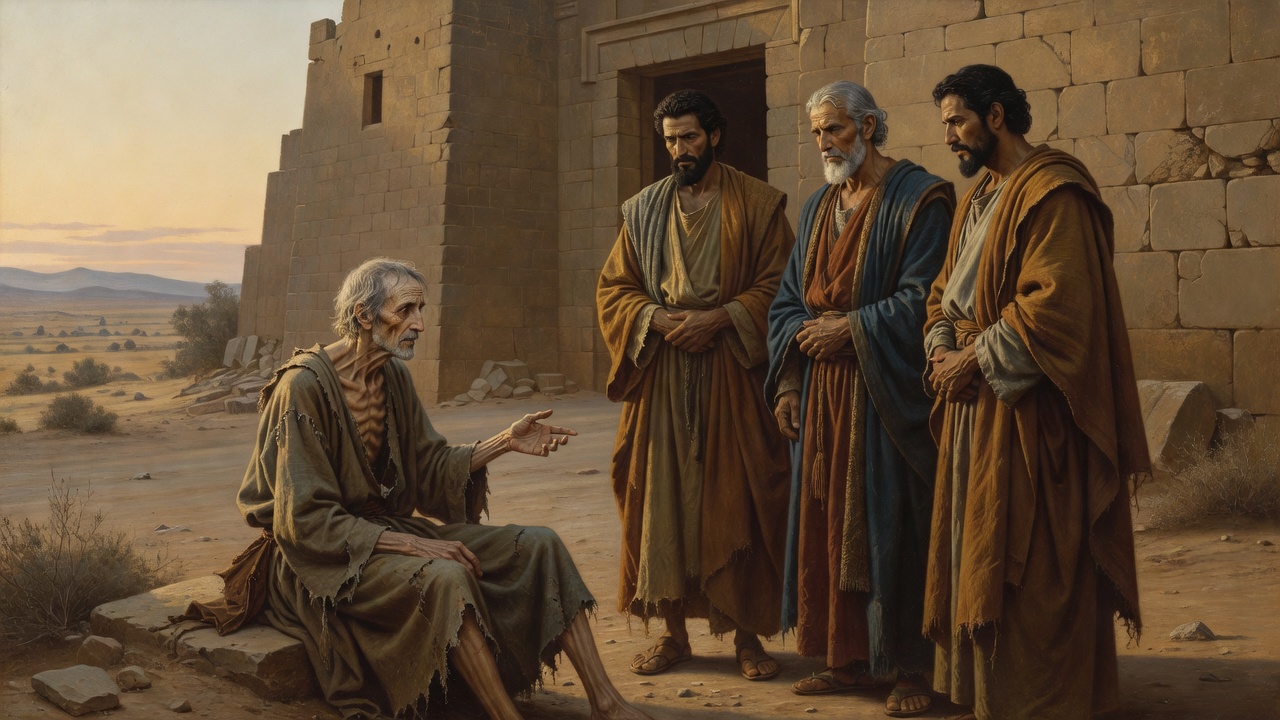
O Desespero de Jó e a Perspectiva da Sepultura
- Jó apela diretamente a Deus para que seja seu fiador. Na prática jurídica antiga, um fiador assumia a responsabilidade por alguém acusado ou endividado, e Jó não encontrava nenhum aliado humano disposto a defendê-lo.Fontes: o próprio texto bíblico
- Jó descreve a si mesmo como tendo se tornado um provérbio entre o povo, uma condição em que o sofrimento de alguém se transforma em objeto de zombaria pública, desprezo e alerta proverbial.Fontes: o próprio texto bíblico
- Em sua dor, Jó fala do mundo dos mortos (o Seol) e da sepultura como seu único lar restante, adotando metaforicamente a corrupção e os vermes como seus familiares mais próximos.Fontes: o próprio texto bíblico
Notas escritas com auxílio de IA a partir de fontes abertas (Theographic Bible Metadata, CC BY-SA 4.0; Easton’s Bible Dictionary, domínio público) e revisadas antes de publicar.
Créditos e licença desta tradução
Azərbaycan dilində Müqəddəs Kitab
The Holy Bible in the Azerbaijani language, also known as the Azeri language, of Azerbaijan, Iran, Iraq, Syria, and Turkey
Copyright © 2008 Müqəddəs Kitab Sirkəti
Language: Azeri (Azerbaijani, South)
Translation by: Institute for Bible Translation
Contributor: Bible Society of Azerbaijan
This translation text is made available to you under the
terms of the Creative Commons License: Attribution-Noncommercial-No Derivative Works.
( http://creativecommons.org/licenses/by-nc-nd/3.0/ )
In addition, you have permission to port the text to different file formats, as long as you
do not change any of the text or punctuation of the Bible.
You may share, copy, distribute, transmit, and extract portions
or quotations from this work, provided that you include the above copyright
information:
You must give Attribution to the work.
You do not sell this work for a profit.
You do not make any derivative works that change any of the actual words or punctuation of the Scriptures.
Permissions beyond the scope of this license may be
available if you contact
us with your request.
This translation is made available to you under the terms of the
Creative Commons Attribution-Noncommercial-No Derivatives license 4.0.
You may share and redistribute this Bible translation or extracts from it in any format, provided that:
You include the above copyright and source information.
You do not sell this work for a profit.
You do not change any of the words or punctuation of the Scriptures.
Pictures included with Scriptures and other documents on this site are licensed just for use with those Scriptures and documents.
For other uses, please contact the respective copyright owners.
2018-11-09
Fonte: http://ebible.org/azb/ · eBible.org