2 Coríntios 8
Manikáne O Ehwehne · Toque num versículo para ver as referências cruzadas.
Sísa tagaríáh ké séhréh aritagéhboq móne soruparáhro i ehwéhne.
1Néne iyahnabo anímáríno, Manikánka Másérónía marákórápéqté Sísa tagaríáh kéyábé sirutaboiréna séhréh arítárái ehwéh teiníe. 2Anotah íre kaweq sunúq káráitaq Másérónía marákórápéqté ké áhnte tabónáhéra sirupipeq íre umehia peh eyoyóéra sega mó Sísa tagaríáh ké séhréh aritageheéra áhnte moné soruparowe.
3Minayabe teiníboq írátíáhro. Sega moke nárieráhi naneq náríátówe. Seyega iwíáhue áhnte mónkakáq pehipi náríátówe.
4Sega Súría marákórápéqté Sísa tagaríáh ké séhréh aritaneheqmúne íwíáhéra itensabé, Ite séhréh aritanéhe éra itega sorupóna moné meyáhro págegeue teiátówe. 5Teiátówana ínéga iwíáhéna, Peh móne nárigéhe íwíáhurauge. Iwíáhuraugara téhwe Maniká itene Wahnahnsabé sirutaboiréra sinonka náwéra wega awahbeh sansá sehgiera anehemé móne náwátówe. Manikánka iwíáh aritowara ite moq irutaboiraitárówe.
6Menah Táításaga náwe sansá ite Kórína ke íwáhnoruraire. Íwáhnorurainsabé ínéga wensabé, Kórína kegá moq mina irútábóri sansá kawerue sehgigeheéna minayabe moke síwáhnoré séhréh arito éna teawátáuge. 7Itega moke mirao sansá aiq kawerue miraowe. Itega Manikánsabe anotahtaq aiq pútare atáhwe. Wene ehweh teri terinoneheéq kawerue arambehriurowe. Itewe ahtebia ké méq Manikáne arambehri kawerue miraowe. Ínénsabe irutaboiraintáhwe. Itega moke mó arámbéhrí kawerue mira onserah itewe iwíáhue tagéq itene móne Maniká náwenéhe íwíáhoro.
8Minayabe miraoro éhwéh íre aitóge. Másérónía kegá nárie sansansábé teiúge. Sega sirutaboiraritera náríénserah itega moq irutaboirariteq nárigéhe íwíáhuge. Mó keyábé aiq pútaq irutaboirowapómo ite taganeheéna mah ehwéh teiúge. 9Itene Wahnah Sísa Karáhéga íópeq áhnte kaweq naneq matiorabeq suena ite kaweraitanieéna mah marákóípéq tuména tabonah ani míowe. Wega miraúnka itega áhnte kaweq naneq meyahráhúne. Meyahráhúnayabé wega séhréh aitéh sánsámé tagarione.
10Mahra íwíáhunsabé móne sorupé ehwéh teiníe. Itega inokáh opéq mi arámbéhrí áhwárarowe. Itega mi arámbéhrí pehipi íre áhwárareq téhwe miraoneheqmúne íwíáhéq áhwárarowe. 11Minayabe amahnága mi arámbéhrí parabarúáhro. Itega áhwárarotaq iwíáhuronserahnéq náweráho moné soruqparáhro.
12Wehukenínká náwiníe íwíáh kahnaraqmé minawé Maniká awahbeh sansáne. Manikánka itega íre matíáh náneqsabé náníéro aitehro? Írakaumo. Peh morá matíáh náneq náweráhowe. Manikánka peh morá itega náweráho naneq iwíáhéna itega náwíra naneq tagéna kawerowe aitéhre.
13Mó ke kaweqtaq míéhraq ite tabonah ke míageheéna mah ehwéh teiugo? Írakaumo. Ite ómi monseráhnue awehraq matiageheéna teiúge. 14Amahnága áhnte moné matíáh púaq móbeqte tábónáh ké séhréh aritagéhe. Mókake ite tabonahirataq se áhnte matíéhrataqmé sega ite séhréh aitagéhe. Mirairataq itewe íre tabonah ke míaneheqmóe. 15Minayabe Manikáne ehwehnka aiq mahraréna,
Mi topáh áhnte meyáh kégá arahq íre máráhwe. Pehgáriq meyáh kégá awehraq matíáhwe ire. (Kisim Bek 16.18)
Poraga wehuke Kórína suwahpeq eqmaro ehwéhne.
16Manikánka Táítása iwíáh atáráirana ínéga ite séhréh aitaníe íwíáhunserah Táításaga moq mira íwíáhire. Manikánka mi iwíáh atáráinsabé wensabé iwíáh íwíáh atóge. 17Táításaga néne ehweh irena iwíáh íwíáhuraire. Íre ínéga pagu pagunuraunsabé peh wewega ite, Koséhréh aitanauge íwíáhéna iteba sinie ire.
18Mó anínká mó kehiná suwahpeq mó kehiná suwahperue nogena Manikáne kaweq ehwéh teri terinúwara mibeqté Sísa tagaríáh kégá irera, Kaweq ehwéh tei teini aní míre atáhwe. Mi aní iteba eqmarahnana wega Táítása kérankéhe. 19Sísa tagaríáh kégá mi aní omaq atera ínéreq ínéba míáh kéreq moráráq nowe arambehriinkeheéra eqmatowe. Maniká itene Wahnahnsabé iwíáh íwíáh atageheéq mah kawéq árámbéhríúne. Sísa tagaríáh tábónáh ké séhréh aitanéhe íwíáhúwara mó kegá mina tagagehe.
20Mó kegá iwíáhéra, Itega náríra naneq íre kawerue wahnahnowe íwíáhiyeho éq mó aní eqmarahnana wega moq mina náríra naneq wahnahninkehe. 21Íre peh morá Maniká itene Wahnahnka tagaríéhtáq kaweq sansánonehe. Wehukega tagahtaqkákáq kaweq sansánonaraq tagagehe.
22Itega kaweq sansánowe íwíáhigeheéq mó aní eqmaranéhe. Mi anínká métáq iraru aníté kérirankeheéq eqmaranéhe. Mó arámbéhrí mó arámbéhríue awena tagaraugana wega aiq kawerue arambehriuraire. Kawerue arambehriéna, Itega Sísane sánsá kawerue sehgioneheqmóe íwíáhinsabé ite koséhréh aitaníe íwíáhinsabé iteba eqmaranéhe.
23Táításawe ite tagaríáhwe. Ite séhréh aitayeheéta arambehriúye. We kéróya anítéwé Sísa tagaríáh kégá aiq omaq sitówara mó kegá Sísa Karáhénsabe iwíáh íwíáh atageheéra sega kawerue arambehriigehe. 24Itega mi keyábé irutaboirariteq séhréh arítáhro. Mirairataq móbeqte Sísa tagaríáh kégá mina irera néne ehweh aiq pútare aintagéhe. Itega kaweq sansáno ke wóe irarurauwara mi ehwéhnsábé aiq pútare aintagéhe.
Você sabia?
Generosidade e a coleta para Jerusalém
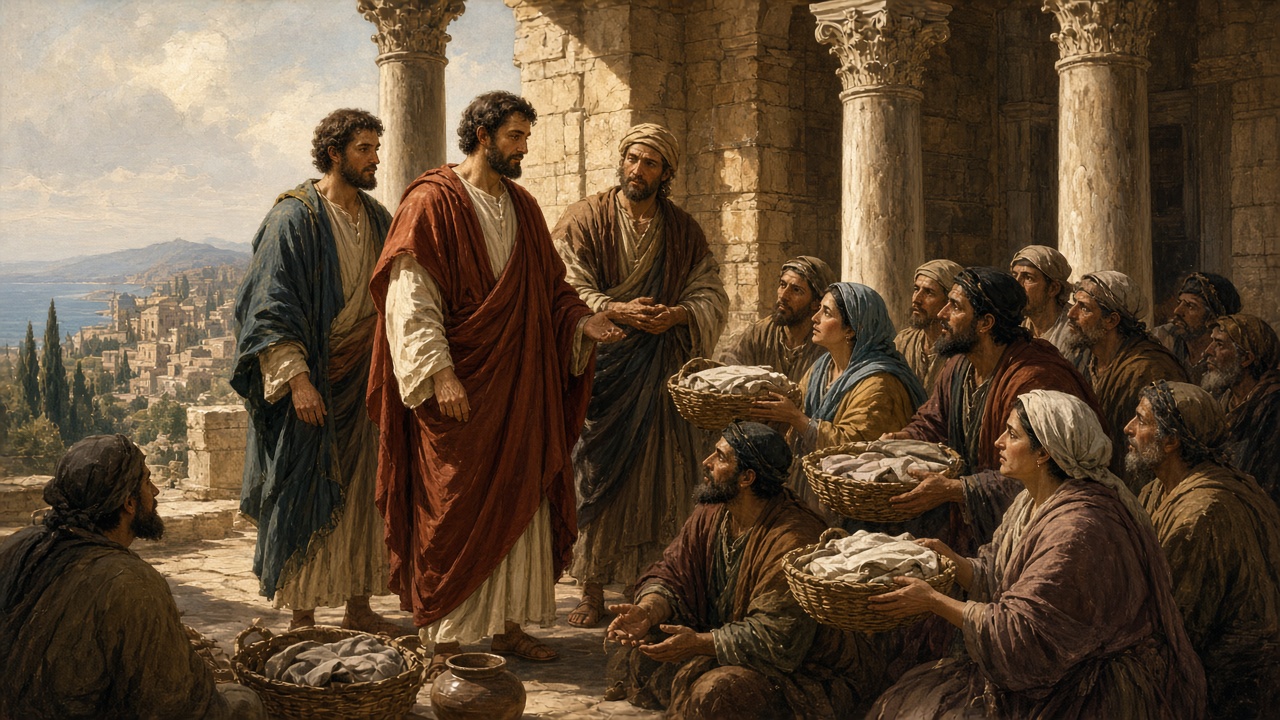
- Nos tempos do Novo Testamento, a Macedônia era uma província romana ao norte da Grécia. Paulo foi chamado pela visão de um homem da Macedônia para pregar o evangelho ali, e este capítulo conta aos coríntios como aquelas igrejas, numa terrível provação e em profunda pobreza, deram com alegria e até além do que podiam.Fontes: Macedonia · o próprio texto bíblico
- Tito, cujo nome não aparece em Atos, parece ter sido um gentio dedicado sobretudo a ministrar aos gentios. De Éfeso, Paulo o enviou a Corinto para encaminhar as contribuições da igreja em favor dos santos pobres de Jerusalém; neste capítulo, Paulo o exorta a concluir essa obra, e Tito vem com entusiasmo, por iniciativa própria.Fontes: Titus · o próprio texto bíblico
- Junto com Tito, Paulo envia um irmão elogiado por todas as igrejas por seu trabalho no evangelho e escolhido por elas para acompanhar a oferta, e outro irmão cujo empenho já foi provado muitas vezes e de muitos modos. Ele explica que esse cuidado visa evitar críticas à maneira de administrar o generoso donativo, para que façam o que é certo não só aos olhos do Senhor, mas também aos olhos das outras pessoas.Fontes: o próprio texto bíblico
Notas escritas com auxílio de IA a partir de fontes abertas (Theographic Bible Metadata, CC BY-SA 4.0; Easton’s Bible Dictionary, domínio público) e revisadas antes de publicar.
Lugares deste capítulo
Só aparecem lugares com identificação de alta confiança (90% ou mais segundo as fontes acadêmicas reunidas pelo OpenBible). Mapa da época: DARE (Digital Atlas of the Roman Empire), CC BY 4.0; mapa atual: © colaboradores do OpenStreetMap; lugares: OpenBible.info (CC BY 4.0).
Créditos e licença desta tradução
Manikáne O Ehwehne
God's New Talk: The New Testament in the Awa Language of Papua New Guinea
Nupela Testamen long tokples Awa long Niugini
copyright © 1974, 1997 Wycliffe Bible Translators, Inc.
℗ Faith Comes by Hearing
Language: Awa
Translation by: Wycliffe Bible Translators
This translation is made available to you under the terms of the
Creative Commons Attribution-Noncommercial-No Derivatives license 4.0.
You may share and redistribute this Bible translation or extracts from it in any format, provided that:
You include the above copyright and source information.
You do not sell this work for a profit.
You do not change any of the words or punctuation of the Scriptures.
Pictures included with Scriptures and other documents on this site are licensed just for use with those Scriptures and documents.
For other uses, please contact the respective copyright owners.
2013-12-11
Fonte: http://png.bible/awb/ · eBible.org