Apocalipse 6
Ebe-No-Pfuasẹ Ishobọ Onogbọ · Toque num versículo para ver as referências cruzadas.
Eni ẹruẹli
1Mhi tọkpẹ bino abi ọni Omi Osumha ọ rọ maghiẹ ẹruẹli onododẹ elemhi eni ẹruẹli ishilua-a. Mhi suọ khi ọghuo eni elamhakọ eghọ o ngme abi uruli akphala, ọọ li, “Bhale!” 2Mhi bino, ghe achi ọpfopfo odalo oyẹmhẹ khẹ! Ọmọse ni ọ nga li ọ mu usheli mhuẹ, a ri arula oghie na li, ọ nga ọni achi ya fiẹ abi ọkhọli-okhuẹ ni ọ khọli mu ọ le ni ọ gbo vu ya khọli mu ọ le.
3Abi ọni Omi Osumha ọ rọ maghiẹ ẹruẹli onuzi-eva-a, mhi suọ khi ẹlamhakọ ọnuzava ọ ngme, ọọ li, “Bhale!” 4Mhi mẹ khi achi ọlese ni ọọ yilẹ nyọghọ ọ fiẹ lasele. A ri afu na ọni ọ nga li ni ọ rọ rue opfọmhẹ ekẹ agbọ-a, ni ọ rọ ri ẹgbọ ke gbolo egbe wẹ-a. A ri ọgbhọrọ oniẹmhi na li.
5Abi ọni Omi Osumha ọ rọ maghiẹ ẹruẹli onuzi-esẹ-a, mhi suọ khi ẹlamhakọ ọnuzi-aasẹ ọ ngme, ọọ li, “Bhale!” Mhi bino, ghe achi ọbishi odalo oyẹmhẹ khẹ! Ọni ọ nga li ọ mu emini a rọ ọ mhẹsẹ ukhọmhi oyi emhi. Emini a rọ mhẹsẹ ukhọmhi oyi emhi|src="hk00156c.tif" size="col" loc="REV 6.5" copy="TIF" ref="6.5" 6Mhi suọ khi emini o li abi uruli o la elemhi ifuabọ oyi eni elamhakọ aane eghọ ngme, ọọ liẹ, “Ifata ogbẹlẹghuo a ri ago oghuo oyi ado ẹ dẹ, idiakpala esẹ oyi ọakpa, o li migha shi ifata ogbẹlẹghuo. Khi yese oili olivu-a ali onyọ!”
7Abi ọni Omi Osumha ọ rọ maghiẹ ẹruẹli onuzi-ene-a, mhi suọ khi uruli oyi ẹlamhakọ ọnuzi-aane ọọ li, “Bhale!” 8Ighọ mhi mẹ achi ni ọ li abi ọni ọ ya ghu-a. Ọni ọ nga li a lui Eghuli, ali eghiele ilimhi oo deba li udidi, a ri afu na wẹ ni e rọ ri ọgbhọrọ ali okiamhi ali ighuamhi ali elamhakọ okhẹna gbolo ẹgbọ iku akemhishi asha ene ẹgbọ na ekẹ agbọ-a.
9Abi ọni Omi Osumha ọ rọ maghiẹ ẹruẹli onuzi-ishe-a, mhi mẹ iyẹmhẹ eyi ẹgbọ na gbolo-a irari ungmemhi oyi Ẹshinẹgba ali ọtsẹlẹ ni e mu mhuẹ ufui oni atẹtẹ. 10Ee viẹ leghe, e liẹ, “Ọnọmhuẹ ni ọ khi ọna ipfuasẹ ali igẹsikia, ẹghẹghẹ onoghuo u rọ ya gue ẹgbọ na agbọ ẹzọ, ni u rọ ya ye okhuẹ ọlia eyi anye obọ oyẹwẹ na anye?” 11Ẹghẹghẹ aghọ, a ri itsua epfopfo na wẹ. A gueyẹ wẹ e migha ne ukuku ọ, ramhi ẹghẹghẹ ni eni ẹẹ ga nabi wẹwẹ etuangmẹ ni a nono ni a li gbolo-a e rọ ya gba. Ẹzẹzẹ abi a li gbolo wẹwẹ-a.
12Mhi bino abi ọ li khueghie ẹruẹli onuzi-esesa-a. Ukpokpomhi ekẹ o kuluẹ. Ovọ o bishi-a abi ode abuma ni a ri iriria ẹlamhi do. Uki nya o yilẹ-a abi ọlia. 13Ikpẹtata na idane e deno kule ekẹ abi ikpamhi ọkhua-eni ni ẹa yilẹ ne e liẹ de kule ini akpekpeli ni o ze o jighise wẹ. 14Irarogbe o khili odẹ-a abi a liẹ khili ighẹlẹ ekẹ-a. Ite nya ali ekẹ ni e la iteva okẹ, a rue wẹ ashini e la le.
15Ẹghẹghẹ aghọ, ighie na ekẹ agbọ ali ekhẹmhuẹ ali idenọmọ okhọli ali eni e mhọli ẹpfue ali eni e mhọli ekpabọ ali ọgbọkpa ali ighumha ali eni ẹa khi ighumha, e na ya sheli ifui irui ali echẹ na ite. 16Ee viẹ lu ite ali echẹ eniẹmhi, e liẹ wẹ, “A de mu anye ni a ri anye sheli ẹloe oyi ọni ọ shitọ oni ukpẹkhomhi oghie ali ofu oyi ọni Omi Osumha! 17Irari khi ogbẹlẹ ofu oniẹmhi oyi Ẹshinẹgba o she ramhi ni o rọ ya tiemhile shi wẹ ọ, ọghuo ọ dobẹ ya migha?”
Você sabia?
A Abertura dos Seis Selos
- Os primeiros quatro selos revelam quatro cavaleiros em cavalos branco, vermelho brilhante, preto e amarelo, convocados um a um pelos quatro seres viventes. Cada cavaleiro traz uma aflição distinta sobre a terra, desde a conquista e a retirada da paz até a fome generalizada, a peste e a morte.Fontes: o próprio texto bíblico
- O terceiro cavaleiro segura uma balança, acompanhado por uma proclamação que fixa o preço de uma medida de trigo ou três de cevada em um denário, refletindo uma grave escassez e racionamento de alimentos enquanto o azeite e o vinho são poupados.Fontes: o próprio texto bíblico
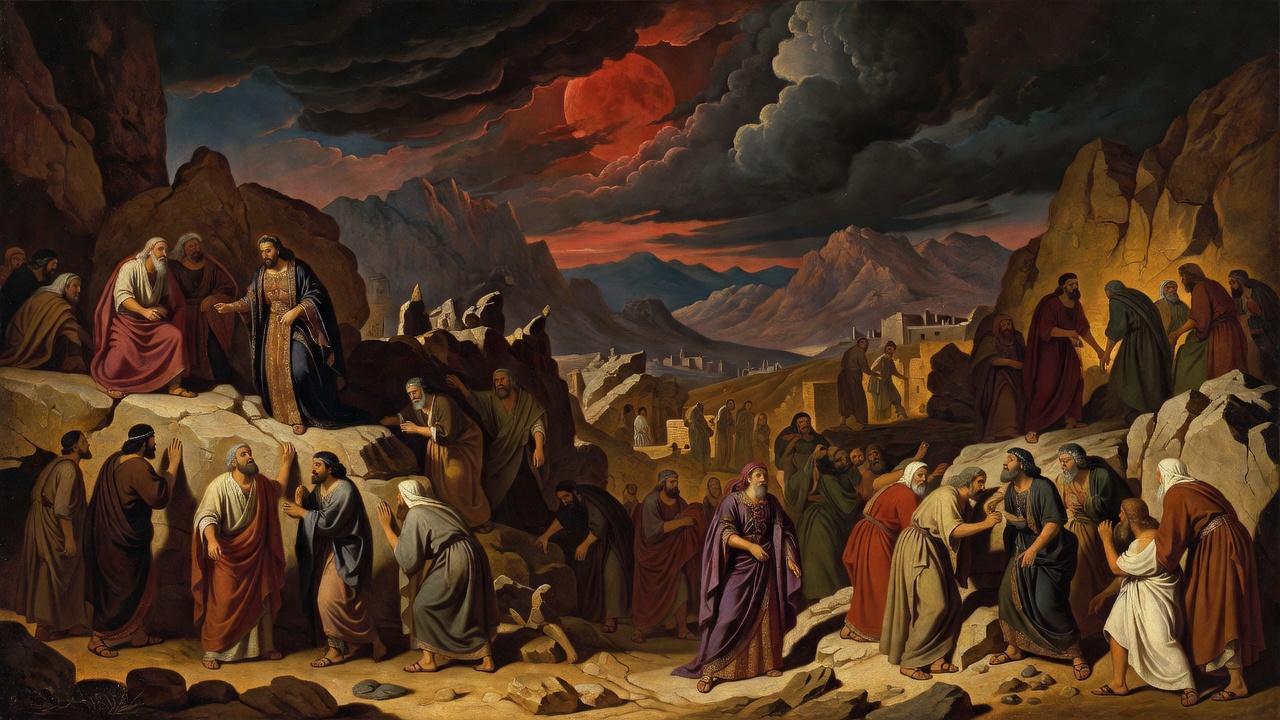
- Com a abertura do quinto e do sexto selos, o foco se volta para as almas dos mártires debaixo do altar e, em seguida, para imensas convulsões cósmicas e terrestres que levam pessoas de todas as classes sociais a se esconderem em cavernas nas montanhas.Fontes: o próprio texto bíblico
Notas escritas com auxílio de IA a partir de fontes abertas (Theographic Bible Metadata, CC BY-SA 4.0; Easton’s Bible Dictionary, domínio público) e revisadas antes de publicar.
Créditos e licença desta tradução
Ebe-No-Pfuasẹ Ishobọ Onogbọ
New Testament in Ivbie North-Okpela-Arhe (NI:atg:Ivbie North-Okpela-Arhe)
copyright © 2012 Wycliffe Bible Translators, Inc.
Language: Ivbie North-Okpela-Arhe
Translation by: Wycliffe Bible Translators, Inc.
Copyright Information
© 2012, Wycliffe Bible Translators, Inc. All rights reserved.
This translation text is made available to you under the
terms of the Creative Commons License: Attribution-Noncommercial-No Derivative Works.
( http://creativecommons.org/licenses/by-nc-nd/3.0/ )
In addition, you have permission to port the text to different file formats, as long as you
do not change any of the text or punctuation of the Bible.
You may share, copy, distribute, transmit, and extract portions
or quotations from this work, provided that you include the above copyright
information:
You must give Attribution to the work.
You do not sell this work for a profit.
You do not make any derivative works that change any of the actual words or punctuation of the Scriptures.
Permissions beyond the scope of this license may be
available if you contact
us with your request.
Printed book ISBN 9789789194797
The New Testament
in Ivbie North-Okpela-Arhe
© 2012, Wycliffe Bible Translators, Inc. All rights reserved.
This translation is made available to you under the terms of the
Creative Commons Attribution-Noncommercial-No Derivatives license 4.0.
You may share and redistribute this Bible translation or extracts from it in any format, provided that:
You include the above copyright and source information.
You do not sell this work for a profit.
You do not change any of the words or punctuation of the Scriptures.
Pictures included with Scriptures and other documents on this site are licensed just for use with those Scriptures and documents.
For other uses, please contact the respective copyright owners.
2019-08-09
Fonte: http://ebible.org/atgNT/ · eBible.org