Salmos 144
Cishingini Agwara Kambari [asg] · Toque num versículo para ver as referências cruzadas.
Vishipa vu Dawuda.
1Ucikpi u Vuzavaguɗu a̱yi na wi
katali ke kusheɗeku ka̱ va̱
u piꞋisaka mu ta̱ vishili
ɗa u foɓusoi mu adama o kuvon,
2a̱yi ɗa Ka̱shile macigi ma̱ va̱ n ke ere ka̱ va̱
mashilya ma̱ va̱ n kawawi ka̱ va̱,
ma̱ra̱ga̱ ma̱ va̱ ma na
mi a̱ kula̱nsa̱ ubuta̱ u kusheɗeku wa̱ ni,
a̱yi ɗa u zuwai uduniyan o tsugono tsu va̱.
3Vuzavaguɗu, yayi vuma
ali ɗa vi a̱ kula̱na̱ yi?
Maku ma vuma, ali ɗa vi e kusheshe adama a̱ ni?
4Vuma wi ta̱ tsu ayinviki
ayin a̱ ni a kulaza tsu kulu.
5Vuzavaguɗu ɓa̱yuwa̱ gaɗi ka̱ta̱ vu cipa̱,
saꞋawa nsansa i ta̱ a kuyaꞋan ka̱nga̱.
6Zuwa kutashi ku ulaɗi u nu
ku wacuwa irala i nu,
taku ayaꞋa a̱ nu vu zuwa le a wacuwa n ilaɗi.
7Ba̱rukpa̱ kukiye ku nu ɗe gaɗi,
vu uta̱ka̱ mu a̱ mini u uga̱vi,
vu isa mu e ekiye omoci.
8Aza a na una̱ u le
u tsu dansa ukuna u mayun ba,
a ci yaꞋan ta̱ akucina aꞋuwa. 9Ka̱shile ka̱ va̱ mi ta̱
a kucanana vishipa vu savu wa̱ nu,
n umolu u aꞋin kupa,
mi ta̱ a kucanana ka wu ishipa i kucikpa,
10avu na vu ci neke ngono ulyaꞋi,
vuza na u wawai kagbashi ka̱ ni Dawuda.
o kotokobi ka munuka.
11Uta̱ka̱ mu, vi isa mu
e ekiye o omoci,
ele na a ci yaꞋan kucina aꞋuwa.
12Zuwa muku mo olobo n tsu
okpo tsu nɗanga n na
mi o kugbonguro gogoꞋo lo,
muku mu nkere n tsu mo okpo
tsa ashamkpatsu a na a yaꞋin
adama e kefeku ko mogono,
13Zuwa mpon n tsu n shana,
n ili ya ashina ra̱ka̱.
Zuwa nkyon n tsu n yimkpa,
ushiga a̱ a̱kpa̱n-a̱kpa̱n a shana,
a̱ ubuta̱ u kaguɓa u tsu.
14Zuwa anaka a̱ tsu a matsa n a̱bunda̱i,
ka̱ta̱ a̱tsuma̱ a̱ tsuwa̱n le ko a̱ puwa̱nka̱ ba,
ka̱ta̱ a pana ma̱shi ma̱
una̱mgbuka̱tsuma̱ wa̱ tsu ba.
15Aza a una̱singai a ɗa
ele na a̱ ciya̱i ka nampa ka
aza a una̱singai a ɗa uma a na Ka̱shile ke le kaꞋa Vuzavaguɗu.
Você sabia?
A oração de um rei por libertação e prosperidade
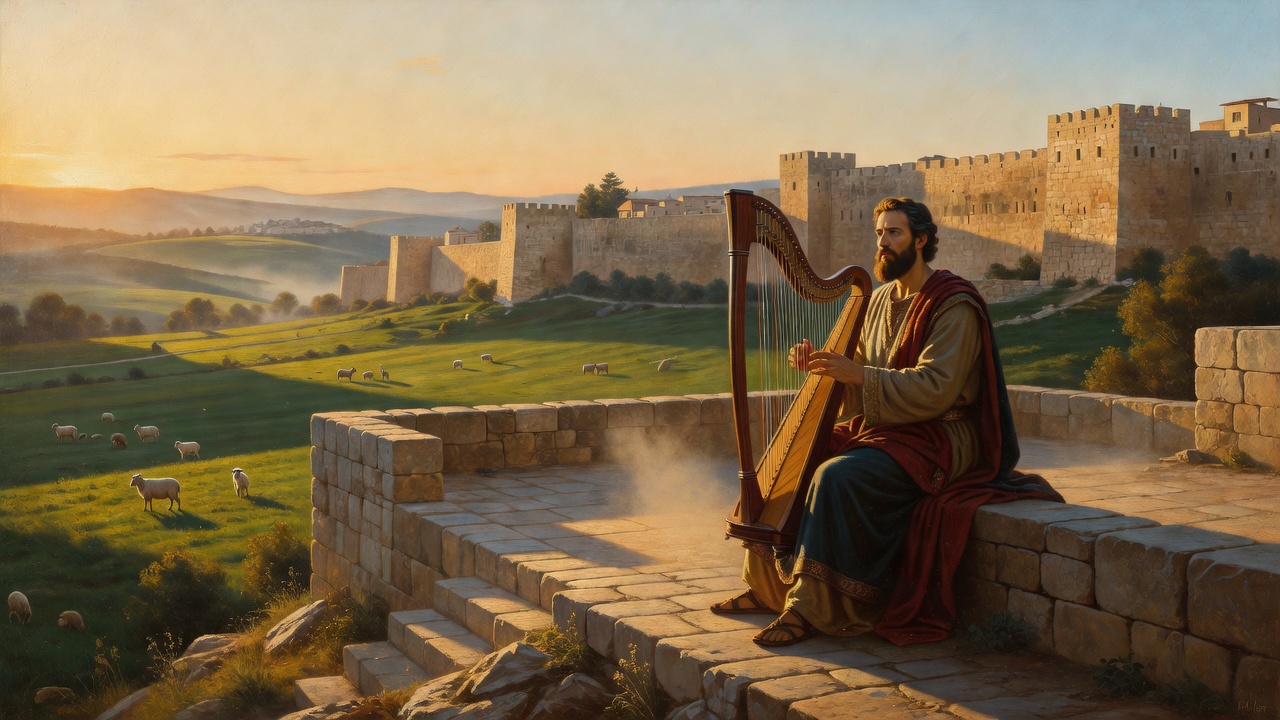
- O salmo é atribuído a Davi, que combina súplicas por libertação militar com louvor musical, prometendo cantar um cântico novo a Deus ao som de uma harpa de dez cordas.Fontes: David · o próprio texto bíblico
- O texto reflete sobre a fragilidade humana, descrevendo o homem como um sopro e a vida humana como uma sombra passageira em contraste com a majestade e o poder divinos.Fontes: o próprio texto bíblico
- A seção final vislumbra a segurança da comunidade e a fartura agrícola, pedindo filhos vigorosos, celeiros cheios, rebanhos que se multiplicam e cidades com muros intactos, livres de invasões ou cativeiro.Fontes: o próprio texto bíblico
Notas escritas com auxílio de IA a partir de fontes abertas (Theographic Bible Metadata, CC BY-SA 4.0; Easton’s Bible Dictionary, domínio público) e revisadas antes de publicar.
Créditos e licença desta tradução
Cishingini Agwara Kambari [asg]
Cishingini: Cishingini Agwara Kambari [asg] (Bible)
copyright © 2025 Language Development and Translation Initiative (LDTI)
Language: (Cishingini)
Contributor: The Seed Company
This translation is made available to you under the terms of the
Creative Commons Attribution Share-Alike license 4.0.
You have permission to share and redistribute this Bible translation in any format and to make reasonable revisions and adaptations of this translation, provided that:
You include the above copyright and source information.
If you make any changes to the text, you must indicate that you did so in a way that makes it clear that the original licensor is not necessarily endorsing your changes.
If you redistribute this text, you must distribute your contributions under the same license as the original.
Pictures included with Scriptures and other documents on this site are licensed just for use with those Scriptures and documents.
For other uses, please contact the respective copyright owners.
Note that in addition to the rules above, revising and adapting God's Word involves a great responsibility to be true to God's Word. See Revelation 22:18-19.
2025-07-09
Fonte: http://ebible.org/asg/ · eBible.org