Apocalipse 6
Ŋwɛ menomenyɛɛ́ mekɛ́ · Toque num versículo para ver as referências cruzadas.
Maá ɛgɔŋme abea malu ɛma ayi mbɛ ákéné né ŋwɛ ayi ápwiré
1Ndɛre mpɛlé, ngɛ nkane Maá ɛgɔŋme abea melu ɛma ɛwé mbɛ né geluɔge malu akénéama ayi adyɛɛ́ né ŋwɛ yimbɔ. Ne nwu meko menya ama né geluage menya ɛyi mebɛ ɛni, ndɛre ajɔɔ́ ne meko keŋké ɛké néfé aké, “Chwɔ we.” 2Mpɛge, ngɛ mpɔ mekagala pópó. Muú ayi ajwɔlé mfaá agbare ɛmbeé né ɛbwɔ ne áchyɛɛ́ ji ɛla gefwa ne akɛne ajyɛ ndɛre muú ayi ajyɛ mmyɛ mɛ ummyɛ apwɔ ne amage pwɔ nyɛ.
3Ne ji ábeagé melu ɛma ɛwe ɛgbeé malu apea nwu meko menya ayi agbeé menya ɛpea ndɛre ajɔɔ́ aké, “Chwɔ́ we.” 4Ajɔ́gé mbɔ, mpɔ mekagala megɛle atane achwɔ́. Ji achyɛɛ́ muú ayi ajwɔlé mfaá uto ne gekpɛkpɛgé aparanja mamfere nesɔ fa mme nnó bɔɔ́ ámmyɛge áwané atɛ.
5Ámá ábeagé melu ɛwé ɛgbeé malú alɛɛ́, nwu meko menya ayi agbeé menya ɛlɛɛ́, ndɛre ajɔɔ́ aké, “Chwɔ́ we.” Mpɛge, ngɛ mpɔ mekagala megíle ne muú ayi ajwɔlé mfaá agbare ɛlómé né ɛbwɔ. 6Nwú meko ayi alú ɛké meko muú ndɛre atane né geluagé menya yi mebɛ ɛyimbɔ ɛni ájɔɔ́ aké, “Ɛkpoko Flawa ɛma, ɛlú né ŋka utɔɔ́ bií uma ne makpoko barlɛ alɛɛ́ alú ntó ŋka utɔɔ́ bií uma. Ne ɔchɔge fɔ mbwɛ maweé ne mmɔɔ́.”
7Ne ji ámá ábeagé melu ɛma ɛwé ɛgbeé malu ani, nwú menya mebɛ ayi agbeé menya ɛni ndɛre ajɔɔ́ aké, “Chwɔ́ we.” 8Mpɛge, ngɛ mpɔ mekagala ayi ala bɛɛ́ ne muú ayi ajwɔlé né mfaá akamégé negbo. Ne muú ayifɔ, ayi akwɔle ji meso, akamege melɔ áwuú bɔɔ́. Áchyɛɛ́ ɛbwɔ́ uto nnó akare mme meko né malu aní, áwá bɔɔ́ né melu ɛma ne bee, mesa, ufɔɔ́ ufɔɔ́ mameé ne menyá ɛyi ɛpyɛɛ́ ɛfɔ.
9Maá ɛgɔŋme ábeagé melu ɛma ɛwé ɛgbeé malu ata, ngɛ né nteé geluɔ́gé upɛ Ɛsɔwɔ mandoó bɔɔ́ abi áwané gétúgé mekomejɔɔ́ Ɛsɔwɔ ayi ɛbwɔ́ ágaré. 10Ne mandoó bɔɔ́ Ɛsɔwɔ bimbɔ, ájɔɔ́ keŋké áké, “Ɛh Anyata Ɛsɔwɔ, wɔ ɔlú muú ukpea ne bɔɔ́ ákage ánɛre metɔɔ́ ne wɔ. Ɛ́bɛlege mbɔ nnó ne wɔ ɔsɔ mpa bɔɔ́ mme abi áwané ɛsé, ɔshuú ɛbwɔ́ amu manchyɛɛ́ ɛbwɔ́ ɛfwyale?” 11Ájɔɔ́gé mbɔ, áchyɛɛ́ yɛ́ndémuú bwɔ́ ɛwule pópó, ne ágaré ɛbwɔ́ nnó ákoó metɔɔ́, ágilé kpaá tɛɛ́ mpa atɛ aŋmɛ ɛbwɔ́ abi ápyɛɛ́ utɔɔ́ Ɛsɔwɔ, ɛbwɔ́ abi áwané ákwanege ndɛre Ɛsɔwɔ akɛlege.
12Ne maá ɛgɔŋme ábeagé melu ɛma ɛwé ɛgbeé malu akene, ngɛ ndɛre mme anyigé ne ɛshyɛ tegetege. Ŋmɛɛ́ ɛbwɔ́lé ɛlá megílé ɛké ndeé nekwi ne mfaá ntó agɛlé chuú ɛké manoó. 13Ambe átane mfaá ákwe mme ɛké umpome genɔɔ́ fik ɛbi ula ugɛlé wɔ́, ukwene gébé mbyo metometo anyigé ubi. 14Nebuú neseé ɛké gebɔ ɛyi muú apwiré afeé ne mbaá ayi gebɔ́ gélú. Yɛ́ndé mekwɛ kpaá ne mewaá metɔɔ́ nnyi áferé ɛwu né melu wuú. 15Ne afwa mme meko, bɔɔ́ kpakpa, ákpakpa bɔɔ bee, bɔɔ́ abi awyaá gefwa, anɔɔ́ bɔɔ́, ne bɔɔ́ ako choncho ne áfwɛ ne abi álá ápɔ́ áfwɛ ábó ájyɛɛ́ bií né mmu ambu maba ntaá ne meso mataravɛ ayi álú né mfaá makwɛ kpakpa, 16ákalé ákuú maba ntaá ne makwɛ kpakpa áké, “Kwege débií ɛsé nnó ɛ́kágé muú ayi ajwɔlé né mfaá geluɔgé gefwa agɛ ɛsé ne nnó ɛ́kágé maá ɛgɔŋme achyɛɛ́ ɛsé ɛfwyale. 17Néndé gekpɛ́kpɛ́ bií ɛbi Ɛsɔwɔ ne maá ɛgɔŋme achyɛge bɔɔ́ ɛfwyale ukwɔ́ne, ne ndémuú ákágé bo ɛfwyale ɛwémbɔ?”
Você sabia?
A Abertura dos Seis Selos
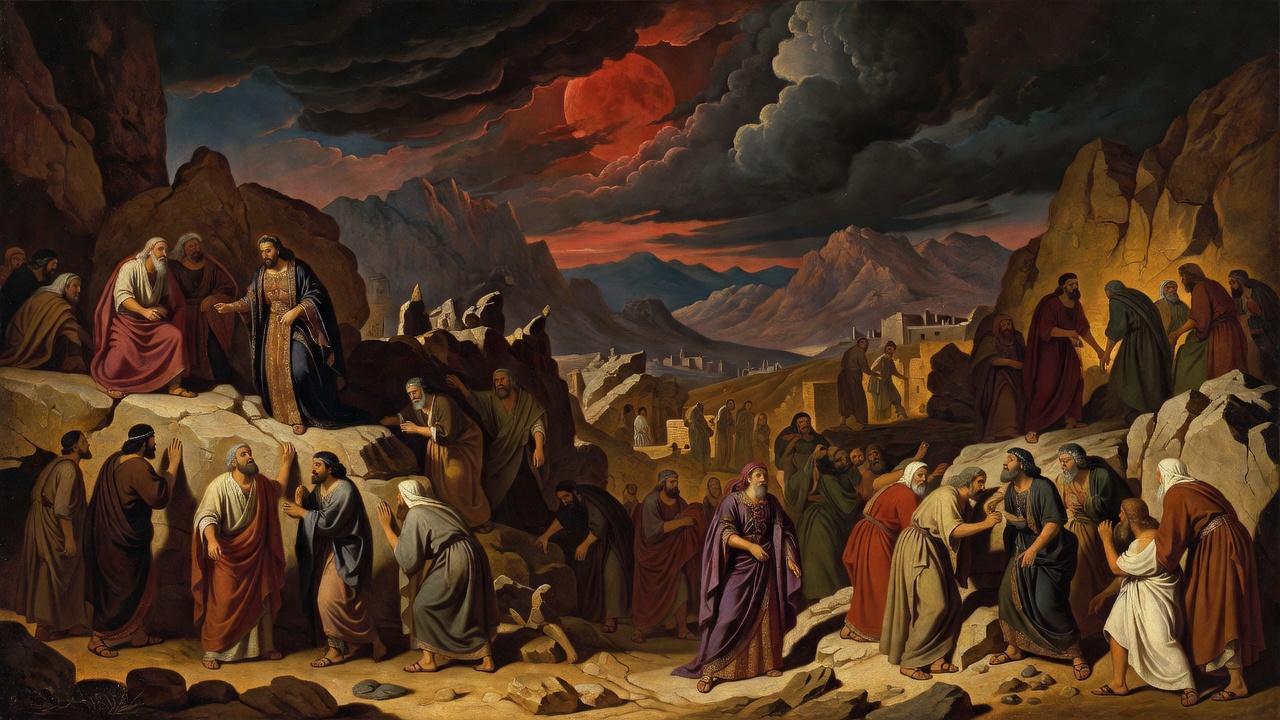
- Os primeiros quatro selos revelam quatro cavaleiros em cavalos branco, vermelho brilhante, preto e amarelo, convocados um a um pelos quatro seres viventes. Cada cavaleiro traz uma aflição distinta sobre a terra, desde a conquista e a retirada da paz até a fome generalizada, a peste e a morte.Fontes: o próprio texto bíblico
- O terceiro cavaleiro segura uma balança, acompanhado por uma proclamação que fixa o preço de uma medida de trigo ou três de cevada em um denário, refletindo uma grave escassez e racionamento de alimentos enquanto o azeite e o vinho são poupados.Fontes: o próprio texto bíblico
- Com a abertura do quinto e do sexto selos, o foco se volta para as almas dos mártires debaixo do altar e, em seguida, para imensas convulsões cósmicas e terrestres que levam pessoas de todas as classes sociais a se esconderem em cavernas nas montanhas.Fontes: o próprio texto bíblico
Notas escritas com auxílio de IA a partir de fontes abertas (Theographic Bible Metadata, CC BY-SA 4.0; Easton’s Bible Dictionary, domínio público) e revisadas antes de publicar.
Créditos e licença desta tradução
Ŋwɛ menomenyɛɛ́ mekɛ́
New Testament in Denya (CM:anv:Denya)
copyright © 2010 Wycliffe Bible Translators, Inc.
Language: Denya
Translation by: Wycliffe Bible Translators, Inc.
Copyright Information
© 2010, Wycliffe Bible Translators, Inc. All rights reserved.
This translation text is made available to you under the
terms of the Creative Commons License: Attribution-Noncommercial-No Derivative Works.
( http://creativecommons.org/licenses/by-nc-nd/3.0/ )
In addition, you have permission to port the text to different file formats, as long as you
do not change any of the text or punctuation of the Bible.
You may share, copy, distribute, transmit, and extract portions
or quotations from this work, provided that you include the above copyright
information:
You must give Attribution to the work.
You do not sell this work for a profit.
You do not make any derivative works that change any of the actual words or punctuation of the Scriptures.
Permissions beyond the scope of this license may be
available if you contact
us with your request.
The New Testament
in Denya
© 2010, Wycliffe Bible Translators, Inc. All rights reserved.
This translation is made available to you under the terms of the
Creative Commons Attribution-Noncommercial-No Derivatives license 4.0.
You may share and redistribute this Bible translation or extracts from it in any format, provided that:
You include the above copyright and source information.
You do not sell this work for a profit.
You do not change any of the words or punctuation of the Scriptures.
Pictures included with Scriptures and other documents on this site are licensed just for use with those Scriptures and documents.
For other uses, please contact the respective copyright owners.
2024-02-11
Fonte: http://ebible.org/anvNT/ · eBible.org