Efésios 5
Amo New Testament · Toque num versículo para ver as referências cruzadas.
1Nafo nono nayi Kutellẹ. 2Cinan nafo ame, cinan nanya nsu nafo na Kristi nati a napka litime imon nkusu na dadu ananzang, imong kugya kuman, udu kiti Kutellẹ. 3Unozu nan nawani nan nalilime, nin dinon a kuna niyizi na iwa se nanya mine ba, nanere cha kiti nanit alau Kutellẹ. 4Sa imon inanzan, uliru tilala, timap liyakiti to nati chaun ba. Nworo minu sun uliru nin liburi libo. 5Yinnon na umon unan nozu na nawani sa nalilime indinon, kunaniyizi, nin nan su nimon vat, aso ule na adin dortun ncil, na aba se kiti lisosin nanya kilari tigoh in Kristi nin Kutellẹ ba. 6Na umon wa rusuzu minu nin tigulang hem ba. Bara ille imonere tinanayyi Kutellẹ ma tolu kitenen nonon salin lanzun liru. 7Na iwa suzu ile imon na inung din suze ba. 8Bara anung wang na di nanya nsirti, nene anung bdin kanaghari nanya in Cikilari. Cinan nafo nonon kanan. 9Bara kumat nkanang ncineari nin lau a kidegen. 10Ussu nimon icine nbun Kutellẹ. 11Na iwa munu achara nan ghinu kitin su katah nsirti ba. Nworu nani, puzunon nani kanang. 12Nnanzang nimon illenge na idin su nanya sirti na ichaun ubellu ba. 13Nkanang din puzunu imon vat. 14Bara nani ina woro, “unan moro fita, fita nanya nanan kul, Kristi ba punu nkanag me kiti me.” 15Ndin bellu minu, cinan seng, na nafo alala ba, nafo ajijijn. 16Sung katah nin kube, bara na allenge ayire ananzanghari. 17Na iwa so alalan ba. Yinon ille imon na Kutellẹ nin suwẹ. 18Na iwa son toro ba, bara asa mita unit deu, nworo nani na nfip Kutellẹ so nanya mine. 19Iliru nin nati nanya nsen nin nalali nfip milau, isuzu avu nin liru nin nibinayi mine udu kitin Cikilari. 20Isuzu ugodiya ko kome kubi nanya nimon vat, nin lisan Cikilari Yisa Kristi udu uchife Kutellẹ. 21Inonkuzo atimine nanyan lanzu fiu in Kristi. 22Awani toltinon atimine kiti nales mine, nafo kitin Cikilari. 23Bara ules amere liti in wani, nafo Kristi amere liti kutin lira, amrere unan tuchu kidowo. 24Nafo na Kristiarin udya nanan bi, nanere nalilime ma yitu adidya nawani mine. 25Anung Ales, tan usu nawani nafo na Kristi na ti usu nanan dortu me, ana litime bara inung. 26Bara anan ta nani iso lau. Ana kusu nani nin sulsunu ulau nanya nmyen ligulang. 27Anan nakpa anan dortu me kitime imon igongong, sa in dinong, sa ikpenu, sa imonimon nafon inin, na ina yita sa ndinon. 28Nafo na in belle, na ales ti usuu nawani mine nafo atimine. Ullenge na adin suu nwani me litimere adin suwẹ. 29Na umon sa nari kidowo me ba. Asa agyiza kinin imoli a kye kinin gegeme, nafo na Kristi din su nin nanan dortu me. 30Bara arik tigap kidowo mere. 31Bara nani unit ba chinu uchiff me nin nameh amunu ninj wane, “inughe nabẹ ma so kidowo kirum.” 32Nkang kidegen liyenshin kidyawa kane, ndi bellu ubelle in Kristi ari nan nanan dortu me. 33Vat nin nani, kogha mine na ati usuu in wani me nafo litime, uwani tutung tolting litime nbun less me.
Você sabia?
Amor, luz e o lar
- Efésios 5 começa chamando os leitores a imitar a Deus como filhos amados e a andar em amor, assim como Cristo os amou e se entregou por eles como oferta sacrificial de aroma agradável a Deus.Fontes: o próprio texto bíblico
- O capítulo diz que os leitores antes eram trevas, mas agora são luz no Senhor, e que o fruto da luz consiste em toda bondade, justiça e verdade. Cita também um dito que chama quem dorme a despertar e a levantar-se dentre os mortos, prometendo que Cristo brilhará sobre essa pessoa.Fontes: o próprio texto bíblico
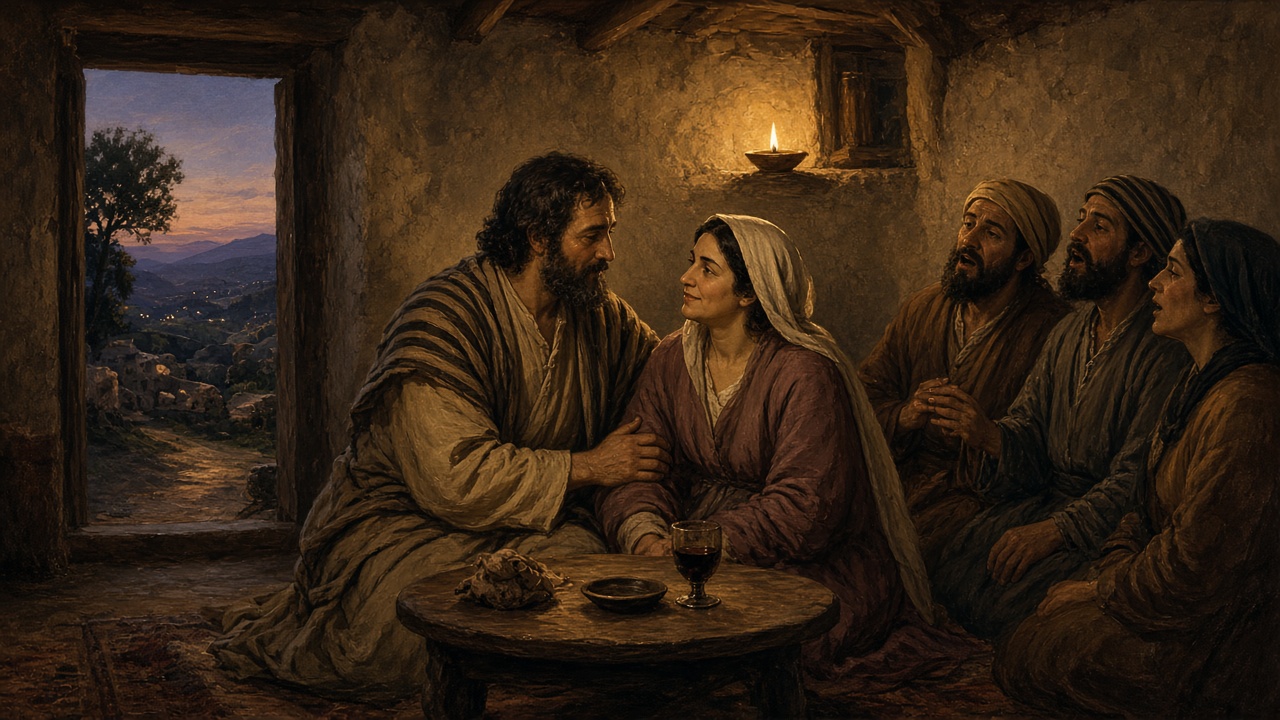
- Um chamado a que uns se submetam aos outros por reverência a Cristo introduz as instruções para esposas e maridos. Diz-se aos maridos que amem suas esposas como Cristo amou a igreja e se entregou por ela, e o capítulo chama a união de marido e mulher de mistério profundo que diz respeito a Cristo e à igreja.Fontes: o próprio texto bíblico
Notas escritas com auxílio de IA a partir de fontes abertas (Theographic Bible Metadata, CC BY-SA 4.0; Easton’s Bible Dictionary, domínio público) e revisadas antes de publicar.
Créditos e licença desta tradução
Amo New Testament
The New Testament in the Amo language of Nigeria
copyright © 2020 Door43 World Missions Community
Language: Timap (Amo)
Translation by: AFenlason, ALHASSAN SUDA, Chrispher Ishaya, James, Kawusu David, Pungs Makarios, Zephaniah A. Isau, tab04-nig, tab12-nig
This translation is made available to you under the terms of the
Creative Commons Attribution Share-Alike license 4.0.
You have permission to share and redistribute this Bible translation in any format and to make reasonable revisions and adaptations of this translation, provided that:
You include the above copyright and source information.
If you make any changes to the text, you must indicate that you did so in a way that makes it clear that the original licensor is not necessarily endorsing your changes.
If you redistribute this text, you must distribute your contributions under the same license as the original.
Pictures included with Scriptures and other documents on this site are licensed just for use with those Scriptures and documents.
For other uses, please contact the respective copyright owners.
Note that in addition to the rules above, revising and adapting God's Word involves a great responsibility to be true to God's Word. See Revelation 22:18-19.
2020-07-06
Fonte: http://ebible.org/amo/ · eBible.org