2 Coríntios 4
Haalin Mallano · Toque num versículo para ver as referências cruzadas.
Bhawloos Yisa Waadimanka Gon Hama Eedi Kinin Maatoono
1Ogonante Barjo yisa garintonka ko waadimanam kinin wona imonna, wodi agehe hamayse garattone. 2Aachimonbee ooshinsenbe hamon waadimanam waadadhattone wodi hamidine; cubbokaar waadadhattone; Barjosa upsinam buudamoka worsattone. Goninam may hayayse dhayntaka, een wulsa meskenna hamayse Barjo birante woda dee.
3Wonin giyayno Barjosa dhacchintan upsino aachimoono ko hannaar, konin aachimoono kayayna eenanane. 4Kedi Barjodar woylamin kenin qajimino peen kosa bit maataa Seethaan kesa woylaminam kinin shuponnane; Barjosa gon kamsi maataa Kiristoossa gobshin giyayno Barjosa dhacchintan upsinka kena nivayno shaakanam kenin haapoamadettsi maraa kidine.
5Wonin giyayno, Yesus Kiristoos Imba kinin dohonbee wodiar Yesusna hamayse yena waadimayna wonin maatonbene; wonnon metenna giyattone. 6Harrna hambhidianna, “Shaaka thipansa iir ko shaake” hamayse giyaa Barjo shaakan yinnonam wosa woylaminte shashkaa kidine; shaakano ogono Kiristoossa wotinte shaakayno Barjosa gobshinam wona dhettsaynone.
7Ko dahaannaar ko gobshin yerinam peera ashkadhaa daadettsi maatayse wo tiyade. Harrna hambhidianna, ogono gembho kantano Barjosa konin dohonam, wonti konin dahaamonam eenin dhesoadettsine. 8Yer wulka gaale wodar ko yeskaakaar, bashadhattone; thoothi qaabe wodar ko nivaakaar, wosa woza kayehe. 9Woam jibbayna ke oytayaakaar, Barjo woam garehe; woam qanate ke dhabaakaar, diyattone. 10Yesussa sadano wosa bishinte konin haapadhoadettsi, rooro wul Yesussa dembhinam wosa bishindar baskayse woda yaaye. 11Yesussa sadano diyen wosa bishinte konin haapadhoadettsi, ta wodi sadanka dahaana rooro wul Yesus goynka dembhina saskate woda imbhe. 12Ogonante wodi dembhinte wonin haapadhenka, yedi dayntante yeda haapadhe.
13Ko dahaannaar, “Barjoyn giyonam gonne i hamade; ogonante i giyade” hamayse thaapadhondettsi, wodiar ogodettsi Barjodar woylamin wonin qajenna, kinin giyonam gonne wo hamade; ogonante woda giye. 14Imbaa wontea Yesusam dembhira dhaasaa Barjo woamaar Yesusbesana kinin dhaasendettsibee yembesana kinnon birante woam kinin woysenbeam dhesooda dhese. 15Barjosa sunin imintonin thoothayse eenna yeskonna, eeno Barjoam konin gobshenka Barjona gobshi thoothoadettsi, yer wul yena ko maatade.
Barjodar Woylamin Qajayse Daadhayno
16Ogonante wodi agehe hamayse garattone; yer hamin hambhaakaar eenna haapadhayno wosa bishino kayaate ko yivaakaar, haapadhimino bishino rooro wul haalimbha ko haalimbhe. 17Ogo likka wodana haapadhayno, deegano gaaleno wuldara kattsi sagi rooro wul lay dehen gebhon gobshinsa dethanam wona koda haye. 18Wonin shedayno haapadhimin yerinamne, haapadhenamtehe. Harrna hambhidianna, haapadhayno yerro likka wodanane, haapadhimino yerro woda wulnane.
Você sabia?
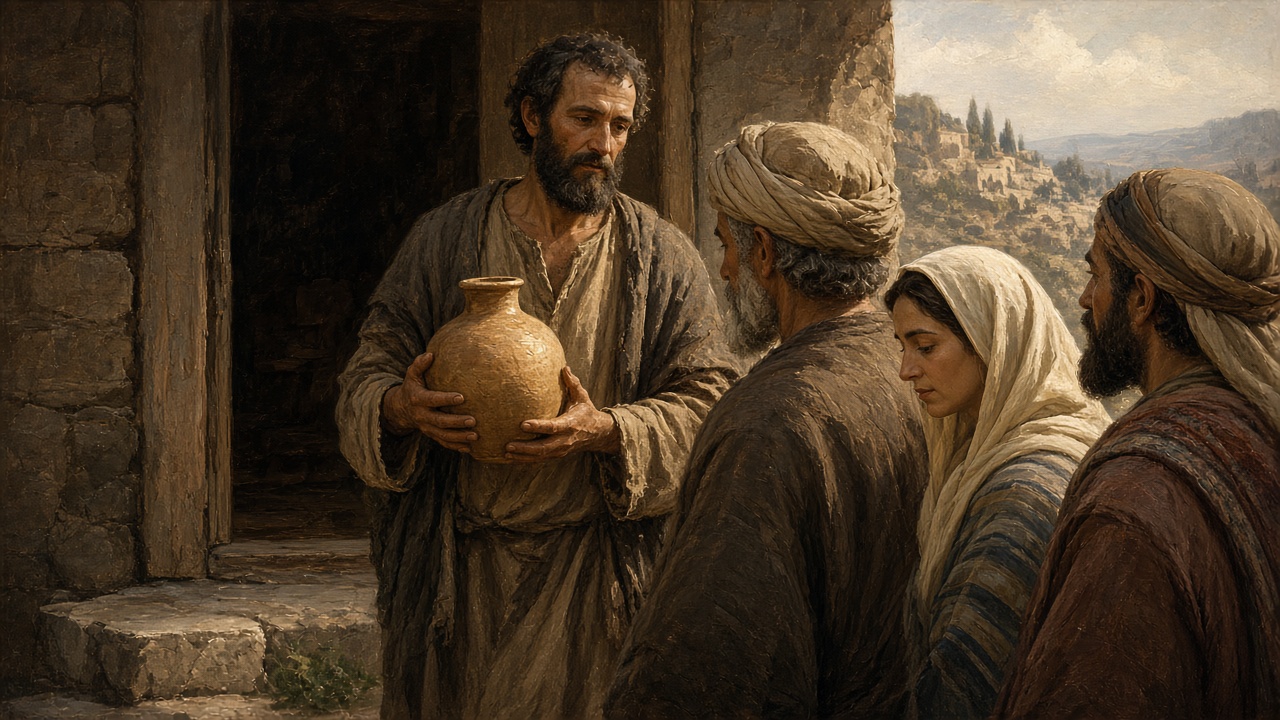
Tesouro em jarros de barro
- Neste capítulo, os que falam dizem que, porque Deus em sua misericórdia lhes deu este ministério, eles não desanimam. Renunciaram a caminhos secretos e vergonhosos: não praticam o engano nem distorcem a palavra de Deus, mas, pela proclamação aberta da verdade, recomendam-se à consciência de cada pessoa diante de Deus.Fontes: o próprio texto bíblico
- A mensagem deles é apresentada como um tesouro guardado em jarros de barro, para que se mostre que esse poder incomparavelmente grande vem de Deus e não deles. O mesmo contraste percorre suas dificuldades: pressionados de todos os lados, mas não esmagados; perplexos, mas não desesperados; perseguidos, mas não abandonados; derrubados, mas não destruídos.Fontes: o próprio texto bíblico
- A luz é a outra imagem central do capítulo. Deus, que disse: "Que a luz brilhe das trevas", é apresentado como quem fez brilhar a sua luz no coração deles, para dar a luz do conhecimento da glória de Deus no rosto de Jesus Cristo. Eles não proclamam a si mesmos, mas a Jesus Cristo como Senhor, e a si mesmos como servos daqueles a quem se dirigem, por causa de Jesus; se o evangelho está encoberto, o texto diz que está encoberto para os que perecem, cujas mentes foram cegadas pelo "deus desta era".Fontes: o próprio texto bíblico
Notas escritas com auxílio de IA a partir de fontes abertas (Theographic Bible Metadata, CC BY-SA 4.0; Easton’s Bible Dictionary, domínio público) e revisadas antes de publicar.
Créditos e licença desta tradução
Haalin Mallano
The New Testament in the Banna language of Ethiopia
copyright © 2014 SIM International
Language: Banna (Hamer-Banna)
Translation by: SIM
This translation text is made available to you under the
terms of the Creative Commons License: Attribution-Noncommercial-No Derivative Works.
( http://creativecommons.org/licenses/by-nc-nd/3.0/ )
In addition, you have permission to port the text to different file formats, as long as you
do not change any of the text or punctuation of the Bible.
You may share, copy, distribute, transmit, and extract portions
or quotations from this work, provided that you include the above copyright
information:
You must give Attribution to the work.
You do not sell this work for a profit.
You do not make any derivative works that change any of the actual words or punctuation of the Scriptures.
Permissions beyond the scope of this license may be
available if you contact
us with your request.
This translation is made available to you under the terms of the
Creative Commons Attribution-Noncommercial-No Derivatives license 4.0.
You may share and redistribute this Bible translation or extracts from it in any format, provided that:
You include the above copyright and source information.
You do not sell this work for a profit.
You do not change any of the words or punctuation of the Scriptures.
Pictures included with Scriptures and other documents on this site are licensed just for use with those Scriptures and documents.
For other uses, please contact the respective copyright owners.
2014-10-15
Fonte: http://ebible.org/amf/ · eBible.org