1 Coríntios 10
Haalin Mallano · Toque num versículo para ver as referências cruzadas.
Ena Birana Eykena Wonnadettsi Seeso Haya Woam Zaskimoono
1Imbanaanato, Barjo ena eykena wonna wulam polonka shipshayse keam kinin entsonbee ke wulamaar bazindara kinin saskonbeam yenin dhesoadettsi ida zage. 2Kedi Musebesana kinka eedi kalaa maatota ko polonbee ko bazinbesa iinte ke shiidhade. 3Kedi wulaar Barjokalanka manpasinka imbhon galan kallon kinka ke itsade. 4Kedi wulaar Barjokalanka manpasinka imbhon wucadhen kallorra kinka ke wucade. Kenin wucoonoar kesa paanan yivea manpasinka nivaa seenia laytarane; agaa seenia laytaar Kiristoosne. 5Ko dahaannaar Barjo kesa een thoothinka wozadhadehe; ogonante darante diyate ke maqade.
6Igina ena eykena wonna yerin siyonam kenin anngardhondettsi, wodiar yin yerin siyonam wonin anngardhoamadettsi, ogono wul wona kamsi ko maatade. 7“Eeno itsannabee wucannabe ko dooqade, kirbannaar ko dhaabhade” hamayse thaapadhondettsi, kesa iira waani waani eena aaninka ashkadhaana barjonana konin goodimondettsi, yediar yin aaninka ashkadhaana barjonana goodimeebhode. 8Kesa iira waani waani eenayn sharmucimakkon waadiman hayonna, kesa iira eedi kalaa kaysa apo makkamin shiin eeno rooro kala konin diyondettsi, wodiar sharmucimakkon waadiman wo hayabhoode. 9Pir kesa iira waani waani eeno Barjo Imbaam konin taysate shedonna, Barjo koam wacimaysaka gunin koam gavate deesondettsi, wodiar Barjo Imbaam taysate wo shedabhoode. 10Kesa iira waani waani eeno Barjodar kenin gundumonna, Barjo kedar wacimayse deesea yisa gaanaaka keam kinin kaysondettsi, yediar yin gundumeebhode.
11Ogo wul yerinin kedar yeskoono wona kamsi konin maatoadettsi, wodi kina wodansa macchinte dahaana eena kedettsi wonin hayoamadettsi ko thaapadhade. 12Ogonante “Inta woydine” hamea ea kinin dhamboamadettsi yisa mete ki gishe. 13Taysate shedenin een wuldar yeskenkalanka ab yer yedar yeskadehe. Barjo kidi gon hamaane; taysate shedenin yedar yesken wodanka yenin damerra sagi konin yeskoadettsi hayehe. Taysate shedenin yedar yesken wodanka, yeninkay darshen kantan yena imintaka yenin utea goyti yena ashka ki ashke.
14Ogonante inin nashaynato, aaninka ashkadhaana barjonaam miskadhenkalanka pegimbhimate! 15Ogo yin inin giyayno yedi woylamka dahaana eena yenin dohonnane. Inin ta yena giyen yedi yentika pirdimate. 16Barjoam gobshayse kinka wonin wucayno gobshadhoono wucimano Kiristoossa zombhinam kinka kashimate wosa wucanotayu? Qunthate kinka wonin itsayno balashano Kiristoossa waanam kinka kashimate wosa itsanotayu? 17Wonin itsayno balashano kalaa konin dohondettsi, wodi wul ogo balashan kallonam itsayna wonin dohonna, wodi eedi thoothi wo dahaannaar kinka kisa wodi waa kalaane.
18Yinda Israveel zarsinin hayonam shedimate. Barjona marsha machadhonam itsayna eena marshan machadhen raqinbesana kinka kesa kalaa maatintatayu? 19Ta yin inin giyenka aaninka ashkadhaa barjoana marshan machadhoono waano yer poota pooteane isa hamintaw? Way aaninka ashkadhaa barjoa yer pooteane isa hamintaw? 20Yintehe! Barjoam dhesimina eena yinnon marshanam kenin machayno Barjona daymaka meeshinane. Ogonante yembee meeshinabesa kinka kaaramo konin doadettsi inta zagattine. 21Imbaa wontea Yesussa zombhin kamsin wucadhenam kinka wucaate pir meeshi wucimanam wucana damattene; Imbaa wontea Yesussa waan kamsin galanam yedi kinka itsaate pir meeshina marshan machadhon waanam itsana damattene. 22Wodi ta yin hayntaka Imbaa wontea Yesusam wo wacinso? Wodi kidara bashi wocchimbhaynaw?
23Yer wulin haydhoadettsi giidhidine; ko dahaannaar, yerro wul pootehe. Yer wulin haydhoadettsi giidhidine; ko dahaannaar, yerro wul eenaam ashkeatehe. 24Eeno wul een waanina payya maaten yerinam ko qaabe; meten yinnonna bish payya maatenam ko qaababhoode.
25Yennon woylaminsa iinte dohon qothimenam yekalanka peginsayse gabante shanshadhen waanam shanate itsimate. 26Harrna hambhidianna, “Peenbee kodar dohon yerin wulbe Barjosane” ko hambhade.
27Barjodar woylamin qajima eedi kalaa kummana yeam ki eelaysaka, yivana ye nashidianna, yena kinin imen galanam qothimeka oysima itsimate. 28Ko dahaannaar eedi kalaa “Kono waano meeshina marsha machadhaane” yena hamidi ki hanna, ogoam yena giyaa ea goynbee kisa meskenna hamaysebe ogo waanam itseebhode. 29Ogono inin giyayno ea hana giyaasa meskenna hamaysene; hannon meskennane isa hamintatehe. Ta ea aba qaaben goynsa hamayse, inin qaabenka gaalaamonna idar hamin ko pirdadhe? 30Inta Barjoam gobshayse i itsina Barjoam inin gobshon goynka nammo isa harrna ko gendhe?
31Ta yenin itsenka ko hannaar, yenin wucenka ko hannaar, way yenin hayenka ko hannaar, yerin wulka Barjoyn gobshadhoadettsi haymate. 32Ayiwd eenana ko hannaar, Girik eenana ko hannaar, Barjosa misken oonin eenana ko hannaar, eedi haynaar goa maateebhode. 33Inta eeno thoothino konin dhaqoadettsi, ina daymaka een waaninaar konin agoadettsi ida qaabe. Een wulam yer wulka inin wozisendettsi, yediar yin haymate.
Você sabia?
Advertências do deserto e a mesa do Senhor
- Paulo diz que não quer que os coríntios ignorem que os antepassados estiveram todos debaixo da nuvem e passaram todos pelo mar, e que foram batizados em Moisés na nuvem e no mar. Todos comeram o mesmo alimento espiritual e beberam a mesma bebida espiritual da rocha espiritual que os acompanhava, e ele afirma que essa rocha era Cristo.Fontes: o próprio texto bíblico
- Paulo diz que Deus não se agradou da maioria deles, pois foram abatidos no deserto. Ele menciona a idolatria, a imoralidade sexual em que vinte e três mil morreram num só dia, o ato de pôr Cristo à prova, que trouxe morte por serpentes, e as queixas, punidas pelo anjo destruidor, e chama esses fatos de exemplos registrados como advertências.Fontes: o próprio texto bíblico
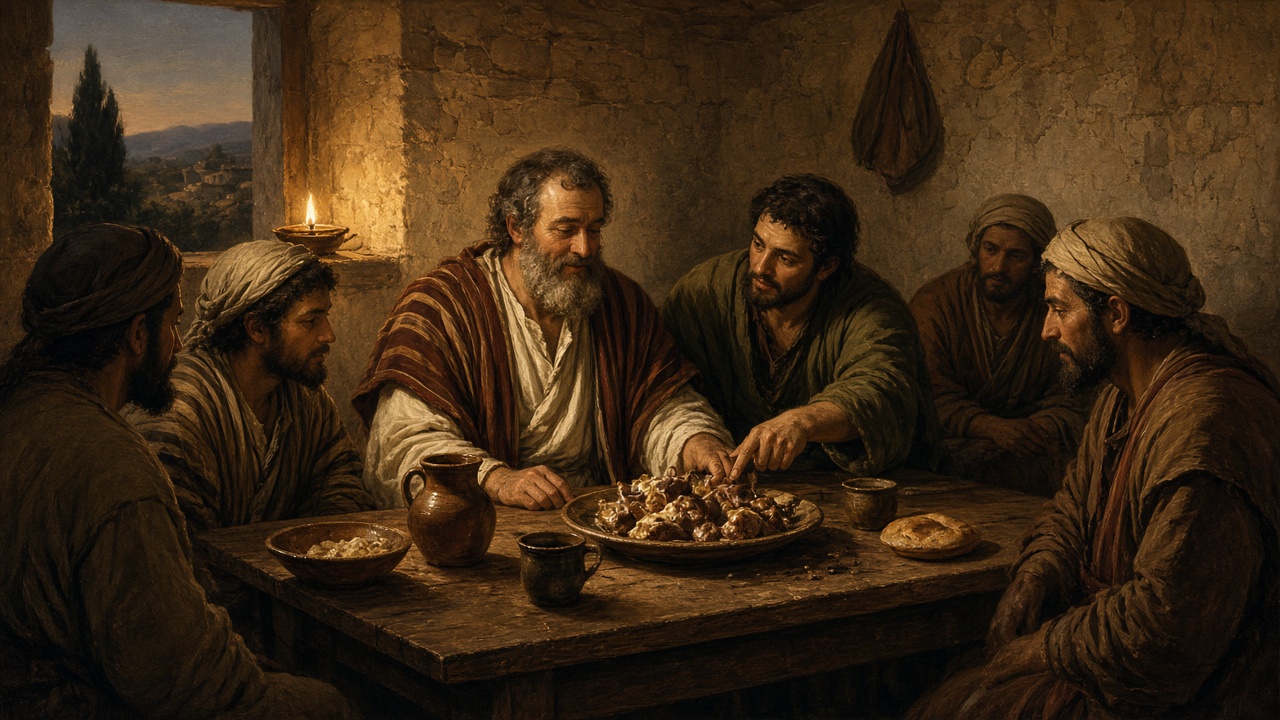
- Ele chama o cálice da bênção e o pão que é partido de participação no sangue e no corpo de Cristo, e afirma que os sacrifícios dos pagãos são oferecidos a demônios, não a Deus, de modo que as duas mesas não podem ser partilhadas. O que se vende no mercado de carne pode ser comido sem levantar questões de consciência, pois "Do Senhor é a terra e a sua plenitude", mas, se alguém disser que foi oferecido a ídolos, convém recusar por causa da consciência dessa pessoa.Fontes: o próprio texto bíblico
Notas escritas com auxílio de IA a partir de fontes abertas (Theographic Bible Metadata, CC BY-SA 4.0; Easton’s Bible Dictionary, domínio público) e revisadas antes de publicar.
Créditos e licença desta tradução
Haalin Mallano
The New Testament in the Banna language of Ethiopia
copyright © 2014 SIM International
Language: Banna (Hamer-Banna)
Translation by: SIM
This translation text is made available to you under the
terms of the Creative Commons License: Attribution-Noncommercial-No Derivative Works.
( http://creativecommons.org/licenses/by-nc-nd/3.0/ )
In addition, you have permission to port the text to different file formats, as long as you
do not change any of the text or punctuation of the Bible.
You may share, copy, distribute, transmit, and extract portions
or quotations from this work, provided that you include the above copyright
information:
You must give Attribution to the work.
You do not sell this work for a profit.
You do not make any derivative works that change any of the actual words or punctuation of the Scriptures.
Permissions beyond the scope of this license may be
available if you contact
us with your request.
This translation is made available to you under the terms of the
Creative Commons Attribution-Noncommercial-No Derivatives license 4.0.
You may share and redistribute this Bible translation or extracts from it in any format, provided that:
You include the above copyright and source information.
You do not sell this work for a profit.
You do not change any of the words or punctuation of the Scriptures.
Pictures included with Scriptures and other documents on this site are licensed just for use with those Scriptures and documents.
For other uses, please contact the respective copyright owners.
2014-10-15
Fonte: http://ebible.org/amf/ · eBible.org