Josué 7
Yi Antiw Bible / Yi Ac'aj Testament · Toque num versículo para ver as referências cruzadas.
Yi juchul Acán til
1Itzun bantz, e' juch yi e' xonl Israel quil swutz Ryos, tan paj yi at jun scyeri yi jun k'u'j xonl Judá, nin saj tcy'al cobox takle'n le tnum Jericó yi qui'c cuj tan cyetzal. Na sken a'lchij scyetz yi tajwe'n tan tele'n cu'n tircu'n swutz. Tan yi cobox takle'na'tz yi saj tcy'al, tircu'n tzun xonl Israel jal quil swutz Ryos. Cha'stzun te je'n lajp wi' i' scye'j. Yi juna'tz yi njuch til, i'tz Acán, yi cy'ajl Carmi, nin yi taj Carmi i'tz Zabdi, ma taj Zabdi i'tz Zera, yi e'a'tz e' cu'n xonl Judá.
2Itzun yi tele'n cobox k'ej, nintzun e' ben ẍchakol Josué cobox xk'ukwil tan xk'uke'n yi tnum Hay yi at swutz len yi tnum Betel, naka'jil Bet-avén. Chibene'n tzuntz tan tilwe'n yi ama'l, chi tal Josué scyetz. 3Yi chipakxe'nt nintzun cyaltz tetz Josué: “Qui'c tajwe'n tan chije'n pone'n cyakil yi e' sanlar tan oyintzi' scye'j yi e' aj Hay, ma na tzicu'n tan cob nka ox mil sanlar, na qui'c mas chixone'n yi aj Hay,” che'ch tetz Josué.
4I nintzun tulej Josuéja'tz. Ox ntzi' mil sanlar e' ben ta'n tan oyintzi'. Poro quinin e' xcye', na tircu'n yi ox mila'tz e' el ojk ẍchiwutz yi e' aj Hay. 5E' xcye' yi e' aj Haya'tz tan chiquimse'n e'chk junak waklaj lo' xonl Israel. Nin e' xomnin tan chibiyle'n yi e' mas jalen wutz cu'nak Sebarim. Cha'stzun te wi'nin chixobe'n yi e' xonl Israel scyetz yi e' aj Hay. Qui'tnin tzun chinimsaj chic'u'l tan oyintzi' scye'j.
6Yi quibital Josué scyuch' yi e' wi' banl wi' yi cyele'n ojk ẍchiwutz yi e' chicontr, nintzun e' oc tan katzle'n yi be'ch cyetz, nin e' oc tan ẍchitle'n puklaj xo'l chiwi' tan ẍchajle'n yi wi'nin na chibisun. Chicwe'n tzun joklok swutz yi caẍa' tetz Kataj, jalen bene'n k'ej.
7Itzun tal Josué tetz Kataj Ryos:
—Ta', ¿mbi xac mbanu' yi xtxolbile'j ske'j? Ba'n tcu'n qui'k nku'l tanu' tzone'j. Ko ya'tz kaxac nku'l tanu' tan kaquime'n ẍchik'ab yi e' amorreo. Ba'n tcu'n cho'nk nkacyaj cyen jalaj cy'en Jordán. 8Lastum ta', ¿mbil wal jalu'? na cyakil yi e' kasanlar ja che'l ojk ẍchiwutz yi kacontr.
9”Ej, nin yil quibit yi e' aj Canaán scyuch' yi e' mas kacontr yi mbi mbajij, chu'l tan kabiyle'n, nin skasotzok junawes cya'n. Nin ko ya'tz ẍchibne' ske'j ¿ẍe'n lajluchax yi teru' k'eju'? stzun Josué tetz Kataj.
10Nintzun saj tlol Ryos tetz Josué:
—¡Josué! txiclije'n. ¿Mbi xac joklquiẍ wuxtx'otx'? 11Na yi jun xtxolbila'tz ja bajij, tan paj yi ja chijuch yi e' atanum yi quil. Ja chipaj inca'wl, na ja saj cyalk'al cobox takle'n yi ja klo' tz'e' cya'n. E' la'j. Wech na bita'nt cya'n yi at xtxintxal talk'e'n yi e'chk takle'na'tz, ma na ja saj cyalk'al, nin ja cyew xo'l be'ch cyetz. 12Cha'stzun te qui'c rmeril tan ixcyewe'n scye'j yi e' icontr. Ej nin ilenin cxelepon ojk ẍchiwutz, na tajwe'n klo' tan iquime'n. Nin ko quil tz'el cu'n yi e'chk takle'na'tz swutz ita'n, tircu'n axwok cxelepon cu'n wa'n swutz. 13Ma jalu' bin Josué. Txicleje'n, molwe' cu'n cyakil yi e' atanum, nin alaj scyetz yi tajwe'n tan chixansal quib, na tajwe'n chu'l tzinwutz ek jalchan. Ej, nin je swale' scyetze'j: In yi Ajcaw tzite'j, nin in iRyosil. Poro ja jal jun chin ilc'ol tzixo'lwok, na ja saj itcy'al e'chk takle'n yi ja klo' el cu'n swutz ita'n. Ej, nin ko quil tz'el cu'n yi e'chk takle'na'tz ita'n swutz, qui'ct rmeril tan ixcyewe'n scye'j icontr. 14Ma jalu', na waj yil chu'l cyakil atanum tzinwutz ek jalchan. Nin junale'n chichaj quib yi coblaj k'u'j atanuma'tz tzinwutz, na tzinchaje' jun k'u'j ẍchixo'l yi coblaj k'u'ja'tz. Nin ẍchixo'l yi jun k'u'ja'tz tzinchaje' junt k'u'j yi chixonl quib, nin ẍchixo'l yi e'a'tz tzinchaje' jun najal. Nin tul yi jun najala'tz tzinchaje' yi jun yaj yi aj paj. 15Ma yil jal yi jun yaja'tz yi mmicy'an tzaj yi e'chk takle'na'tz yi ja klo' tz'e' stz'e'ok i' tuml yi najal, tuml cyakil yi me'bi'l. Na e' pajol ca'wl tzixo'lwok, na quinin nchiban tane'n yi inca'wl yi walnak, stzun Kataj bantz tetz Josué.
Yi ẍchojo'nil yi til Acán
16Itzun bantz, le junt eklok. Chin jalchan cunin tzun c'ase'n Josué. Nintzun ben mantartz tan i' tan chichakle'n yi e' tanum. Yi cyule'n, nintzun e' baj cu'n jatxol yi jujun k'u'j e'. Je'n tzun xtxa'ol Kataj yi jun k'u'j xonl Judá. 17Chisaje'n tzun ẍchakol Josué yi jun k'u'j xonl Judája'tz, nin ẍchixo'l yi e'a'tz, nin je' xtxa'ol Kataj yi jun k'u'j e' tu Zera, nin ẍchixo'l yi e'a'tz, nin je' xtxa'ol yi najal Zabdi. 18Cyopone'n tzun cyakil najal Zabdi, nin ẍchixo'l yi e'a'tz tx'amxij Acán, yi cy'ajl Carmi. Yi Carmi i' cy'ajl Zabdi, nin yi Zabdi, i' cy'ajl Zera. Cyakil yi e'a'tz, e' cu'n xonl Judá.
19Nintzun ben tlol Josué tetz Acán:
—Ma jalu' yaj, alaj yi mero bintzi swetz. Quil tzajuẍ awib swutz Kataj, yi kaRyosil yi o' xonl Israel. Alaj swetz yi mbi ncu' anuc'ul. Nin quil tzawew tzinwutz, stzun Josué tetz Acán.
20Tlol tzun Acán yi mero bintzi:
—Bintzi ta', ja injuch wil swutz Kataj yi kaRyosil. Na je mmimbane'j: 21Yi kopone'n Jericó, nin wil jun balaj xbu'k yi cho'n sajnak Babilonia, nintzun saj wucy'altz. Ncha'tz saj wucy'al cob cient piẍ sakal tu jun chin lepaj oro, at lo' jun liwr talal. Na nin el quen walma' te'j, cha'stzun te saje'n wucy'altz. Cho'n tzun cwe'n inmukul xe inmantial tan tewe'n, stzun Acán tetz Josué.
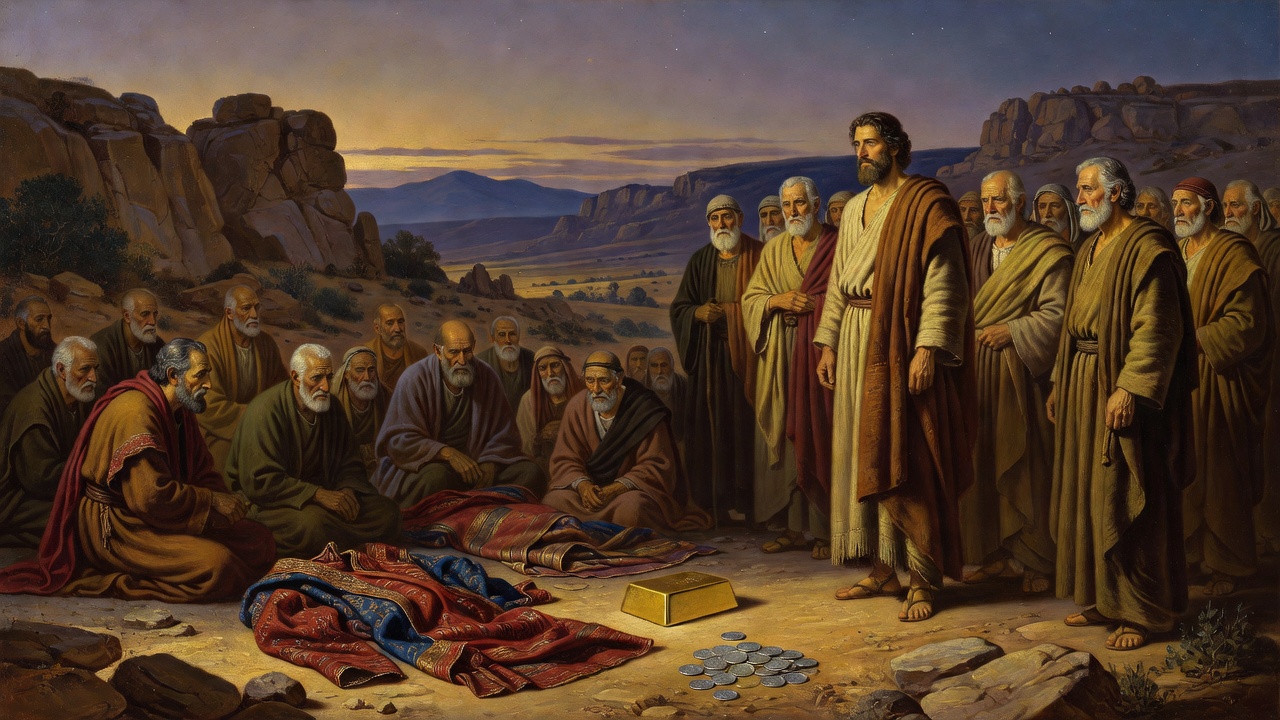
22Chibene'n tzun ẍchakol Josué cobox chakum tan tilwe'n le mantial Acán. Lajke'l nintzun e' bene'ntz tan tilwe'n. Nin cho'n nin jale'ntz cyak'un. Cho'n mukij yi balaj xbu'ka'tz nicy'al yi mantial, nin cho'n at cyen yi sakal tu yi oro tzak' yi balaj xbu'ka'tz. 23Yi je'n tzaj quicy'al yi e'chk takle'na'tz yi ewa'n xe yi mantial, nintzun saj chicy'al swutz Josué nin ẍchiwutz yi e' mas xonl Israel. Nin ben chicy'al swutz Kataj Ryos. 24Cawune'nin tzun Josué scyetz cyakil yi xonl Israel tan chibene'n tan stz'amle'n Acán, nin ben chicy'altz tuml yi sakal, tu yi mant tu yi jun piẍ oro. Ncha'tz e' tx'amxij yi e' cy'ajl, scyuch' yi e' me'l, scyuch' cyakil yi e' tawun, yi e' wacẍ, ẍchej, cneru', tu cyakil yi tetz mantial kale najlche't. Nintzun ben quicy'altz le tal joco'j yi na bi'aj Acor.
25Yi cyopone'n Acor, nintzun ben tlol Josué-tz tetz Acán:
—Yaj, ¿nxac mawak' bis sketz? Ma jalu', stk'e' Kataj yi acaws, stzun Josué tetz.
Cyoque'n tzun cyakil yi e' xonl Israel tan chibiyle'n cu'n Acán tan c'ub. Yi wi't chilo'one'n nintzun e' octz tan stz'e'se'n yi chiwankil. 26Ej nin tibaj kale e' tz'e't nintzun je' tenu'n jun c'oloj c'ub. Iẍnin atit yi c'uba'tz jalu'. Cha'stzun te toque'n yi bi' yi jun tal joco'ja'tz tetz Acor, yi na elepont: “Sotzaj c'u'lal”. Nin yi ama'la'tz, ite'n nin bi'a'tz jalu'. Ej nin tan yi xtxolbila'tz, qui't nchi'ch mas c'u'l Ryos scye'j yi e' xonl Israel.
Você sabia?
A derrota em Ai e o pecado de Acã
- Ai era uma cidade real cananeia situada a leste de Betel e perto de Bete-Áven. Após a tomada de Jericó, foi a segunda cidade visada pelos israelitas, embora uma força inicial de cerca de três mil soldados tenha sido inesperadamente derrotada nas encostas fora da cidade.Fontes: Ai · o próprio texto bíblico
- Para descobrir a razão da derrota de Israel em Ai, Josué reuniu a comunidade em etapas por tribo, clã, família e indivíduo até que Acã, da tribo de Judá, foi escolhido. Acã confessou que havia roubado e escondido ouro, prata e uma capa babilônica que haviam sido consagrados à destruição.Fontes: Achan · o próprio texto bíblico
- O nome do Vale de Acor significa perturbação ou desgraça, refletindo as palavras de Josué de que Acã havia trazido calamidade sobre Israel. Escritores bíblicos posteriores, incluindo Oseias e Isaías, referiram-se a esse vale simbolicamente como um lugar onde o desastre se transforma em esperança e bênção.Fontes: Achan · Valley of Achor · o próprio texto bíblico
Notas escritas com auxílio de IA a partir de fontes abertas (Theographic Bible Metadata, CC BY-SA 4.0; Easton’s Bible Dictionary, domínio público) e revisadas antes de publicar.
Lugares deste capítulo
- Jericho · Hoje: Tell es Sultan · 31.872, 35.445 · versículo 2
- Jordan · Hoje: Jordan River · 31.761, 35.558 · versículo 7
- Shinar · Hoje: Babylonia · 32.543, 44.422 · versículo 21
Só aparecem lugares com identificação de alta confiança (90% ou mais segundo as fontes acadêmicas reunidas pelo OpenBible). Mapa da época: DARE (Digital Atlas of the Roman Empire), CC BY 4.0; mapa atual: © colaboradores do OpenStreetMap; lugares: OpenBible.info (CC BY 4.0).
Créditos e licença desta tradução
Yi Antiw Bible / Yi Ac'aj Testament
Bible in Aguacateco (GT:agu:Aguacateco)
copyright © 2011 Wycliffe Bible Translators, Inc.
Language: Aguacateco
Translation by: Wycliffe Bible Translators, Inc.
Copyright Information
© 2011-02-18, Wycliffe Bible Translators, Inc. All rights reserved.
This translation text is made available to you under the
terms of the Creative Commons License: Attribution-Noncommercial-No Derivative Works.
( http://creativecommons.org/licenses/by-nc-nd/3.0/ )
In addition, you have permission to port the text to different file formats, as long as you
do not change any of the text or punctuation of the Bible.
You may share, copy, distribute, transmit, and extract portions
or quotations from this work, provided that you include the above copyright
information:
You must give Attribution to the work.
You do not sell this work for a profit.
You do not make any derivative works that change any of the actual words or punctuation of the Scriptures.
Permissions beyond the scope of this license may be
available if you contact
us with your request.
The Bible
in Aguacateco
© 2011-02-18, Wycliffe Bible Translators, Inc. All rights reserved.
This translation is made available to you under the terms of the
Creative Commons Attribution-Noncommercial-No Derivatives license 4.0.
You may share and redistribute this Bible translation or extracts from it in any format, provided that:
You include the above copyright and source information.
You do not sell this work for a profit.
You do not change any of the words or punctuation of the Scriptures.
Pictures included with Scriptures and other documents on this site are licensed just for use with those Scriptures and documents.
For other uses, please contact the respective copyright owners.
2014-04-21
Fonte: http://ebible.org/aguBl/ · eBible.org