Juízes 15
Yi Antiw Bible / Yi Ac'aj Testament · Toque num versículo para ver as referências cruzadas.
1Ej itzun yi tele'n cobox ke'j, yi je'n yi cosech tetz yi triw, nin tzun ben Sansón tan xajse'n yi txkel, nin ben tcy'al i' jun tal ne'ẍ chiw. I tzun yi topone'n, nin tzun taltz:
—Nocopon tan tilwe'n yi wuxkel, jalen xe tetz ca'l, stzun i' bantz.
Poro yi ji' qui nin tak' ama'l tetz. 2Saje'n tzun tlol tetz:
—Chinch wetz, yi qui't na cẍpek' te'j. Cha'stzun te ja ben wuk'ol tetz jun awamiw. Poro at jun titz'un, nin chumbalajt cunin yubil. Ba'n tzun tz'oc tetz awuxkel.
3—¡Ko ya'tz mban xtxumu'nu' qui'c wetz tuch' yi mbil bajij scye'j yi e' tanumu'! stzun Sansón bantz.
4Bene'n tzun i'-tz tan chitz'amle'n cobox yac. Ox tzun cient e' tx'amxijtz ta'n, nin tzun baj cu' c'alol chije'-tz. Quicobenle'n cu'n tzun e' baj tuleltz, nin oc nin c'alol jun cul tzaj te'jak chije' yi e' lmuj yaca'tz. 5Kalena's tzun tele'n stzakpul yi e' yaca'tz, yi c'alij tzaj yi na k'ak'an sju'ak chije', txo'lak e'chk ujul yi awij cya'n yi e' filistey. Tzaj cunin tzun tircu'n yi triw yi nsken wi't molxij, tu yi triw yi ntaxk je' yi txa'xe't mu'ẍt. Tzaj cunin tircu'n, tu e'chk wi' uva, tu e'chk wi' oliw, tircu'n stz'e'e'n. 6Cyoque'n tzun e' filistey tan jakle'n tkanil yi na' taw yi ajtza'kla'tz. Ma yi quibital yi ya's tzun ban Sansón, tan ticy'se'n c'u'l te ji', yi cho'n najlij Timnat, tampaj yi ticy'e'n tk'ol yi txkel tetz jun tamiw, nin tzun e' ben e' filisteya'tz tan stz'e'se'n yi xna'na'tz tuml yi taj.
7Ej itzun yi tbital Sansón yi mbi cu'n mbajij te txkel, itzun taltz:
—Ma jalu', tampaj yi ya'stzun mban itxumu'n, ¡jun cu'n yol swale' nin tzitetz yi quil nuje', jalen cu'n yil wicy'saj inc'u'l tzite'j! stzun i' bantz.
8Ya'tz nin tzun tulejtz. Tircunin yi e' filisteya'tz e' baj lo'on ta'n, nin qui'c jun nink clax cyen. Ma yi ticy'sal c'u'l scye'j, nintzun ajtz tan najewe'n le jun picy yi at wutz c'ub yi na bi'aj Etam.
Yi xcone'n yi bakil wi' jun buru' tan Sansón tan chibiyle'n yi e' filistey
9Ej itzun bantz nin tzun e' opon yi e' filistey tetz cobox k'ej le jun ama'l cwent Judá. Noj cunin tzun yi ama'la'tz cya'n jalen yi cyopone'n nakajil yi tnum yi na bi'aj Lehi. 10I tzun yi e' aj Judá nin tzun chijaktz scyetz:
—¿Mbi tzuntz nchu'lu' tan oyintzi' skuch'? che'ch tzun yi e' aj Judá bantz scyetz yi e' filistey.
—Ntin nku'l tan stz'amle'n Sansón, tan ẍchojol i' yi mbi cu'n banak ske'j.
11Yi quibital yi e' aj Judá yi ya'stzun chitxumu'n yi e' filistey, nin tzun e' ben ox mil aj Judá tan joyle'n Sansón le yi picy yi at wutz c'ub yi na bi'aj Etam. Itzun cyaltz tetz Sansón:
—¿Qui pe' na el atxum tetz, wi'nin chiwalor yi e' filistey skawutz ketz? Na tan yi awajtza'kla'tz skatz'aben nink tzawe'j.
—Yi mero xtxolbil i'tz, yi ntin ja inxelsaj yi xtxolbil yi nchiban e' swe'j.
12—Ma jalu', yi o' ketz, ntin nku'l tan atz'amle'n, nin tan ajatxle'n ẍchik'ab yi e' filistey, che'ch tzun yi e' aj Judá bantz tetz Sansón:
—Ko ya'tz bintzij na ital qui' bin chinquima'tz ita'n.
13—Jun cu'n yol sak swutz Ryos yi quil ko'c ketz tan abiyle'n cu'n, ma na ntin na kaj ketz yil ẍkak'nin scyetz yi e' filistey, che'ch tzun bantz tetz Sansón.
Ej nin tzun e' octz tan c'alche'n cu'n Sansón tan cob akwil yi nim c'atzaj, yi mero ac'aj, yi qui'c cunin jun tir jajk xcon. Nintzun el tzaj quicy'altz kale tewane't tib.
14Ej itzun cyopone'ntz le ama'l yi na bi'aj Lehi, nin tzun e' saj yi e' filisteytz tan chic'ulche'n. Wi'nin tzun chiẍch'ine'ntz, na le wutz cyetz cyajtza'kl yi nsken tx'amxij Sansón cya'n. Cwe'n mule'n tzun yi porer Kataj te Sansón tan tk'ol xtx'amil tan pak'leje'n yi e'chk akwil yi c'alol tetz yi k'ab. Qui'c nin tzun tilil yi akwila'tz bantz swutz Sansón, na icunin tal nok' yi tz'e'nakt ban. 15Nin tzun ben i'-tz tan ticy'le'n tzaj jun bakil stzi' buru' yi at wuxtx'otx' naka'j nintz, yi ntaxk skej, nin tan yi baka'tz xcye' i' tan chibiyle'n jun mil filistey. 16Ej itzun tal Sansóntz:
“Tan bakil wi' jun buru', ja chinxcye' scye'j jun c'oloj wunak,
tan bakil wi' jun buru', ja chiquim jun mil yaj wa'n,” stzun Sansón bantz.
17Ej nin tzun el c'oxol yi jun baka'tz, nin tan yi xtxolbila'tz nin oc cyen bi' yi jun ama'la'tz tetz Ramat-lehi. 18Wi'nin tzun sak tzi' at-tz te Sansón, nin tzun jilonintz tetz Kataj Ryos, i tzun ben tloltz: “¿Mbi tzuntz ja tak'u' ama'l swetz tan inxcyewe'n scye'j yi e' incontr? Ej ma jalu' ¿stk'e' pe'u' ama'l tan inquime'n tan saktzi' ẍchiwutz yi e' wunake'j yi qui'c na cyocsaj?” stzun Sansón bantz.
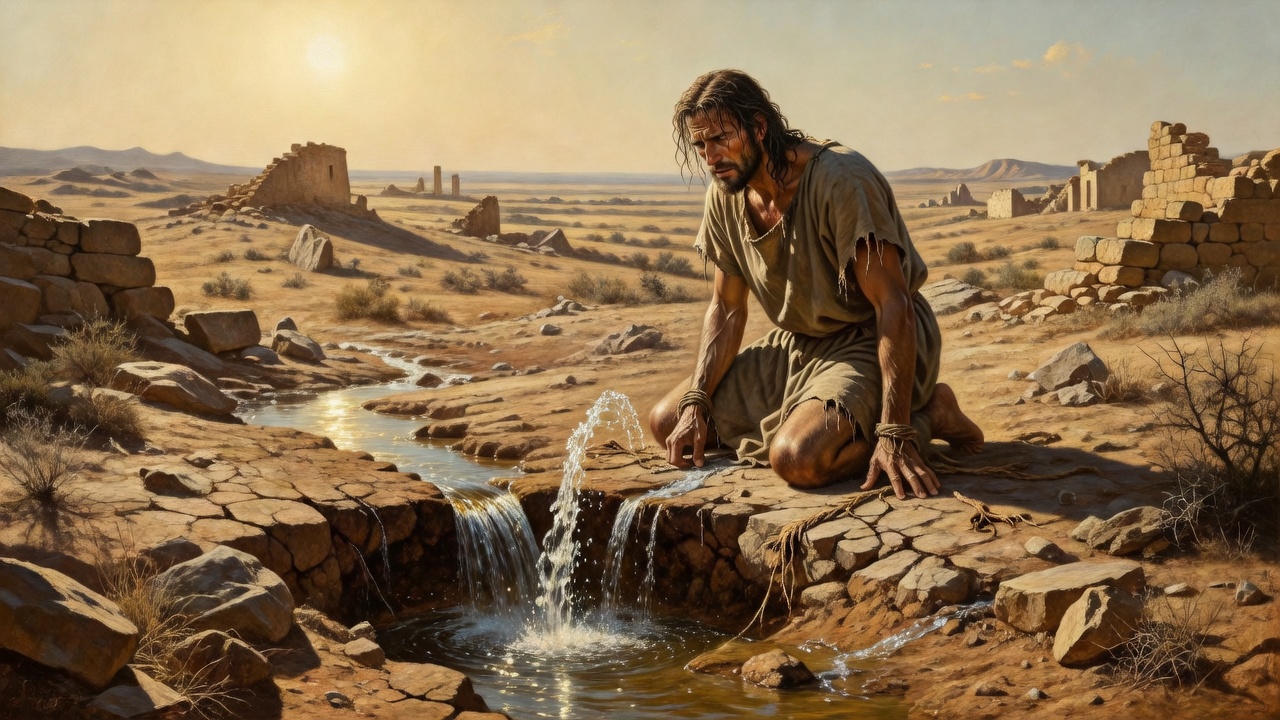
19Nin tan porer Kataj Ryos nin tzun jakxij jun jul kale je ule't mulk' a', yi at nintz le ama'la'tz yi na bi'aj Lehi. Nin tzun uc'a' Sansóntz te yi a' yi mmulk'ij, nin tzun ult yos tuch'. Nin tan yi xtxolbila'se'j nin tzun oc cyen bi' yi jun tal a'a'tz tetz En-hacore, nin ya'tz nin bi'-tz jalu'.
20Junak tzun yob ban Sansóntz tetz wi'tz ajcaw Israel, te yi tiemp yi at tzaj cunin chichamil yi e' filisteya'tz tan cawu'n le ama'la'tz.
Você sabia?
A Vingança de Sansão e a Fonte em Leí
- O topônimo Leí significa queixada em hebraico. Após derrotar mil filisteus com uma queixada fresca de jumento, Sansão chamou o local de Ramate-Leí, que significa elevação da queixada ou altura de Leí.Fontes: Lehi · Ramath-lehi · o próprio texto bíblico
- Quando Sansão clamou tomado por extrema sede e exaustão após a vitória, Deus abriu uma cavidade em Leí para prover água. A nascente resultante foi chamada de En-Hacoré, que significa fonte daquele que clama.Fontes: En-hakkore · o próprio texto bíblico
- Durante essa época de quarenta anos de domínio filisteu, três mil homens de Judá preferiram amarrar Sansão a desafiar seus governantes filisteus. Sansão julgou Israel por vinte anos durante esse período de sujeição.Fontes: Philistine Dominion · Judgeship of Samson · o próprio texto bíblico
Notas escritas com auxílio de IA a partir de fontes abertas (Theographic Bible Metadata, CC BY-SA 4.0; Easton’s Bible Dictionary, domínio público) e revisadas antes de publicar.
Lugares deste capítulo
- Ramath-lehi · Hoje: Khirbet es Siyyagh · 31.749, 35.001 · versículo 17
Só aparecem lugares com identificação de alta confiança (90% ou mais segundo as fontes acadêmicas reunidas pelo OpenBible). Mapa da época: DARE (Digital Atlas of the Roman Empire), CC BY 4.0; mapa atual: © colaboradores do OpenStreetMap; lugares: OpenBible.info (CC BY 4.0).
Créditos e licença desta tradução
Yi Antiw Bible / Yi Ac'aj Testament
Bible in Aguacateco (GT:agu:Aguacateco)
copyright © 2011 Wycliffe Bible Translators, Inc.
Language: Aguacateco
Translation by: Wycliffe Bible Translators, Inc.
Copyright Information
© 2011-02-18, Wycliffe Bible Translators, Inc. All rights reserved.
This translation text is made available to you under the
terms of the Creative Commons License: Attribution-Noncommercial-No Derivative Works.
( http://creativecommons.org/licenses/by-nc-nd/3.0/ )
In addition, you have permission to port the text to different file formats, as long as you
do not change any of the text or punctuation of the Bible.
You may share, copy, distribute, transmit, and extract portions
or quotations from this work, provided that you include the above copyright
information:
You must give Attribution to the work.
You do not sell this work for a profit.
You do not make any derivative works that change any of the actual words or punctuation of the Scriptures.
Permissions beyond the scope of this license may be
available if you contact
us with your request.
The Bible
in Aguacateco
© 2011-02-18, Wycliffe Bible Translators, Inc. All rights reserved.
This translation is made available to you under the terms of the
Creative Commons Attribution-Noncommercial-No Derivatives license 4.0.
You may share and redistribute this Bible translation or extracts from it in any format, provided that:
You include the above copyright and source information.
You do not sell this work for a profit.
You do not change any of the words or punctuation of the Scriptures.
Pictures included with Scriptures and other documents on this site are licensed just for use with those Scriptures and documents.
For other uses, please contact the respective copyright owners.
2014-04-21
Fonte: http://ebible.org/aguBl/ · eBible.org