Apocalipse 7
I 'utz laj tzij re i dios · Toque num versículo para ver as referências cruzadas.
Je ciénto cuarénta y cuátro mil aj Israel cocsax u retalil i Dios chique
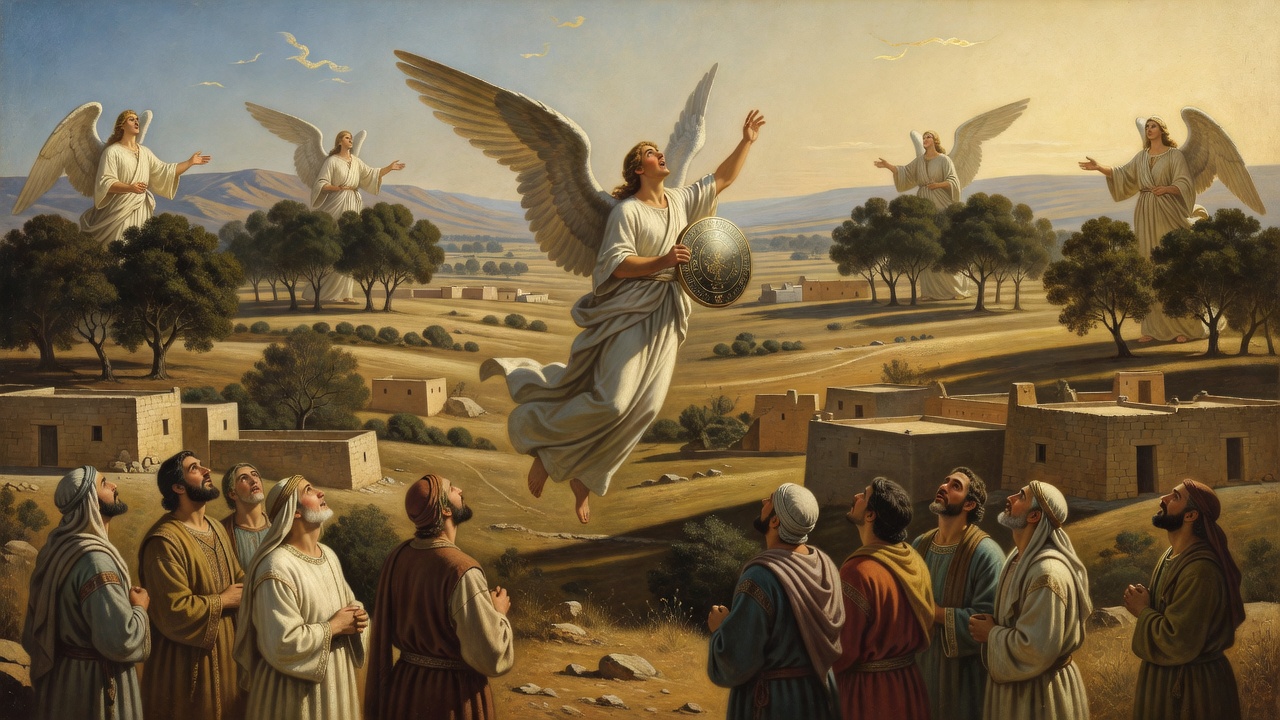
1Teʼuri xe wil chic cajib ángel je tacʼal jujun pa tak cajib esquin re u wach i jyub taʼaj. Ique-le que tijin chu ʼatixic i tew che i cajib esquin. N-quiqui ya ta che chi ca pe chuwach i jyub taʼaj, xak mi ne puwi i mar, xak mi ne chirij i cheʼ. 2Are ʼuri xwil chic jun ángel, xel lok, pa quel wi li ʼij. I u patan ire, are u cojic i retalil re i Dios chuwach qui crusil i winak, niʼpa i je re i Dios cʼaslic. Ire rucʼam pu ʼab, i cojbal re i retalil-le. I ángel-le, co xsiqʼuin chique i cajib ángel, chi ʼo piquiʼab quiqui ʼan cʼax che u wach i jyub taʼaj, xak che i mar. 3Xu bij chique:
—Mi ʼan tan cʼax che i u wach i jyub taʼaj, xak mi che i mar, xak mi che i cheʼ. Mi ʼan tan ile, cʼa caka coj ni retalil chuwach qui crusil je niʼpa i je rajchac i ka Dios —xu bij chique.
4Xak xin ta niʼpa qui qʼuial chi coc ni retalil chique: je ciénto cuarénta y cuátro mil. Je aj ronojel tak tzobaj je qui muk qui xiquin i u cʼojol i mam Israel ujer:
5Je cablajuj mil chique u muk u xiquin i mam Juda,
xak cablajuj mil chique u muk u xiquin i mam Ruben,
xak cablajuj mil chique u muk u xiquin i mam Gad,
6xak cablajuj mil chique u muk u xiquin i mam Aser,
xak cablajuj mil chique u muk u xiquin i mam Neftali,
xak cablajuj mil chique u muk u xiquin i mam Manases,
7xak cablajuj mil chique u muk u xiquin i mam Simeon,
xak cablajuj mil chique u muk u xiquin i mam Levi,
xak cablajuj mil chique u muk u xiquin i mam Isacar,
8xak cablajuj mil chique u muk u xiquin i mam Zabulon,
xak cablajuj mil chique u muk u xiquin i mam Jose,
xak cablajuj mil chique u muk u xiquin i mam Benjamin.
Ma Wan xe ril je u qʼuial winak sak qui ʼuʼ
9Teʼuri xin takej tan chic, y xe wil u qʼuial winak je tacʼal chiquiwach i je queb (i jun chi cul pa chom laj u cubibal, xak i jun chi ral Chij ca bix che.) I winak-le je petnak pa ronojel tak tinimit, pa ronojel tak jyub, pa ronojel tak quijayil, pa ronojel tak chʼawbal. Lic je qʼui i winak-le, mi jun ca tiqui chi rajlaxic qui qʼuial. Sak i qui ʼuʼ; ʼis cucʼam u xak pálma piqui ʼab. 10Ique xe siqʼuin chu bixquil i tzij-i:
I kelbal chupam i cʼax, xa cumal i queb-le chi are i ka Dios chi cul pa chom laj u cubibal, xak i Crísto, chi ral Chij ca bix che.
(Queje ile xe siqʼuin chu bixquil.)
11Conojel i ángel je tacʼal bic, qui sutim rij i chom laj cubibal, xak i nimak tak mamʼib, xak i je cajib je pacha ángel. Xqui xucba qui jolom cʼa chuwach ulew, chuwach i chom laj cubibal, y xqui coj u ʼij i Dios; 12xqui bij:
¡Amen (katzij iri)! I ka Dios lic ca majaw che chi caka bij u ʼij, caka bij u chomal, caka bij wach i nim laj u nojbal, xak caka tioxij che.
Ca majaw che chi caka coj u ʼij rumal wach ʼo puʼab, xak rumal u choʼab.
Queje i ka Dios ile queʼe ʼij sak chirij. Amen (queje ile cakaj).
(Queje ile xqui bij i ángel.)
13Are ʼuri ʼo jun chique i nimak tak mamʼib xu tzʼonoj chwe:
—¿Awetaʼam yet je pachin ique-le chi sak qui ʼuʼ? ¿Awetaʼam pa je petnak wi? —xu bij chwe.
14Yin xin bij che:
—Nim laj winak, n-wetaʼam taj. Yet awetaʼam —xin bij.
Ire xu bij:
—Je are ique chi je ʼelnak chupam i nim laj uyej chi xicʼaw chuwach i jyub taʼaj. (Qui jachom quib puʼab i Tolque.) Qui chʼajom i qui ʼuʼ, y qui sakirsam chic che u quiqʼuel i ral Chij. 15Are rumal ʼuri je ʼo chuwach i chom laj u cubibal i Dios, xak quiqui ʼan qui patan chirij. Chi paʼij chi chaʼab quiqui ʼan qui patan pa chom laj rachoch i Dios; xak ire, chi cul pa chom laj u cubibal, que u chajij na. 16Ique n-quiqui tij ta chic numic, mi cʼatic; xak n-quiqui tij ta chic uyej rumal i ʼij; n-que cʼatsax ta chic rumal u choʼab. 17Queje ile ca ʼani chique, man ire chi ral Chij ca bix che (chi xak ʼo ruʼ i chom laj cubibal re i Dios), ire que u chajij na pacha je u chij; que u cʼam bi che tak ralaxbal ya, y quiqui tuʼ ni ya chi cu ya qui cʼaslemal. Niʼpa ni uwal qui wach, i Dios cu su na chique.
Você sabia?
As tribos seladas e a grande multidão
- Apocalipse 7 apresenta o número dos selados como 144.000, doze mil de cada uma das tribos de Israel nomeadas no capítulo. Israel era outro nome de Jacó, o segundo dos filhos gêmeos de Isaque e Rebeca; o Easton's Bible Dictionary (1897) explica o nome de Jacó como alguém que segue os calcanhares de outro, ou um suplantador.Fontes: o próprio texto bíblico · Jacob (Israel)
- Embora Rúben fosse o filho mais velho de Jacó e Lia, a lista dos selados começa com Judá e depois nomeia Rúben. A lista inclui também tanto José como Manassés; Manassés era o filho mais velho de José, e Jacó adotou a ele e a seu irmão Efraim como seus próprios filhos.Fontes: o próprio texto bíblico · Reuben · Manasseh (son of Joseph)
- Depois do selamento, a visão mostra uma multidão grande demais para ser contada, de toda nação, tribo, povo e língua, de pé diante do trono e do Cordeiro, com vestes brancas e ramos de palmeira nas mãos. Um dos anciãos diz que eles saíram da grande tribulação e lavaram as suas vestes, tornando-as brancas no sangue do Cordeiro.Fontes: o próprio texto bíblico
Notas escritas com auxílio de IA a partir de fontes abertas (Theographic Bible Metadata, CC BY-SA 4.0; Easton’s Bible Dictionary, domínio público) e revisadas antes de publicar.
Créditos e licença desta tradução
I 'utz laj tzij re i dios
New Testament in Achi (I 'utz laj tzij re i dios)
copyright © 2009 Wycliffe Bible Translators, Inc.
Language: Achi
Dialect: Cubulco
Translation by: Wycliffe Bible Translators, Inc.
Achi, Cubulco
Achi' is a Mayan language very
closely related to K'iche' (Quiché in the older orthography). It is spoken by the
Achi people, primarily in the area of Baja Verapaz in Guatemala. There are two Achi'
dialects. Cubulco Achi' is spoken by approximately 48,000 people in the Cubulco area
west of Rabinal area. Rabinal Achi' is spoken by approximately 37,000 people in the
Rabinal area.
El Nuevo Testamento
en el idioma Achí de Cubulco de
Guatemala
Ediciones anteriores
Segunda edición
©2009, Wycliffe Bible
Translators
Primera edición
Publicado por
©1984, Sociedad Bíblica
Internacional
Copyright Information
© 2009, Wycliffe Inc. All rights reserved.
This translation text is made available to you under the terms of the Creative
Commons License: Attribution-Noncommercial-No Derivative Works. ( http://creativecommons.org/licenses/by-nc-nd/3.0/ ) In addition, you have
permission to port the text to different file formats, as long as you do not change
any of the text or punctuation of the Bible.
You may share, copy, distribute, transmit, and extract portions or quotations from
this work, provided that you include the above copyright information:
You must give Attribution to the work.
You do not sell this work for a profit.
You do not make any derivative works that change any of the actual words or
punctuation of the Scriptures.
Permissions beyond the scope of this license may be available if you contact us
with your request. If you want to revise a translation, use a translation in an
adaptation, or use a translation commercially, we will consider your request.
NT:segunda edición
The New Testament
in Achi
© 2009, Wycliffe Inc. All rights reserved.
This translation is made available to you under the terms of the
Creative Commons Attribution-Noncommercial-No Derivatives license 4.0.
You may share and redistribute this Bible translation or extracts from it in any format, provided that:
You include the above copyright and source information.
You do not sell this work for a profit.
You do not change any of the words or punctuation of the Scriptures.
Pictures included with Scriptures and other documents on this site are licensed just for use with those Scriptures and documents.
For other uses, please contact the respective copyright owners.
2013-01-05
Fonte: http://ebible.org/acr-acc/ · eBible.org