Lucas 7
I 'utz laj tzij re i dios · Toque num versículo para ver as referências cruzadas.
Wach i rutzirsaxic i u mocom jun capitan n-aj Israel taj
1I Jesus, are xutzin u chʼaʼatic cuʼ i winak, xoc pa tinimit Capernaum. 2Chila ʼo wi jun capitan aj Róma winak, chi ʼo jun u mocom ruʼ ja lic cʼax cu naʼo. I u mocom-le, lic iwab, ya ca camic. 3I capitan, are xu ta u tzijol i Jesus, xe u tak bi jujun nimak tak mamʼib ruʼ, chi je aj Israel winak. (I capitan, n-aj Israel taj.) Xe u tak bi chu tzʼonoxic chi ca ʼe ruʼ ja, ca ʼe cunax i u mocom. 4Ique, are xe upon ruʼ i Jesus, xe tejeb ruʼ, y ronojel qui cʼux xqui bij che:
—I capitan-i lic ca majawic que a to na. 5Ire lic coj raj yoj chi oj aj Israel, xak xu yijba jun ja re i molbal kib —xqui bij.
6Teʼuri i Jesus xa ʼe cuʼ. Are ya que upon ruʼ ja, xqui cʼulaj juban chic achiab chi quetaʼam u wach i capitan; ique je taktal li rumal ire. Xol qui bij u tzij i capitan che i Jesus. Queje iri u bim lok:
—Nim laj winak, cha cuyu in mac; n-tu chac cat cʼun cʼa ruʼ ja. N-ca majaw ta chwe we cat oc chi wachoch, man n-nim ti in ʼij chawach yet. 7Rumal-i, n-tu cowil in cʼux quin upon chawach. Xui-ri, we ca bij li yet, cutzir ni in mocom. 8Wetaʼam ile, man xak yin in ʼo piquiʼab i je wajʼatzil, xak je ʼo juban soldádo pinʼab yin, y we quin bij che jun “¡Jat!”, ca ʼec; y we quin bij che i jun chic, “¡Saʼaj!”, ca petic. We xak quin tak bi jun wajchac, ire cu ʼan na wach i quin bij che. (Queje xqui bij ique ile che i Jesus, chi u bim li capitan.)
9I Jesus, are xu ta wach u bim li capitan, lic xu bisoj. Xe u tzu i winak chi je teren chirij, y xu bij chique:
—Mi tene jun chique i aj Israel winak cul u cʼux chwe pacha u ʼanom i achi-le —xu bij.
10I ramig i capitan chi je u takom lok, xe tzalij chic ruʼ ja. Are xe uponic, xquil i achi utzirnak chic.
Wach u cʼunsaxic sak chuwach i ralab i ixok malcan
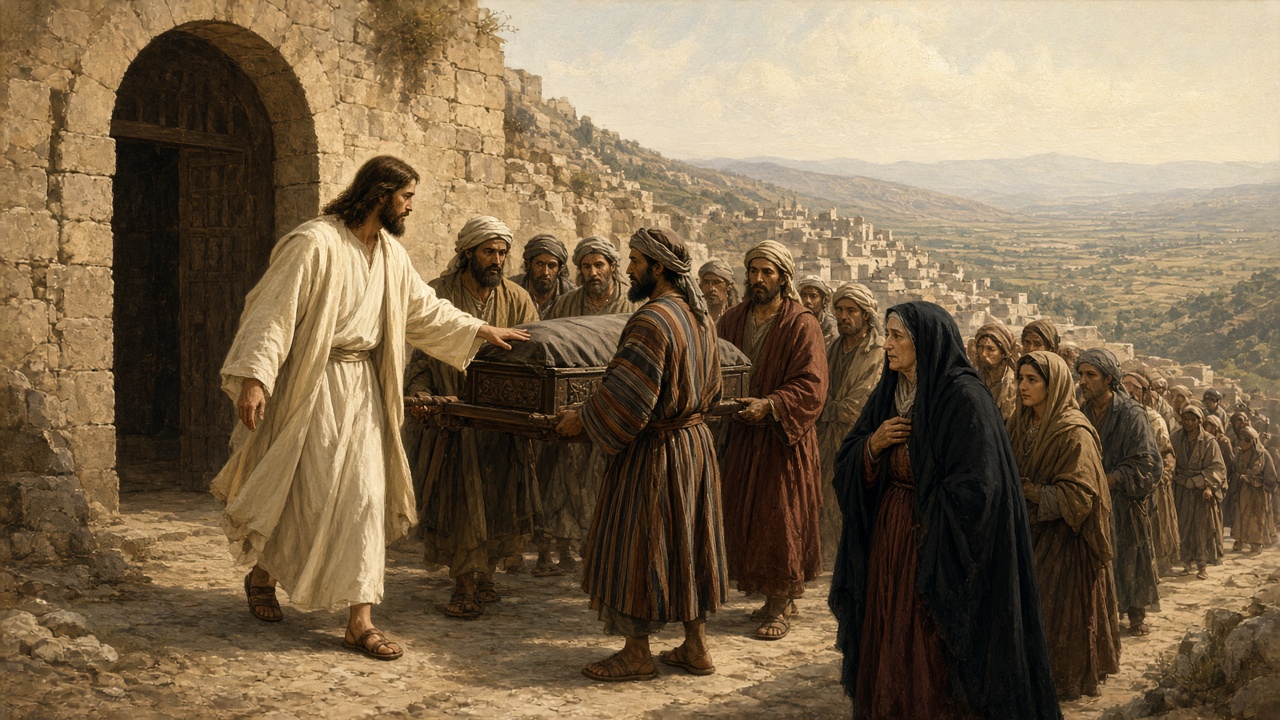
11Xoʼon chupanok, i Jesus xa ʼe che jun tinimit, Nain u bi, cucʼam quib cuʼ u tijoxelab, xak cuʼ uqʼuial winak. 12Are ya cuponic xe u cʼulaj juban winak cucʼam jun camnak, ʼenam-que chu mukic. I camnak-i, jun ala, xa jun chirij u chuch, chi ixok malcan. Je qʼui i winak aj tinimit que tijin qui ʼenam ruʼ u chuch chu mukic. 13I Kajwal Jesus, are xril i ixok, cʼax xu na u cʼux che.
—Mat oʼic —coʼon che.
14Are ʼuri xtejeb pan cuʼ, y xu yin i tzʼalam pa cotzʼol wi i camnak. I je ucʼawnak xe taqʼuiʼic. I Jesus xu bij che i camnak:
—Ala, ¡Chat walijok! —coʼon che.
15I camnak juntir xcubi ʼanok, y xoc chi lapanic cuʼ. Teʼuri i Jesus xu jach bi che u chuch. 16I winak, are xquil ile, ʼis xe oc ʼil che. Xqui jek u cojic u ʼij i Dios:
—Jun nim laj ajbil u tzij Dios cʼun-nak kuʼ yoj —xqui bij—. I Dios xoj ol u tobej yoj oj u winak ire —xe cha.
17Lic xel u tzijol i Jesus, wach ca tijin chu ʼonquil pa ronojel i jyub que i aj Israel winak, xak i chirij chuwach.
Wach xu bij i Jesus chique u tijoxelab i ma Wan
18I ma Wan aj kajsanel ya, i u tijoxelab ire qui bim che wach tak cu ʼan i Jesus. Rumal-i, xe u siqʼuij queb chique, 19xe u tak bi ruʼ i Jesus. Xu bij chique: “Jix ruʼ i Jesus y chi tzʼonoj che we are ire i Tolke chi koyʼem. Mokxa n-are taj, mok cʼa ca koyʼej jun chic,” xu bij. 20I u takon i ma Wan, are xe uponic, xe tejeb ruʼ i Jesus y xqui bij che:
—I ma Wan aj kajsanel ya, xoj u tak lok col ka tzʼonoj jun tzij chawe. ¿Mok yet i Tolke chi u bim i Dios ca cʼunic? ¿O xa cakoyʼej chic jun chic? —xqui bij che.
21Che i ʼij-le chi xe upon i u takon i ma Wan, i Jesus xe u cunaj uqʼuial iwabib. Niʼpa i cʼax ʼo chique, niʼpa i yobil ʼo chique, niʼpa itzel tew, ʼis xresaj chique. Xak je qʼui i mawach xe u tzunsaj. 22Rumal-i, i Jesus xu bij chique u takon i ma Wan:
—Jix ruʼ i ma Wan y chi bij che wach iwilom, xak wach i tom, chi quin tijin yin chu ʼanic. Chi bij che chi wumal yin, i mawach ya xe tzunic; xak i je sic, xe binic; xak i iwabib chi ʼo itzel cʼax “lepra” chique, xe utziric; xak i je tac, xe tanic; xak i camnak xe walijic; xak i nibaʼib qui tom i ʼutz laj tzij re i quelbal pa cʼax. (Are ile quin tijin chu ʼonquil.) 23Xak chi bij che, chi ʼutz que ique niʼpa n-quiqui sach ti u cubibal qui cʼux chwe —xu bij i Jesus chique u tijoxelab i ma Wan.
I Jesus xu bij chique i winak wach u patan i ma Wan
24Are xe ʼe ique chi je u takom li ma Wan, i Jesus xu jek u bixquil chique i winak wach u ʼanom i ma Wan.
—Yix, are xix ʼe che i jyub tzʼinilic que i tabej re i ma Wan, ¿wach xi bij yix que iwila? ¿Xix ʼe bawa chi rilic jun ʼes ca silab rumal i tew? N-are taj. 25¿Wach i xix ʼe chi rilic? ¿Xataba xix ʼe chi rilic jun achi, chom u wikic rib u ʼanom che u ʼuʼ? N-are taj. Niʼpa i ʼo qui ʼuʼ chom, pakalic, niʼpa i ʼis ʼo cuʼ wach tak quiqui rayij, ique ne te ʼo pa tak jyub, ique je jekel pa rachoch i ʼatol tzij. 26¿Wach i xe iwila ʼut? ¿Jun ajbil u tzij i Dios? Katzij, are. I jun chi xiwilo-le, mas nim ni u ʼij chiquiwach i xa je ajbil u tzij i Dios chi je icʼawnak. 27I ma Wan-le are i jun chi u bim can i Dios chi cu tak na lok, ca nabeaj chuwach i Toliwe. I Dios u bim can chupam u wuj:
Yin nabe quin tak na bi jun ajbil in tzij chawach yet,
cu yijba ni a be chawach.
28Chitapeʼ: i ma Wan aj kajsanel ya, nim ni u ʼij ire chiquiwach conojel i winak. Xui-ri, woʼor conojel niʼpa i que oc na pa ʼutz laj ʼatbal tzij re i Dios, mas ʼutz na que ique chuwach ire (man i ma Wan-le n-xril ti ʼatbal tzij re i Dios petnak waral chuwach i jyub taʼaj). (Queje ile xu bij i Jesus chique i winak.)
29I winak, are xqui ta ile, ʼis xqui bij chi Dios ʼutz i cu ʼano, xak queje xqui bij i aj tzʼonol alcawal ile, man ique ʼis xqui cojo wach i xu bij i ma Wan, xak xqui tzʼonoj u kajsaxic ya piquiwi rumal. 30Xui-ri, i je tijonel re i ujer ʼatbal tzij, xak i aj Fariséo n-xqui tzʼonoj ti u kajsaxic ya piquiwi. Rumal ʼuri ʼalaj chi xqui xutuj wach u yijbam i Dios chique. 31I Jesus xak xu bij chique i je ʼo chila:
—I winak woʼor ¿wach tak que in junamsaj ruʼ? ¿Wach i que majawic? 32Ique xa je pacha acʼalab je cul xol tak be; jutzobaj que siqʼuin chique i cachiʼil: “Yix lic n-ta ʼo quiwaj,” quiqui bij. “Yoj xka xutʼij i suʼ chiwe, péro n-xiwaj ti xix xajawic. Teʼuri xka bixaj jun bix re i bisonbal, péro n-xix oʼ taj,” quiqui bij. 33Queje que tijin i winak chu ʼanic woʼor; n-ta ʼo cacaj, man xcʼun i ma Wan aj kajsanel ya, chi n-ta wa cu tijo, xak n-ta víno cu tuʼu. Y qui bij yix, xa ʼo itzel tew ruʼ. 34Are xin cʼun yin in Achi aj Chicaj, ʼis ronojel quin tijo y quin tuʼu, y qui bij yix lic in aj numel, xak in aj ʼabarel, qui bij yix. Xak qui coj in mac chi yin in cachiʼil ajmaquib, xak i mal laj tak aj tzʼonol alcawal. 35Xui-ri, we te xi ta u be wach cu ʼan i ma Wan, xak wach quin ʼan yin, quiwetamaj ʼuri chi Dios lic ʼo u noʼoj.
Jun ixok xu chʼaj i rakan i Jesus ruʼ uwal uwach
36ʼO jun aj Fariséo ma Simon u bi, u bim che i Jesus que u tija i wa ruʼ. I Jesus xa ʼe ruʼ chi rachoch y xcubi chi waʼim. 37Che i tinimit-le, ʼo jun ixok chi lic ajmac laj ixok. Are xu ta rason chi i Jesus ca tijin chi waʼim pa rachoch i aj Fariséo, ire xa ʼe cuʼ. Rucʼam bi jun chom laj baxo ʼantal che abaj pacha sakchoʼ, nojnak che cunbal muy. 38Are xuponic, xqʼuiji che i rakan i Jesus. Xoʼic xqʼuiji chila. Are ʼuri xoc chu chʼajic i rakan i Jesus ruʼ uwal uwach, y xu su ruʼ u wi. Teʼuri xu tzʼubaj u wach rakan i Jesus, xak xu coj i cunbal muy che.
39I aj Fariséo chi ʼo i Jesus chi rachoch, are xril ire ile, xu bij pu cʼux: “I achi-le, n-ajbil tu tzij i Dios,” xu bij. “We tene are, cretamaj ʼuri bi chi ixokil ile chi cu yin i rakan-le; xak cretamaj ʼuri chi lic ajmac laj ixok.” Queje ile xu chʼob i aj Fariséo pu cʼux.
40Teʼuri i Jesus xu bij che:
—Ma Simon, ʼo jun tzij cwaj quin bij chawe —coʼono.
—ʼUtz, Nim laj Winak, cha bij chwe —xu bij i aj Fariséo.
41Teʼuri i Jesus xu bij jun tijojbal tzij che. Queje iri xu bij:
—Je ʼo queb achiab ʼo qui cʼas ruʼ jun achi. I jun ʼo joʼob ciénto u cʼas ruʼ, i jun chic, xa cincuénta u cʼas ruʼ. 42Ique n-que tiqui ta chic chu tojic; i achi xu cuy ʼuri i qui mac, y xu chup i qui cʼas. Cha bij pe chwe, ¿pachin chique i je queb-le ʼo ni mas cʼaxnabal u cʼux che i xcuyuw qui mac? (Queje xu bij i Jesus ile.)
43Teʼuri i ma Simon xu bij che:
—Quin bij yin are i jun chi mas nim u cʼas chuptalic —xcha.
I Jesus xu bij:
—ʼUtz i xa bij —coʼono.
44I Jesus xu takej i ixok, teʼuri xu bij che i ma Simon:
—¿Cawil i ixok-i? ʼUtz i ca tijin chu ʼanic. Yet, are xin oc chi, che awachoch, n-ta ya xa ya chwe, chʼajbal re wakan. Xui-ri, i ixok-i, xu chʼaj i wakan ruʼ uwal uwach, y xu su ruʼ u wi. 45Yet n-xin a tzʼubaj taj, tioxbal-we, are xin a cʼulaj. I ixok-i nu mayim ti u tzʼubaxic i wakan niʼpa i woquic lok. 46Yet mi tene acéite xa coj che in jolom; xui-ri, ire u jamom ni cunbal muy rij wakan. 47Queje ile, u ʼalijinsam chi lic cʼax quin u naʼo. I u ʼanom-i, cʼutbal-re che, chi qʼui u mac ya cuytajnak chic. Xui-ri, jun chi n-ta kas u mac cuytajnak che, ire n-ta kas cʼaxnabal u cʼux ʼuri. (Queje xu bij i Jesus ile che i ma Simon.)
48Teʼuri xu bij che ixok:
—I a mac ya cuytajnak chic —coʼono.
49Teʼuri i juban chi que tijin che i waʼim xe oc chu bixquil chiquiwach:
—¿Bi chi achial ire-le, chi xak cu cuy i qui mac i winak? —xe cha.
50I Jesus n-xu coj ta retalil wach xqui bij ique. Xu bij che i ixok:
—At ʼelnak chupam a mac man xa cuba a cʼux chwe. Jat chi awachoch; mat cʼachir chic —xu bij che.
Você sabia?
Fé, compaixão e a pergunta de um profeta
- O Easton's Bible Dictionary (1897) descreve Cafarnaum como uma cidade da Galileia que não é mencionada no Antigo Testamento e que se tornou a cidade que Jesus tratava como sua depois de ser expulso de Nazaré, cenário de muitos episódios da sua vida. Neste capítulo, ele chega ali e encontra o servo muito estimado de um centurião à beira da morte; anciãos judeus rogam, dizendo que o oficial ama a nação deles e construiu a sinagoga deles.Fontes: Capernaum · o próprio texto bíblico
- O Easton's Bible Dictionary (1897) liga o nome Naim a uma palavra hebraica que significa pastos verdes ou amável, e identifica a cidade com a aldeia de Nein, na encosta noroeste do Jebel ed-Duhy, também chamado monte Moré ou Pequeno Hermom, a cerca de quatro milhas de Tabor e vinte e cinco milhas a sudoeste de Cafarnaum, acima da planície de Esdrelão. À porta da cidade, Jesus encontrou o funeral do filho único de uma viúva, e o espanto se espalhou pela multidão.Fontes: Nain · o próprio texto bíblico
- João Batista é apresentado como o precursor do Senhor e como homem de linhagem sacerdotal: seu pai, Zacarias, era sacerdote da turma de Abias, e sua mãe, Isabel, era uma das filhas de Arão. A missão dele é descrita como objeto de profecia, e neste capítulo Jesus diz às multidões que João é mais do que um profeta, o mensageiro enviado adiante para preparar o caminho, enquanto os discípulos de João perguntam se Jesus é aquele que havia de vir.Fontes: John the Baptist · o próprio texto bíblico
Notas escritas com auxílio de IA a partir de fontes abertas (Theographic Bible Metadata, CC BY-SA 4.0; Easton’s Bible Dictionary, domínio público) e revisadas antes de publicar.
Lugares deste capítulo
- Nain · Hoje: Nein · 32.631, 35.350 · versículo 11
- Judea · Hoje: Judea 1 · 31.777, 35.234 · versículo 17
Só aparecem lugares com identificação de alta confiança (90% ou mais segundo as fontes acadêmicas reunidas pelo OpenBible). Mapa da época: DARE (Digital Atlas of the Roman Empire), CC BY 4.0; mapa atual: © colaboradores do OpenStreetMap; lugares: OpenBible.info (CC BY 4.0).
Créditos e licença desta tradução
I 'utz laj tzij re i dios
New Testament in Achi (I 'utz laj tzij re i dios)
copyright © 2009 Wycliffe Bible Translators, Inc.
Language: Achi
Dialect: Cubulco
Translation by: Wycliffe Bible Translators, Inc.
Achi, Cubulco
Achi' is a Mayan language very
closely related to K'iche' (Quiché in the older orthography). It is spoken by the
Achi people, primarily in the area of Baja Verapaz in Guatemala. There are two Achi'
dialects. Cubulco Achi' is spoken by approximately 48,000 people in the Cubulco area
west of Rabinal area. Rabinal Achi' is spoken by approximately 37,000 people in the
Rabinal area.
El Nuevo Testamento
en el idioma Achí de Cubulco de
Guatemala
Ediciones anteriores
Segunda edición
©2009, Wycliffe Bible
Translators
Primera edición
Publicado por
©1984, Sociedad Bíblica
Internacional
Copyright Information
© 2009, Wycliffe Inc. All rights reserved.
This translation text is made available to you under the terms of the Creative
Commons License: Attribution-Noncommercial-No Derivative Works. ( http://creativecommons.org/licenses/by-nc-nd/3.0/ ) In addition, you have
permission to port the text to different file formats, as long as you do not change
any of the text or punctuation of the Bible.
You may share, copy, distribute, transmit, and extract portions or quotations from
this work, provided that you include the above copyright information:
You must give Attribution to the work.
You do not sell this work for a profit.
You do not make any derivative works that change any of the actual words or
punctuation of the Scriptures.
Permissions beyond the scope of this license may be available if you contact us
with your request. If you want to revise a translation, use a translation in an
adaptation, or use a translation commercially, we will consider your request.
NT:segunda edición
The New Testament
in Achi
© 2009, Wycliffe Inc. All rights reserved.
This translation is made available to you under the terms of the
Creative Commons Attribution-Noncommercial-No Derivatives license 4.0.
You may share and redistribute this Bible translation or extracts from it in any format, provided that:
You include the above copyright and source information.
You do not sell this work for a profit.
You do not change any of the words or punctuation of the Scriptures.
Pictures included with Scriptures and other documents on this site are licensed just for use with those Scriptures and documents.
For other uses, please contact the respective copyright owners.
2013-01-05
Fonte: http://ebible.org/acr-acc/ · eBible.org