João 7
I 'utz laj tzij re i dios · Toque num versículo para ver as referências cruzadas.
I u chaʼ i Jesus n-xqui coj ti u tzij
1Teʼuri i Jesus xui chic ca bin pa tak jyub re i Galiléa; n-craj ta ca qʼuiji pa Judéa man i nimak tak aj Israel chila cacaj quiqui camsaj. 2Teʼuri, ya xnakajab jun chic nimaʼij que i aj Israel winak; are i nimaʼij re i mujbal. 3Are ʼuri i u chaʼ i Jesus xqui bij che:
—Mat canaj waral; jat pa Judéa, cha cʼutu chique i quetaʼam a wach chila wach tak i milágro ca ʼano. 4Man we jun craj ca ʼetamax u wach u patan, n-coʼon tu chac toʼ aliʼal. Yet chi cat tijin chu ʼonquil nimak tak ʼanic, cha ʼana ʼuri chiquiwach conojel i winak —xe cha che.
5ʼAlaj ʼuri chi xak mi ne u chaʼ n-xqui coj taj we Tolque. 6I Jesus xu bij chique:
—Maja cu rik i ʼij chinwach chi quin ʼalijinsaj in pachin yin; chiwe yix, pachique ʼij ʼis ʼutz. 7I winak aj u wach i jyub taʼaj n-tzel ta quix quil yix, péro yin, tzel quin quilo, man quin ʼalijinsaj chique chi n-ʼus taj wach i que tijin chu ʼanic. 8Jix yix pa nimaʼij-le; yin cʼa maja na quin ʼec, man maja cu rik i ʼij chinwach.
9Queje ile xu bij chique y xcanaj pa Galiléa.
I u tzij i Jesus petnak ruʼ i Dios
10Are je ʼenak chic u chaʼ, teʼuri i Jesus xak xa ʼe paʼ nimaʼij. N-xa ʼe ta chiquixol i winak, n-kas ta xu cʼut rib are xa ʼec. 11I nimak tak aj Israel winak quiqui tzucuj i Jesus pa nimaʼij-le. Quiqui bij:
—¿Pa nawi ʼo wi i achi-le? —que cha.
12I winak pa nimaʼij-le, xa quiqui lap i Jesus chiquiwach. ʼO i que binic: “Ile lic ʼutz laj achi,” que cha. Xak ʼo i que binic: “Ile n-ʼus taj; xa que u tʼor i winak,” que cha. 13Péro xa aliʼal quiqui lap i Jesus chiquiwach, man quiqui xij quib chique i nimak tak aj Israel.
14Are nicʼajarnak chic i nimaʼij, i Jesus xoc bi pa rachoch i Dios; teʼuri xoc chi qui tijoxic i winak chila. 15I nimak tak aj Israel winak xqui bisoj wach tak i xu cʼutu; xqui bij: ¿Wach retamaxic tak ile u ʼanom? Ire n-ta u nawsam wi rib —que cha.
16I Jesus xu bij chique:
—Are i quin tijin chu cʼutic n-are ti yin xin nojij, lic are petnak ruʼ i xin takaw lok. 17Pachin jun lic craj cu ʼan pacha craj i Dios, cu nabej ʼuri pa xpe wi i cʼutunic quin ʼano; cretamaj we petnak ruʼ i Dios, o xa petnak pin nojbal yin. 18Jun, we xui cu cʼut u nojbal ire, xa craj ʼuri cocsax u ʼij. Péro jun, we cu tzucuj u cojic u ʼij i Jun chi takawnak lok, cu bij ʼuri i sak laj tzij, xak n-que u tʼor ta i winak. 19Katzij, i mam Moises xu cʼut i ʼatbal tzij re i Dios chiwe, xui-ri, mi jun chiwe cu ʼano pacha cu bij i ʼatbal tzij-le. Yix quiwaj quin i camsaj (rumal quin cunan pa uxlambal ʼij) —xu bij i Jesus chique. 20I winak xqui laʼ u wach che:
—Xa at chʼuj; ¿pachin craj a camsaxic? —xe cha che.
21I Jesus xu bij chique:
—Chupam jun uxlambal ʼij xin ʼan jun milágro. Yix xi bisoj man pa jun uxlambal ʼij xin ʼan wi. 22Chiwila ba i qui ʼan yix. ʼOlic qui ʼan retal circuncision che i qui chʼacul acʼalab pa tak uxlambal ʼij. We xel wajxakib ʼij jun ral ala, queje ile qui ʼano, man queje ile xu cʼut i mam Moises chiwe. Katzij, n-are ti mam Moises xjekaw u cʼutic ile, xa are iwatit i mam que ʼanaw chic ile are xu bij i mam Moises i tzij-le. 23Yix qui ʼan pen u ʼanic pacha xu bij i mam Moises; qui ʼan retal circuncision che i qui chʼacul iwacʼal, tupu xa pa uxlambal ʼij. We queje ile qui ʼan yix, ¿wuchac ʼuri ca pe iwoywal chwe, xa rumal xwesaj ronojel i cʼax che u chʼacul jun achi che i uxlambal ʼij? 24Mi coj u mac jun winak we n-iwetaʼam taj we kas ʼo u mac. Chiwila u be bien we kas ʼo u mac, teʼuri chi bij u mac —xu bij i Jesus chique.
I Jesus, ruʼ i Dios petnak wi
25Teʼuri i winak chi je jekel pa Jerusalen xe oc chu bixquil:
—¿N-are ta bari i achi-le ca tzucuxic man cacaj quiqui camsaj? 26Chiwilapeʼ, chi ʼo wi; lic ca chʼaʼat chiquiwach conojel i winak. ¿Wuchac n-ta ca bix che? ¿Xataba i ka wi ka jolom qui cojom chic u tzij? ¿Xataba qui bim ique we are i Crísto, chi Tolke? 27N-are ti Crísto ile. Yoj, ʼut, ketaʼam pa petnak wi i achi-le; xui-ri, i Crísto, mi jun quetama-nic pa ca pe wi —xe cha.
28I Jesus xu ta wach i quiqui bij are ca tijin chu cʼutic chique i winak pa rachoch i Dios. Teʼuri co xchʼawic y xu bij:
—Qui bij yix iwetaʼam in wach; qui bij yix iwetaʼam pa xin pe wi. Xui-ri, yin n-toʼ ta in cʼun-nak pin wach wi. In cʼun-nak man in taktal li rumal i Jun chi yix n-iwetaʼam tu wach, péro ire sakil. 29Yin ʼut, wetaʼam u wach, man ruʼ ire in petnak wi, are ire xin takaw lok —xu bij i Jesus chique.
30Are ʼuri laj xcaj xqui tzʼapij, péro n-ta jun xa ʼanawic, man cʼa maja cu rik i ʼij u chʼicom i Dios. 31Xui-ri je qʼui i winak xqui cuba qui cʼux che y xqui bij:
—Are ca cʼun i Crísto, ¿xataba ʼo mas tan chic i milágro cu ʼano, chuwach i cu ʼan i achi-ri? N-ta chic mas —xe cha.
Je taktal bi i policía chu chapic i Jesus
32I aj Fariséo xqui ta chi quiqui bij i winak chi Jesus are i Crísto. Rumal-i, ique junam cuʼ i ajwab sacerdóte xe qui tak bi policía chi aj patanib re i rachoch i Dios, que ʼe qui chapr i Jesus. 33I Jesus xu bij chique i winak:
—Xa ʼatal ʼij in ʼo iwuʼ, teʼuri quin tzalij chic ruʼ i xin takaw lok. 34Yix quin i tzucuj na, péro n-quin i rik taj, man pa i quin ʼe wi yin, n-ca yaʼ ta chiwe quix ʼe chila —xu bij.
35I qui nimakil i aj Israel winak xqui bij chiquiwach:
—¿Pa nawi ca ʼe wi i achi-ri chi yoj n-coj tiqui ta chu rikic? ¿Mok ca ʼe cuʼ i kach aj tinimit chi je ʼenak chiquixol i aj Griégo winak? ¿Mokxa que u cʼutu chique i aj Griégo chila? 36¿Wach queʼel i tzij-i chi xu bij chake? Man xu bij: “Quin i tzucuj na, péro n-quin i rik taj, man n-quix oc taj pa i quin ʼe wi yin,” xcha. ¿Wach usucʼ ile? —xe cha.
Niʼpa i cacaj, quiqui rik i cʼaslic ya ruʼ i Jesucrísto
37I qʼuisbal ʼij re i nimaʼij chila, mas ʼo u ʼij. Chupam i ʼij-le, i Jesus xtaqʼui ʼan chiquiwach i winak y co xu bij:
—Pachin jun ca cʼatic, cha pet wuʼ yin, chol u tuʼu i ya chi quin sujuj. 38We jun coʼon ile, queʼel ʼuri pacha i tzʼibtal can chupam i wuj re i Dios, chi cu bij: “Pachin i cu cuba u cʼux chwe yin, u cʼux ire coʼon pacha ralaxbal ya; pacha ya cʼaslic quel che,” —xu bij i Jesus chique.
39I tzij chi xu bij i Jesus-le queʼelok: niʼpa i quiqui cuba qui cʼux che ire, coc ni u Tewal i Dios piqui cʼux coʼon panok. Are xu bij ile, cʼa maja ca kaj li u Tewal i Dios chuwach i jyub taʼaj, man cʼa maja coc i Jesus che u ʼij u chomal.
I winak xqui chap quib chi tzij rumal i Jesus
40ʼO jujun chiquixol i winak, are xqui ta ile, xqui bij chiquiwach:
—Katzij, i achi-ri are i ajbil u tzij i Dios chi koyʼem —xe cha.
41ʼO juban chic xqui bij:
—Iri are i Crísto chi koyʼem —xe cha.
Xak ʼo juban chic xqui bij:
—¿Wach u ʼonquil ile? ¿Xataba ʼo Tolke ca pe pa Galiléa? ¡N-taj! 42Chupam i wuj re i Dios cu bij: i Crísto chi ca petic, u muk u xiquin i ujer mam David: xak cu bij chi calax na pu tinimit i mam David; ile are i tinimit Belen. Rumal-i, n-are ti achi-le —xe cha.
43Teʼuri i winak xqui chap quib chi tzij rumal i Jesus. 44ʼO jujun xcaj teʼek u tzʼapixic, péro n-ta jun xu ya rib chu ʼonquil.
I je rajʼatzil i rachoch i Dios n-xqui coj ti u tzij i Jesus
45Teʼuri i policía re i rachoch i Dios xe tzalij chal cuʼ i je takawnak bic. I aj Fariséo winak xak i ajwab sacerdóte xqui tzʼonoj chique i policía-le:
—¿Wuchac n-xi cʼam ta lok? —xe cha.
46I policía xqui bij:
—N-ta jun chic achi ka tom wi ruʼ, pacha i tzij chi cu bij i achi-le; rumal-i n-xka cʼam ta lok —xe cha.
47Teʼuri i aj Fariséo xqui bij chique i policía:
—¿Xak queje yix xix tʼortaj rumal i achi-le? 48¿Xataba ʼo jun chake yoj oj aj Fariséo, u cojom u tzij? Mi jun. Xak mi jun kajʼatzil yoj u cubam u cʼux che i achi-le. 49I toʼ winak-le, qui cojom; péro ique n-quiqui ta tu be i ʼatbal tzij tzʼibtal canok; ique-le ʼo i cʼokbal-re i Dios piquiwi —xqui bij i aj Fariséo winak.
50Are ʼuri ʼo jun chiquixol ique xchʼawic. Are i ma Nicodémo chi upon-nak ruʼ i Jesus aliʼal chaʼab. Xu bij chique:
51—I ka ʼatbal tzij tzʼibtal can rumal i mam Moises n-cu ya ta chake caka ya jun achi pa tojpen we n-caka ya ta che cu to rib chakawach. ʼO u chac coj taqʼui pa rakan we kas ʼo u mac.
52I rachiʼil xa xqui yoʼya, y xqui bij che:
—¿Xataba yet xak at aj chila pa Galiléa? Cha tzucuj chupam i wuj re i Dios; cawil ʼut chi mi jun ajbil u tzij i Dios ca pe pa Galiléa —xe cha che.
53Teʼuri, chi qui jujunal wi, xe ʼe chi cachoch.
Você sabia?
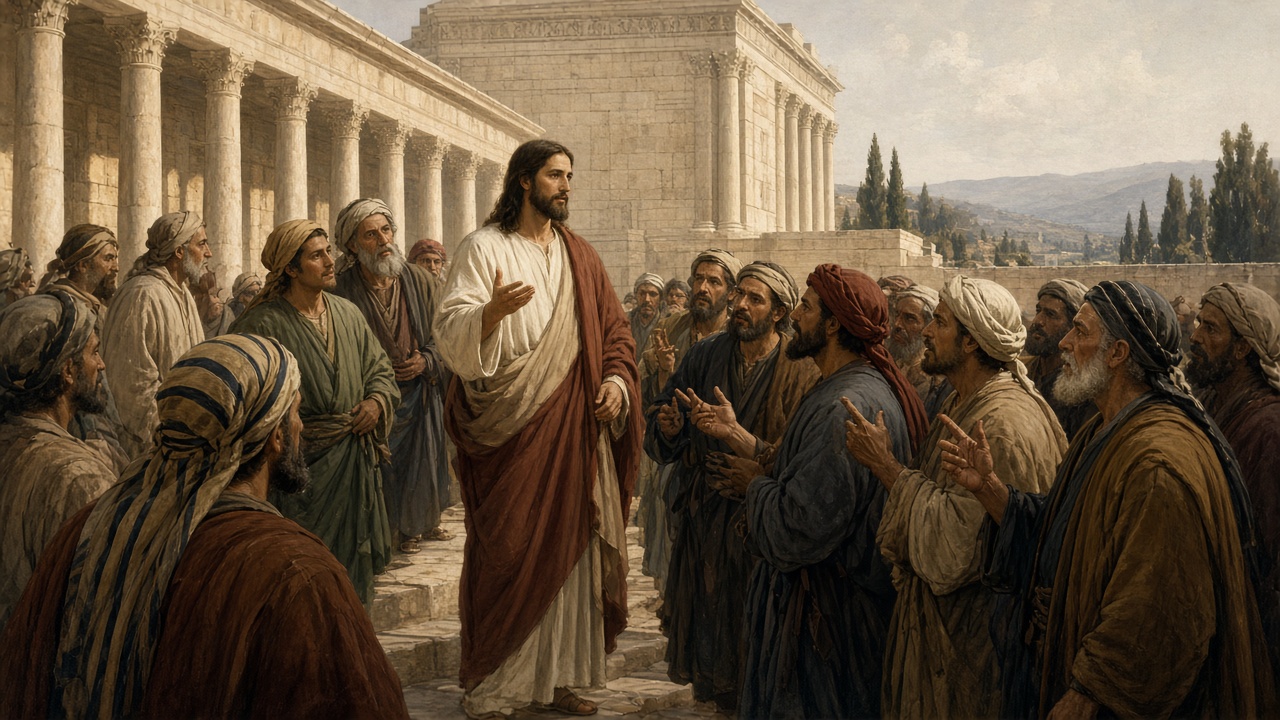
Jesus na Festa dos Tabernáculos
- Quando se aproximava a Festa judaica dos Tabernáculos, uma festa de sete dias, Jesus permaneceu na Galileia e evitou a Judeia, onde queriam matá-lo. Naquele tempo, a Judeia era a mais meridional das três divisões romanas da Palestina, distinta da Galileia e da Samaria; mais tarde ele subiu à festa em segredo e ensinou nos pátios do templo.Fontes: o próprio texto bíblico · Feast of Tabernacles · Judea
- A multidão estava dividida sobre o lugar de onde viria o Cristo. Alguns diziam que as Escrituras o colocam na linhagem de Davi e em Belém, a aldeia onde viveu Davi, oitavo e mais novo filho de Jessé; outros objetavam que ele não podia vir da Galileia, região há muito chamada Galileia dos gentios, e os fariseus insistiam que nenhum profeta vem de lá.Fontes: o próprio texto bíblico · David · Galilee
- Nicodemos, fariseu e membro do Sinédrio, já tinha ido a Jesus de noite. Quando os guardas enviados para prender Jesus voltaram sem ele, Nicodemos protestou e perguntou se a lei deles condenava um homem antes de ouvi-lo e de apurar o que ele tinha feito.Fontes: o próprio texto bíblico · Nicodemus
Notas escritas com auxílio de IA a partir de fontes abertas (Theographic Bible Metadata, CC BY-SA 4.0; Easton’s Bible Dictionary, domínio público) e revisadas antes de publicar.
Lugares deste capítulo
- Galilee · 32.760, 35.527 · versículos 1, 3, 9, 41, 52
- Judea · Hoje: Judea 1 · 31.777, 35.234 · versículos 1, 3
- Jerusalem · 31.777, 35.234 · versículo 25
- Bethlehem · 31.704, 35.208 · versículo 42
Só aparecem lugares com identificação de alta confiança (90% ou mais segundo as fontes acadêmicas reunidas pelo OpenBible). Mapa da época: DARE (Digital Atlas of the Roman Empire), CC BY 4.0; mapa atual: © colaboradores do OpenStreetMap; lugares: OpenBible.info (CC BY 4.0).
Créditos e licença desta tradução
I 'utz laj tzij re i dios
New Testament in Achi (I 'utz laj tzij re i dios)
copyright © 2009 Wycliffe Bible Translators, Inc.
Language: Achi
Dialect: Cubulco
Translation by: Wycliffe Bible Translators, Inc.
Achi, Cubulco
Achi' is a Mayan language very
closely related to K'iche' (Quiché in the older orthography). It is spoken by the
Achi people, primarily in the area of Baja Verapaz in Guatemala. There are two Achi'
dialects. Cubulco Achi' is spoken by approximately 48,000 people in the Cubulco area
west of Rabinal area. Rabinal Achi' is spoken by approximately 37,000 people in the
Rabinal area.
El Nuevo Testamento
en el idioma Achí de Cubulco de
Guatemala
Ediciones anteriores
Segunda edición
©2009, Wycliffe Bible
Translators
Primera edición
Publicado por
©1984, Sociedad Bíblica
Internacional
Copyright Information
© 2009, Wycliffe Inc. All rights reserved.
This translation text is made available to you under the terms of the Creative
Commons License: Attribution-Noncommercial-No Derivative Works. ( http://creativecommons.org/licenses/by-nc-nd/3.0/ ) In addition, you have
permission to port the text to different file formats, as long as you do not change
any of the text or punctuation of the Bible.
You may share, copy, distribute, transmit, and extract portions or quotations from
this work, provided that you include the above copyright information:
You must give Attribution to the work.
You do not sell this work for a profit.
You do not make any derivative works that change any of the actual words or
punctuation of the Scriptures.
Permissions beyond the scope of this license may be available if you contact us
with your request. If you want to revise a translation, use a translation in an
adaptation, or use a translation commercially, we will consider your request.
NT:segunda edición
The New Testament
in Achi
© 2009, Wycliffe Inc. All rights reserved.
This translation is made available to you under the terms of the
Creative Commons Attribution-Noncommercial-No Derivatives license 4.0.
You may share and redistribute this Bible translation or extracts from it in any format, provided that:
You include the above copyright and source information.
You do not sell this work for a profit.
You do not change any of the words or punctuation of the Scriptures.
Pictures included with Scriptures and other documents on this site are licensed just for use with those Scriptures and documents.
For other uses, please contact the respective copyright owners.
2013-01-05
Fonte: http://ebible.org/acr-acc/ · eBible.org