João 10
I 'utz laj tzij re i dios · Toque num versículo para ver as referências cruzadas.
I je re i Dios quetaʼam u wach i chajinel-que
1(I Jesus xu bij jun tzij chique tijojbal-que):
—Sak laj tzij i quin bij chiwe: jun winak, we craj coc pa coral cuʼ i chij, cu tzucuj i ocbal; we n-coc ta che i ocbal, we xa cu cʼak rib puwi i coral, katzij xa iliʼom ʼuri, xa craj que relʼaj i chij. 2Jun we che i ocbal coc wi, are aj yuʼul chij ʼuri. 3I aj chajal re i ocbal retaʼam u wach, y cu ya ʼuri che coquic. Xak i chij quetaʼam u chʼawbal i aj yuʼul-que. Ire cu bij qui bi u chij are que u siqʼuij, y que resaj li pa coral. 4Are que ʼel li u chij, ire ca nabeaj chiquiwach; y u chij que terej bi chirij, man quetaʼam u chʼawbal. 5Ique xak n-que terej ta chirij jun we n-quetaʼam tu wach, xa que ʼanmaj chuwach, man n-quetaʼam tu wach u chʼawbal —xu bij i Jesus chique.
6I tzij-le, are jun tijojbal tzij xu bij i Jesus chique, péro ique n-xqui ta tu be wach usucʼ i xu bij chique.
I Jesucrísto queje pacha ʼutz laj aj yuʼul chij
7Rumal-i, i Jesus xu bij chic jun tzij chique:
—Sak laj tzij i quin bij chiwe: yin in ocbal que i chij. 8Niʼpa i je cʼun-nak nabe chinwach yin, ique xa je iliʼomab, xa elaʼ quiqui ʼano. Xui-ri, i chij n-xquetamaj tu wach i qui chʼawbal. 9Chwe yin qui rik wi uchibe. Pachin i ca cʼun wuʼ, ca totaj ʼuri. Lic quin chajij; y queʼelok pacha jun chij quelsax bic, ca ʼe waʼok, y cocsax chalok.
10I iliʼom, we xcʼunic, xui col u ʼana elaʼ, tak i camsanic, col u ʼana cʼax chique i chij. Yin n-queje ta quin ʼan ile. Yin in cʼun-nak quin yabej qui cʼaslemal i winak, jun cʼaslemal tzʼakatnak, lic ʼo u qʼuial u chomalil. 11Yin in ʼutz laj chajinel que i we yin, queje pacha jun ʼutz laj aj chajil chij. Jun ʼutz laj aj chajil chij cu ya rib chuwach i cʼax, tupu ca camsaxic, cu tobej que u chij. Queje quin ʼan yin ile, que in tobej i winak. 12Jun toʼ aj chʼacanel, n-cʼax ta que u na i chij. Are crilo ca cʼun li jun itzel chicop, que roʼtaj can i chij, y ca ʼanmajic. Queje ile cu ʼano, man n-are ti mer cajaw i chij, ire xa mocom. Are ʼuri itzel chicop que u chap i chij, y que u quichersaj bic. 13I achi-le, xa ca ʼanmajic man n-cʼax ta que u na i chij; ire ʼo chila xa rumal i chʼacoj craj.
14(Yin n-in ta pacha i aj chʼacoj-le), in queje pacha i ʼutz laj aj chajil chij man in ʼutz laj chajinel que i winak we yin. Yin lic wetaʼam u wach in Kajaw, xak in Kajaw retaʼam in wach yin. Queje yin ile chique i winak je we yin, wetaʼam qui wach; ique xak quetaʼam in wach yin. Yin xak quin ya wib chi camsaxic, tobal-que i je we yin. 16Xak je ʼo juban chic winak, ne te aj Israel; ique xak que in siqʼuij wuʼ. Ique quiqui coj ni in tzij; coʼon panok xak jun iwach que u ʼon iwuʼ yix, y xui yin in aj chajal piwi iwonojel.
17I Ta cʼax quin u naʼo man yin quin ya na wib che i camic, y ca cʼun chic sak chinwach. 18Mi jun quin u camsaj we n-quin ya ta che cu ʼano, xui-ri, quin ya na wib chi quin camsaxic. Lic ʼo pinʼab chi quin ya wib chi camic, xak ʼo pinʼab quin walij chic. Man queje ile u yom in Kajaw pin ʼab —xu bij i Jesus chique.
19I nimak tak aj Israel winak, are xqui ta ile, xe oc chu chapic quib puwi u tzij. 20Je qʼui chique ique xqui bij:
—Yix, ¿wuchac qui coj retalil che? I achi-le xa chʼuj; ʼo itzel tew che —xe cha.
21Je ʼo juban chic chi xqui bij:
—We jun achi ʼo itzel tew che, n-cu bij taj pacha i cu bij ire-le. ¿Xataba jun itzel tew ca tiqui chu tzunsaxic jun mawach? —xqui bij chique i cachiʼil.
I qui nimakil i aj Israel n-xqui coj tu tzij i Jesus
22Chupam i ʼalaj, ʼo jun nimaʼij pa tinimit Jerusalen; are i nimaʼij re i rachoch i Dios chila. 23Che i rachoch i Dios, ʼo jun u wach ja chi u bi “U wach ja re i mam Salomon”; chila ca malcat wi i Jesus. 24Xe upon juban nimak tak aj Israel, xqui mol quib ruʼ i Jesus y xqui bij che:
—Cʼa koyʼem na umpa ca bij chake chi at pachin yet. Cha bij i sak laj tzij we yet at Tolke chi koyʼem —xe cha che.
25I Jesus xu bij chique:
—Ya xin bij, y n-qui coj taj. Dios u yom chwe quin ʼan nimak tak ʼanic, cʼutbal-re in pachin yin, péro yix n-qui coj taj chi Dios u yom pinʼab. 26Yix ix queje pacha i chij chi n-quin i coj taj, man n-ix ta we yin; pacha xin bij chiwe oʼonom lok. 27Niʼpa i je we yin quetaʼam in chʼawbal. Yin wetaʼam qui wach, xak ique que terej chwij pacha quiqui ʼan i chij: quetaʼam u chʼawbal i cajaw, y que terej chirij. 28Y yin quin ya i qui cʼaslemal chi n-tu qʼuisic. Lic n-que sach taj; xak mi ta jun cu maj chwe. 29Are in Kajaw je u yom ique chwe. In Kajaw, nim ni u choʼab chiquiwach conojel; mi jun ca tiqui chi qui majic che. 30Yin, ruʼ in Kajaw, xa oj jun —xu bij i Jesus chique.
31Rumal-i, i nimak tak aj Israel winak xe oc chic chu yaquic abaj, quiqui coj che, quiqui bij ique. 32Are ʼuri i Jesus xu bij chique:
—Rumal in Kajaw, in ʼanom u qʼuial tak ʼutz chiwach. ¿Pachique che tak i in ʼanomle u petsam iwoywal yix? ¿Wach rumal quiwaj qui coj abaj chwe? —coʼono.
33Teʼuri i nimak tak aj Israel xqui bij che:
—N-rumal ta jun ʼutz a ʼanom chi caka coj abaj chawe. Caka ʼan na chawe man n-ʼus ti a bim chuwach i Dios; yet ca bij chi at xak jun ruʼ i Dios. Queje ile ca bij, y yet xa at jun chi winak —xe cha che.
34I Jesus xu bij chique:
—I ʼatbal tzij tzʼibtal can rumal i mam Moises, cu bij chi Dios u bim i tzij-i: “Iwonojel yix ix tiox,” xu bij. 35Ketaʼam chi niʼpa i tzʼibtal chupam i wuj re i Dios, lic katzij. Bay, cu bij chi niʼpa i quiqui cʼam u tzij i Dios pa qui cʼux, ire cu bij chi je tiox. 36Y yin, Dios in u chom, xak in u takom chuwach i jyub taʼaj. ¿wuchac ʼut qui bij yix chi in kajsam u ʼij i Dios man xin bij chi in u Cʼojol i Dios? 37Yin we n-quin tijin ta chu ʼanic u chac in Kajaw, min i coj ʼuri. 38We n-qui cuba ta i cʼux chwe yin, tupu quin ʼan u chac in Kajaw, chi cuba i cʼux che wach tak quin ʼano. We queje ile qui ʼano, lic quiwetamaj ʼuri chi i Ta chicaj ʼo chwe yin, y yin xak in ʼo che ire —xu bij i Jesus chique.
39Rumal-i, xcaj tan chic i nimak tak aj Israel quiqui tzʼapij i Jesus, péro ire xtiqui chi relsaxic rib chiquixol.
40Teʼuri, i Jesus xa ʼax chic chʼakap che i ya Jordan. Chila xcanaj wi, pa xu kajsaj wi ya i ma Wan piquiwi i winak oʼonom lok. 41Je qʼui i winak xe upon ruʼ i Jesus, y xqui bij chiquiwach:
—I ma Wan, katzij n-ta jun milágro xu cʼutu, xui-ri niʼpa i xu bij chirij i achi-le, lic sak laj tzij —xe cha.
42Je qʼui i winak xqui cuba qui cʼux che i Jesus chila.
Você sabia?
O Bom Pastor
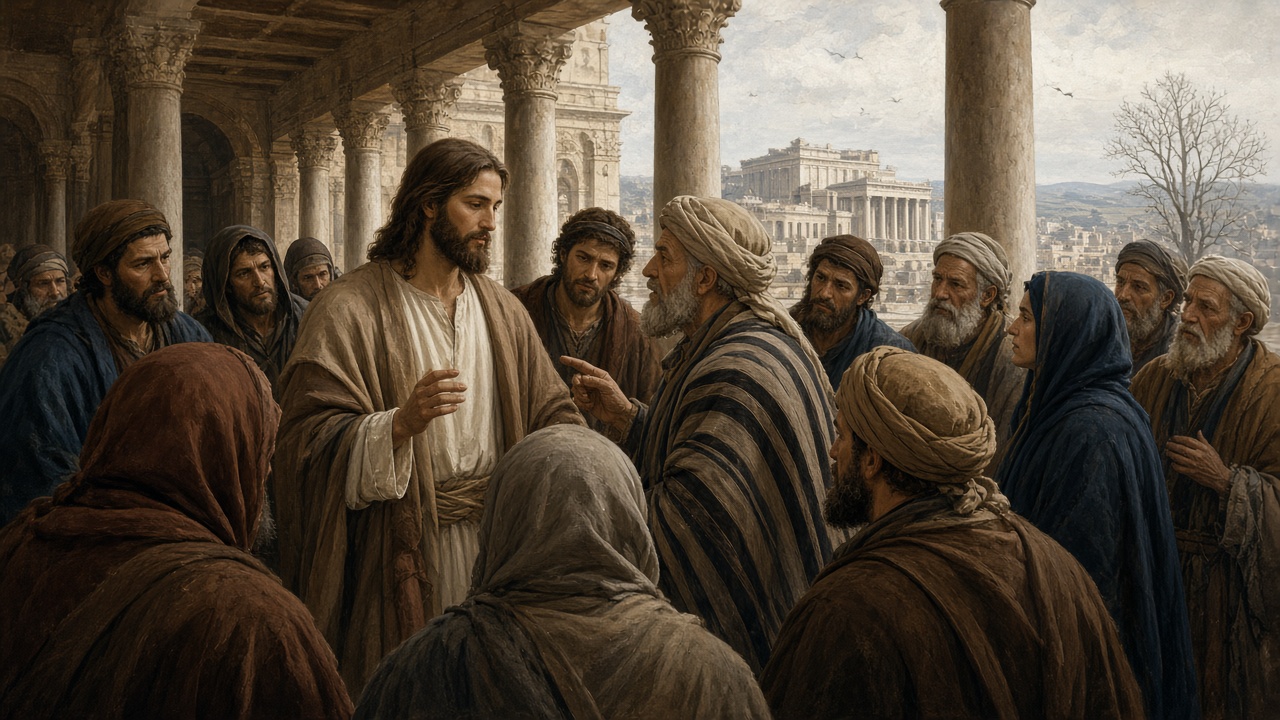
- Na Festa da Dedicação, em Jerusalém, era inverno, e Jesus caminhava pelos pátios do templo, no Pórtico de Salomão. O nome Jerusalém, na forma dual do original, significa "posse da paz" ou "fundação da paz"; essa forma provavelmente se refere aos montes Sião e Moriá ou, como alguns supõem, à cidade alta e à cidade baixa. O nome hebraico de Salomão, Shelomoh, significa "pacífico".Fontes: o próprio texto bíblico · Jerusalem · Solomon
- Uma cronologia dos episódios evangélicos situa o ensino do Bom Pastor em 29 d.C. e um tempo de ensino e cura, de Pereia a Jerusalém, em 30 d.C.Fontes: The Good Shepherd Teaching · Teaching and Healing in Perea to Jerusalem
- Jesus voltou então para o outro lado do Jordão, ao lugar onde João tinha começado a batizar, e muitas pessoas ali creram nele. João era de linhagem sacerdotal: seu pai, Zacarias, era sacerdote da turma de Abias, e sua mãe, Isabel, era das filhas de Arão. O nascimento dele, seis meses antes do de Jesus, foi anunciado por um anjo; os que vinham diziam que João nunca fez sinal algum, mas que tudo o que dissera a respeito de Jesus era verdade.Fontes: o próprio texto bíblico · John the Baptist
Notas escritas com auxílio de IA a partir de fontes abertas (Theographic Bible Metadata, CC BY-SA 4.0; Easton’s Bible Dictionary, domínio público) e revisadas antes de publicar.
Lugares deste capítulo
- Jerusalem · 31.777, 35.234 · versículo 22
- Solomon’s Portico · Hoje: in Jerusalem · 31.777, 35.234 · versículo 23
- Jordan · Hoje: Jordan River · 31.761, 35.558 · versículo 40
Só aparecem lugares com identificação de alta confiança (90% ou mais segundo as fontes acadêmicas reunidas pelo OpenBible). Mapa da época: DARE (Digital Atlas of the Roman Empire), CC BY 4.0; mapa atual: © colaboradores do OpenStreetMap; lugares: OpenBible.info (CC BY 4.0).
Créditos e licença desta tradução
I 'utz laj tzij re i dios
New Testament in Achi (I 'utz laj tzij re i dios)
copyright © 2009 Wycliffe Bible Translators, Inc.
Language: Achi
Dialect: Cubulco
Translation by: Wycliffe Bible Translators, Inc.
Achi, Cubulco
Achi' is a Mayan language very
closely related to K'iche' (Quiché in the older orthography). It is spoken by the
Achi people, primarily in the area of Baja Verapaz in Guatemala. There are two Achi'
dialects. Cubulco Achi' is spoken by approximately 48,000 people in the Cubulco area
west of Rabinal area. Rabinal Achi' is spoken by approximately 37,000 people in the
Rabinal area.
El Nuevo Testamento
en el idioma Achí de Cubulco de
Guatemala
Ediciones anteriores
Segunda edición
©2009, Wycliffe Bible
Translators
Primera edición
Publicado por
©1984, Sociedad Bíblica
Internacional
Copyright Information
© 2009, Wycliffe Inc. All rights reserved.
This translation text is made available to you under the terms of the Creative
Commons License: Attribution-Noncommercial-No Derivative Works. ( http://creativecommons.org/licenses/by-nc-nd/3.0/ ) In addition, you have
permission to port the text to different file formats, as long as you do not change
any of the text or punctuation of the Bible.
You may share, copy, distribute, transmit, and extract portions or quotations from
this work, provided that you include the above copyright information:
You must give Attribution to the work.
You do not sell this work for a profit.
You do not make any derivative works that change any of the actual words or
punctuation of the Scriptures.
Permissions beyond the scope of this license may be available if you contact us
with your request. If you want to revise a translation, use a translation in an
adaptation, or use a translation commercially, we will consider your request.
NT:segunda edición
The New Testament
in Achi
© 2009, Wycliffe Inc. All rights reserved.
This translation is made available to you under the terms of the
Creative Commons Attribution-Noncommercial-No Derivatives license 4.0.
You may share and redistribute this Bible translation or extracts from it in any format, provided that:
You include the above copyright and source information.
You do not sell this work for a profit.
You do not change any of the words or punctuation of the Scriptures.
Pictures included with Scriptures and other documents on this site are licensed just for use with those Scriptures and documents.
For other uses, please contact the respective copyright owners.
2013-01-05
Fonte: http://ebible.org/acr-acc/ · eBible.org