Atos 24
I 'utz laj tzij re i dios · Toque num versículo para ver as referências cruzadas.
I u tzij i ma Páblo, tobal rib chuwach i gobernador
1Joʼob ʼij u ʼonquil ile, i ʼatz laj sacerdóte, ma Ananías, xupon pa Cesaréa junam cuʼ juban qui wi qui jolom i aj Israel. Xak xa ʼe jun licenciádo cuʼ, ma Tértulo u bi. Ique xe upon chuwach i gobernador, cojbal u mac i ma Páblo. 2Are xqui cʼam li ma Páblo chiquiwach, i ma Tértulo xu jek u cojic u mac. Xu bij che i ma Félis:
—Nim laj winak mam gobernador, cʼamori che, awumal yet lic chom oj ʼolic, yoj chi oj re i jyub-i, n-ta jun cʼax chikij. Rumal i nim laj a noʼoj, ʼutz i ʼatbal tzij cat tijin chu ʼonquil pakawi, y woʼor mas ʼutz caka na che i ka cʼaslemal chuwach i ujer. 3Queje ile queʼel chake xa ipa oj ʼo wi, y lic caka tioxij chawe ronojel ka cʼux, at nim laj winak mam Félis. 4Ketaʼam chi lic latzʼ a wach, n-cakaj ta cat ka bay mas. Xui caka tzʼonoj chawe, cha ʼana i pawor choj a ta na jubiʼ. 5I achi-le lic n-ʼus ta laj winak; kilom chi cu yoj qui nojbal i winak xa ipa ca ʼe wi pa tak tinimit ronojel u wach i jyub taʼaj, cu petsaj chʼoʼoj chiquixol i aj Israel winak y queʼelok quiqui jach qui wach rumal. Ire xak aj cʼamol u tzam chique i jutzobaj winak “aj Nazaren” ca bix chique. 6Xak xraj te cu kajsaj u ʼij i rachoch i Dios; xui-ri xka chapo, xkaj teʼek caka ʼan ʼatbal tzij puwi pacha cu bij i ka ʼatbal tzij yoj. 7Xui-ri, i ma Lísias, chi capitan, xu min rib cuʼ u qʼuial soldádo y xu maj pa ka ʼab. 8Teʼuri xu bij chi je pachin que cojow u mac, ʼo u chac que cʼun awuʼ. Yet mísmo, we ca tzʼonoj che i aj mac-le, cawetamaj na wach usucʼ u mac coj tijin chu cojic. (Que ile xu bij i ma Tértulo che i gobernador.)
9Xak i aj Israel chi je cʼun-nak ruʼ, quiqui min quib chi chʼaʼatic. Quiqui bij chi lic sak laj tzij ile. 10Are ʼuri i gobernador xu cʼut ruʼ u ʼab che i ma Páblo chi ca chʼawic. I ma Páblo xu bij:
—Lic cul in cʼux quin bij in tzij chawach, tobal wib, man wetaʼam chi qʼuial chic junab ʼo chawe chi ca ʼat tzij pakawi yoj, oj aj Israel re i jyub-i. 11Yin, cʼa te cablajuj ʼij iri wuponic pa Jerusalen chu cojic u ʼij i Dios. We cawaj cat tiqui chi tacʼalem pa rakan chi sak laj tzij i quin bij. 12Niʼpa i que cojow in mac, quiqui bij chi are xin uponic, xin quilo coj tijin chu chapic kib chi tzij cuʼ juban chic winak pa rachoch i Dios, xak quin tijin chi qui chʼujersaxic. Xui-ri, n-katzij ti ile. N-ta xak in ʼanom pacha ile, mi ne pa rachoch i Dios, mi ne pa tak molbalʼib que i aj Israel, xak mi ne pa tak be re i tinimit. 13Niʼpa i que cojow in mac-i, n-que tiqui ta chu ʼalijinsaxic we katzij in ʼanom pacha quiqui bij. 14Xui-ri, ʼo i in ʼanom, chi n-cacaj ti ique, are iri: are quin coj u ʼij i Dios, chi xak i Dios que i katit ka mam, quin ʼano pacha cu bij i cʼacʼ cʼutunic, y n-ʼus ti cʼutunic-le, quiqui bij ique. Xui-ri, tupu quin coj i tzij-le, xak quin cojo ronojel niʼpa i tzʼibtal can rumal i mam Moises, xak cumal i ujer ajbil u tzij i Dios. 15Xak cul in cʼux che, chi que walij chic i camnak, niʼpa i je ʼutz, xak niʼpa i ne te ʼutz. Queje ile quin coj yin, xak queje ile quiqui coj i je aj cojol in mac. 16Rumal ile chi lic quin cojo, ʼax in ʼanom wi pen u ʼonquil wach u bim i Dios, man n-ta cu bij in cʼux chuwach ire, mi xak chiquiwach i winak.
17Qʼuial junab n-in ta pa Jerusalen; teʼuri xin tzalij lok, wucʼam li jubiʼ mer tobal que i nibaʼib je wach aj Israel. Xak col in ya in sipon chuwach i Dios. 18Nabe xin ʼan i rawasil pacha caka ʼan yoj oj aj Israel winak, ʼanbal chʼam che kib chuwach i Dios, teʼuri xin ʼe pa rachoch i Dios chu sujuxic in sipon chuwach i Dios. Are quin tijin ile chu ʼonquil, xin ʼiltaj cumal jujun aj Israel je petnak Asia. N-ta u qʼuial winak wuʼ pacha quiqui bij i aj cojol in mac-i, y n-ta xak winak quin tijin chi qui chʼujersaxic. 19I xe in ʼilaw chila, je are ique ʼo u chac que cʼun chi chawach, cojbal re in mac, we kas ʼo in mac cacaj quiqui cojo. 20Y we ique n-cacaj taj, niʼpa i je ʼo chi, chiqui bij ʼuri wach in mac xqui riko are in ʼo wi chiquiwach i qui nucʼbal tʼisbal. 21Xui in mac-i xin ʼan chiquiwach, co xin bij i tzij-i chique: “Woʼor quix tijin chu ʼonquil ʼatbal tzij chwij xa rumal quin cojo chi ca cʼun chic sak chiquiwach i camnak,” xin bij chiquiwach. (Queje u tzij i ma Páblo ile chuwach i gobernador, tobal rib xu ʼano.)
22I gobernador, ma Félis, retaʼam usucʼ i cʼutunic chirij i Jesucrísto. Are xu ta i u tzij i ma Páblo, xu chʼobo chi n-coʼon ta tan i ʼatbal tzij. Xu bij chique:
—Are ca cʼun i capitan, ma Lísias, teʼuri quin qʼuis u ʼonquil i ʼatbal tzij —xu bij chique.
23Are ʼuri xu tak chic u tzʼapixic i ma Páblo, xui-ri xu bij che i cajʼatzil i soldádo chi ʼutz rilic chiqui ʼana man n-ta uyej cu tijo. Xak xu bij che chi miqui ʼatij i pachin cacaj quiqui sipaj wach i rajwaxic che, i pachin cacaj quiqui solij.
24Che chic queb oxib ʼij, xe cʼun chic i ma Félis ruʼ i rixokil, ati Drusíla, chi aj Israel ixok. Xu tak u siqʼuixic i ma Páblo man craj cu ta wach usucʼ i cojonic che i Jesucrísto. 25I ma Páblo, are xuponic, xoc chu cʼutic che; xu bij che chi pachin craj ca terej chirij i Crísto, ʼo u chac chu sucʼba u cʼaslemal, xak ʼo u chac cu jecʼ u rayijbal chi n-ʼus taj. Xak xu bij che chi ca cʼun ni ʼij chi Dios cu ʼat na tzij piquiwi i winak, wach tak qui ʼanom. I ma Félis, are xu ta ile, lic xu xij rib. Xu bij che:
—Coʼon ile; ʼutz cat ʼec. Te tan chic cat in siqʼuij are talan in wach —xu bij.
26Xu chʼob i gobernador mok ca sujux mer che rumal i ma Páblo loʼbal re i relbal pa cárcel. Rumal-i, qʼuial mul xu siqʼuij i ma Páblo ruʼ. 27Queb junab queje ile xu ʼan i gobernador ma Félis che i ma Páblo, teʼuri xel che u patan; are ʼuri xoc i ma Pórcio Fésto pu qʼuexel. I ma Félis, are xelic, n-xraj taj cu petsaj i coywal i aj Israel, rumal-i, n-xroʼtaj tu bi i ma Páblo.
Você sabia?
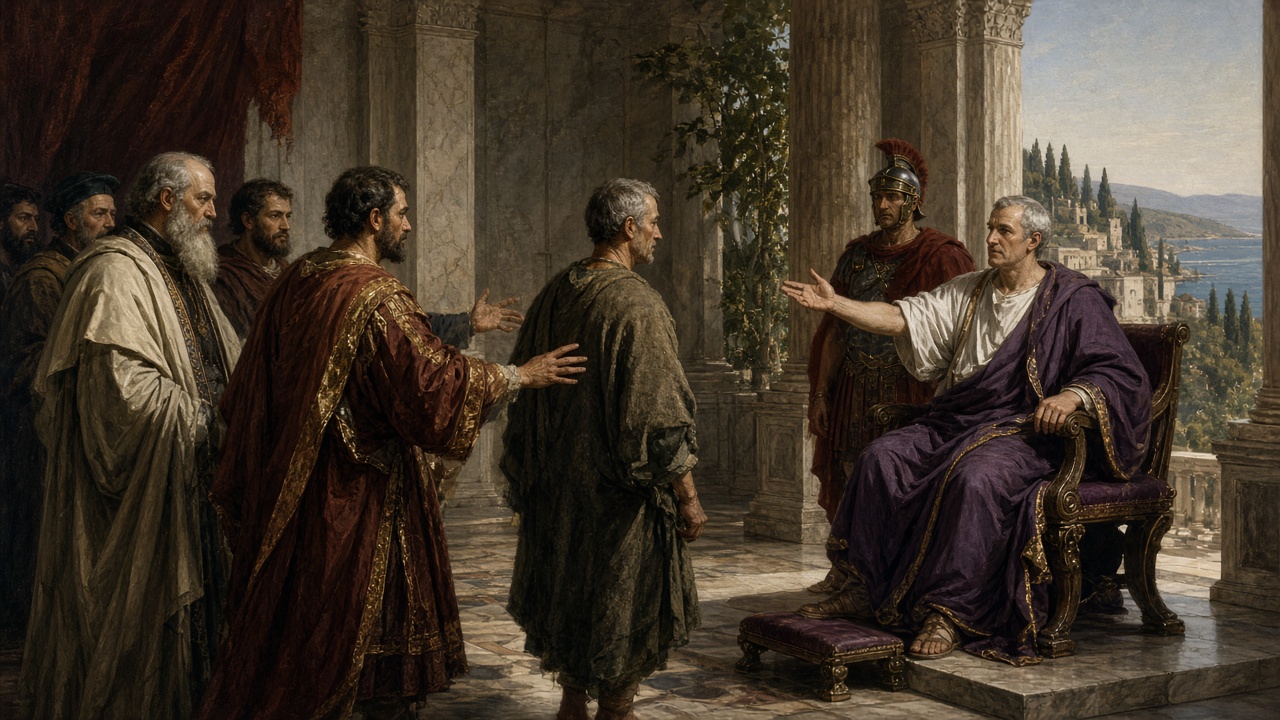
Paulo perante Félix
- O sumo sacerdote Ananias desceu com alguns anciãos e um advogado chamado Tértulo, que o Dicionário Bíblico de Easton descreve como um advogado romano empregado pelos judeus para apresentar a causa contra Paulo diante de Félix. Tértulo elogiou o governador e depois chamou Paulo de peste, que provocava dissensão entre os judeus por todo o mundo, de chefe da seita dos nazarenos e de homem que tinha tentado profanar o templo. O dicionário liga esse elogio inicial à limpeza que Félix fez do país, expulsando bandidos e impostores.Fontes: o próprio texto bíblico · Tertullus · Felix
- Félix, que estava bem informado a respeito do Caminho, adiou a audiência e manteve Paulo sob guarda, permitindo-lhe alguma liberdade e deixando que amigos atendessem às suas necessidades. O relato diz que ele esperava que Paulo lhe oferecesse um suborno e por isso o mandava chamar com frequência; o Dicionário Bíblico de Easton também afirma que ele parece ter esperado um suborno e, por isso, teve várias conversas com ele. Depois de dois anos, Pórcio Festo o sucedeu — o Dicionário Bíblico de Easton (1897) data essa nomeação em 60 d.C. — e, querendo fazer um favor aos judeus, Félix deixou Paulo na prisão.Fontes: o próprio texto bíblico · Felix · Portius Festus
- Alguns dias depois, Félix voltou com sua mulher Drusila, que era judia, e ouviu Paulo falar da fé em Cristo Jesus e da justiça, do domínio próprio e do juízo vindouro; Félix ficou amedrontado e o mandou embora. O Dicionário Bíblico de Easton (1897) identifica Drusila como a terceira e mais nova filha de Herodes Agripa I e diz que Félix a induziu a deixar o marido, Azizus, rei de Emesa. O mesmo verbete diz que ela e o filho morreram na erupção do monte Vesúvio em 79 d.C.Fontes: o próprio texto bíblico · Drusilla
Notas escritas com auxílio de IA a partir de fontes abertas (Theographic Bible Metadata, CC BY-SA 4.0; Easton’s Bible Dictionary, domínio público) e revisadas antes de publicar.
Lugares deste capítulo
- Caesarea · Hoje: Caesarea Maritima · 32.500, 34.892 · versículo 1
- Jerusalem · 31.777, 35.234 · versículos 11, 17
- Asia · 38.400, 28.300 · versículo 18
Só aparecem lugares com identificação de alta confiança (90% ou mais segundo as fontes acadêmicas reunidas pelo OpenBible). Mapa da época: DARE (Digital Atlas of the Roman Empire), CC BY 4.0; mapa atual: © colaboradores do OpenStreetMap; lugares: OpenBible.info (CC BY 4.0).
Créditos e licença desta tradução
I 'utz laj tzij re i dios
New Testament in Achi (I 'utz laj tzij re i dios)
copyright © 2009 Wycliffe Bible Translators, Inc.
Language: Achi
Dialect: Cubulco
Translation by: Wycliffe Bible Translators, Inc.
Achi, Cubulco
Achi' is a Mayan language very
closely related to K'iche' (Quiché in the older orthography). It is spoken by the
Achi people, primarily in the area of Baja Verapaz in Guatemala. There are two Achi'
dialects. Cubulco Achi' is spoken by approximately 48,000 people in the Cubulco area
west of Rabinal area. Rabinal Achi' is spoken by approximately 37,000 people in the
Rabinal area.
El Nuevo Testamento
en el idioma Achí de Cubulco de
Guatemala
Ediciones anteriores
Segunda edición
©2009, Wycliffe Bible
Translators
Primera edición
Publicado por
©1984, Sociedad Bíblica
Internacional
Copyright Information
© 2009, Wycliffe Inc. All rights reserved.
This translation text is made available to you under the terms of the Creative
Commons License: Attribution-Noncommercial-No Derivative Works. ( http://creativecommons.org/licenses/by-nc-nd/3.0/ ) In addition, you have
permission to port the text to different file formats, as long as you do not change
any of the text or punctuation of the Bible.
You may share, copy, distribute, transmit, and extract portions or quotations from
this work, provided that you include the above copyright information:
You must give Attribution to the work.
You do not sell this work for a profit.
You do not make any derivative works that change any of the actual words or
punctuation of the Scriptures.
Permissions beyond the scope of this license may be available if you contact us
with your request. If you want to revise a translation, use a translation in an
adaptation, or use a translation commercially, we will consider your request.
NT:segunda edición
The New Testament
in Achi
© 2009, Wycliffe Inc. All rights reserved.
This translation is made available to you under the terms of the
Creative Commons Attribution-Noncommercial-No Derivatives license 4.0.
You may share and redistribute this Bible translation or extracts from it in any format, provided that:
You include the above copyright and source information.
You do not sell this work for a profit.
You do not change any of the words or punctuation of the Scriptures.
Pictures included with Scriptures and other documents on this site are licensed just for use with those Scriptures and documents.
For other uses, please contact the respective copyright owners.
2013-01-05
Fonte: http://ebible.org/acr-acc/ · eBible.org