Atos 12
I 'utz laj tzij re i dios · Toque num versículo para ver as referências cruzadas.
I ma Heródes xu tak u camsaxic i ma Jacóbo, xak i u tzʼapixic i ma Pédro
1Che tak i ʼij-le, i ʼatol tzij ma Heródes, xu jek chʼoʼoj chiquij jujun creyent. 2Xu tak u camsaxic i ma Jacóbo ruʼ chʼichʼ; are i ma Jacóbo chi catz qui chaʼ quib ruʼ i ma Wan. 3I ma Heródes, are xrilo chi que quicot i nimak tak aj Israel rumal ile, xu tak ʼuri u chapic i ma Pédro. Are ʼij chi xu ʼan ire ile, are i nimaʼij que i aj Israel chi ca tijaw wi i caxlanwa n-ta cunbal che. 4Are xchaptaj i ma Pédro, are ʼuri i ma Heródes xu tzʼapij pa cárcel. Xe u coj cajib tzobaj soldádo chu chajixic; je cajcaj chu chajixic jutak chʼay, chi paʼij chi chaʼab. Xu chʼob i ma Heródes, are ca qʼuis i nimaʼij, cresaj li ma Pédro chiquiwach i winak, man xu chʼob ire quiqui ʼan qui ʼatbal tzij i winak che. 5Rumal-i, i ma Pédro ʼo pa cárcel, lic chajtalic. Xui-ri, i jutzobaj creyent n-xqui mayij tu tzʼonoxic che i Dios puwi; lic ronojel qui cʼux xqui ʼano.
I relic i ma Pédro pa cárcel rumal i Dios
6I ma Pédro ʼo pa cárcel, kus u waram chiquixol i queb soldádo. Ire ximom u ʼab ruʼ queb carena chi xak yukul chique i soldádo. Xak je queb chic soldádo je tacʼal xol uchija, quiqui chajij i cárcel. U chʼobom i ma Heródes cu ya i ma Pédro chiquiwach i winak chucab ʼij. 7(Maja ca pe u sakiric) xak teʼet xwinakir jun ángel re i Kajwal ruʼ i ma Pédro. I pa cárcel lic xoʼon sak rumal. I ángel xu yin pan u cʼalcʼax i ma Pédro y xu cʼastaj.
—¡Chat walij la! —coʼono.
Are ʼuri, xtzak i carena pulew chi ʼo che u ʼab i ma Pédro. 8I ángel xu bij che:
—Cha bajij a pam, y cha cojo a xajab —coʼon che. Are xu ʼan i ma Pédro ile, teʼuri xu bij i ángel che:
—Cha cojo a chaquet, y chat terej chwij —xutixic.
9I ma Pédro xterej li chirij i ángel, y xel lok. Xu chʼob ire mok n-katzij taj wach ca tijin chi rilic, mokxa xa cachiqʼuic cu bij ire. 10Xe icʼaw pa je ʼo wi i nabe jutzobaj soldádo, teʼuri xe icʼaw chic che i ucab tzobaj soldádo. Xe upon che uchibe, lic chʼichʼ, xui-ri utuquel xu jak rib. Xe ʼel lok, y xe bin jubiʼ che jun be. Teʼuri i ángel xu canaj can i ma Pédro utuquel pa be. 11Are ʼuri i ma Pédro xrilo chi katzij wach i ca tijin chi rilic. Xu bij:
—Woʼor xwilo chi katzij ile. I Kajwal u takom li u ángel, tobal we chuwach i ma Heródes xak chiquiwach i nimak takaj Israel, wach qui chʼobom quiqui ʼan chwe —coʼono.
12Ca tijin chu chʼobic queje ile, xa ʼe chi rachoch i ati Mariy, chi u chuch i a-Wan, chi xak a-Márcos ca bix che. Chila qui molom wi quib u qʼuial winak, que tijin chu tzʼonoxic che i Dios. 13I ma Pédro xu cʼojcʼa i sawan. Are ʼuri xel li jun ali, al-Róde u bi, xol u ta pachinok. 14Are xu ta u chʼawbal i ma Pédro, xsach u noʼoj rumal u quicotic. Xtzalij la, n-xu jak ti sawan. Xa ʼe paʼanem chu bixquil chique i je ʼo pa ja, chi ma Pédro tacʼal chic pa ocbal bic. 15Ique xa xqui bij che:
—¡At chʼuj! —xe cha che.
I ali xu bij chi lic katzij are ire. Ique xqui bij chic chi n-are taj:
—Ile xa u ninox —xe cha che.
16I ma Pédro n-xu mayij tu cʼojcʼaxic i sawan. I creyent, are xqui jak uchibe, xquilo chi katzij are ire; lic xe oc ʼil che. 17I ma Pédro xu cʼut ruʼ u ʼab chi me chʼawic. Teʼuri xu bij chique wach i relsaxic xu ʼan i Kajwal che, pa cárcel. Xak xu bij chique:
—Chi ya rason che i ma Jacóbo, xak chique i juban creyent —coʼono.
Teʼuri xel bic, xa ʼe chic che jun tinimit.
18Are xpe u sakiric, i soldádo lic que cʼachiric; que bisonic man n-ta chic i ma Pédro, n-quetaʼam taj wach relic xu ʼano. 19I ma Heródes xu tak u tzucuxic coqʼuil, péro n-xqui rik taj. Xu ya quekan ʼuri i soldádo, y xu tak qui camsaxic. Teʼuri xel i ma Heródes pa Judéa; xa ʼe jekel pa tinimit Cesaréa.
I u camic i ma Heródes
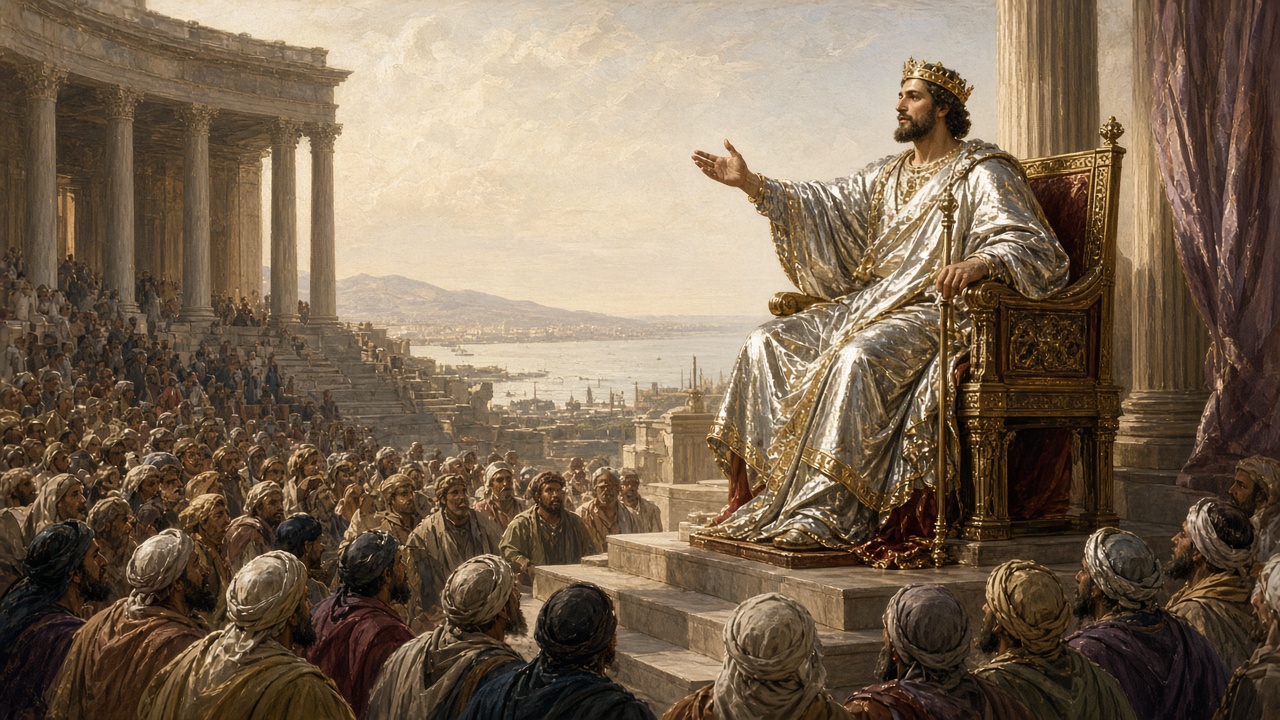
20Xoʼon panok i ma Heródes xpe roywal chique i winak aj pa tak tinimit Tíro y Sidon. Rumal-i, ique xqui yijba chiquiwach chi conojel ʼis que ʼe chuwach i ma Heródes. Ire ʼo jun achi ruʼ, nim u patan, ma Blásto u bi. I winak aj Tíro, i aj Sidon xqui bij che i ma Blásto chi cu coj qui tzij chuwach i ma Heródes, chomarsabal quib ruʼ. ʼO u chac chique quiqui chomaj chic quib ruʼ, man chila pu tinimit i ma Heródes xpe wi wach i quiqui tijo. 21I ma Heródes xu chʼic ʼuri jun ʼij chique, are quiqui mol quib y quiqui yijba chiquiwach. Are xu rik i ʼij, xu coj u ʼuʼ lic chom y xcubi pu cubibal re u ʼatbal tzij. Xu bij ʼuri jun nim laj bixquil chiquiwach. 22I winak, are xqui ta, xe siqʼuinic:
—¡Ire-le n-toʼ ta winak! ¡Ile lic jun dios! —que cha.
23Xak teʼet jun ángel re i Kajwal xu petsaj yobil chirij i ma Heródes, man n-xu bij taj chi xa jun i Dios chi ca majawic quiqui coj u ʼij. Rumal-i, xu ʼan che chi xtijaw cumal amol, y xcam rumal.
24I u tzij i Kajwal ca tijin u paxic u wach; xa ipa ca tataj wi.
25I ma Bernabe i ma Sáulo, are xqʼuis i qui chac pa Jerusalen, xe ʼel chila, xqui cʼam bi i a-Wan cuʼ, chi xak a-Márcos ca bix che.
Você sabia?
A fuga de Pedro e a morte de Herodes
- O rei Herodes deste capítulo é Herodes Agripa I, neto de Herodes, o Grande, que com o tempo passou a possuir todo o reino do avô e o título de rei. Ele mandou matar Tiago e prendeu Pedro. O Dicionário Bíblico de Easton (1897) diz que, no segundo dia de uma festa em honra do imperador Cláudio, Agripa apareceu no grande teatro de Cesareia com magníficas vestes de prata; era cedo, e os raios do sol ofuscavam quem o via.Fontes: Herod Agrippa I · o próprio texto bíblico
- O Tiago morto à espada era Tiago, filho de Zebedeu, irmão do apóstolo João, um pescador que havia trabalhado em parceria com Pedro. O Dicionário Bíblico de Easton (1897) o apresenta como o primeiro dos apóstolos a ser morto e diz que Herodes Agripa o mandou decapitar. O Tiago a quem Pedro manda que os crentes avisem é outro homem: o mesmo dicionário o identifica como o Tiago que estava à frente da igreja em Jerusalém.Fontes: James (Son of Zebedee) · James (Brother of Jesus) · o próprio texto bíblico
- Quando percebeu que estava livre, Pedro foi à casa de Maria, mãe de João Marcos, em Jerusalém, que o Dicionário Bíblico de Easton (1897) chama de lugar habitual de reunião dos discípulos; muita gente estava ali reunida em oração. A serva que veio ao portão externo chamava-se Rode, nome que significa uma rosa; muito alegre ao ouvir a voz dele, correu para dentro para anunciá-lo e esqueceu de abrir o portão. João, também chamado Marcos, era filho de Maria — Marcos, seu nome romano, aos poucos substituiu o nome judeu João — e mais tarde ele deixou Jerusalém com Barnabé e Saulo.Fontes: Mary (Mother of John Mark) · Rhoda · John Mark · o próprio texto bíblico
Notas escritas com auxílio de IA a partir de fontes abertas (Theographic Bible Metadata, CC BY-SA 4.0; Easton’s Bible Dictionary, domínio público) e revisadas antes de publicar.
Lugares deste capítulo
- Caesarea · Hoje: Caesarea Maritima · 32.500, 34.892 · versículo 19
- Judea · Hoje: Judea 1 · 31.777, 35.234 · versículo 19
- Sidon · Hoje: Sandikli archaeological site in Sidon · 33.561, 35.372 · versículo 20
- Tyre · 33.271, 35.196 · versículo 20
- Jerusalem · 31.777, 35.234 · versículo 25
Só aparecem lugares com identificação de alta confiança (90% ou mais segundo as fontes acadêmicas reunidas pelo OpenBible). Mapa da época: DARE (Digital Atlas of the Roman Empire), CC BY 4.0; mapa atual: © colaboradores do OpenStreetMap; lugares: OpenBible.info (CC BY 4.0).
Créditos e licença desta tradução
I 'utz laj tzij re i dios
New Testament in Achi (I 'utz laj tzij re i dios)
copyright © 2009 Wycliffe Bible Translators, Inc.
Language: Achi
Dialect: Cubulco
Translation by: Wycliffe Bible Translators, Inc.
Achi, Cubulco
Achi' is a Mayan language very
closely related to K'iche' (Quiché in the older orthography). It is spoken by the
Achi people, primarily in the area of Baja Verapaz in Guatemala. There are two Achi'
dialects. Cubulco Achi' is spoken by approximately 48,000 people in the Cubulco area
west of Rabinal area. Rabinal Achi' is spoken by approximately 37,000 people in the
Rabinal area.
El Nuevo Testamento
en el idioma Achí de Cubulco de
Guatemala
Ediciones anteriores
Segunda edición
©2009, Wycliffe Bible
Translators
Primera edición
Publicado por
©1984, Sociedad Bíblica
Internacional
Copyright Information
© 2009, Wycliffe Inc. All rights reserved.
This translation text is made available to you under the terms of the Creative
Commons License: Attribution-Noncommercial-No Derivative Works. ( http://creativecommons.org/licenses/by-nc-nd/3.0/ ) In addition, you have
permission to port the text to different file formats, as long as you do not change
any of the text or punctuation of the Bible.
You may share, copy, distribute, transmit, and extract portions or quotations from
this work, provided that you include the above copyright information:
You must give Attribution to the work.
You do not sell this work for a profit.
You do not make any derivative works that change any of the actual words or
punctuation of the Scriptures.
Permissions beyond the scope of this license may be available if you contact us
with your request. If you want to revise a translation, use a translation in an
adaptation, or use a translation commercially, we will consider your request.
NT:segunda edición
The New Testament
in Achi
© 2009, Wycliffe Inc. All rights reserved.
This translation is made available to you under the terms of the
Creative Commons Attribution-Noncommercial-No Derivatives license 4.0.
You may share and redistribute this Bible translation or extracts from it in any format, provided that:
You include the above copyright and source information.
You do not sell this work for a profit.
You do not change any of the words or punctuation of the Scriptures.
Pictures included with Scriptures and other documents on this site are licensed just for use with those Scriptures and documents.
For other uses, please contact the respective copyright owners.
2013-01-05
Fonte: http://ebible.org/acr-acc/ · eBible.org