Lucas 3
Uisneno In Kabin ma Prenat: Rais Manba'an Fe'u nok Reta' Ahun-hunut · Toque num versículo para ver as referências cruzadas.
Naiꞌ Yohanis Asranit nait in mepu
1Oras naan, naiꞌ Tiberius anjair uis koꞌu keser ma nnaaꞌ aprenat anbi pah Roma toon boꞌes am niim een. Naiꞌ Pontius Pilatus anjair gubernur anbi propinsi Yudea. Naiꞌ Herodes anjair gubernur anbi propinsi Galilea. Naiꞌ Herodes tataf naiꞌ Felipus, anjair gubernur anbi propinsi Iturea ma propinsi Trakonitis. Ma naiꞌ Lisanias anjair gubernur anbi propinsi Abilene.
Oras naan amsaꞌ, naiꞌ Hanas ma naiꞌ Kayafas anjarin aꞌnaak rais pirsait Yahudi sin aꞌnaak koꞌu nbi kota Yerusalem.
Oras naan, naiꞌ Yohanis, naiꞌ Sakarias in anah, natua nbi baer ruman naꞌroo naꞌko kuan. Anbi bare naan, Uisneno naꞌuab ma nbaasn ee. 3Anneen anrair on naan ate, naiꞌ Yohanis antaam neu areꞌ kuan-kuan reꞌ anpaumaak noe Yarden, ma natoon neu abitan naan am nak, “Hi ro he mmanakuꞌ ma misaitan hi saant ein ok-okeꞌ, he Uisneno annoes nain sin. Rarit hi ro he misrain feꞌ, he njair tanar nak hi mmarameꞌ mfain mok Uisneno.”
4Un-unuꞌ te, Uisneno In mafefa kninuꞌ kaꞌo Yesaya antui anmatoom nok naiꞌ Yohanis reꞌ ia mnak,
“Anmuiꞌ tuaf reꞌ of annao neu bare reꞌ ka matuaꞌ fa, rarit anhunun ma nkoaꞌ am nak,
‘Areꞌ too mfaun ein ro he mibarab ma miroitan ranan, he mseun ma mtoup Usiꞌ In amneman!
Mikninuꞌ ranan he mseun Goe.
5Amkuub ma mnae mineer kefan ma kobaꞌif.
Amnae ma mhain mineer aꞌtoeꞌf ein.
Mineo ma minoon raan apeunt am abeot ein,
Amhaꞌeik raan kobaꞌif ma faut putuk.
6Maut he tuaf-tuaf naꞌko uuf-uuf ma pah-pah,
bisa nahinin nak, Uisneno nroim he nsoi nafetin mansian
naꞌko sin saant am penu sin.’ ”
7Too mfaun neman naꞌkon mee-mee, ma ntoit naiꞌ Yohanis he nasrain sin. Mes in naskaraꞌ sin im nak, “Hoe, aputa-kriu maufinu ki! Hi on reꞌ kaun araut aan! Hi kais mitenab mak, hi miꞌpiis mipo-poi he hi bisa msoi maan om miꞌko Uisneno In hukun! Kahaf! Ka ꞌroo fa te, Uisneno nasanut hukun neu tuaf-tuaf reꞌ naꞌpiis napo-poi jah! 8Hit tahiin tak kaꞌo Abraham naan, Uisneno in partei. Mes hi kais mitenab am mak, ‘Au ka upein fa hukun, natuin au reꞌ ia kaꞌo Abraham in sufan.’ Hi mipein rasi naan naꞌko mee? Naan ka bisa nturun ki fa. Natuin rasi naan ka nmoeꞌ ki fa he mjair atoin neek amneꞌo. Uisneno bisa nmoeꞌ fatun reꞌ ia njarin kaꞌo Abraham in sufan. Au utoon ki, hee! Mikriraꞌ mbi hi ꞌmoinm ein naan nai, mak hi mnao misaitan hi saant ein ee jen, ma mfain iim mituin Uisneno. 9Hi ro he mmoeꞌ rais reko. Kaah fa te, Uisneno In hukun maꞌfeen ee nmouf neu ki on reꞌ atoniꞌ npaek fani he nnooꞌ hau naꞌko in aꞌbaꞌan. On reꞌ naan, tua! Roet ii ka mapakeꞌ fa, karu ka nmuiꞌ fa in fuaf arekot! Onaim reko nneis amnooꞌ goe, rarit tout goe he nputu nmaet.”
10Rarit too mfaun ein nataan naiꞌ Yohanis am nak, “Onaim hai he mmoeꞌ on mee?”
11On nai te, in nataah sin im nak, “Karu ho mmuiꞌ baru nua, nfee es meu tuaf reꞌ ka nmuiꞌ fa baru. Karu ho mmuꞌi mnahat, mbait meu tuaf reꞌ ka nmuiꞌ fa mnahat.”
12Rarit ahoik beon guin neman ma ntoit naiꞌ Yohanis he nasrain sin. Sin natanan am nak, “Aam tungguru! Hai he mmoeꞌ on mee?”
13In nataah am nak, “Hi roim ein es reꞌ mputa-kriu. Mes nmurai oras ia, hi ro he mmeup nok neek amneot. Kais ambeos beo nneis-neis naꞌko preent ii in atoran. Maut he too gui nbaen ein beos beo natai nok atoran.”
14Sorarus fauk anbin naan amsaꞌ. Sin nataan naiꞌ Yohanis am nak, “Karu hai te, on mee? Hai ro he mmoeꞌ on mee?”
Rarit in nataah sin im nak, “Kais amhoik biak ein sin roit ein mituin hi roim ein naan. Kais amtuꞌiran biak ein tafiꞌ-tafiꞌ. Hi ro he misaeb sukuur ma minokab hi teenb ein nok ahaa hi kai ngguin naan.”
15Anneen in uab ein naan ate, too mfaun ein anmakaꞌin ma naꞌseꞌ-seoꞌ guin am nak, “Hae! Kais-kaisaꞌ naiꞌ Yohanis reꞌ ia, Kristus, reꞌ Uisneno nbaꞌan he nreek Ee neem naꞌko unuꞌ naan, oo!”
16Mes naiꞌ Yohanis nakain sin im nak, “Amneen mirek-rekoꞌ! Anmuiꞌ tuaf es, reꞌ maꞌtaniꞌ nneis naꞌko kau of he neem. Maski au ꞌjari haa in aan renuꞌ msaꞌ, au ka umnees ꞌok Ne fa. Au suma bisa usrani haa ki ꞌpaek oe, mes In of anmoꞌe nneis naꞌko kau, natuin In naheun hi neekm ein nok Uisneno In Asmaan Akninuꞌ. In of nakninuꞌ ki, on reꞌ ttoutuꞌ nunuꞌ npaek ai. 17In nhukun tuaf reꞌ anmoꞌe nsaan, nahuum on reꞌ atoin tani reꞌ anpaek anin he natpeneb makaꞌ taum. Rarit in napaan makaꞌ anbi ꞌponi, mes nout nakratiꞌ maak taꞌuk ma maak apaꞌ. On naan amsaꞌ Kristus of anhukun tuaf-tuaf reꞌ anmoꞌen sanat, ma nait inporin sin neu ai mararaꞌ abar-barat.”
18Nok ranan naan, naiꞌ Yohanis namnaub too mfaun ein nok rasi humaꞌ-humaꞌ, ma natoon Uisneno In Rais Reko neu sin.
19Oras naan, naiꞌ Yohanis anmurai naꞌuab maat-maat anmatoom nok naiꞌ Herodes in aꞌmoꞌen. In rais ji on nai: naiꞌ Herodes naan, gubernur et propinsi Galilea. In saant ein naꞌtupu nsae. Es, es reꞌ in nheer naan in oirf ee fee, kaan ee bi Herodias. Te kaah, in oirf ee anmoin feꞌ, ma ka nporin fa in fee bi Herodias fa feꞌ. Naiꞌ Herodes in aꞌmonin reꞌ ka batuur fa naan, anmoeꞌ naiꞌ Yohanis nakain ee maat-maat, tar naiꞌ Herodes anrenan. Rarit naiꞌ Herodes anheek naiꞌ Yohanis, ma nataam ee nbi bui.
Naiꞌ Yohanis nasrain Usif Yesus
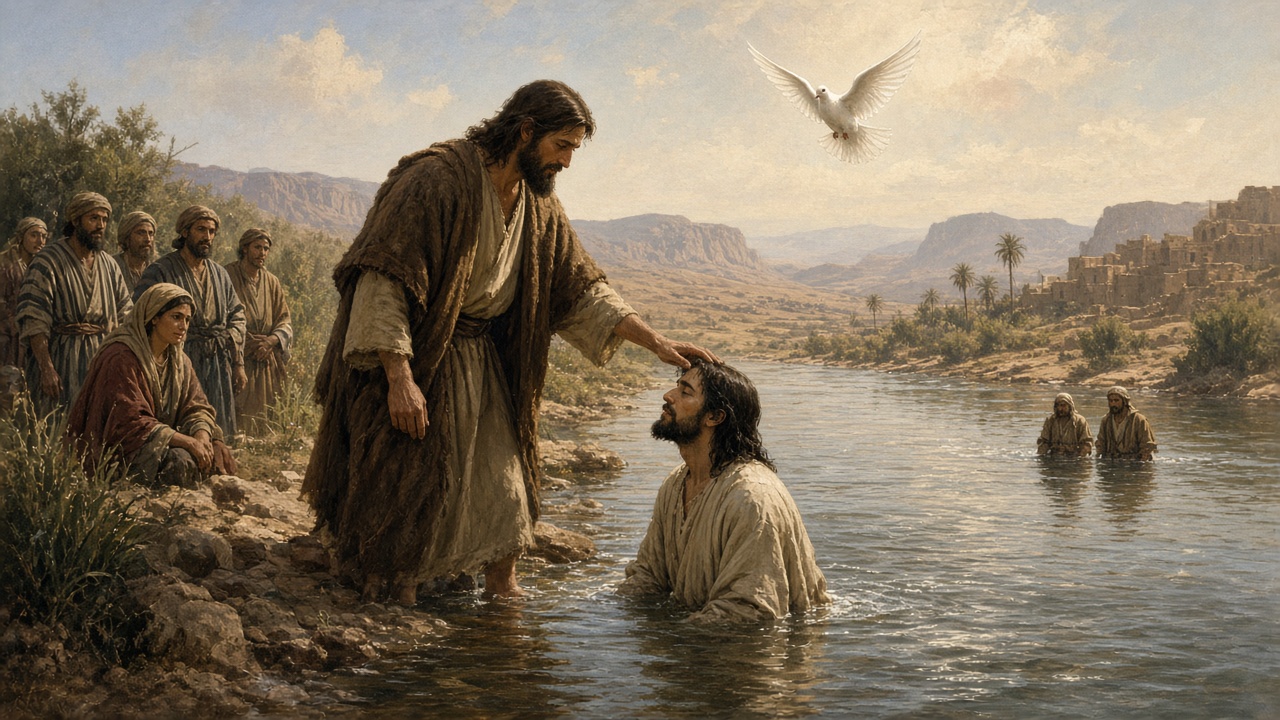
21Unuꞌ te, oras sin ka nheek fa naiꞌ Yohanis fa feꞌ, in nasrain too mfaun. Ma in nasrain Naiꞌ Yesus amsaꞌ. Rarit Naiꞌ Yesus anꞌonen, onaim neon goe natfeꞌi. 22Rarit Uisneno In Asmaan Akniunꞌ ee nsaun neem neu Ne. Asmaan Akninuꞌ naan In maasn ee nahuum on reꞌ kor-kefi. Onaim anmuiꞌ hanaf naꞌko neon goe mnak,
“Ho reꞌ ia, Au Aan nekaꞌ.
Ho mmoeꞌ Au nekak ia, nmariin piut.”
Usif Yesus In beif-naꞌif sin, natuin aam Yusuf in uuf ein
23Oras Naiꞌ Yesus anmurai natoon neu too mfaun ein anmatoom nok Uisneno In ranan, In oniꞌ anmoin naan toon boꞌ teun goen. Tuaf amfaun nahinin nak, Naiꞌ Yesus naan, naiꞌ Yusuf in Anah. Naiꞌ Yusuf in uuf ein, on nai:
Naiꞌ Yusuf in aamf ee, naiꞌ Eli.
24Naiꞌ Eli in aamf ee, naiꞌ Matat.
Naiꞌ Matat in aamf ee, naiꞌ Lewi.
Naiꞌ Lewi in aamf ee, naiꞌ Melki.
Naꞌ Melki in aamf ee, naiꞌ Yanai.
Naiꞌ Yanai in aamf ee, naiꞌ Yusuf.
25Naiꞌ Yusuf in aamf ee, naiꞌ Matatias.
Naiꞌ Matatias in aamf ee, naiꞌ Amos.
Naiꞌ Amos in aamf ee, naiꞌ Nahum.
Naiꞌ Nahum in aamf ee, naiꞌ Hesli.
Naiꞌ Hesli in aamf ee, naiꞌ Nagai.
26Naiꞌ Nagai in aamf ee, naiꞌ Maat.
Naiꞌ Maat in aamf ee, naiꞌ Matatias.
Naiꞌ Matatias in aamf ee, naiꞌ Semein.
Naiꞌ Semein in aamf ee, naiꞌ Yosek.
Naiꞌ Yosek in aamf ee, naiꞌ Yoda.
27Naiꞌ Yoda in aamf ee, naiꞌ Yohanan.
Naiꞌ Yohanan in aamf ee, naiꞌ Resa.
Naiꞌ Resa in aamf ee, naiꞌ Serubabel.
Naiꞌ Serubabel in aamf ee, naiꞌ Seltiel,
Naiꞌ Seltiel in aamf ee, naiꞌ Neri.
28Naiꞌ Neri in aamf ee, naiꞌ Melki.
Naiꞌ Melki in aamf ee, naiꞌ Adi.
Naiꞌ Adi in aamf ee, naiꞌ Kosam.
Naiꞌ Kosam in aamf ee, naiꞌ Elmadam.
Naiꞌ Elmadam in aamf ee, naiꞌ Er.
29Naiꞌ Er in aamf ee, naiꞌ Yosua.
Naiꞌ Yosua in aamf ee, naiꞌ Eliaser.
Naiꞌ Eliaser in aamf ee, naiꞌ Yorim.
Naiꞌ Yorim in aamf ee, naiꞌ Matat.
Naiꞌ Matat in aamf ee, naiꞌ Lewi.
30Naiꞌ Lewi in aamf ee, naiꞌ Simeon.
Naiꞌ Simeon in aamf ee, naiꞌ Yahuda.
Naiꞌ Yahuda in aamf ee, naiꞌ Yusuf.
Naiꞌ Yusuf in aamf ee, naiꞌ Yonam.
Naiꞌ Yonam in aamf ee, naiꞌ Elyakim.
31Naiꞌ Elyakim in aamf ee, naiꞌ Melea.
Naiꞌ Melea in aamf ee, naiꞌ Mena.
Naiꞌ Mena in aamf ee, naiꞌ Matata.
Naiꞌ Matata in aamf ee, naiꞌ Natan.
Naiꞌ Natan in aamf ee, naiꞌ Daut.
32Naiꞌ Daut in aamf ee, naiꞌ Isai.
Naiꞌ Isai in aamf ee, naiꞌ Obet.
Naiꞌ Obet in aamf ee, naiꞌ Boꞌas.
Naiꞌ Boꞌas in aamf ee, naiꞌ Soleman.
Naiꞌ Soleman in aamf ee, naiꞌ Nahason.
33Naiꞌ Nahason in aamf ee, naiꞌ Aminadap.
Naiꞌ Aminadap in aamf ee, naiꞌ Atmin.
Naiꞌ Atmin in aamf ee, naiꞌ Arni.
Naiꞌ Arni in aamf ee, naiꞌ Hesron.
Naiꞌ Hesron in aamf ee, naiꞌ Peres.
Naiꞌ Peres in aamf ee, naiꞌ Yahuda.
34Naiꞌ Yahuda in aamf ee, naiꞌ Yakop.
Naiꞌ Yakop in aamf ee, naiꞌ Isak.
Naiꞌ Isak in aamf ee, naiꞌ Abraham.
Naiꞌ Abraham in aamf ee, naiꞌ Tera.
Naiꞌ Tera in aamf ee, naiꞌ Nahor.
35Naiꞌ Nahor in aamf ee, naiꞌ Seruk.
Naiꞌ Seruk in aamf ee, naiꞌ Rehu.
Naiꞌ Rehu in aamf ee, naiꞌ Pelek.
Naiꞌ Pelek in aamf ee, naiꞌ Eber.
Naiꞌ Eber in aamf ee, naiꞌ Sela.
36Naiꞌ Sela in aamf ee, naiꞌ Kenan.
Naiꞌ Kenan in aamf ee, naiꞌ Arpaksat.
Naiꞌ Arpaksat in aamf ee, naiꞌ Sem.
Naiꞌ Sem in aamf ee, naiꞌ Noh.
Naiꞌ Noh in aamf ee, naiꞌ Lamek.
37Naiꞌ Lamek in aamf ee, naiꞌ Metusalak.
Naiꞌ Metusalak in aamf ee, naiꞌ Hanok.
Naiꞌ Hanok in aamf ee, naiꞌ Yaret.
Naiꞌ Yaret in aamf ee, naiꞌ Maharael.
Naiꞌ Maharael in aamf ee, naiꞌ Kenan.
38Naiꞌ Kenan in aamf ee, naiꞌ Enos.
Naiꞌ Enos in aamf ee, naiꞌ Set.
Naiꞌ Set in aamf ee, naiꞌ Adam.
Naiꞌ Adam naan, Uisneno neikn On es anmoꞌe.
Você sabia?
João Batista prepara o caminho
- Lucas situa a pregação de João no décimo quinto ano de Tibério César, enteado de Augusto, que o sucedeu em 14 d.C. e morreu em 37 d.C. O Dicionário Bíblico de Easton (1897) observa que João iniciou seu ministério público naquele ano e que Pôncio Pilatos, o sexto procurador romano da Judeia, de 26 a 36 d.C., manteve a sede em Cesareia num período que abrangeu os ministérios de João e de Jesus. Herodes Antipas, filho de Herodes, era então tetrarca da Galileia.Fontes: o próprio texto bíblico · Tiberius · Pontius Pilate · Herod Antipas
- O capítulo situa esses acontecimentos durante o sumo sacerdócio de Anás e de Caifás. O Dicionário Bíblico de Easton (1897) registra que Anás foi sumo sacerdote de 7 a 14 d.C. e foi deposto pelo procurador romano, e que Caifás, que havia se casado com a filha de Anás, foi elevado a esse cargo em 25 d.C. O mesmo verbete sugere que os judeus ainda podiam considerar Anás o sumo sacerdote legítimo, pois a lei de Moisés mantinha o cargo por toda a vida, e que ele provavelmente servia com Caifás como presidente do Sinédrio ou como adjunto do sumo sacerdote.Fontes: o próprio texto bíblico · Annas
- João, filho de Zacarias, era de linhagem sacerdotal: o pai era sacerdote da turma de Abias, e a mãe, Isabel, pertencia às filhas de Arão. O Dicionário Bíblico de Easton (1897) observa que a missão de João era objeto de profecia, inclusive a voz que clama no deserto em Isaías, e que seu nascimento ocorreu seis meses antes do de Jesus. Neste capítulo, ele prega um batismo de arrependimento em toda a região ao redor do Jordão, e o tetrarca Herodes depois o prende, após João o repreender por causa de Herodias.Fontes: o próprio texto bíblico · John the Baptist
Notas escritas com auxílio de IA a partir de fontes abertas (Theographic Bible Metadata, CC BY-SA 4.0; Easton’s Bible Dictionary, domínio público) e revisadas antes de publicar.
Lugares deste capítulo
- Abilene · 33.627, 36.106 · versículo 1
- Galilee · 32.760, 35.527 · versículos 1, 19
- Ituraea · 33.400, 35.850 · versículo 1
- Judea · Hoje: Judea 1 · 31.777, 35.234 · versículo 1
- Trachonitis · Hoje: Lajat · 32.969, 36.455 · versículo 1
- Jordan · Hoje: Jordan River · 31.761, 35.558 · versículo 3
Só aparecem lugares com identificação de alta confiança (90% ou mais segundo as fontes acadêmicas reunidas pelo OpenBible). Mapa da época: DARE (Digital Atlas of the Roman Empire), CC BY 4.0; mapa atual: © colaboradores do OpenStreetMap; lugares: OpenBible.info (CC BY 4.0).
Créditos e licença desta tradução
Uisneno In Kabin ma Prenat: Rais Manba'an Fe'u nok Reta' Ahun-hunut
Genesis and the New Testament in the Amarasi language of Indonesia
Kejadian dan Perjanjian Baru dalam bahasa Amarasi dari
copyright © 1999-2014 Unit Bahasa dan Budaya, Kupang NTT, Indonesia
Language: Amarasi
Translation by: Wycliffe Bible Translators
This translation is made available to you under the terms of the
Creative Commons Attribution-No Derivatives license 4.0.
You may share and redistribute this Bible translation or extracts from it in any format, provided that:
You include the above copyright and source information.
You do not make any derivative works that change any of the actual words or punctuation of the Scriptures.
Pictures included with Scriptures and other documents on this site are licensed just for use with those Scriptures and documents.
For other uses, please contact the respective copyright owners.
2022-03-11
Fonte: http://ebible.org/aaz/ · eBible.org