Gênesis 22
Uisneno In Kabin ma Prenat: Rais Manba'an Fe'u nok Reta' Ahun-hunut · Toque num versículo para ver as referências cruzadas.
Uisneno nreun naiꞌ Abraham he nafuataꞌ naiꞌ Isak
1Neot es ate, Uisneno nsuuꞌ naiꞌ Abraham, he nahiin nak in natniin Ee, aiꞌ kaah. Rarit In nhaamn ee mnak, “Abraham!”
Onaim in nataah am nak, “Au es ia, tua.”
2Rarit Uisneno nreun goe mnak, “Amneen murek-rekoꞌ! Mait ho aan moen meseꞌ reꞌ ho mneek miis ne naan. Meik je mnao meu pah Moria, he mout goe njari fuaꞌ-turuꞌ neu Kau. Amtea ne te, Au of naꞌ ukriraꞌ ko in baran et aꞌtoeꞌf es.”
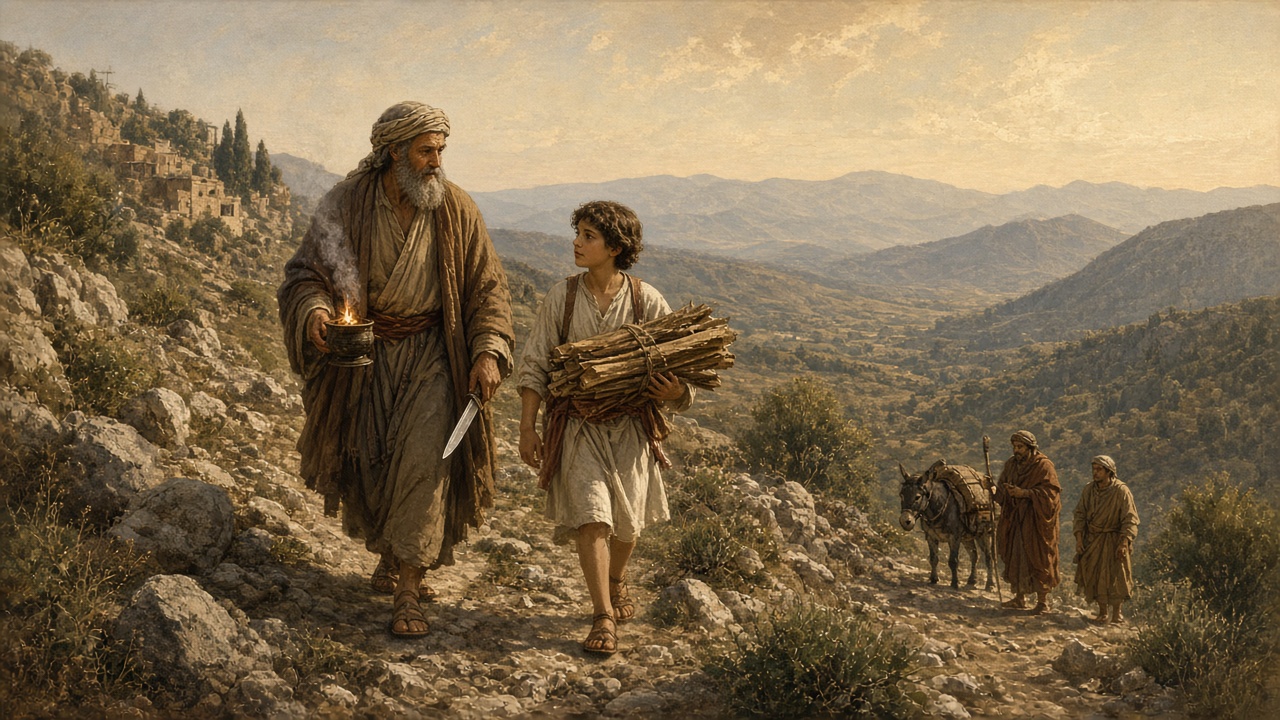
3Anmeu nfini te, naiꞌ Abraham ankeut hau metoꞌ. Rarit anfuut sin, ma nasaeb sin anbin bikaes keledai. Rarit in nok naiꞌ Isak, ma in ameput tuaf nua nnaon neu bare reꞌ Uisneno nteek ee naan. 4Sin nnaon neno nua goen. Ma nmeu te, naiꞌ Abraham napeen niit bare naan anbi ꞌroo. 5Onaim in nak neu in tua ameup nuaꞌ ein naan am nak, “Hi nua ki mpao kai mbi ia, mok bikaes keledai ngguin! Au ꞌok au anah ia, meiki-msae meu ne, he mꞌonen ma miꞌbees meu Uisneno. Rarit of hai mfain iim meu ia.”
6Rarit naiꞌ Abraham nait hau meot ein naan, ma nasahab naiꞌ Isak sin. Ma in nnaaꞌ neik besi ma ai nutaꞌ amsaꞌ. Oras sin nua sin nnaon buꞌ-buaꞌ ate, 7naiꞌ Isak nak in aamf ee mnak, “Aam!”
Rarit naiꞌ Abraham nataah am nak, “Saaꞌ, Isak?”
Onait naiꞌ Isak nataan am nak, “Aam, hit he totu ꞌturuꞌ. Hit teik hau metoꞌ nok ai. Mes aꞌbib-kase reꞌ he taꞌtuur ee ji, es mee?”
8Naiꞌ Abraham nataah am nak, “Isak! Uisneno of neikn On anfee In aꞌbib-kaes anaꞌ he njari ꞌturuꞌ.”
Onaim sin nua sin neiki nsaen piut. 9Oras sin ntean bare reꞌ Uisneno nakriraꞌ nrair je naan, naiꞌ Abraham anbaik fatu he nmoeꞌ mei ꞌturuꞌ. Rarit in nꞌator hau meot ein anbin mei naan. Onaim in nfuut in aanh ee, natupaꞌ natneenb ee nbi hau meot ein naan. 10Onaim in nait besi he nroor in anah. 11Mes nok askeken ate, UISNENO In ameput ankoaꞌ naꞌko neon goe mnak, “Hoe! Abraham! Kaisaꞌ feꞌ! Ampao kreꞌo feꞌ!”
In nataah am nak, “Nansaaꞌ, Usiꞌ?”
12Onait hanaf naan nak, “Kais amroor riꞌanaꞌ naan! Kais munsaaꞌ-saaꞌ ne! Oras ia Au uhiin namneo, ꞌak ho ro batuur-batuur mutuin Uisneno In romin, es naꞌ ho mubarab murair he mufuat ho aan moen meseꞌ naan neu Ne.”
13Rarit naiꞌ Abraham niit aꞌbib-kaes keos goes, reꞌ in suunk ein naꞌheeb ok nbin hau aan es in taek ein. Rarit naiꞌ Abraham nnao nheke ꞌbib-kase naan, ma nout goe njari ꞌturuꞌ neu Uisneno, nsekaꞌ in anah. 14Onaim naiꞌ Abraham nakanab bare naan Yehova Yire, (reꞌ in aꞌmoufn ii, ‘Uisneno of nabarab saaꞌ reꞌ hit tperluu’). Etun antea oras ia msaꞌ, biak ein naꞌuab ein am nak, “Anbi ꞌtoꞌef UISNENO naan, In of nabarab saaꞌ reꞌ hit tperluu.”
15Rarit ameput Uisneno naan nkoaꞌ ntein naꞌko neon goe mnak, 16“UISNENO neikn On nak, ‘Au ꞌsuup ꞌeik Au kanak, on nai: ho mubarab murair he mfee Kau ho aan fua meseꞌ naan, he njari fuaꞌ-turuꞌ. Es naan ate, 17Au of aꞌfee tetus nathoe ꞌeu ko ma ꞌeu ho sufam-kaꞌum sin. Sin of anmasaot-baban piut, tar antea ka tsoiꞌ tabeiꞌ sin fa, on reꞌ kfuun ein et neno, ma snaen et tais je ninin. Ho anah-upuf sin of niis ma naprenat sin musun. 18Naꞌko ho sufam sin, too uuf-uuf nbin pah-pinan ia of napenin tetus-athoen, natuin ho munaobaꞌ mrair Au prenat.’ ”
19Rarit naiꞌ Abraham ma naiꞌ Isak nsanun nfanin ma natefan nok sin ameup nuaꞌ ein naan. Ma sin nfanin neun Beer Seba. Onaim sin natuan nbin naan.
Naiꞌ Nahor in sufan-kaꞌun
20Neot es, naiꞌ Abraham anneen hanaf nak, in orif naiꞌ Nahor fee bi Milka nahoniꞌ riꞌanaꞌ mfaun. 21Aan moen unu, kaan ee naiꞌ Us. In oirf ee, naiꞌ Bus. Rarit naiꞌ Kemuer (reꞌ njair amaf neu naiꞌ Aram). 22Rarit naiꞌ Keset, naiꞌ Haso, naiꞌ Pirdas, naiꞌ Jitlaf, ma naiꞌ Betuel. 23Naiꞌ Betuel naan, bi Ripka in amaf. 24Mes naiꞌ Nahor nahoniꞌ antein riꞌaan nasi naꞌko bifee jes, in kaan ee, bi Reuma. In nahoniꞌ naiꞌ Teba, naiꞌ Gaham, naiꞌ Tahas, ma naiꞌ Maꞌaka.
Você sabia?
Deus prova Abraão
- Isaque era o único filho de Abraão com Sara. O acontecimento marcante seguinte registrado em sua vida, depois do desmame, é a ordem de Deus para que Abraão o oferecesse em holocausto num monte da terra de Moriá.Fontes: Isaac · o próprio texto bíblico
- O Dicionário Bíblico de Easton (1897) observa que alguns defendem que a terra de Moriá seja o monte Gerizim, mas a considera mais provavelmente uma das colinas de Jerusalém, a nordeste de Sião, onde o templo de Salomão foi construído na eira de Ornã, o jebuseu.Fontes: Moriah
- O capítulo termina com notícias dos parentes de Abraão: seu irmão Naor tinha permanecido em Harã, a leste do Eufrates, e Milca lhe dera oito filhos, entre eles Betuel, pai de Rebeca. Rebeca tornou-se esposa de Isaque, e o contato entre a família em Canaã e os parentes em Harã durou até Jacó deixar Harã.Fontes: Nahor (brother of Abraham) · Bethuel · o próprio texto bíblico
Notas escritas com auxílio de IA a partir de fontes abertas (Theographic Bible Metadata, CC BY-SA 4.0; Easton’s Bible Dictionary, domínio público) e revisadas antes de publicar.
Créditos e licença desta tradução
Uisneno In Kabin ma Prenat: Rais Manba'an Fe'u nok Reta' Ahun-hunut
Genesis and the New Testament in the Amarasi language of Indonesia
Kejadian dan Perjanjian Baru dalam bahasa Amarasi dari
copyright © 1999-2014 Unit Bahasa dan Budaya, Kupang NTT, Indonesia
Language: Amarasi
Translation by: Wycliffe Bible Translators
This translation is made available to you under the terms of the
Creative Commons Attribution-No Derivatives license 4.0.
You may share and redistribute this Bible translation or extracts from it in any format, provided that:
You include the above copyright and source information.
You do not make any derivative works that change any of the actual words or punctuation of the Scriptures.
Pictures included with Scriptures and other documents on this site are licensed just for use with those Scriptures and documents.
For other uses, please contact the respective copyright owners.
2022-03-11
Fonte: http://ebible.org/aaz/ · eBible.org