Génesis 11
YAUBADA YANA VONA'AWAUFAUFA 'IVAUNA · Toca un versículo para ver sus referencias cruzadas.
'Auvea tomotoga yadi bona 'aitamogana i sivilavilai bona fuedi i souyedi
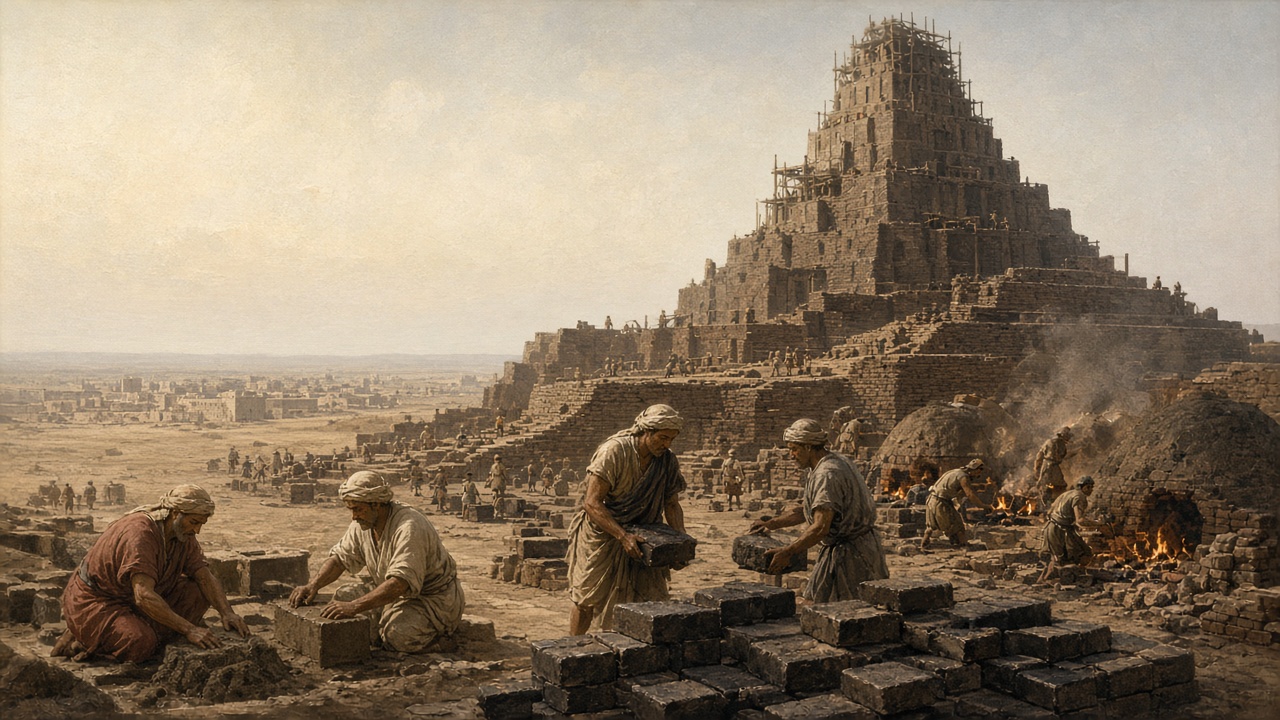
1Tutuya kumekumetana 'waineye, tomotoga matatabudi fwayefwayeye i miamiani bonadi 'aitamogana 'waidiega i veveifufu. 2Tutuyanina 'waineye tomotoganidi i yaba-vuvua i nunago inala yana 'eba lakayega, nika tamu laube'u bwaikina i veluagai bei i vebae'wa 'awalawa Babiloni 'waineye. 3Tutuya 'ifwaidi i 'a'avana, ma ediavo i veifufu i vo, 'Wa maia, yada beliki ta na 'idewadi fwayafwayayega, we'e ta na toke ta na kabunidi nika i na fa'aladewadi.” Bega yadi 'eba 'aiyogona beliki, we'e koluta 'wainega i dekudekudi. 4Mulieta i veifufu i vo, 'Wa maia, 'asiau yada 'atamana bwaikina ta na 'idewai, tamu vanuga manamanawena ta na yogoni bega i na laka abame, nika 'ada wagava i na vebwaika bega bei ta na miamiana kebu ta na yavula fwayafwaya matatabuna 'waineye.” |src="01_Ge_11_06_RG.jpg" size="col" loc="After Genesis 11:4, half page" copy="Sweet Pub" ref="11:4"
5Tamu 'aiata, 'Auvea i obuma 'atamananina bwaikina wata vanuganina i laka abame i yogoniga i na 'isedi. 6Nika 'Auvea i vo, E'a, de'e 'aila'a 'aitamogana wata bonadi 'aitamogana 'wainega i veveifufu, begaidi side bani'odi i vevesauluvedi. Yadi folovanina de'e 'eba velamu, i na nagoga bega 'ai'edi ava'ai i na nuaniga i na 'idewaimo, 'waidie kebu vitanaga. 7'Asa'aiana! Ta na obu tomotoga yadi bona 'aitamogana ta na sivilavilai i na vetuli bega bona fuedi i na souyedi, 'wainega ma ediavo i na ve'ibavubavu.” 8Side bani'odiga 'Auvea tomotoga i luveyavulidi i nagoi fwayafwaya matatabuna 'waidie we'e yadi 'atamananina i yogoyogoniga i baileni. Begaidi 'atamananina i goleni Babeli, fai 'Auvea tomia fwayafwaya bonadi i sivilai bona tulina tulina bei i souyedi. Tutuya manamanawena i 'a'avana mulieta Noa natuna Semi 'ana wauma 'wainega Ebelamu i tubuga.
¿Sabías que…?
Babel y el camino desde Ur
- En este capítulo, unos viajeros se establecen en una llanura de Sinar y construyen con ladrillo cocido y asfalto, en lugar de piedra y mezcla. Un diccionario considera Sinar, probablemente, como Babilonia o el sur de Mesopotamia, que se extiende casi hasta el golfo Pérsico, dice que allí se construyó la torre de Babel y describe a los primeros habitantes de la tierra como gente que hacía ladrillos y edificaba ciudades.Fuentes: el propio texto bíblico · Shinar
- La ciudad inconclusa recibe el nombre de Babel porque, según el relato, allí el Señor confundió la lengua de todo el mundo y dispersó a la gente. Un diccionario explica el nombre como 'confusión' y sugiere que la torre se pensó, probablemente, como un punto de reunión en la extensa llanura de Sinar, tras una migración desde las tierras altas de Armenia, para que los constructores no se dispersaran.Fuentes: el propio texto bíblico · Babel
- El capítulo termina con Taré saliendo de Ur de los caldeos hacia Canaán, con Abram, Sarai y su nieto Lot, y estableciéndose luego en Harán, donde muere a los 205 años; su hijo Harán ya había muerto en Ur. Un diccionario llama a Ur lugar de nacimiento de ese hijo, la ciudad más grande de Sinar o de la Caldea del norte, y un centro de comercio y poder político, y sitúa Harán, hoy Harran y llamada Charrán en el Antiguo Testamento griego y en Hechos, junto al Belik, afluente del Éufrates en la Alta Mesopotamia, donde Abram permaneció hasta la muerte de Taré.Fuentes: el propio texto bíblico · Terah · Ur of the Chaldees · Haran
Notas escritas con ayuda de IA a partir de fuentes abiertas (Theographic Bible Metadata, CC BY-SA 4.0; Easton’s Bible Dictionary, dominio público) y revisadas antes de publicarse.
Lugares de este capítulo
- Shinar · Hoy: Babylonia · 32.543, 44.422 · versículo 2
- Chaldea · 30.962, 46.104 · versículos 28, 31
- Canaan · 32.767, 35.333 · versículo 31
- Haran · Hoy: Harran · 36.864, 39.033 · versículos 31, 32
Solo aparecen lugares identificados con alta confianza (90 % o más según las fuentes académicas reunidas por OpenBible). Mapa de la época: DARE (Digital Atlas of the Roman Empire), CC BY 4.0; mapa actual: © colaboradores de OpenStreetMap; lugares: OpenBible.info (CC BY 4.0).
Créditos y licencia de esta traducción
YAUBADA YANA VONA'AWAUFAUFA 'IVAUNA
The New Testament in the Iamalele dialect of the Ubuvala Language of Papua New Guinea
Nupela Testamen long tokples Ubuvala long Niugini
copyright © 1984, 1988, 2025 Wycliffe Bible Translators, Inc. and SIL Papua New Guinea
Language: Ubuvala (Iamalele)
Dialect: Iamalele
Translation by: SIL PNG
Contributor: Wycliffe Bible Translators
This translation is made available to you under the terms of the
Creative Commons Attribution-Noncommercial-No Derivatives license 4.0.
You may share and redistribute this Bible translation or extracts from it in any format, provided that:
You include the above copyright and source information.
You do not sell this work for a profit.
You do not change any of the words or punctuation of the Scriptures.
Pictures included with Scriptures and other documents on this site are licensed just for use with those Scriptures and documents.
For other uses, please contact the respective copyright owners.
2026-09-30
Fuente: http://png.bible/yml/ · eBible.org