Marcos 12
Etulo NT · Toca un versículo para ver sus referencias cruzadas.
Utsa mgbi emi ibwubwe ngwu // a kye okwɔ wo ma abɔ
1O si wita ogbɔdzɛ yi ama mi utsa gbɛɛ: <<Inggisɛ shi okwɔ awawekwɔ. O mbɛ ogalu kpakɛkɛ won, di tishɛ ogbe eni owawa ekwɔ di tuo otila ikye ongyo. Ta o kye okwɔ na wo emi okwɔ angbeka abɔ si lu agaba. 2Mi onɔ oshɛ etɔ mani, o dɔ ongbidɔ mgban esɔ mbi ama ngwu o kye okwɔ wo ma abɔ ma gbɛɛ non ka gbɛ owawa ekwɔ ongwi okwɔ na mboma. 3Kpaa a kpaklin, gbon lɔn onya lu abubɔ. 4Ta o di dɔ ongbidɔ oka esɔ mboma; a kye ungwɔ zudɔn ikye onun ayiwi. 5Otsungwɔ okwɔ na diyɛ dɔ oka, ongwu na a kyon kye ngwɔlu. O di dɔ angbeka kwuba, angbeka ma, a gbo ma, angbeka yɔ, a ngwɔ ma.
6<<Otsungwɔ okwɔ sisi yi inggisɛ onyi ta odɛsɔ, ongwan ongwu ongyulɔ, ongwu nkpan itukwu saan. O dɔnsɔ olɛlɛ gbɛɛ, <A ka nu ongwani mmwɛ.>
7<<Nghaduu ama odi mi okwɔ ntona gbɔ yi eka gbɛɛ, <Nɛnɛ li ongwɛ nka gyokwudɛ ma aani. Ba na, ni eyi ngwɔlun, ta okwudɛ ka yɛɛ mgbi eyi.> 8Nɛ a si kyon kye ngwɔlu, di kye ikwɔ mgban ngwi tasɛ mi okwɔ.
9<<Li alungwɔ ngwi otsungwɔ okwɔ na ka kyɔ? O ka ba wa ngwɔlu ama ngwu o kye okwɔ wo ma abɔ ntona di yile okwɔ nu angbeka. 10Ema gbɔ Afɛ nɛ walo:
<< <Akwutsɛ ngwi ama ombɛ ozu fwan ma
i yɛɛ okwulu ikye ozu;
11li Otsɛ Imgbasho kyungwɔnɛni,
nɛkpaa li ungwɔ okwulewo mbi eyii>?>>
12Ta a pita ofɛ obwan ikyekyɛ a ye dafi o gbɔ utsa na ikye mgbi ama. Nghaduu a le mio ibyi inggisɛ; nɛ a si dzanta lu.
Okpa udza ifyɛɛ nu iSidza // (Utɔ mgbi emi iRoma)
13A dɔ emi iFarasi angbeka esɔ mi iyikpa yi emi iHerude mbi iYesu ikye oka bwan mi elodzɛ mgban. 14A ba mbon wa gbɛɛ, <<Otsetse, eyi ye abu li inggisɛ otsitsi. Abu li mio inggisɛ ba, ikyekyɛ abu li kye oshewo nu inggisɛ mi odzɛɛdzɛ mgbi ama ba; kpaa abu li tso ofɛ mgbi Imgbasho imbisɔn-mbisɔn yi otsitsi. Nɛ li ola ni eyi kpa udza ifyɛɛ nu iSidza naadi li ola ba? 15Ni eyi kpa naadi ni eyi ka kpa ba?>>
Nghaduu iYesu ye ɛwɛ mgbi ama, o nu ma uka gbɛɛ, <<Kyɔnɛ ngwi ema le mina okya ani ukya? Kye isule ma wa nin di.>> 16A kye isule ma ba, man o byi ma gbɛɛ, <<Nɛnɛ li onodzi mgbi emɛ dɔdzɛ ele? Di li olɔɔlɔ mgbi emɛ?>>
A gbɛɛ, <<Li mgbi iSidza.>>
17IYesu si nya ma gbɛɛ, <<Kye ungwɔ mgbi iSidza nu iSidza di kye mgbi Imgbasho nu Imgbasho.>>
Man i kwulu ma ewo biyan.
Eba mi onɔ okyɛɛ mi ikwu
18Nghanɛ emi iSadusi, ama ngbɛɛ okyɛɛ-kyɛɛ mi ikwu dzɛma ba ma, ba mbi iYesu yi ita. 19A gbɛɛ, <<Otsetse, iMose lɔ gbɛɛ ni ongwunɔ inggisɛ kwulu dzata ongyaa kpaa mba ɛngbɛ bayɔ, inggisɛ na no yile owakwadɛ na kyɛmɛ-kyɛmɛ di mba ɛngbɛ mi ikye ongwunɔ ongwu nkwulu nani. 20Engwuneka nghi egyafa nose to. Ongwu ababɔ kye ongyaa kwulu dzata ongwɛ onyi ba. 21Ongwu fan yile owakwadɛ na, kpaa o di kwulu dzata ongwɛ onyi ba. Ongwu ta kpaa li ngha. 22Mi otsitsi, onyonyi mbi engyulɔ egyafa ntonɛ dzata etɔ onyi ba. Ongyɛɛngyɛ duu, ongyaa na kpaa wa kwulu. 23Mi egbe ngwi inggisɛ ka kyɛɛ mi ikwu ma li emɛ ngwu ongyaa nɛ ka li owan, ngwi ama egyafa duu kyon?>>
24IYesu nu uka gbɛɛ, <<Ema boofɛ ikyegbɛɛ di ema ye ungwɔ ngwi Afɛ lɔ ba di ye mfye mgbi Imgbasho kpaa ba. 25Bana mi onɔ ngwi inggisɛ ka kyɛɛ mi ikwu mani, a ka kye ongyaa hona kye ongwɛ nu eba wuba; a ka to dafi engyesɔ emi esho mani. 26Mi ikye odzɛ okyɛɛ mi ikwu nɛ, ema gbɔ mi Afɛ mgbi iMose, mi odzɛ mgbi oshɛ na walo? Dafi Imgbasho nyan gbɛɛ, <Ani li Imgbasho mgbi Abrahan, Imgbasho mgbi Adziki di li Imgbasho mgbi iJeko ma baa>? 27O li Imgbasho mgbi emi ikwukwɔ ba, kpaa Imgbasho mgbi emi oshishe. Ema le boofɛ timbi saan!>>
Ola onghaangha
28Onyi mi etsetse mgbi ola mgbi iMose ba wa fwo ma le tangwodzɛ. Dafi o di gbɛɛ iYesu nu ma uka osuse nɛta, o si byun gbɛɛ, <<Mi ola duu ma, li ole nghao wuuta?>>
29IYesu nu uka gbɛɛ, <<Ongwu nnghao wuuta ma, li ongwu aani: <Fwo na, ema emi Israi, Otsɛ Imgbasho mgbi eyi, Otsɛ na li onyi. 30Otsɛ Imgbasho mgbi abu no kpa abu itukwu yi itukwu mgbi abu duu yi oshishe mgbi abu duu bɛyi mfye mgbi abu duu.> 31Ongwu fan yɔ: <Inggisɛ nwatse dɔ abu no kpa abu itukwu dafi ewabu mani.> Ola oka dzɛma nshewo ngha ola ntonɛ ba.>>
32Otsetse mgbi ola na nu iYesu uka gbɛɛ, <<Otsetse, abu gbɔ tishi. Abu li ayin ogbɔgbɛɛ Imgbasho li onyi oka dzɛma ba se ongwu ta mani. 33Onon kpa abu itukwu, yi itukwu mgbi abu duu yi oyeye mgbi abu duu bɛyi mfye mgbi abu duu, inggisɛ ongwu nwatse dɔ abu no di kpa abu itukwu dafi ewabu na, li ungwɔ nwuuta ngha umba ama otoola bɛyi ama ofifɛ duu.>>
34Ngwi iYesu di gbɛɛ o nu uka mi ozoyeye nɛ, o nyan gbɛɛ, <<Abu dzɛ mbombo yi esutɔ mgbi Imgbasho ba.>> Ta mi onɔ na lu iyayi inggisɛ onyi kpaa yagba byun ita angbeka wuba.
IKrestu nɛ li Ongwɛ emɛ?
35Ngwi iYesu le tso mi ozu okwukwo osunu Imgbasho mi iJerosalin nɛ, o si byita gbɛɛ, <<Kyɔsinɛse ngwi etsetse mgbi ola mgbi iMose gbɔgbɛɛ Ongwu Imgbasho zondu gbɛɛ o ka wa dulu ɛsɛ watɔ (iKrestu) ma li Ongwɛ iDevedi? 36Onodzi Osaan kye iDevedi abuon kpaa teyi non gbɛɛ:
<< <Otsɛ Imgbasho nya Otsɛ mgbi ani gbɛɛ:
<<Sɔkɛ mi abugye mgbi ani
nghataa ni ani wa nu engyikyili mgbi abu
yɛɛ itse mgbi abu ogbe afɔ dɔ efu.>> >
37IDevedi abuon kwun di <Otsɛ.> Nghanɛ ka kyɔsinɛse ngwi o ka li ongwan?>>
Ibyi inggisɛ ntona fwo otsootso mgbi iYesu yi atsa mi itukwu mgbi ama.
IYesu kwo adɔ mi otsootso mgbi // etsetse mgbi ola
38Mi otsootso mgbi iYesu ma, o gbɛɛ, <<Kye inɛ byi etsetse mgbi ola na. A li mina okyikyɛ yi angwuto owulu-wulu nu ma dile ta ma angba mi ifyidu, 39odi sɔ itse ngwi a nghao kye wuuta mi ozu okwakye mgbi emi iJuda yi imbe okpɔngɔ mi oga. 40A li gye mmgbe mi udɛ mgbi emi owakwadɛ di li bibɔ tunto otso gbɛɛ ama tishi. Itɔ inggisɛ ntona Imgbasho ka kwo ma adɔ she kpakpa.>>
Umba mgbi owakwadɛ
41Man iYesu sisɛ mi agya imbe ngwi a gbe umba le wokɛ, le di ibyi inggisɛ kye udza mgbi ama le wokɛ mi ashiko mgbi ozu okwukwo osunu Imgbasho mi iJerosalin. Ama odzɛ yi udza kwuba kpaa kye udza mgbi ama le wokɛ ele. 42Nghaduu ongyaa owakwadɛ adzɛ ba wa nu anini efa, ngwi mɛ ikobo onyi ta.
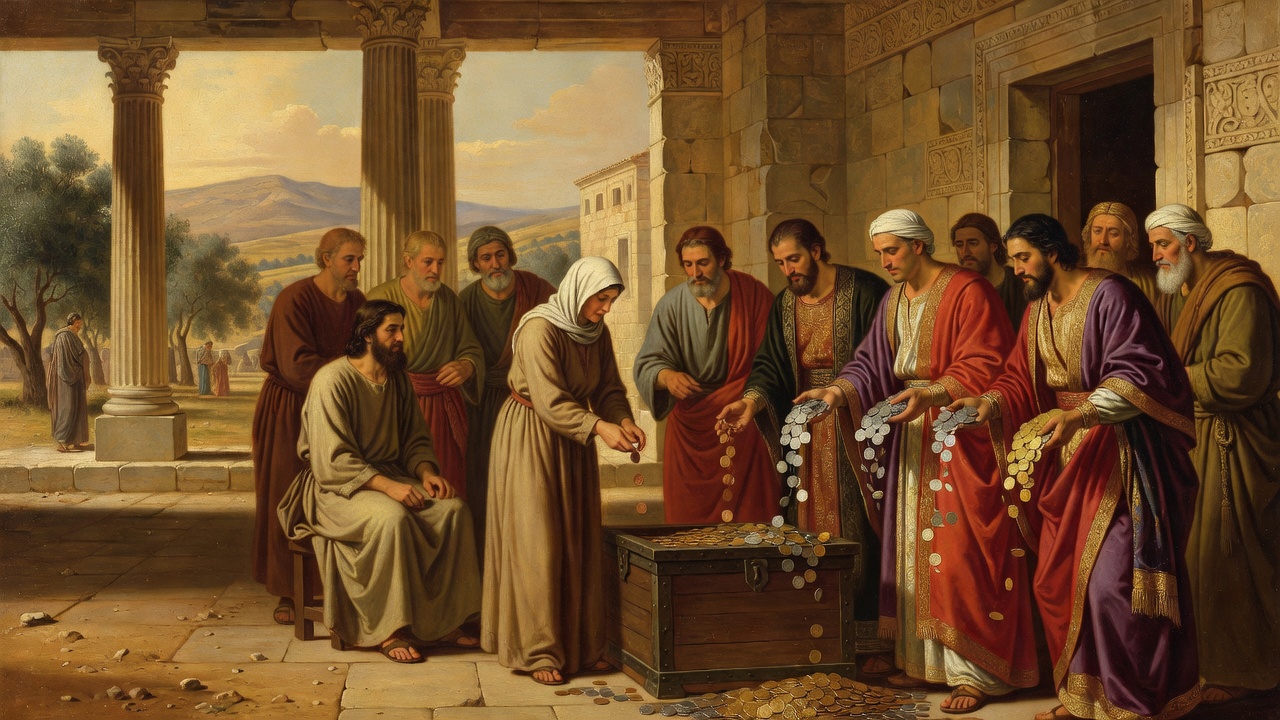
43Nɛ iYesu si kwu engwafɔɔn ela ba mbon nya ma gbɛɛ, <<N nya ema otsitsi, ongyaa owakwadɛ adzɛ nɛ nghao kye wokɛ mi ashiko ngha angbeka duu. 44Ama duu a nu mi odzɛɛdzɛ mgbi aludu mgbi ama; kpaa owakwadɛ nɛ yɔ, li mi adzɛ mgban ngwi o nu, li ungwɔ ngwi o dzɛ biyan duu onon dzɛ oshishe mani.>>
¿Sabías que…?
Debates en el templo
- Los saduceos, que dicen que no hay resurrección, interrogan a Jesús sobre siete hermanos y una viuda, apelando a lo que escribió Moisés. Él los remite a la zarza ardiente en el Libro de Moisés, donde Dios dice: “Yo soy el Dios de Abraham, el Dios de Isaac y el Dios de Jacob”. Abraham, “padre de una multitud”, era hijo de Taré; Isaac era el único hijo de Abraham con Sara; y Jacob era el segundo de los hijos gemelos de Isaac y Rebeca.Fuentes: el propio texto bíblico · Abraham · Isaac · Jacob (Israel)
- Cuando le preguntan cuál es el mandamiento más importante, Jesús comienza: “Oye, Israel, el Señor nuestro Dios, el Señor es uno”, y añade: “Ama a tu prójimo como a ti mismo”. Israel es otro nombre de Jacob, el segundo de los gemelos de Isaac y Rebeca; el nombre Jacob se explica como el que sigue los talones de otro, o suplantador.Fuentes: el propio texto bíblico · Jacob (Israel)
- Mientras enseña en los atrios del templo, Jesús pregunta cómo pueden decir los escribas que el Cristo es el Hijo de David, si el propio David lo llama “Señor”. David, cuyo nombre significa “Amado”, era el octavo y el menor de los hijos de Isaí, ciudadano de Belén, y su primera ocupación fue cuidar las ovejas de su padre en las tierras altas de Judá.Fuentes: el propio texto bíblico · David
Notas escritas con ayuda de IA a partir de fuentes abiertas (Theographic Bible Metadata, CC BY-SA 4.0; Easton’s Bible Dictionary, dominio público) y revisadas antes de publicarse.
Créditos y licencia de esta traducción
Etulo NT
Portions of the Holy Bible in the Etulo language of Nigeria
copyright © 2024 Initiative for the Translation and Development of African Languages
Language: (Etulo)
Contributor: The Seed Company
This translation is made available to you under the terms of the
Creative Commons Attribution Share-Alike license 4.0.
You have permission to share and redistribute this Bible translation in any format and to make reasonable revisions and adaptations of this translation, provided that:
You include the above copyright and source information.
If you make any changes to the text, you must indicate that you did so in a way that makes it clear that the original licensor is not necessarily endorsing your changes.
If you redistribute this text, you must distribute your contributions under the same license as the original.
Pictures included with Scriptures and other documents on this site are licensed just for use with those Scriptures and documents.
For other uses, please contact the respective copyright owners.
Note that in addition to the rules above, revising and adapting God's Word involves a great responsibility to be true to God's Word. See Revelation 22:18-19.
2025-07-09
Fuente: http://ebible.org/utr/ · eBible.org