Hechos 12
Tupã Je'ẽha · Toca un versículo para ver sus referencias cruzadas.
Jesu kotyhar ta ke amõ ta mupyrara tĩ
1Arahã amõ amõ we Jesu rehe jurujar katu ame'ẽ ta ke Ero mupyrara. Ero riki jundéu awa tama'e kapitam. 2Pe, Ero je'ẽha rupi Tian ke amõ jukwa oho. Tian riki Juã mu. Kyse puku pe jukwa. Ame'ẽ rehe jundéu awa ta hury katu. 3Ame'ẽ ke Ero ukwa rahã, Petu ke a'e pyhyk tĩ. Pasuko weraha rehe uhyk tate rahã, Petu ke pyhyk. (Ame'ẽ wera rahã, jundéu awa ta mbeju ke u'u. Mbeju ke mupururukiha nixói te, ame'ẽ ke u'u.) 4Upa pyhyk rahã, kyndaha pe kynda raho. Heta sonda ta harõ u'am. Awa py wajar mokõi sonda ta harõ u'am. Tumeme harõ py. A'engi amõ tumeme harõ tĩ. A'engi amõ tumeme harõ tĩ. Aja pame katu te harõ u'am. Pe, Pasuko weraha upa rahã, Petu ke Ero muhem tar katu. Jundéu awa ta ruwa koty jukwa tar katu. 5Pe, Petu rehe sonda ta usak katu u'am. (Jesu kotyhar ta anĩ.) A'eta Tupã namõ pandu pandu hũ. “Kyndaha ngi Petu ke emuhem katu” aja inamõ pandu pandu hũ.
Kyndaha ngi Petu ke Tupã je'ẽha rahoha muhem
6Pytun rahã, mokõi sonda ta pyter rupi Petu ukwer ou. Ku'ẽ rahã, Petu ke Ero muhem ta tipe. Jukwa ta tipe. Petu ke ipo apyr rupi sonda ta pukwar, ita tupaham pe. Ita tupaham pe sonda ta ipo apyr rupi pukwar tĩ. Kyndaha rukwen ke sonda ta harõ u'am tĩ. 7Pe, pahar kyndaha rehe Tupã je'ẽha rahoha uhyk. Wera hũ a'ep. Petu jixi'y rehe pyhyk. Pe, mukatak. Aja mupak. Pandu ipe:
—Pahar epu'am! — aja Petu pe.
Pe, pu'am rahã, pahar ita tupaham ke jujirar ingi. Tik tik tik. Upa jujirar. 8Pandu ipe tĩ:
—So'o pirer nde ku'a rupi har emujar. Nde py rehe har epukwar tĩ — aja Petu pe.
Ame'ẽ upa rahã, pandu ipe tĩ:
—Kamixa emunde tĩ! Jahorahã! — aja Petu pe.
9Pe, inamõ Petu oho ixo. Kyndaha ngi uhem oho ixo. Anĩ. Petu ukwa ym rĩ. Tupã je'ẽha rahoha muhem raho ame'ẽ ke Petu ukwa katu ym. Ixerai nahã my, aja Petu ukwaha naĩ. 10Hukwen harõha asa py oho. Mokõihar ta ke asa oho tĩ. Pe, ita rukwen rehe uhyk oho. Ame'ẽ riki ok ta rukwen ke. Ok ta pe ixe oho ame'ẽ ke. Ame'ẽ rehe uhyk rahã, jupirar te'e u'am. Pe, a'eta uhem oho. Awa rape rupi wata we, pe, pahar Petu ke Tupã je'ẽha rahoha hijar oho. 11Arahã Petu ukwa katu. Kuja jupandu jupe:
—Ihẽ akwa katu te apo 'y! Tupã je'ẽha rahoha ke ihẽ koty Tupã muwyr. Ero ngi ihẽ ke a'e mupoir. Ihẽ ke mupoir, a'erehe ihẽ ke amõ jukwa ta, ame'ẽ ke jundéu awa ta usak ym ta apo 'y — aja Petu jupe.
12Poiriha Petu ukwa rahã, Mari rok rehe uhyk oho. Mari riki Juã mãi. Mak aja Juã rer tĩ. A'ep heta jy'ar uĩ. Tupã namõ pandu pandu uĩ. 13Pe, ok kurar rukwen rehe Petu uhyk rahã, pukái u'am. Pe, kũjãtãi usak oho. Ma'e mupupuriha ke a'e. Her Ho. 14Petu je'ẽha ke a'e ukwa. A'erehe hury katu jywyr oho. Hukwen ke pirar ym we ipe rĩ. Pe, amõ ta pe a'e pandu oho:
—Se soroka pe Petu ixo! — aja kũjãtãi.
15Amõ ta pandu:
—Anĩ. Nde te'e pe aja. Nde ereka'u te'e! — aja kũjãtãi pe.
Anĩ. A'e pandu we rĩ:
—Jete atu te atu. Se Petu ixo! — aja a'eta pe.
Pe, amõ ta pandu:
—Anĩ. Tupã je'ẽha rahoha riki. Petu rehe usak katu ame'ẽ ke a'e — aja ipe.
16Petu pukái pukái we u'am rĩ. Pe, amõ hukwen pirar oho. Petu rehe a'eta usak rahã, a'eta pandu: “Mã! Myja nde erehem my? Mã!” aja a'eta pandu. 17Pe, ipo ke Petu mukatak. (Aja a'eta je'ẽha ke muputu'u a'eta ngi.) Pe, kyndaha ngi Tupã muhem ame'ẽ rehe har pandu pandu a'eta pe. Petu pandu tĩ:
—Ame'ẽ rehe har Tian pe pepandu peho. Jesu kotyhar ta pe pepandu peho tĩ — aja a'ep ixo ame'ẽ ta pe Petu pandu.
Pe, amõ koty kanim oho.
18Pytuniwe te rahã, sonda ta pandu pandu hũ a'eta jupe. “My Petu ihon mamy?” aja sonda ta pandu hũ. 19Pe, sonda ta pe Ero pandu:
—Pekekar pehorahã! — aja a'eta pe.
Anĩ. Mahem ym a'eta. Pe, hukwen harõha ta pe Ero pandu pandu. Petu uhemiha rehe har pandu. Anĩ. Je'ẽha nixói te a'eta rehe. Pe, amõ sonda ta pe Ero pandu:
—Harõha ta ke pejukwa! — aja.
A'engi Jundéi ywy ngi Ero oho. Sesaréi ok ta pe oho. A'ep pyta rĩ.
Ero manõha rehe har
20Ero ixo ame'ẽ ywy ngi ngã mi'u ke Tir ok ta pe har ta werur. Aja te'eha a'eta. Sinõ ok ta pe har ta aja tĩ. Ngã mi'u werur tĩ. Pe, Tir ok ta pe har ta rehe Ero parahy te. Sinõ ok ta pe har ta rehe parahy tĩ. A'erehe ame'ẽ mokõi ok ta pe ngã mi'u ke Ero mondo ym te apo 'y. A'erehe Ero rehe Tir ok ta pe har ta usak oho. Sinõ ok ta pe har usak oho tĩ. Mukatu ta oho. (Aja rahã, ngã mi'u ke Ero mondo ta tĩ, aja ngã ukwa. A'erehe mukatu oho.) Eroma'e miasu pe ame'ẽ ta pandu py. Her Mbasa. Kapitã rok usakiha ke a'e. Ame'ẽ namõ a'eta mukatu py oho. A'engi Ero namõ mukatuha rehe har johu ngã pandu ta oho.
21Pe, amõ weraha ke Ero manga. Arahã kapitãma'e myrape tymã 'ar pe a'e wapyk. Ima'e mundeha katu te ame'ẽ ke a'e munde. Pe, ngã pe a'e pandu pandu katu te uĩ. 22A'erehe Ero rehe ngã ipy'a katu u'am. Ehe har kuja pandu:
—Kome'ẽ ywy keruhũ pe har ym a'e! Tupã tiki a'e — aja ukwa ngã jupe.
23Tupã aja Ero rehe ipy'a ke amõ ta moĩ moĩ katu. Ame'ẽ ke Ero muputu'u ym ngã ngi. A'erehe pahar Tupã je'ẽha rahoha parahy ehe. Ma'e ahyha mondo ehe. Upa hete rupi tapuru su'u su'u hũ. Aja a'e manõ.
24Pe, Tupã je'ẽha ke amõ ta pandu pandu oho. Amõ amõ ta Jesu rehe jurujar katu tĩ.
25Tamatarer ke upa raho rahã, Manambe jywyr oho. Jerusarẽ ok ta ngi jywyr oho. Sáu jywyr oho inamõ tĩ. Jywyr oho rahã, Juã Mak ke a'eta raho. Antioki ok ta pe a'eta jywyr uhyk oho.
¿Sabías que…?
La huida de Pedro y la muerte de Herodes
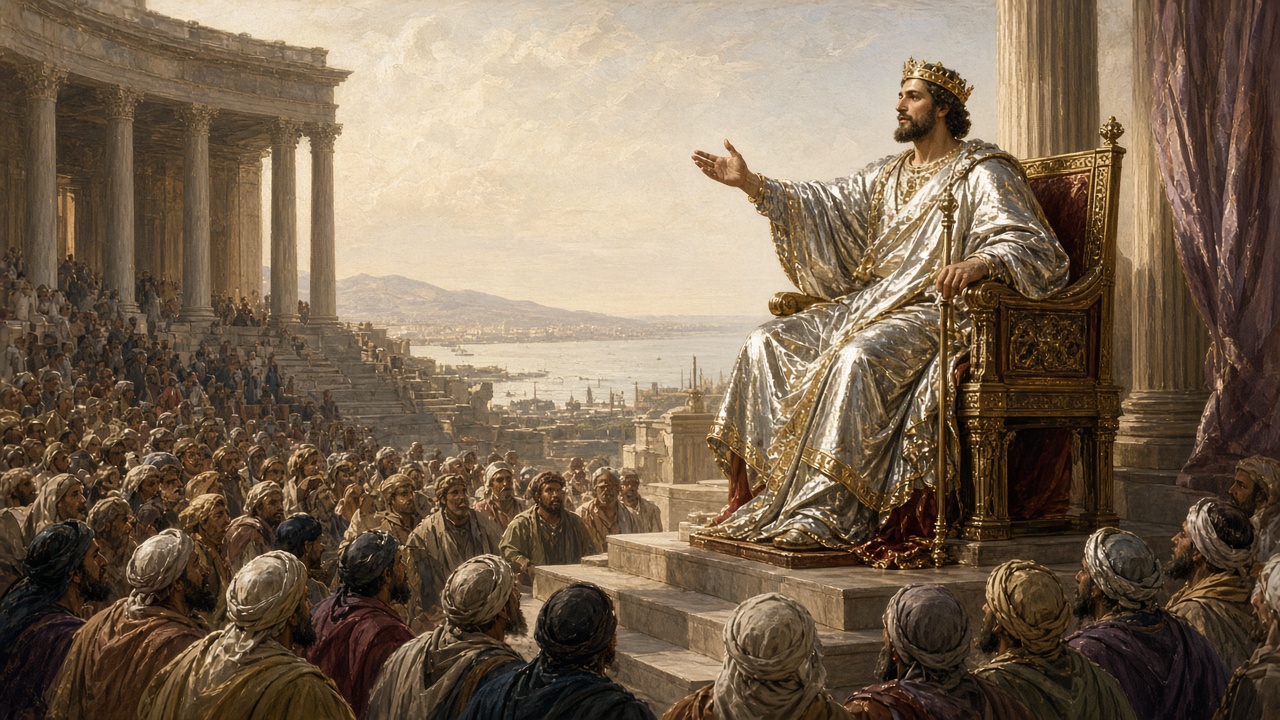
- El rey Herodes de este capítulo es Herodes Agripa I, nieto de Herodes el Grande, que con el tiempo llegó a poseer todo el reino de su abuelo y el título de rey. Hizo matar a Santiago y encarceló a Pedro. El Diccionario Bíblico de Easton (1897) dice que, en el segundo día de una fiesta en honor del emperador Claudio, Agripa apareció en el gran teatro de Cesarea con magníficas vestiduras de plata; era temprano, y los rayos del sol deslumbraban a quienes lo veían.Fuentes: Herod Agrippa I · el propio texto bíblico
- El Santiago muerto a espada era Santiago, hijo de Zebedeo, hermano del apóstolo Juan, un pescador que había trabajado como socio de Pedro. El Diccionario Bíblico de Easton (1897) lo presenta como el primero de los apóstoles en ser muerto y dice que Herodes Agripa lo hizo decapitar. El Santiago a quien Pedro pide que se avise a los creyentes es otro hombre: el mismo diccionario lo identifica como el Santiago que encabezaba la iglesia en Jerusalén.Fuentes: James (Son of Zebedee) · James (Brother of Jesus) · el propio texto bíblico
- Cuando comprendió que estaba libre, Pedro fue a la casa de María, madre de Juan Marcos, en Jerusalén, que el Diccionario Bíblico de Easton (1897) llama lugar habitual de reunión de los discípulos; mucha gente estaba reunida allí orando. La sirvienta que acudió a la puerta exterior se llamaba Rode, nombre que significa una rosa; llena de alegría al oír su voz, corrió adentro para anunciarlo y olvidó abrir la puerta. Juan, llamado también Marcos, era hijo de María —Marcos, su nombre romano, poco a poco reemplazó al nombre judío Juan— y más tarde salió de Jerusalén con Bernabé y Saulo.Fuentes: Mary (Mother of John Mark) · Rhoda · John Mark · el propio texto bíblico
Notas escritas con ayuda de IA a partir de fuentes abiertas (Theographic Bible Metadata, CC BY-SA 4.0; Easton’s Bible Dictionary, dominio público) y revisadas antes de publicarse.
Lugares de este capítulo
- Caesarea · Hoy: Caesarea Maritima · 32.500, 34.892 · versículo 19
- Judea · Hoy: Judea 1 · 31.777, 35.234 · versículo 19
- Sidon · Hoy: Sandikli archaeological site in Sidon · 33.561, 35.372 · versículo 20
- Tyre · 33.271, 35.196 · versículo 20
- Jerusalem · 31.777, 35.234 · versículo 25
Solo aparecen lugares identificados con alta confianza (90 % o más según las fuentes académicas reunidas por OpenBible). Mapa de la época: DARE (Digital Atlas of the Roman Empire), CC BY 4.0; mapa actual: © colaboradores de OpenStreetMap; lugares: OpenBible.info (CC BY 4.0).
Créditos y licencia de esta traducción
Tupã Je'ẽha
New Testament in Kaapor (BR:urb:Kaapor)
copyright © 2012 Wycliffe Bible Translators, Inc.
Language: Kaapor
Translation by: Wycliffe Bible Translators, Inc.
Copyright Information
© 2012, Wycliffe Bible Translators, Inc. All rights reserved.
This translation text is made available to you under the
terms of the Creative Commons License: Attribution-Noncommercial-No Derivative Works.
( http://creativecommons.org/licenses/by-nc-nd/3.0/ )
In addition, you have permission to port the text to different file formats, as long as you
do not change any of the text or punctuation of the Bible.
You may share, copy, distribute, transmit, and extract portions
or quotations from this work, provided that you include the above copyright
information:
You must give Attribution to the work.
You do not sell this work for a profit.
You do not make any derivative works that change any of the actual words or punctuation of the Scriptures.
Permissions beyond the scope of this license may be
available if you contact
us with your request.
The New Testament
in Kaapor
© 2012, Wycliffe Bible Translators, Inc. All rights reserved.
This translation is made available to you under the terms of the
Creative Commons Attribution-Noncommercial-No Derivatives license 4.0.
You may share and redistribute this Bible translation or extracts from it in any format, provided that:
You include the above copyright and source information.
You do not sell this work for a profit.
You do not change any of the words or punctuation of the Scriptures.
Pictures included with Scriptures and other documents on this site are licensed just for use with those Scriptures and documents.
For other uses, please contact the respective copyright owners.
2014-04-27
Fuente: http://ebible.org/urbNT/ · eBible.org