2 Timoteo 3
Tupã Je'ẽha · Toca un versículo para ver sus referencias cruzadas.
'Ar rehe angaha uhyk tate ame'ẽ rehe har
1Kuja ekwa exo apo. 'Ar rehe angaha uhyk tate rahã, pyrara hũ ta ngã ixo. 2Arahã kyty'ym te ta amõ ta juehe. Arahã tamatarer rehe jõ ipy'a ke moĩ moĩ ta tĩ. Arahã: “Jande jõ riki katu te me'ẽ ke” aja jõ amõ ta ukwa ta a'eta juehe har tĩ. Arahã: “Upa amõ ta riki jaxer ai” aja jõ amõ ta ukwa ta a'eta juehe har tĩ. Arahã ipái rehe hendu ym te ta tĩ. Imãi rehe aja tĩ. Hendu ym te ta tĩ. Arahã amõ ta ngi ma'e pyhyk rahã: “Pete tiki” aja pandu ym te ta tĩ. Arahã Tupã rehe har ukwa ukwa ym te ta ixo tĩ. 3Arahã amõ ta rehe ipy'a ym te ta tĩ. Arahã amõ ta rehe parahy rahã, ipy'a jywyr ym te ta a'eta rehe tĩ. Arahã amõ ta rehe juru ai pame katu te ta tĩ. Arahã pahar ipy'a pihun te ta oho tĩ. Pahar parahy ta tĩ. Arahã katu ame'ẽ ke amõ ma'ema'e, ame'ẽ ke putar ym te ta tĩ. 4Arahã ehe katu ame'ẽ ke te'e huwajan wan uwak ta oho tĩ. Arahã upa ma'e ka'u te'eha namõ ma'ema'e ta tĩ. A'eta jõ ukwa katu te ame'ẽ ta ke a'eta aja ukwa ta tĩ. Arahã Tupã rehe ipy'a ym ta. Anĩ. Ima'e jumuhuryha rehe jõ a'eta ipy'a katu ta tĩ. 5“Tupã rehe jande japy'a katu” aja a'eta pandu ta naĩ. Anĩ. Panduha aja a'eta ixoha ym ta tĩ. Tupãma'e pyrãtãha namõ ma'e ke amõ ma'ema'e. Aja ym ta awa. Aja a'eta ixo ym ta.
Timo! Ehendu katurahã! A'eta ngi eho. 6A'eta ngi har amõ ta ixe oho. Amõ rok pe ixe oho. Pe, kũjã ka'u te'e ame'ẽ ke a'eta muka'u te'e raho. Ma'e katu ym ame'ẽ ke kũjã ta putar katu. Pe, ma'e ka'u te'eha ke ma'ema'e, ame'ẽ rehe a'eta jupyai. Anĩ. Putu'u ym ingi. 7Ma'e ke a'eta jumu'e mu'e tar katu ixo tĩ. Aja te'eha a'eta. Anĩ. Jetehar te ke marã ka ym a'eta ukwa katuha.
8Yman Moise ke Jan putar ym. Jã aja tĩ. Moise ke putar ym tĩ. (“Te'e Moise pandu” aja a'eta naĩ.) Ame'ẽ mokõihar ta aja apo mu'eharan ta jetehar te ke putar ym tĩ. (“Ame'ẽ ke te'e” aja a'eta pandu naĩ tĩ.) Ima'e ukwaha ke a'eta muka'u te'e. “Jetehar te ke jamu'e” aja a'eta pandu naĩ. Anĩ. Jurujar ym ame'ẽ ta ke a'eta, aja Tupã ukwa katu. 9Anĩ. Upa ngã ke a'eta muka'u te'e ym ta. A'eta riki te'e aja pahar amõ ta ukwa ta. A'erehe upa ngã ke muka'u te'e ym ta. Aja Jan ta rehe har tĩ. Ka'u te'e ame'ẽ ta ke a'eta aja ymanihar ta ukwa tĩ.
Tapijar te'e we jetehar te ke rehe ejurujar katu
10Timo! Ihẽ rehe har nde erekwa katu. Kuja. Ihẽ amu'e ame'ẽ ke rehe har nde erekwa katu. Katu ihẽ axoha rehe har nde erekwa katu tĩ. Ma'e ke ihẽ ama'ema'e tar katu, ame'ẽ ke nde erekwa katu tĩ. Tupã rehe tapijar te'e we ihẽ ajurujar katu. Ame'ẽ rehe har nde erekwa katu tĩ. Ihẽ apy'a katu te we ngã rehe axo rĩ, ame'ẽ ke nde erekwa katu tĩ. Amõ ta rehe ihẽ apy'a katu, ame'ẽ ke nde erekwa katu tĩ. Ihẽ ke amõ ta mupyrara rahã, ihẽ py'ahu te'e ahendu. (Tapijar te'e we myrandu katu ke ihẽ apandu pandu.) Ame'ẽ ke nde erekwa katu tĩ. 11Ihẽ apyraraha rehe har nde erekwa katu tĩ. Ihẽ ke amõ ta mupyrara hũ. Ame'ẽ rehe har upa katu te nde erekwa katu tĩ. Antioki ok ta pe aja tĩ. Iko ok ta pe aja tĩ. Rit ok ta pe aja tĩ. Mupyrara ihẽ ke tĩ. Anĩ. Ame'ẽ mupyraraha ngi ihẽ ke Tupã muhem. 12Jete. Tupã je'ẽha mu'e, aja amõ ixo tar katu rahã, a'e ke amõ ta mupyrara ta tĩ. A'e riki Jesu Kirisutu kotyhar ke, a'erehe amõ ta mupyrara ta tĩ.
13Pe, sawa'e katu ym ame'ẽ ta ma'e ka'u te'eha ke ma'ema'e ta. Jete! I'ar koty te we ma'ema'e we ta rĩ. Muka'u te'eha aja tĩ. Amõ ta ke a'eta muka'u te'e ta tĩ. Pe, a'eta juehe amõ ta jumuka'u te'e ta tĩ. 14Ame'ẽ ta aja ym nde tĩ. Jetehar te ke nde ke amõ ta mu'e. Ame'ẽ ke nde erekwa katu te. Tapijar te'e we ejurujar katu ehe tĩ. Nema'e mu'eha ta rehe har nde erekwa katu. Katu ame'ẽ ta ke a'eta. A'erehe nde ke mu'e, ame'ẽ riki jetehar te ke aja nde erekwa katu tĩ.
15Amõ we tĩ. Kurumĩ rahã har Tupã je'ẽha ke nde erekwa katu. Ame'ẽ ke nde erekwa rahã, Jesu Kirisutu rehe nde erejurujar katu, a'erehe nde ke Tupã muhã katu.
16Jete! Upa Tupã je'ẽha ke amõ ta mupinim. Tupã'ã mujekwa ame'ẽ ke a'eta mupinim. Tupã je'ẽha riki ma'e ke rehe katu tiki. Kuja. Jetehar te ke mu'e, ame'ẽ ke mujekwa katu. Ma'e ka'u te'eha ke amõ ma'e rahã, ame'ẽ ke Tupã je'ẽha mujekwa katu ipe tĩ. Amõ ixoha katu ym rahã, myja mukatu ta my? Ame'ẽ ke Tupã je'ẽha mujekwa katu tĩ. Myja amõ ixoha katu my, ame'ẽ ke mu'e katu tĩ. 17Aja rahã, Tupã rehe har mu'e ame'ẽ ke ixo katu ta. Ma'e ukwa katu ta tĩ. Aja rahã, upa ma'e katu ame'ẽ ke ma'ema'e ta tĩ.
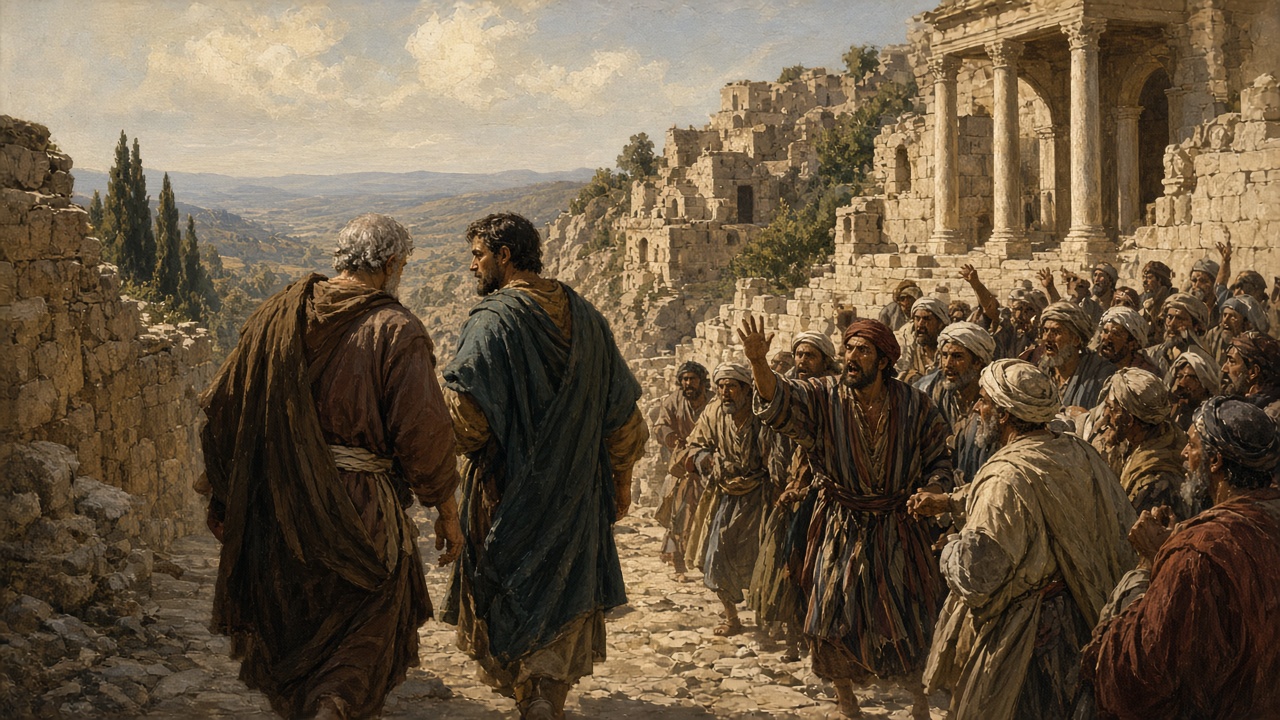
¿Sabías que…?
Tiempos difíciles y la oposición a la verdad
- Este capítulo compara a las personas que se oponen a la verdad con Janes y Jambres. Un diccionario bíblico identifica a Janes como uno de los egipcios que resistieron a Moisés, y a Jambres como uno de los que se opusieron a Moisés en Egipto. La carta dice que, como ellos, esos opositores tienen la mente depravada y están descalificados en cuanto a la fe, y que su insensatez quedará evidente para todos.Fuentes: Jannes · Jambres · el propio texto bíblico
- Pablo recuerda las persecuciones y los sufrimientos que le sobrevinieron en Antioquía, Iconio y Listra, y dice que el Señor lo libró de todas esas persecuciones. En el primer viaje misionero con Bernabé, los judíos en Antioquía, en el extremo norte de Pisidia, provocaron una oposición violenta, y los dos tuvieron que irse; en Iconio fueron perseguidos por los judíos y huyeron a Listra. Iconio era la capital de la antigua Licaonia; Listra era una ciudad de Licaonia, en Asia Menor, en una región agreste.Fuentes: Antioch (Pisidia) · Iconium · Lystra · el propio texto bíblico
Notas escritas con ayuda de IA a partir de fuentes abiertas (Theographic Bible Metadata, CC BY-SA 4.0; Easton’s Bible Dictionary, dominio público) y revisadas antes de publicarse.
Lugares de este capítulo
- Antioch · Hoy: Antioch in Pisidia · 38.306, 31.189 · versículo 11
- Iconium · Hoy: Konya · 37.872, 32.492 · versículo 11
- Lystra · Hoy: Tel Lystra · 37.602, 32.338 · versículo 11
Solo aparecen lugares identificados con alta confianza (90 % o más según las fuentes académicas reunidas por OpenBible). Mapa de la época: DARE (Digital Atlas of the Roman Empire), CC BY 4.0; mapa actual: © colaboradores de OpenStreetMap; lugares: OpenBible.info (CC BY 4.0).
Créditos y licencia de esta traducción
Tupã Je'ẽha
New Testament in Kaapor (BR:urb:Kaapor)
copyright © 2012 Wycliffe Bible Translators, Inc.
Language: Kaapor
Translation by: Wycliffe Bible Translators, Inc.
Copyright Information
© 2012, Wycliffe Bible Translators, Inc. All rights reserved.
This translation text is made available to you under the
terms of the Creative Commons License: Attribution-Noncommercial-No Derivative Works.
( http://creativecommons.org/licenses/by-nc-nd/3.0/ )
In addition, you have permission to port the text to different file formats, as long as you
do not change any of the text or punctuation of the Bible.
You may share, copy, distribute, transmit, and extract portions
or quotations from this work, provided that you include the above copyright
information:
You must give Attribution to the work.
You do not sell this work for a profit.
You do not make any derivative works that change any of the actual words or punctuation of the Scriptures.
Permissions beyond the scope of this license may be
available if you contact
us with your request.
The New Testament
in Kaapor
© 2012, Wycliffe Bible Translators, Inc. All rights reserved.
This translation is made available to you under the terms of the
Creative Commons Attribution-Noncommercial-No Derivatives license 4.0.
You may share and redistribute this Bible translation or extracts from it in any format, provided that:
You include the above copyright and source information.
You do not sell this work for a profit.
You do not change any of the words or punctuation of the Scriptures.
Pictures included with Scriptures and other documents on this site are licensed just for use with those Scriptures and documents.
For other uses, please contact the respective copyright owners.
2014-04-27
Fuente: http://ebible.org/urbNT/ · eBible.org