Salmos 95
Godón Buk · Toca un versículo para ver sus referencias cruzadas.
Agür Wórr
1Yao, mi kya ⌊ Lodónkü⌋ wórr atonóm bagürwómpükü!
Yao, mi kya taegwarr apónónóm bagürwómpükü oyankü, mibü zidbain ingülküp nótóke!
2Mi kya oya obzek kwata togobón oya eso akyanóm,
mi kya taegwarr apónónóm bagürwómpükü wórri oya agürüm.
3Zitülkus módóga, Lod wirri arüng Goda,
wa wirri arüng Kinga blaman godódógab.
4Aumana tüp oya tangdóma,
akó wirri kwitüm podo ta oya tangdómako.
5Malu oyane, zitülkus wató tónggapónórr;
akó oya tanga dorro tónggapónórr.
6Yao, mi kya singül tüp alókóm togobón oya ⌊ótókóm⌋!
Mi kya wakósingül nümgününüm oya obzek kwata, Lod mibü Tómbapón Pam!
7Zitülkus módóga, wa mibü Gode,
akó mi oya apapdó pamkolpamakla,
mi sipzanakla, wa ne ⌊sip⌋ ngabyónda.
Errkya, e wata ki barrkrrua God ne poko bóktanda!
8“Wirri-singül bain-gu yabü abalbobatalazan Merribamzan kainóp,
akó i Masamzan kainóp, ene ⌊ngüin-koke bwóbdü⌋,
9i kürü nóla apók kwarilürr,
enana i kürü kósenóp, ka ne morroal kla tómbapón namülnürrü ibüka.
1040 Pailüm ka inkü ngürsil namülnürrü, ene Isrrael pamkolpam, ene tonarrdó nidi ngyaben kwarilürr.
Da ka we bóktarró kólbabóka kagó, ‘Ibü ubi wata metat tibiób ubi kwata tótókóma,
akó i bangóndako ka ne poko tómbapónóm byaldóla.’
11Ka ngürsil namülnürrü, da ka igó ⌊arüng alkamül-koke bóktan⌋ ingrirrü kagó:
‘I sab kürü ngón bagón bwóbdü kokean barrbüne ngón bagónóm!’”
¿Sabías que…?
Un llamado a la alabanza y una solemne advertencia
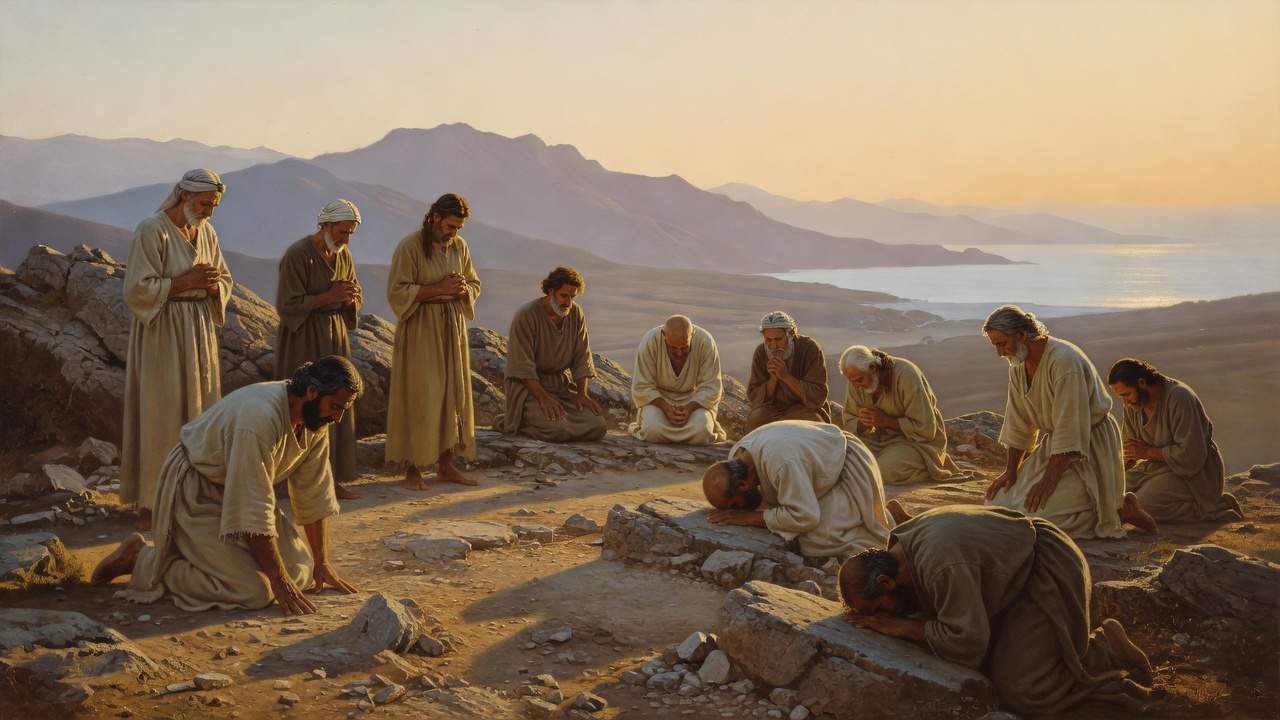
- El Salmo 95 comienza como una invitación a adorar a Dios con cánticos y acción de gracias, celebrándolo como un gran Rey, Creador de los mares y las montañas, y el pastor que cuida de Su pueblo. El salmo llama a la comunidad no solo a aclamar con júbilo, sino también a postrarse y arrodillarse ante su Hacedor.Fuentes: el propio texto bíblico
- En la segunda mitad del salmo, el tono cambia de manera repentina hacia una advertencia divina contra el endurecimiento del corazón. Recuerda la rebelión en Meriba y Masah en el desierto, donde el pueblo puso a prueba a Dios durante cuarenta años a pesar de haber visto Sus obras, lo que llevó al juramento divino de que no entrarían en Su reposo.Fuentes: el propio texto bíblico
Notas escritas con ayuda de IA a partir de fuentes abiertas (Theographic Bible Metadata, CC BY-SA 4.0; Easton’s Bible Dictionary, dominio público) y revisadas antes de publicarse.
Lugares de este capítulo
- Meribah · Hoy: within 500 m of Wadi Rufaiyil · 28.623, 33.880 · versículo 8
Solo aparecen lugares identificados con alta confianza (90 % o más según las fuentes académicas reunidas por OpenBible). Mapa de la época: DARE (Digital Atlas of the Roman Empire), CC BY 4.0; mapa actual: © colaboradores de OpenStreetMap; lugares: OpenBible.info (CC BY 4.0).
Créditos y licencia de esta traducción
Godón Buk
Portions of the Holy Bible in the Gizrra language of Western Province, Papua New Guinea
Buk Baibel long tokples Gizrra long Niugini
copyright © 2019 Wycliffe Bible Translators, Inc.
Language: Gizrra
Translation by: Wycliffe Bible Translators, Inc.
This translation is made available to you under the terms of the
Creative Commons Attribution-Noncommercial-No Derivatives license 4.0.
You may share and redistribute this Bible translation or extracts from it in any format, provided that:
You include the above copyright and source information.
You do not sell this work for a profit.
You do not change any of the words or punctuation of the Scriptures.
Pictures included with Scriptures and other documents on this site are licensed just for use with those Scriptures and documents.
For other uses, please contact the respective copyright owners.
2024-07-01
Fuente: http://png.bible/tof/ · eBible.org