Mateo 8
PATHEN LEKHABU THENG · Toca un versículo para ver sus referencias cruzadas.
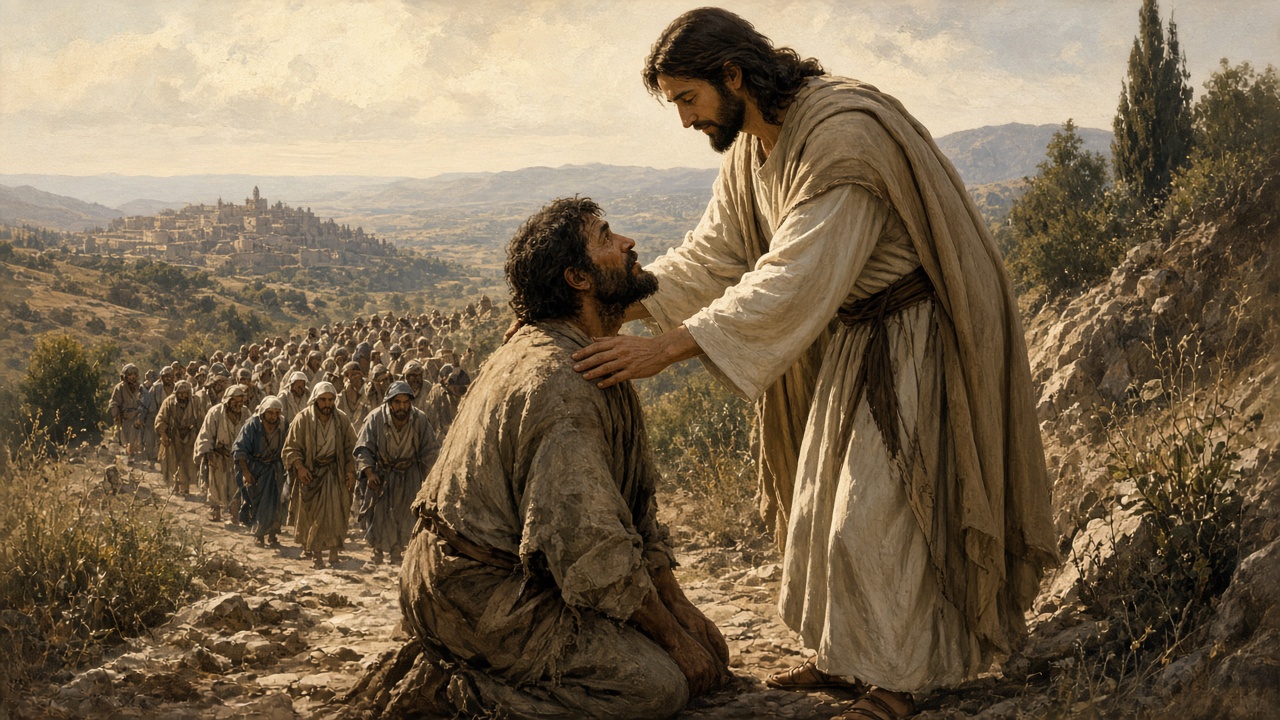
Jesun miphah khat asuhtheng
1Chujouvin Jesu mol chunga konna ahung kuma ahileh, mipi atama tam'in anung ajuiyuvin ahi. 2Photlot in, “Miphah khat in Ama akimu pin chule a anga abohkhup in, ajah a, Pakai nalung ahileh nei damsah a chule nei thensah thei ahi,” ahung titai. 3Chuin Jesun akhut alhaangin chule athamin, “Kalung ahi, dam jengin,” atin ahileh apettah in aphah chu atheng tan ahi.” 4Chuin Jesun ajah a, “Hiche thudol hi koima kom'a seihih in. Chusangin, nangma thempu kom'a gachen lang chule aman nave chil hen. Mose Danbua miphah ho athen teng thupehsa thilto ding chu gatoh tan. Hiche hi nathengtai ti ahetna, mipi lah a na phondohna hi ding ahi,” ati.
Rome sepai lamkaipa tahsan
5Chule Jesu Capernaum ahung kile phat in, Rome Sepai jalamkai khat ahenga ahungin chule ama chu atem in, 6“Pakai, kasohpa alangthia ahin, jalkhun'a alum'e chule anatna chu athohlel lheh in ahi,” ati. 7Jesun ajah a, “Keima hung ingting chule kahung damsah ding ahi,” ati. 8Hinlah sepai jalamkaipa chun, “Pakai, nangman ka-in neihung chotlut peh dinga lhingjou chu kahipoi. Na umna mun'ah thu chu hinsei lechun, kasohpa hi dam tante.” 9Hiche hi kahei, ajeh chu keima ka chunga thunei lamkai lenho aum'inchule keiman sepai te chunga thu kaneiye. Keiman, “Cheuvin katileh acheuvin, ahilouleh hungun, katileh amaho ahung uve. Chule keiman kasohte jah a, ‘Hiche hi bol un katileh, ama hon abol uve,’” ati. 10Jesun hichu ajah phat in adatmo lheh jenge. Aman anungjuiho jah a aseijin, “Thudih tahbeh ka seipeh nahiuve, Israel ho jouse lah ah hitobang tahsan hi kamu khapoi! 11Chule hiche hi ka seipeh nahiuve, chidang namdang ho mi tamtah vannoi muntin'a konna hung diu solama kon le lhum lama konna Abraham, Isaac chule Jacob toh Van gam'a golvah an nea tou ding ahiuve. 12Hinlah Israel mi tamtah ho adiuva lenggam kigonpeh ho chu polam muthim lah a ale lut dingu, hichea chu ka le hagel um ding ahi,” ati. 13Chutah in Jesun Rome sepai jalamkaipa jah a aseijin, “Inlam'a kile tan. Ijeh inem itileh nangman na tahsan chu aguilhung tai,” ati. Chule soh khangdongpa chu apettah chun adamtai.
Jesun Peter nupanu adamsah
14Jesu Peter in ahung lhun phat in, Peter jinu nu chu alupna a khosih natna neiya leltah a uma ahi. 15Hinlah Jesun ama chu akhut athampeh in ahileh, akhosih chun adalhatai. Chuin ama athoudoh in Ama ding chun anneh ding agong in ahi.
Nilhah a Jesun mi tamtah asuhdam
16Nilhah ahiphat in lhagao boh vop mi tamtah Jesu henga ahin pui tauvin. Aman lhagao gilou ho chu thu apen adamlou jouse chu aboldam tai. 17Hiche hin Pakai thu Isaiah themgao in asei, “Aman inatnau aladoh in chule ihiveiyu alamang tai,” ati chu aguilhun sah e.
Jesu nungjui dia kilom ho
18Jesun mihonpi akimvel'a aum amun, aman aseijui te chu dil langkhat a galkai dingin thu apen ahi. 19Chuphat in Hou dan thuhil ho khat in ajah a, “Houhil, na chena chan'ah najui inge,” ati. 20Hinlah Jesun adonbut in, “Sial hon chenna ding ko aneiyun, chule vacha hon gena ding bu aneiyui, hinlah Mihem Chapan alu ngapna ding mun jeng jong aneipoi,” ati. 21Aseijui dang khat in ajah a, “Pakai, in a gakile masa'ng ting kapa gavui inge” ati. 22Hinlah Jesun aseipeh in ajah a, “Tun neijui in. Lhagaova thi hon ami thiu kivui nauvinte,” ati.
Jesun dil kinong lai apho thip
23Chuin Jesu kong sunga alut in, chule aseijui te chutoh dil langkhat panga chun agalkai pan tauve. 24Photlot changin, twipi kinong in dil chu ahin nuh in, chule twi kinong ho chun kong chu ahin nuh a ahileh kong sunga aluttai; hinlah Ama a'imun ahi. 25Seijuiho chu aga cheuvin, chule asukhang un, akou un, “Pakai nei huhdoh un, twiyin eichup diu ahitai,” atiuve. 26Jesun adonbut in, “Ipi dinga kicha a nahiuvem? Tahsanna neocha nanei uve!” ati. Chuphat in Ama aki patdoh in chule huipi le twipi kinong chu aphoh in, chuin phulou helouvin athip paitai. 27Seijui ho chun adatmo lheh uvin, “Hiche mipa hi koi ham? Huipi le twipi kinong Ama thun anunge,” atiuve.
Jesun Gadarene gam a thilhavop teni adamsah
28Jesu chu dil langkhat pang agei tan, Gadarene gamkai alhungin ahileh lhagao boh vop minin akimupi lhon e. Amani chu lhan mun'a chengden lhona chule gilou huham behseh ahijeh lhon a, koiman hiche lam chu ahopa ngam lou ahi. 29Amani chun ahinsam lhon'in, ajah a, “Pathen Chapa, koi nahi hiya nei hung suhboiyu ham? Nangma Pathen phat tep masanga hikom mun'a hi eisugim diuva hunga nahim?” ati lhon e. 30Mun gamla tah a vohcha hon tampi loujaova lha a um uva ahi. 31Hiti chun Lhagaoboh vop teni chu atao lhon'in, “Nei nodoh diuva ahileh vohcha honsunga khun neisol un,” atiuve. 32Jesun amaho chu thu apen, “Aphai, cheuvin!” ati. Hiti chun lhagao boh ho chu mi tenia kon'in ahung potdoh un, chuin vohcha ho sunga chun alut tauvin, chule vohcha jouse chu abon'un mol pang dillen sunga chun alhai lha uvin, twi lah a chun alhalut gam tauve. 33Gancha chinga pang ho chu akom'a khopia chun alhai lut un, lhagao boh vop teni chunga thilsoh thudol chu amitakip aseipeh tauve. 34Chuphat in khopia miho jouse chu ahung potdoh un, Jesu ahung kimu piuvin, ama hon Jesu chu ache mang'a chule amaho adalhahna diuvin atem un ahi.
¿Sabías que…?
Curaciones, fe y el mar
- Capernaum, la ciudad a la que Jesús entra en este capítulo, era una ciudad de Galilea que no se menciona en el Antiguo Testamento. El Easton's Bible Dictionary (1897) dice que llegó a ser “su propia ciudad” después de que dejó Nazaret, e incluye la súplica del centurión y la curación en la casa de Pedro entre los hechos situados allí.Fuentes: Capernaum · el propio texto bíblico
- Jesús dice que muchos vendrán del oriente y del occidente para compartir el banquete con Abraham, Isaac y Jacob en el reino de los cielos. El Easton's Bible Dictionary (1897) presenta a Abraham como hijo de Taré y heredero de las promesas, a Isaac como el único hijo de Abraham con Sara, y a Jacob —también llamado Israel— como el hijo gemelo menor de Isaac y Rebeca.Fuentes: el propio texto bíblico · Abraham · Isaac · Jacob (Israel)
- Mateo presenta las curaciones de aquella noche como cumplimiento de lo dicho por medio del profeta Isaías: “Él tomó nuestras dolencias y cargó con nuestras enfermedades.” El Easton's Bible Dictionary (1897) identifica a Isaías como hijo de Amoz, que profetizó durante los reinados de Uzías, Jotam, Acaz y Ezequías.Fuentes: el propio texto bíblico · Isaiah
Notas escritas con ayuda de IA a partir de fuentes abiertas (Theographic Bible Metadata, CC BY-SA 4.0; Easton’s Bible Dictionary, dominio público) y revisadas antes de publicarse.
Lugares de este capítulo
- Gadara · Hoy: Umm Qais · 32.656, 35.679 · versículo 28
Solo aparecen lugares identificados con alta confianza (90 % o más según las fuentes académicas reunidas por OpenBible). Mapa de la época: DARE (Digital Atlas of the Roman Empire), CC BY 4.0; mapa actual: © colaboradores de OpenStreetMap; lugares: OpenBible.info (CC BY 4.0).
Créditos y licencia de esta traducción
PATHEN LEKHABU THENG
The Holy Bible in the Chongthu Dialect of India
Copyright © 2020 Chongthu Bible Translation Team
Language: Chongthu (Chin, Thado)
Dialect: Chongthu
This is a draft copy of a work in progress. It will be updated.
This translation is made available to you under the terms of the
Creative Commons Attribution Share-Alike license 4.0.
You have permission to share and redistribute this Bible translation in any format and to make reasonable revisions and adaptations of this translation, provided that:
You include the above copyright and source information.
If you make any changes to the text, you must indicate that you did so in a way that makes it clear that the original licensor is not necessarily endorsing your changes.
If you redistribute this text, you must distribute your contributions under the same license as the original.
Pictures included with Scriptures and other documents on this site are licensed just for use with those Scriptures and documents.
For other uses, please contact the respective copyright owners.
Note that in addition to the rules above, revising and adapting God's Word involves a great responsibility to be true to God's Word. See Revelation 22:18-19.
2026-10-02
Fuente: http://ebible.org/tczchongthu/ · eBible.org