Isaías 63
PATHEN LEKHABU THENG · Toca un versículo para ver sus referencias cruzadas.
Pakaijin Amite Angailui
1Edoma konna hunga, Bozrah khopia konna hung'ah, aponsil thisan beh hi koi hija ham? Alalna sangkhol chol puma, athahatna’a hungpa chu koi hija ham? Hiche hi Keima, Pakai huhhing'a naumna ding phongdohpa chu kahi!Hiche hi Keima Pakai, nangho huhdoh thei thaneipa chu kahi! 2Nangman lengpi-ga nachil khat tou hiya, ipi itia navon hi tia hi san ahidem? 3Keiman kachangseh’a lengpi-ga chu kachil ahin, eipanpi ding koima aumpoi.Ka lunghan jeh a ka melmate chu lengpiga kachil tobanga kaban chil jeng ahi tauve. Athisanu chu kavon ho chunga behden’a ahije. 4Ajeh iham itileh ka mite abol hesoh nauva konna lhatdohna’a, phu kalahna ding phat hunglhunga ahitai. 5Keiman amaho agimbol pa’uva konna pan hu dinga koimacha akikum lou hi kadatmo lheh in ahi. Hijeh a hi, keima tah mong kakikuma kabanjang thahatna amaho kahuhdoh kigot ahin, ka lunghanin eichoh thoudoh jenge. 6Keiman chitin-namtin ho hi ka lunghanna’ a ka chilgoi ahin, chule amaho lon le leuva tolla lhu lhop’uva, athisannu leisetna ahin vatlhah sah ding’u ahi. 7Keiman Pakai ngailutna lhadai ngailou chu kasei ding, athibol ho jouse jal'a hi Pakai chu ka vahchoi ding, akhotona le angailutna jal'a lungsetna anei chu, Israel dinga aphat behset jeh a hi kipah thanom ding kahi. 8Aman aseijin, “Ama ho hi Ka mite mong mong ahiuve. Ama ho hin keima eipedoh kit talou diu ahi.” Chule Ama ahuhhingpu’u ahung hitai. 9Gim hesoh athoh nauva Aman jong agim pin, Ama tah amaho huhdoh in apange. Angailutna le akhotona jallin, amaho alhatdamin, Ama’n amaho hi kum sunghoa ahin domkhang’in chule apole’in ahi. 10Hinla amaho hi Ama douna’a akisauvin, a Lhagao Theng alung phatmo sah’uvin, hijeh chun Ama amaho dingin melma akisoh in, amaho ahin doutai. 11Chuphat in ama hon Mose in amite apuidoh lai phat’u, nikho chesaho chu ageldoh tauve. Chujeh in ama hon asam uvin: Twipi-sanna Israel te hin pui galkaipa chu hoiya uma ham? Mose achingpau chu anahi lou ham? Lhagao Theng hinsolpa Amite umpipa chu hoiya uma ham? 12Mose in a khut ajah a chu koiham athahatna hin vetsah’a chu? Amasang tah’uva twipi-san hop nia so’a, Ama tah minthanna atonsotna hin semdoh pa chu hoiya umham? 13Twi khanglen thuh tah noinung lampeh’a konna amite ho hin pui galkai’pa chu hoi lamba hitam? Ama ho hi Sakolchal til kilalou hoitah ho tobangin gamthip gam'a ahung kilhaitet’uva jong kipal louhel ahiuve. 14Gancha hotoh phaicham lhunga lung monga kilhonuva, Pakai Lhagaovin amaho chu akicholdo sah ahiiai. Pakai nangman namite chu napui jin, chua chun minthanna loupitah chu 15Pakai, vanna kon'in neihin vesuh’uvin: na chenna In thengtah le loupitah’a kon'in hin ven. Kachung uva neihin gelkhoh nau le nahatna neivetsah jiu chu hoilamba hitam? 16Thonlou hella nangma ka Pa’u nahi jinge! Abraham le Jacob’in einol diu hijongleh, Pakai, nangma ka Pa’u nahi jing nahlai ding ahi.Nangma akhang akhana achesa phat hoa ei-Lhatdampu’u chu nahi. 17Pakai, iti danna na lampia konna kihei mang dinga neiphal jengu hitam? Ipi dinga Nangma kagin louna ding uva louchalna lungthim neipeh’u hitam? Hung kilehei kit in lang chule nei pan piuvin, ajeh iham itileh keiho na lhachate kahiuvin, nangman na deilhen phunga mite kahiuve. 18Chomcha kahsung bou ahi nalaije na mun theng sung namiten kalo nau phatsung hi, hinla tun ka melma teuvin eisugam hel tauve. 19Khatvei kom le keiho hi nangma’a hikhalouhel to kabang jitauvin, keiho hi nangma mite tia kihekhalouhel kabanguve.
¿Sabías que…?
Juicio sobre Edom y una Oración de Recuerdo
- El capítulo comienza con la visión vívida de un conquistador que llega desde Bosra, una antigua capital de la montañosa región de Edom. Las imágenes aluden al nombre Edom, que significa rojo, describiendo a la figura con vestiduras teñidas de carmesí como las de quien pisa uvas en un lagar.Fuentes: Bozrah · Edom · Esau (Edom) · el propio texto bíblico
- La parte central del capítulo reflexiona sobre el pasado de Israel, recordando expresamente los días de Moisés, cuando Dios dividió las aguas del mar y guio a su pueblo por las profundidades mediante su Espíritu Santo.Fuentes: Moses · el propio texto bíblico
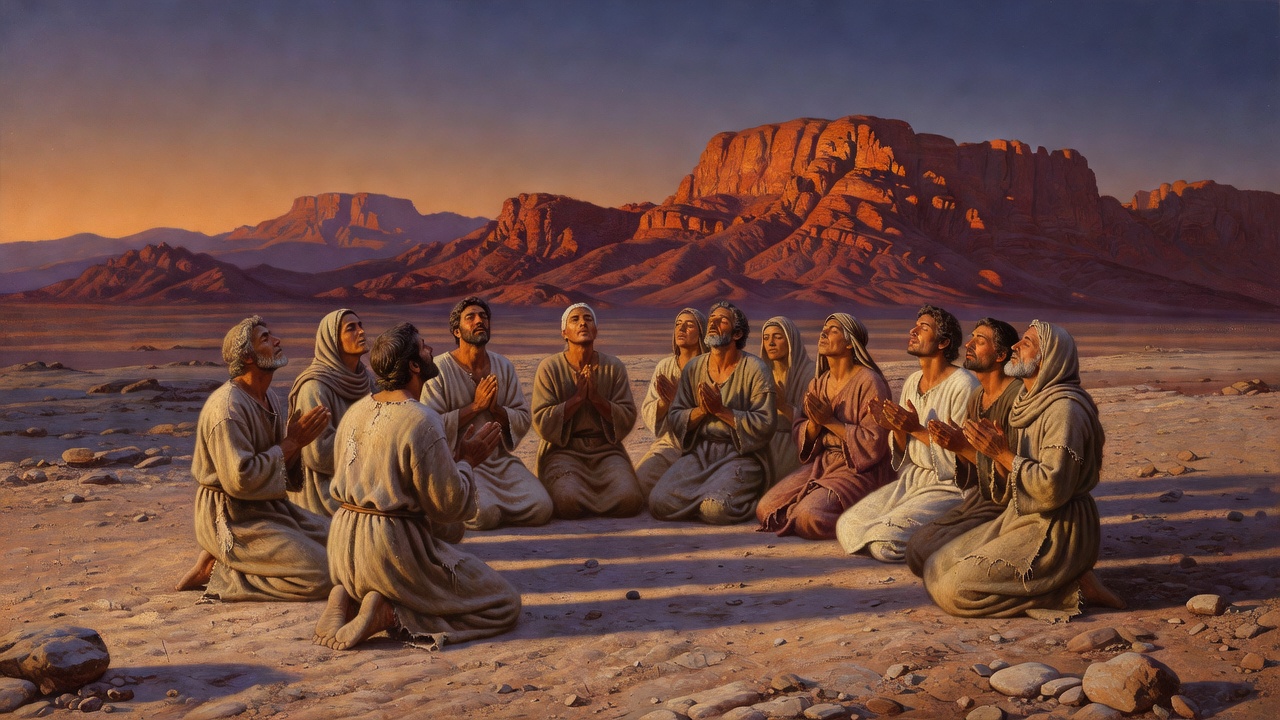
- En su sincera súplica, el pueblo se dirige a Dios como su Padre y Redentor, afirmando que, aun si patriarcas como Abraham e Israel no los reconocieran, Dios sigue siendo su protector.Fuentes: Abraham · el propio texto bíblico
Notas escritas con ayuda de IA a partir de fuentes abiertas (Theographic Bible Metadata, CC BY-SA 4.0; Easton’s Bible Dictionary, dominio público) y revisadas antes de publicarse.
Lugares de este capítulo
Solo aparecen lugares identificados con alta confianza (90 % o más según las fuentes académicas reunidas por OpenBible). Mapa de la época: DARE (Digital Atlas of the Roman Empire), CC BY 4.0; mapa actual: © colaboradores de OpenStreetMap; lugares: OpenBible.info (CC BY 4.0).
Créditos y licencia de esta traducción
PATHEN LEKHABU THENG
The Holy Bible in the Chongthu Dialect of India
Copyright © 2020 Chongthu Bible Translation Team
Language: Chongthu (Chin, Thado)
Dialect: Chongthu
This is a draft copy of a work in progress. It will be updated.
This translation is made available to you under the terms of the
Creative Commons Attribution Share-Alike license 4.0.
You have permission to share and redistribute this Bible translation in any format and to make reasonable revisions and adaptations of this translation, provided that:
You include the above copyright and source information.
If you make any changes to the text, you must indicate that you did so in a way that makes it clear that the original licensor is not necessarily endorsing your changes.
If you redistribute this text, you must distribute your contributions under the same license as the original.
Pictures included with Scriptures and other documents on this site are licensed just for use with those Scriptures and documents.
For other uses, please contact the respective copyright owners.
Note that in addition to the rules above, revising and adapting God's Word involves a great responsibility to be true to God's Word. See Revelation 22:18-19.
2026-10-02
Fuente: http://ebible.org/tczchongthu/ · eBible.org