Amós 6
PATHEN LEKHABU THENG · Toca un versículo para ver sus referencias cruzadas.
Israel Kisuhmang
1Ohe ada nahiuve, Jerusalem khopia nomsatah’a chengho, chuleh Samaria khopia lungmong tah’a khosa ho! Namtin vaipi lah a naminthang lheh’un, chuleh mihon napanpina ngaichan nakom'a ahung jiuve. 2Amavang Calneh lhang galkaijun vetem un, chuteng Hamath khopi len a chun chepaijun, chuleh Philistine khopi Gath a jong chesuh un, nangho amaho sang’a phajo nahideh pouve, vetem un, amaho iti manthah hitauvem! 3Nanghon nachung uva hamsetna hunglhung vahlou dingin nagel’un, ahinlah, pumhat’a nathilbol’u chun thutanna nikho chu nakiloilut loijiuve. 4Ohe ada nahiuve, saiha-a kisem jalkhun’a kijamlea, chuleh nomtah’a kijaole ho, Kelngoinou lah a adei dei kitha-a neho, chuleh bonghon lah a athao adei lailai kitha-a neho, 5Nanghon selangdah tum ging toh thon lakoila pou nasa uvin, chuleh kithepsah tah in David umchan na tho uvin, tumging thei manchah nakisem thu’uve. 6Nanghon khon dim dim in lengpitwi nadon’un, chuleh thao namtui pen nakinu uvin, Na nampiu manthah chu lunggim nan nanei pouve. 7Hijeh a chu, nangho gal-hing’a sohchang masapen’a napan diu, chutah leh nomtah’a khosaho chu, anopsahnau abon’a beisoh hel ding ahi. 8Hatchungnung Pakai chu, ama tah min'in akihahsel in, chuleh Pakai van Pathen ahina chun hitin aseiye, “Israel mite louchalna kaho in, chuleh akulpi sem’u jong ka kidah’e. Hijeh chun, hiche khopi leh asunga um chengse abon’a, amelmateu kapehdoh ding ahi,’’ ati. 9Ijemtia insung khat a ahingdoh mison khat aum nahlai leh, amaho jong chu abonchauva thisoh hel diu ahi. 10Insung mikhattou, amopohna dungjuiya asopu thisaho govam ding kigo-a, insunga kon’a lhilongho ahinputdoh phatleh, insungmi ahingdoh pen kom’a chu, midang jong um nalaijem? tia adoh khah leh, ama chun kihahsel’a “Aum poi, pao poh hih in! Pakai chu amin jeng jong iphah pohlouhel diu ahi bouve,’’ ati ding, apho ding ahi. 11Ajeh chu vetan, in loupitah tah ho jong ahalsi sia kisugep ding, chuleh in neocha cha ho jong kivo goisoh hel ding ahiuve,’’ tin Pakaijin thupeh anei tai. 12Songpi chunga khu sakolte chomle le thei mong’a, hiche lah chu bongchal in loukaina-a akaithei mong ding ham? Hitobang chun, nang hon ngol-hoi tah in, thu adih’a kitan chu thina gu-twi na sosah uvin, chuleh adihtah’a hung ga doh twitah chu nehmohel khacheh-chuh na sodoh gam tauvin ahi. 13Chuleh nang hon Lo-debar chunga nagaljonau chu nakithang-at piuvin, kiletsahtah in, eihon eiho thahat’a karnaim chu ilah’u hilou ham? na kitiuve. 14“Vo Israel mite, nangho douding melma namkhat katildoh ding ahi,’’ tin Pakai van Pathen chun aseiye. ‘’ama hon nangho na gamsung uva nasuh genthei diu, sahlam’a Leb-hamath apat noilam’a Arabah phaicham geija nasuh genthei diu ahi,’’ati.
¿Sabías que…?
La Complacencia y el Exilio Inminente
- Amós se dirige a la élite gobernante que se sentía segura tanto en Sion, la colina fortificada de Jerusalén, como en el monte de Samaria, la capital del reino del norte construida en una cumbre aislada por el rey Omri. A pesar de las defensas naturales y el prestigio de estas ciudades, se advierte a sus líderes que su tranquilidad y exceso de confianza terminarían en cautiverio.Fuentes: Zion · Samaria · el propio texto bíblico
- El profeta desafía a Israel a mirar a renombradas ciudades extranjeras como Calne, cerca del Éufrates, Hamat, sobre el río Orontes, en la Alta Siria, y la fortaleza filistea de Gat. Estas potencias vecinas no eran más pequeñas ni estaban menos protegidas, pero aun así no escaparon de la destrucción.Fuentes: Calneh · Hamath · Gath · el propio texto bíblico
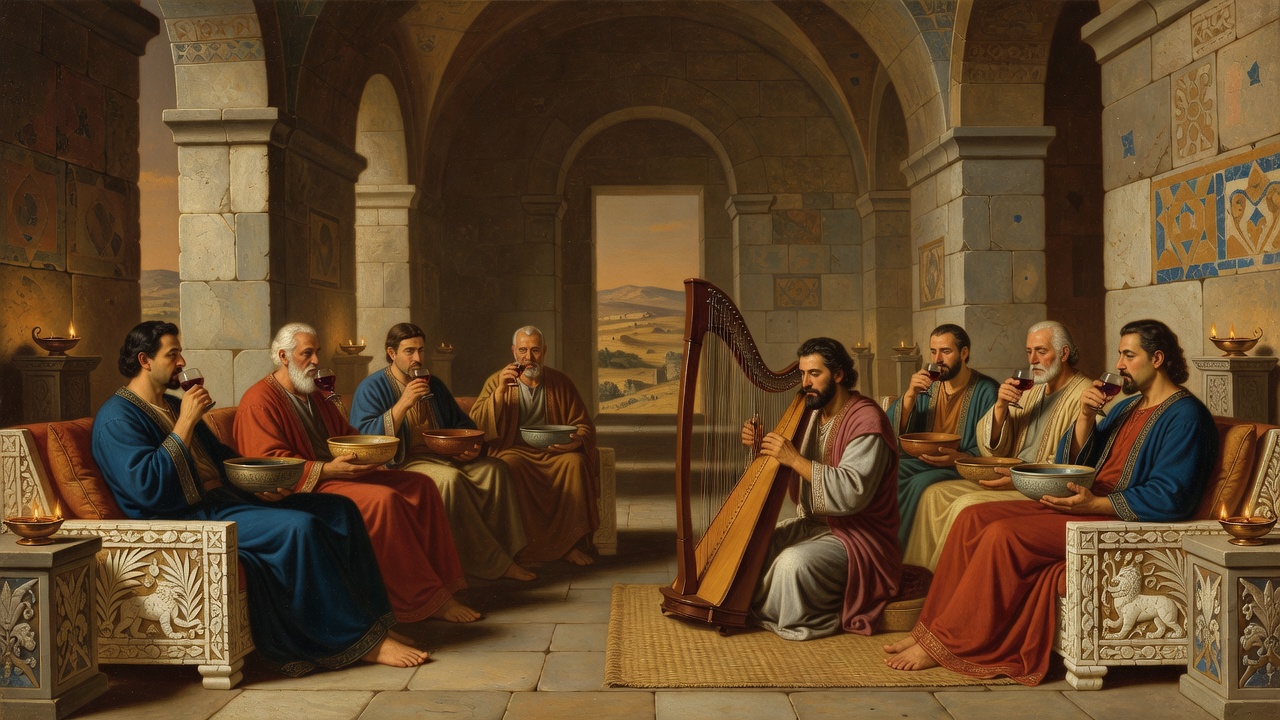
- Amós critica a la aristocracia por entregarse a banquetes extravagantes, descansar en lechos con incrustaciones de marfil e improvisar música con arpas al estilo de David, mientras ignoraba la ruina de José. El nombre José designa aquí a las tribus del norte de Israel, cuya decadencia moral e injusticia social eran desatendidas por sus líderes acaudalados.Fuentes: David · Joseph (son of Jacob) · el propio texto bíblico
Notas escritas con ayuda de IA a partir de fuentes abiertas (Theographic Bible Metadata, CC BY-SA 4.0; Easton’s Bible Dictionary, dominio público) y revisadas antes de publicarse.
Lugares de este capítulo
- Samaria · 32.276, 35.195 · versículos 1, 8
- Zion · Hoy: Jerusalem · 31.777, 35.234 · versículo 1
- Hamath · Hoy: Hama · 35.136, 36.750 · versículo 2
- Philistia · 31.664, 34.546 · versículo 2
Solo aparecen lugares identificados con alta confianza (90 % o más según las fuentes académicas reunidas por OpenBible). Mapa de la época: DARE (Digital Atlas of the Roman Empire), CC BY 4.0; mapa actual: © colaboradores de OpenStreetMap; lugares: OpenBible.info (CC BY 4.0).
Créditos y licencia de esta traducción
PATHEN LEKHABU THENG
The Holy Bible in the Chongthu Dialect of India
Copyright © 2020 Chongthu Bible Translation Team
Language: Chongthu (Chin, Thado)
Dialect: Chongthu
This is a draft copy of a work in progress. It will be updated.
This translation is made available to you under the terms of the
Creative Commons Attribution Share-Alike license 4.0.
You have permission to share and redistribute this Bible translation in any format and to make reasonable revisions and adaptations of this translation, provided that:
You include the above copyright and source information.
If you make any changes to the text, you must indicate that you did so in a way that makes it clear that the original licensor is not necessarily endorsing your changes.
If you redistribute this text, you must distribute your contributions under the same license as the original.
Pictures included with Scriptures and other documents on this site are licensed just for use with those Scriptures and documents.
For other uses, please contact the respective copyright owners.
Note that in addition to the rules above, revising and adapting God's Word involves a great responsibility to be true to God's Word. See Revelation 22:18-19.
2026-10-02
Fuente: http://ebible.org/tczchongthu/ · eBible.org