Cantares 4
Bibiri Kuyie Nnɑ́ɑǹtì Pɑ́tíri · Toca un versículo para ver sus referencias cruzadas.
1N cɑ̀ɑ̀ nhɑ wennimu,
ɑ tú oposɑ́ɑ́tì nwe,
ɑ ɔ̃ ndɑ́ɑ́tí kuyɑ̀ɑ̀kù
kɑ̀ɑ nɔmbii ndònnɛ̀ fɛduonfɛ kɔ̃mɛ mmɛ.
Kɑ̀ɑ yùtì dònnɛ̀ yɛbɔdɑkɛ̀
yɛ̀ɛ̀ pùù yɛtɑ̃rɛ̀ ĩ́nkɛ̀.
2Kɑ̀ɑ nìì mpɛ̀íkù dònnɛ̀ kupecɛ̃nku,
bɛ̀ kɛ̃ĩ́ ìì pe kó ticìtì
kɛ ì wùɔ̀ kɛ̀ ì yɛ̀tìní.
Imɔu kɛ̀ ì dò nhɛ̀rɛ,
kɛ bo imɔu bɑ́ fɛ̀mɑfɛ̀ í kpɑ.
3A bìɛ̀ ndònnɛ̀ kuyɑɑ̀wũɔ̃kù nku,
kɑ̀ɑ nɔ́ndɛnfɛ̀ wenni,
ɑ ɔ̃ nkɑ̀ɑ dɑ́ɑ́tí kuyɑ̀ɑ̀kù
ɑ bɑɑ̀ nní ndònnɛ̀ yɛtebɛ
bɛ̀ tu yɛ̀ kèdènɑ́tì yɛ̀ kó diyɑtirì ndi.
4Kɑ̀ɑ fɔ̃̀níí dònnɛ̀ Dɑfiti kó didènnì,
bɛ̀ mɑɑ́ dì kɛ̀ dì dò ncírícírí,
kɛ̀ tidɔpììtì tɛkɔupíítɛ̀ (1000) dì nùú.
Bɛkpɑ̀rìnuɔmbɛ kó tidɔpììtì.
5A mɛ yɛdɛ́ dònnɛ̀ kupɛriniku nku,
kɛ dònnɛ̀ fɛwɑurìfɛ̀ kó yɛtɑ́ɑ́tɛ́bɛ,
yɛ̀ɛ̀ cèntì mutepóó nhɑ̃ dɛ̀.
6Diyiè bo nkpɑɑ́ kɛ í tònkɛ̀,
kɛ̀ mɛdɛ́ɛ̀ mmu nyí pɛ̃ɛ̃tɛ́ kɛ̀ n kɔtoomu,
míírì tie mbɛ̀ dɔ̀ɔ̀rinɛ̀ dɛ̀ tùdɑ̀ɑ̀rí dɛ̀ bo dìì tɑ̃rì,
tihúúntì tie, bɛ̀ tu tì ɑ̃̀nsɑ̃́ɑ̃̀ kó tɛtɑ̃tɛ̀.
7A tú osɑpùnsɑ́ɑ́tì nwe,
n cɑ̀ɑ̀ nhɑ í ɑ̃ kuyɛ̀nkù kupíkù mɑkù.
8Fɔ̃́ m pocɛ̃nnì, ítɛ́ní kutúúkù Dimɑɑ
kɛ́kɔtɛní kɛ̀ tí nnɛí,
ɑ itinímu Amɑnɑ kɛ̀ ti bo nnɛí,
ítɛ́ní ditɑ̃rì Seii nɛ̀ Ɛdimɔnni kpɛri.
Cokɛ́nɛ̀ yɛcìrícìrɛ̀ kɛ́kɔtɛní.
Dɛ kó yɛtɑ̃rɛ̀ tu yɛkpɑmɑɑ̀ nkpɛyɛ nyɛ.
9A tɑ n yɛ̀mmɛ̀ mmɛ n tɑ̃ũ̀, m pocɛ̃nnì,
ɑ n wèńtɛ́ kucɛ mɛ̀mɑ́ɑ̀ ndi
kɛ̀ n yɛ̀mmɛ̀ kɛ̃ɛ̃́ nkɛ dɑ tɑ,
mɛdɛ̀ì nhɑ dúúkúmɛ̀ mɛɛ̀ yũ̀ɔ̃́ n yɛ̀mmɛ̀.
10N cɑ̀ɑ̀ nhɑ kɑ́ɑm̀mù n nɑɑtimu,
ɑ kɑ́ɑm̀mù ɔ̃ nni nnɑɑtimu kɛ pɛ̃ɛ̃tɛ́ mɛnɑɑ̀,
ɑ kó kufɔ̃ɔ̃ku n nɑɑtimu
kɛ pɛ̃ɛ̃tɛ́ tùdɑ̀ɑ̀ríbɛ̀ bɛmɔu.
11M pocɛ̃nnì ɑ bìɛ̀ n wɛ̀ɛtimu,
mɛcekùɔ̀ ndòmmɛ̀,
ɑ nɔ́ndɛnkù dò nkù ɑ̃ mɛcekùɔ̀ mmɛ nɛ̀ mɛnɑɑmiɛ̀,
ɑ yɑɑ̀bòrɛ̀ fɔ̃ɔ̃ku dònnɛ̀ kutúúkù Dimɑɑ
kó kufɔ̃ɔ̃ku nku.
12N tɑ̃ũ̀, m pocɛ̃nnì, ɑ dònnɛ̀ dikũmpúrì sɑ̀ɑ̀rì ndi
dìì dìti,
m mɑ́ɑ̀ n kó tɛbintɛ, m mɑ́ɑ̀ n kó dinɛ́bòrì.
13A boomu kɛ dònnɛ̀ dɛtie mbɛ̀ tu dɛ̀ kèdènɑ́tì
dɛ̀ɛ̀ bo kupúú sɑ̀ɑ̀kù,
kɛ pɛí yɛbɛ kɛ̀ yɛ̀ nɑɑti,
kɑ̀ɑ fɔ̃ɔ̃ku dònnɛ̀ tùdɑ̀ɑ̀rí bɛ̀ tu wè ɛdéè.
14A kó kufɔ̃ɔ̃ku dònnɛ̀ tùdɑ̀ɑ̀rí
bɛ̀ dɔ̀ɔ̀nɛ̀ wè nwe dɛtie mbɛ̀ tu dɛ̀ nɑ́ɑ́rì
nɛ̀ dodiè nɛ̀ kɑ̀nɛ́dì nɛ̀ míírì nɛ̀ ɑ̀dòwɛ́ɛ̀
nɛ̀ dɛtɛrɛ̀ dɛ̀ɛ̀ kó dimɑ̀ɑ̀ fɔ̃̀ɔ̃́tí.
15Kɛ dònnɛ̀ kupúú kó tɛbintɛ,
kɛ dònnɛ̀ mɛnɛ́sɑ̀ɑ̀mɛ̀ kó tɛmintɛ
tɛ̀ɛ̀ pũɔ̃̀nní Dimɑɑ túúkù kó ditennì.
16Kubɑkù yoú kó muyɑɑ́
nɛ̀ kubɑkù cɑ̃̀nku kɔ̃mu kɔtɛnɛ̀ní
kɛ́fuutɛ n kũmpúú,
kɛ̀ kufɔ̃ɔ̃kuu dɑ́tínnɛ́,
fɔ̃́ n dɑcɛ̃nnì kɔtɛní ɑ púú miɛkɛ
kɛ́di ɑ tebɛ sɑ̀ɑ̀yɛ̀, yɛnɑtiyɛ̀.
¿Sabías que…?
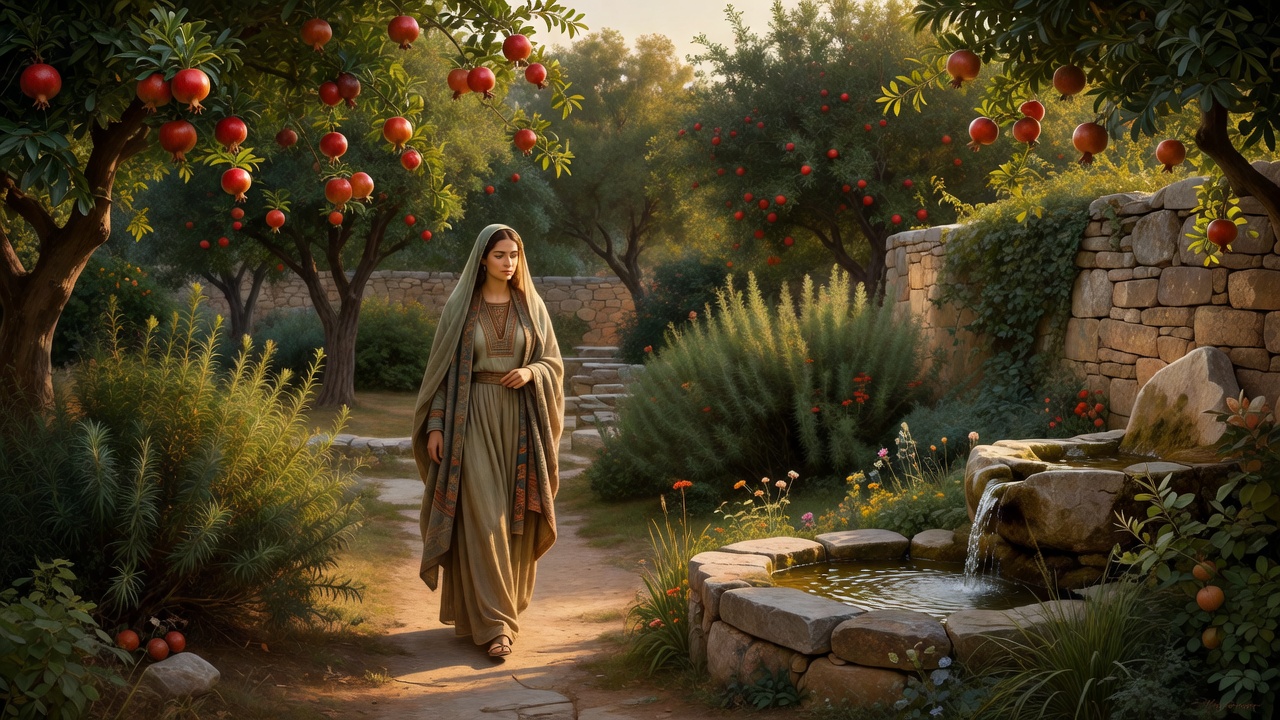
La belleza de la novia y el huerto de especias
- El poema invita a la novia a descender de las imponentes cordilleras del norte en el Líbano, que incluyen Amana, Senir y el monte Hermón. El monte Hermón es la cumbre más alta del Antilíbano, y las fuentes bíblicas señalan que Senir era el nombre amorreo para este monte.Fuentes: el propio texto bíblico · Hermon · Senir · Lebanon
- El cabello de la amada se compara con un rebaño de cabras que desciende por el monte Galaad, una región fértil y montañosa situada al este del río Jordán.Fuentes: el propio texto bíblico · Gilead
- La novia es descrita como un huerto cerrado, una fuente sellada y un vergel repleto de valiosas especias como nardo, azafrán, canela e incienso, lo que evoca exclusividad, frescura y fragancia.Fuentes: el propio texto bíblico
Notas escritas con ayuda de IA a partir de fuentes abiertas (Theographic Bible Metadata, CC BY-SA 4.0; Easton’s Bible Dictionary, dominio público) y revisadas antes de publicarse.
Lugares de este capítulo
- Gilead · Hoy: Gilead 1 · 32.187, 35.692 · versículo 1
- Lebanon · 33.540, 35.584 · versículos 8, 11, 15
- Mount Hermon · 33.400, 35.850 · versículo 8
- Senir · Hoy: Mount Hermon · 33.400, 35.850 · versículo 8
Solo aparecen lugares identificados con alta confianza (90 % o más según las fuentes académicas reunidas por OpenBible). Mapa de la época: DARE (Digital Atlas of the Roman Empire), CC BY 4.0; mapa actual: © colaboradores de OpenStreetMap; lugares: OpenBible.info (CC BY 4.0).
Créditos y licencia de esta traducción
Bibiri Kuyie Nnɑ́ɑǹtì Pɑ́tíri
The Holy Bible in the Ditammari language of Benin
copyright © 2001 SIM International
Language: Ditammari
Translation by: SIM
This translation text is made available to you under the
terms of the Creative Commons License: Attribution-Noncommercial-No Derivative Works.
( http://creativecommons.org/licenses/by-nc-nd/3.0/ )
In addition, you have permission to port the text to different file formats, as long as you
do not change any of the text or punctuation of the Bible.
You may share, copy, distribute, transmit, and extract portions
or quotations from this work, provided that you include the above copyright
information:
You must give Attribution to the work.
You do not sell this work for a profit.
You do not make any derivative works that change any of the actual words or punctuation of the Scriptures.
Permissions beyond the scope of this license may be
available if you contact
us with your request.
This translation is made available to you under the terms of the
Creative Commons Attribution-No Derivatives license 4.0.
You may share and redistribute this Bible translation or extracts from it in any format, provided that:
You include the above copyright and source information.
You do not make any derivative works that change any of the actual words or punctuation of the Scriptures.
Pictures included with Scriptures and other documents on this site are licensed just for use with those Scriptures and documents.
For other uses, please contact the respective copyright owners.
2022-05-31
Fuente: http://ebible.org/tbzsim/ · eBible.org