Rut 2
Bibiri Kuyie Nnɑ́ɑǹtì Pɑ́tíri · Toca un versículo para ver sus referencias cruzadas.
Oduti dɛ̀ɛ́mmɛ̀ tidiitì Boɑsi pɑku
1Nɑomii dɔù Edimɛdɛki nɑɑ̀mùnkù kou mɔù weè do bo kɛ mɔkɛ o kpɛrɛ kòo yètìrì feí, kɛ̀ bɛ̀ ò tu Boɑsi. 2Diyiè mɑrì kɛ̀ Odutii nɑ́kɛ́ Nɑomii kɛ dɔ̀: N dɔ́ kɛ́kɔ̃tɛ́ òmɔù pɑku nku, kòo yie n dɛ́rí tidiitì. Kɛ̀ Nɑomii dɔ̀: Kɔ̃tɛ́ m birɛ.
3Kòo kɔ̃tɛ́ kupɑku mɑkù kɛ̀ bɛtɔ̃mbɛ̀ nni kòò tũ̀ nkɛ dɛ́ɛ́ntɛ. O yuu yó nnɑɑti dɛ̀ kɛ sɔ̃́ nku pɑku tú Boɑsi kɔku nku.
4Kɛ̀ Boɑsii ítɛ́ Bɛtideɛmmu kɛ́kɔ̃tóo kɛ́dɔu mbɛtɔ̃mbɛ̀ kɛ dɔ̀: Ti Yiɛ̀ nKuyie nni ndi bonɛ̀. Kɛ̀ bɛ̀ɛ ò tɛ̃̀ńnɛ́ kɛ dɔ̀: Kù dɑ dɔɔ̀ mɛsɑ̀ɑ̀.
5Kɛ̀ Boɑsii bekɛ wèè bɑ̀ɑ bɛtɔ̃mbɛ̀ kɛ dɔ̀: We ntu onitipòkù yie?
6Kòò dɔ̀: Nɑomii nɛínɛ̀ní wènwe Mɔɑbu, 7ò mɔɔmu dinùù kɛ bo dɛ́rí, nɛ̀ dikṹnweńnì ndi ò dɛ̀ɛ́mmɛ̀, ò yĩ́ cɔ́kɛ̀ sɑ́m̀pɔ́ nwe.
8Kɛ̀ Boɑsii nɑ́kɛ́ Oduti kɛ dɔ̀: N kóo sɑpɑ̀ɑ̀ nhɑ bɑ́ɑ́ kɔtɛ òmɔù pɑku, ḿbo diɛ nnɛ̀ n nitipotɔ̃mbɛ̀ kɛ dɛ́ɛ́. 9N nɑ̀kɛ́mu bɛtɔ̃mbɛ̀ kɛ tú bɛ̀ bɑ́ɑ́ dɑ bɛ́innɛ̀, kɛ̀ sinɛ́yɛ̃ĩ dɑ pĩ nhɑ́ kɔtɛ kɛ́yɑ̃̀ bɛ̀ dòní mɛ̀ɛ̀ niɛ.
10Kɛ̀ Odutii nínkú Boɑsi ììkɛ̀ kóò nɑ̀kɛ́ kɛ dɔ̀: Dɛ̀ yĩmɛ kɑ̀ɑ n dɔ̀ɔ̀ mɛsɑ̀ɑ̀ nkɛ m pɛ́nsìrì, mí nwèè tu opɔ̀ɔ̀?
11Kɛ̀ Boɑsi dɔ̀: Bɛ̀ ǹ nɑ̀kɛ́mu ɑ dɔ̀ɔ̀mɛ̀ ɑ cɔ̀kù nɛ̀ ɑ dɔù kumɛ̀ nɛ̀ ɑ yóumɛ̀ ɑ cicɛ nɛ̀ ɑ yɔ̃ nɛ̀ ɑ ɛì kɛ kɔ̀tɛní kɛ bonɛ̀ kubotí tɛkù, ɑ do í yɛ̃́ kù. 12Ti Yiɛ̀ nKuyie ndɑ yietí mɛsɑ̀ɑ̀ nhɑ dɔ̀ɔ̀ mɛ̀. Ti Yiɛ̀ nKuyie tínti nyIsidɑyɛɛribɛ tũ nkù dɑ dɔɔ̀ mɛsɑ̀ɑ̀ nkɛ̀ mɛ̀ ndɛu, kɛ́ n dɑ kɑ̃nkɛ́.
13Kɛ̀ Oduti dɔ̀: N yiɛ̀ ɑ nni ndɔɔri mɛsɑ̀ɑ̀ nhɑ n dɔ̀ɔ̀mɛ̀ kɛ nɑ́ríkùnnɛ n yɛ̀mmɛ̀, kɛ n nɑ́ɑ́nɛ̀ diwɛ̀ì kɛ dò nhɑ kó bɛtɔ̃mbɛ̀ m mɛ nyí bɛ̀ tùɔ̀kɛ.
14Bɛ̀ yóó di dìì mɔ̀nnì kɛ̀ Boɑsii nɑ́kɛ́ Oduti kɛ dɔ̀: Kɔtɛní kɛ́di, pɔɔ̀tɛ̀ ɑ pɛ̃́ɛ̃̀ tikṹntì. Kòo ò duɔ́ ntidiitì bɛ̀ pũ̀ńnɛ́ tì, kòò cɑ̀ɑ́kɛ́ kɛ́nsɑ̀nnɛ̀ kɛ́súɔ́. 15Ò wɛ̃̀tɛ dìì mɔ̀nnì kɛ bo dɛ́rí kɛ̀ Boɑsii nɑ́kɛ́ bɛtɔ̃mbɛ̀ kɛ dɔ̀: Yóunɛ̀ we kòo ndɛ́ɛ́, di bɑ́ɑ́ ò kɔkɛ́nɛ̀. 16Di yóu kɛ̀ tidiitì nduò kòò dɛ̀ɛ́, di bɑ́ɑ́ ò kpɑnnɛ̀.
17Kɛ̀ Oduti ntṹṹ nkɛ dɛ́ɛ́ nkɛ́tuɔkɛnɛ̀ kuyuoku, kɛ́puotí kɛ́píɛ ntɛyɑ̀ɑ̀tɛ̀, 18kɛ́tɔ kɛ́kònnɛ̀ kɛ́bɛnkɛ o cɔ̀kù, kóò duɔ́nnɛ̀ tidiitì ò do di kɛ́súɔ́ ntì. 19Kòo cɔ̀kùu ò bekɛ kɛ dɔ̀: A dɛ̀rí we mpɑku yíe? A pĩ ndɛ mutɔ̃mmú? Ti Yiɛ̀ nKuyie ndɔɔ̀ mɛsɑ̀ɑ̀ nwèè dɑ cɔutɛ́.
Kɛ̀ Odutii ò nɑ̀kɛ́ dɛ̀ɛ̀ dɔ̀ɔ̀, kɛ dɔ̀ ò dɛ̀rí wèè pɑku o yètìrì tu Boɑsi. 20Kɛ̀ Nɑomii dɔ̀: M bɑntɛ́ kɛ dò nti Yiɛ̀ nKuyie nkuù ti dɔ̀ɔ̀ mɛsɑ̀ɑ̀ nkù do mɛ dɔ̀ɔ̀mɛ̀ bɛ̀ɛ̀ ku, kùu dɔɔ̀ mɛsɑ̀ɑ̀ ndɛ kóo nìtì. Kɛ yíɛ́ bɛ́i nkɛ dɔ̀: Boɑsi tu tinɑɑ̀mùnkù kɔbɛ kóò mɔù nwe wèè dò nkɛ́ndɑkɛ ti kpɛ́í.
21Kɛ̀ Oduti dɔ̀: Ò bɛ́immu kɛ tú nní mbonɛ̀ o tɔ̃mbɛ̀ kɛ dɛ́ɛ́ nkɛ bɛ̀ yɑ̀ɑ deènɛ̀ mudidɛ̀ì.
22Kɛ̀ Nɑomii dɔ̀: Mbonɛ̀ Boɑsi tɔ̃mbɛ̀, ɑ bɑ́ɑ́ kɔtɛ kupɑku tɛkù mɑkù, bɛ̀ yɑ̀ɑ̀ bo dɑ kpɑnnɛ̀.
23Kɛ̀ Oduti nkũɔ̃tìnɛ̀ Boɑsi nitipotɔ̃mbɛ̀ kɛ dɛ́ɛ́ nkɛ yɑ̀ɑ deènɛ̀ tidiitì ketitì nɛ̀ tidɛ́rítì, kɛ bɑɑ bonɛ̀ o cɔ̀kù.
¿Sabías que…?
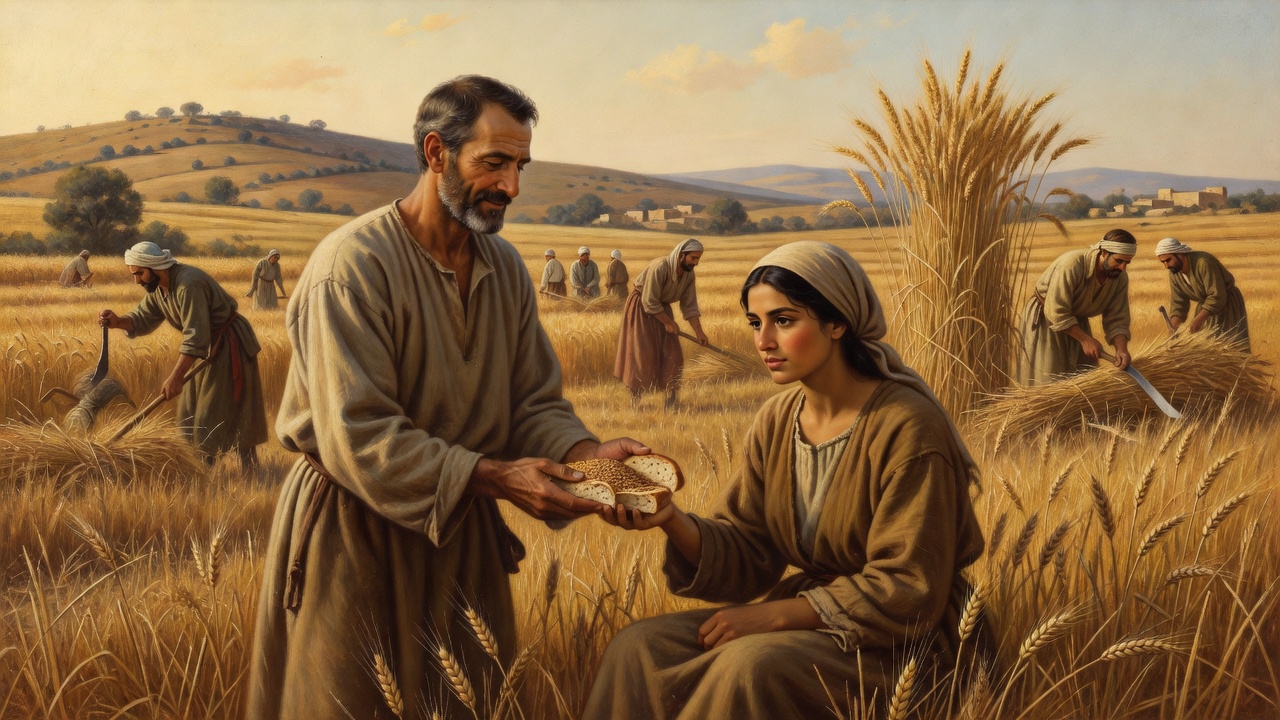
Rut espiga en los campos de Booz
- Belén estaba situada en la región montañosa de Judá, y los valles fértiles al este servían como campos agrícolas donde Rut recogía las espigas de cebada que dejaban los segadores.Fuentes: Bethlehem · Ruth · el propio texto bíblico
- Booz era un terrateniente próspero en Belén, perteneciente al clan del difunto esposo de Noemí, Elimelec, lo que lo convertía en un pariente cercano y redentor de la familia.Fuentes: Boaz · Elimelech · el propio texto bíblico
- Aunque Rut era una extranjera procedente de Moab, Booz le ofreció una hospitalidad y protección especiales, compartiendo con ella grano tostado y agua, y ordenando a sus trabajadores que no la molestaran debido a su lealtad hacia Noemí.Fuentes: Ruth · el propio texto bíblico
Notas escritas con ayuda de IA a partir de fuentes abiertas (Theographic Bible Metadata, CC BY-SA 4.0; Easton’s Bible Dictionary, dominio público) y revisadas antes de publicarse.
Lugares de este capítulo
Solo aparecen lugares identificados con alta confianza (90 % o más según las fuentes académicas reunidas por OpenBible). Mapa de la época: DARE (Digital Atlas of the Roman Empire), CC BY 4.0; mapa actual: © colaboradores de OpenStreetMap; lugares: OpenBible.info (CC BY 4.0).
Créditos y licencia de esta traducción
Bibiri Kuyie Nnɑ́ɑǹtì Pɑ́tíri
The Holy Bible in the Ditammari language of Benin
copyright © 2001 SIM International
Language: Ditammari
Translation by: SIM
This translation text is made available to you under the
terms of the Creative Commons License: Attribution-Noncommercial-No Derivative Works.
( http://creativecommons.org/licenses/by-nc-nd/3.0/ )
In addition, you have permission to port the text to different file formats, as long as you
do not change any of the text or punctuation of the Bible.
You may share, copy, distribute, transmit, and extract portions
or quotations from this work, provided that you include the above copyright
information:
You must give Attribution to the work.
You do not sell this work for a profit.
You do not make any derivative works that change any of the actual words or punctuation of the Scriptures.
Permissions beyond the scope of this license may be
available if you contact
us with your request.
This translation is made available to you under the terms of the
Creative Commons Attribution-No Derivatives license 4.0.
You may share and redistribute this Bible translation or extracts from it in any format, provided that:
You include the above copyright and source information.
You do not make any derivative works that change any of the actual words or punctuation of the Scriptures.
Pictures included with Scriptures and other documents on this site are licensed just for use with those Scriptures and documents.
For other uses, please contact the respective copyright owners.
2022-05-31
Fuente: http://ebible.org/tbzsim/ · eBible.org