Lamentaciones 4
Bibiri Kuyie Nnɑ́ɑǹtì Pɑ́tíri · Toca un versículo para ver sus referencias cruzadas.
Mɛyɛi mmɛ̀ɛ̀ do Sedisɑdɛmmu
1Dɛ̀ dòmmɛ kɛ̀ mɛsɔɔ mmɛ̀ɛ̀ do tú mɛsɔɔ nsɑ̀ɑ̀mɛ̀ kɛ̀ mɛ̀ sĩ̀ntɛ?
Dɛ̀ dòmmɛ kɛ̀ bɛ̀ do cɑ̃̀ńnɛ́ yɛ̀ɛ̀ tɑ̃́sɑ̀ɑ̀yɛ̀ Kuyie nkpɛ́í nkɛ̀ yɛ̀ cìɛ́tɛ́ kɛ yɑɑ́ yɑɑ́ dihɛì kó icɛ miɛkɛ?
2Dɛ̀ dòmmɛ kɛ̀ Siyɔ̃ɔ̃ ɛì kó ibí ìì yètɛ̀ do feí mɛsɔɔ nsɑ̀ɑ̀mɛ̀ kpɛri kɔ̃mɛ,
kɛ̀ bɛ̀ nɑɑ́ ntiyɑɑmɑtì,
bɛ̀ mɑɑ̀nɛ̀ tì sinɔu?
3Sikpɑmɔɔ́ mɔ́mmɔnsi yɑ̃ɑ̃nkomu si bí,
kɛ̀ n nìtìbɛ̀ biɛ nɛ́ yonkɛ,
kɛ pɛ̃ɛ̃tɛ́ dikpɑ́ɑ̀ kó icùo ndiɛyì dòmmɛ̀.
4Sinɛ́yɛ̃ĩ siì pĩ nyibíbɛ́nní,
kɛ̀ i nɔ́ndiɛ́ nkpeí,
kɛ̀ ikótí békú mudiì,
bɑ́ òmɔù í ì pɑ̃ɑ̃.
5Bɛ̀ɛ̀ do yo ntidiitì sɑ̀ɑ̀tì,
bɛ̀ɛ̀ kɔ̃nnɛ̀ dikònnì icɛ miɛkɛ,
bɛ̀ɛ̀ do ɑ̃ sicɛ̃sɑ̀ɑ̀sì miɛkɛ,
bɛ̀ɛ̀ kũrí kũrí yɛtɑ́pò miɛkɛ.
6N nìtìbɛ̀ kó mɛyɛi ndɛumu,
kɛ pɛ̃ɛ̃tɛ́ Sodɔmmu ɛì kɔ̃mɛ do dòmmɛ̀,
kɛ̀ dìi do dimɔ̀nnì dimɑ́ɑ̀,
bɑ́ òmɔù í dì kɑ̀ɑ́kɛ́.
7Bɛ kó sikpɑ̀ɑ̀tìbìí do pĩntimu,
kɛ pɛ̃nkù siwɑ̃̀ɑ̃,
kɛ pɛ́ì kɛ pɛ̃ɛ̃tɛ́ mɛnɑɑmiɛ̀,
kɛ̀ bɛ kɔ̃̀ntì wũɔ̃,
kɛ pɛ̃ɛ̃tɛ́ mɛdɛ̀ì nwũɔ̃mɛ̀,
kɛ̀ bɛ ììkɛ̀ dò ndoii,
kɛ dò nditɑ̃́sɑ̀ɑ̀rì bɛ̀ tu dì sɑ̀fíì.
8Kɛ̀ bɛɛ̀ nɛ́ sɔ̀ùtɛ kɛ pɛ̃ɛ̃tɛ́ yɛhɑ̃ɑ̃kũɔ̃,
bɛ̀ tɛ̃́nkɛ í bɛ̀ bɑí diciènnì,
kɛ̀ bɛ kɔ̃̀mmɛ̀ dɑ̀rinɛ̀ bɛ kṹɔ̃̀,
kɛ̀ bɛ̀ kpeí kɛ dòntɛnɛ̀ idɑkperí.
9Bɛ̀ɛ̀ ku mudoò miɛkɛ,
bɛ kpɛrɛ tɔ̃ũnɛ̀mu dikònnì kùɔ bɛ̀,
mudiì bo dóntɛ́ bɛ̀,
kɛ̀ bɛ̀ɛ cĩtɛ kɛ́nkɔ̃nnɛ̀ dikònnì.
10Bɛnitipòbɛ̀ bɑ́ nɛ̀ bɛ̀ mɛ ndɔ́mɛ̀ bɛ bí,
kɛ̀ bɛ̀ɛ ì kùɔ kɛ́bénnɛ́,
kɛ̀ ìì nɑɑ́ mbɛ kó mudiì,
n nìtìbɛ̀ tɑ mɛ̀ɛ̀ fɛ̃́ṹtímɛ̀ mɛɛ̀ te.
11Ti Yiɛ̀ nKuyie mmiɛkɛ kɛɛ̀ bɛ̀ yɛ̀ kɛ tontɛ́,
kɛ̀ kù còúnní ku miɛkɛ kó muhɑ̃ɑ̃́ nSiyɔ̃ɔ̃ ɛì ĩ́nkɛ̀,
kɛ̀ mù cɔ̀útɛ́ dihɛì nɛ̀ di pũkoo.
12Kutenkù kó bɛkpɑ̀ɑ̀tìbɛ̀ nɛ̀ bɛ̀ɛ̀ kó dimɑ̀ɑ̀ bo kutenkù,
òmɔù do í yɛ̃́ kɛ dò nSedisɑdɛmmu ɛì dùɔ̀ntɔbɛ̀,
o dootitɔbɛ̀, òmɔù bo tɑ Sedisɑdɛmmu ɛì kó yɛbòrɛ̀.
13Tìì mɛ̀ ntùɔ̀kɛní,
Kuyie mpɑ̃ɑ̃nɑ́ɑǹtì nɑ́ɑm̀bɛ̀ bɛ̀ɛ̀ bo Sedisɑdɛmmu,
nɛ̀ ikuɔ́ nìùbɛ̀ bɛɛ̀ kó mɛcɑɑ̀rìmɛ̀ kpɛ́í nte,
bɛmbɛ bɛ̀ɛ̀ do kɔù bɛnitisɑ̀ɑ̀bɛ̀,
kɛ cou bɛ yĩ̀ĩ̀ ndɛtetìrɛ̀.
14Bɛɛ̀ do ɔ̃ nhɑ̃́ɑ̃ntɛ icɛ miɛkɛ,
kɛ muɔ̀tì mɛnitiyĩ̀ĩ̀,
nɛ̀ dɛ kpɛ́í mbɑ́ bɛ yɑ̀ɑ̀tì í ndò ndɑ́ɑ́tí kɛ́kɑ́ɑ́kɛ́.
15Bɛ̀ do ɔ̃ɔ̃ bɛ nyɑ̀ kɛ́pĩɛ̃kɛ́ kɛ dɔ̀:
Cíɛ́tɛ́nɛ̀ bɛsĩ̀mbɛ̀ mbɛ,
cíɛ́tɛ́nɛ̀ kɛ́fũtɛ kɛ bɑ́ɑ́ bɛ̀ kɑ̀ɑ́kɛ́,
kɛ̀ bɛ̀ nhɑ̃́ɑ̃ntɛ bɑ́ bɛ̀ í mɔkɛ bɛ̀ bo cuó nkɛ̀,
kɛ̀ ibotí tɛì kɔbɛ tú:
Di bɑ́ɑ́ kɑri diɛ nti ciɛ.
16Kuyie nku mɔ́mmɔnku kuù bɛ̀ cíɛ,
kù tɛ̃́nkɛ í bɛ̀ wùó,
bɛnìtìbɛ̀ í bɛ̀ wùó nyikuɔ́ nìùbɛ̀,
bɛ̀ í bɛ̀ wùó mbɛkótíbɛ̀.
17Kɛ̀ bɛ̀ nɑ̀ɑ́ nkɛ tú:
Ti nuɔ nyiì ɔ̀unɛ̀ muwéìmù,
kɛ̀ ti bɑɑ bɛ̀ɛ̀ bo ti teennɛ̀ òmɔù í kɔrìní,
kɛ̀ ti dekɛ ti dèrɛ̀ ĩ́nkɛ̀ kɛ pɑkɛ́ kɛ wéí dɛtetìrɛ̀,
kuwuɔ nkùù í yóó nɑ kɛ ti dɛɛtɛ́ ku bíɛ́kɛ̀,
18Kɛ̀ bɛ̀ mpɑkíí ti cèmmu,
bɑ́ ti í nɔ nkɛ yiɛ̀,
ti mɔ̀nnì diì ɑutɛ́ní,
ti kṹṹ mmuù duunní,
kɛ tùɔ̀kɛní kɛ dèè.
19Bɛ̀ɛ̀ ti bɛtì kɛ̀ bɛ̀ ncɑ̃ɑ̃,
kɛ́pɛ̃ɛ̃tɛ́ icĩrí dòmmɛ̀,
kɛ ti bɛ̀ti kɛ dèènko yɛtɑ̃rɛ̀ ĩ́nkɛ̀,
kɛ ti dintɛ́ dikpɑ́ɑ̀ miɛkɛ.
20Wèè do tú ti kó muwemmu,
ti Yiɛ̀ nKuyie ntɑ̃ɑ̃tɛ́ wè koò còú mmɛkùɔ̀,
kòò do bɛ fɔ̃̀tìrì bɛ̀ keú dì miɛkɛ,
ti yɛ̀mmɛ̀ do dò nti yó ndiɛku
wèè kó mɛdɛ́ɛ̀ nyibotí tɛì cuokɛ̀.
21Díndi Edɔmmu ɛì kɔbɛ nyɑ̃nkunɛ̀,
díndi bɛ̀ɛ̀ bo Uusi ɛì bɛ̀ yóó di duɔ́mmu Kuyie mmiɛkɛ kó fɛbòòfɛ̀,
kɛ̀ di fɛ̀ yɑ̃̀ kɛ́muɔ́ nkɛ́dɑ́tɛ́ di yɑ̀ɑ̀tì kɛ́nfeío.
22Díndi Siyɔ̃ɔ̃ ɛì kɔbɛ di kó mɛyɛi ndèèmu,
bɛ̀ tɛ̃́nkɛ í yóó di pĩ́ nkɛ́dɔɔ̀ tidɑɑtì,
Díndi Edɔmmu ɛì kɔbɛ di kó tiyɛ̃ĩti tiì tùɔ̀kɛ,
Di yɛi mmɛɛ̀ dɑ̀tɛ́ kɛ feío.
¿Sabías que…?
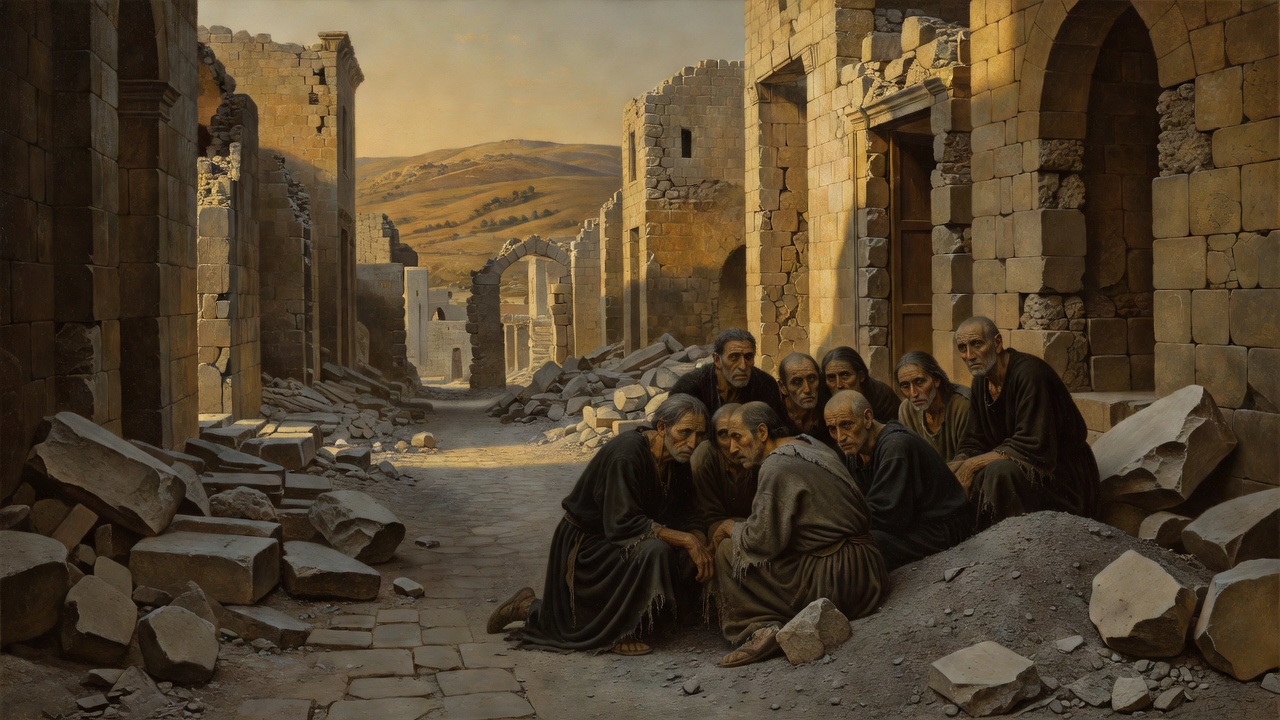
La Agonía de la Ciudad Caída
- El poeta considera que el prolongado sufrimiento de Jerusalén fue peor que el destino de Sodoma. Mientras que Sodoma fue destruida en un instante por fuego divino, los habitantes de Jerusalén soportaron el tormento lento y desgarrador del asedio y la hambruna.Fuentes: el propio texto bíblico · Sodom
- Antes de su caída, Jerusalén era considerada en gran medida como una ciudad montañosa impenetrable. El texto señala que los reyes extranjeros y las naciones vecinas nunca creyeron que un enemigo pudiera traspasar sus puertas fortificadas.Fuentes: el propio texto bíblico · Jerusalem
- El capítulo concluye dirigiéndose a Edom, que habitaba en la tierra de Uz, advirtiendo que el juicio pronto la alcanzaría a ella también. La tierra de Uz se menciona únicamente en tres libros bíblicos: Job, Jeremías y Lamentaciones.Fuentes: el propio texto bíblico · Uz · Edom
Notas escritas con ayuda de IA a partir de fuentes abiertas (Theographic Bible Metadata, CC BY-SA 4.0; Easton’s Bible Dictionary, dominio público) y revisadas antes de publicarse.
Lugares de este capítulo
- Zion · Hoy: Jerusalem · 31.777, 35.234 · versículos 2, 11, 22
- Jerusalem · 31.777, 35.234 · versículo 12
- Edom · 30.746, 35.604 · versículos 21, 22
Solo aparecen lugares identificados con alta confianza (90 % o más según las fuentes académicas reunidas por OpenBible). Mapa de la época: DARE (Digital Atlas of the Roman Empire), CC BY 4.0; mapa actual: © colaboradores de OpenStreetMap; lugares: OpenBible.info (CC BY 4.0).
Créditos y licencia de esta traducción
Bibiri Kuyie Nnɑ́ɑǹtì Pɑ́tíri
The Holy Bible in the Ditammari language of Benin
copyright © 2001 SIM International
Language: Ditammari
Translation by: SIM
This translation text is made available to you under the
terms of the Creative Commons License: Attribution-Noncommercial-No Derivative Works.
( http://creativecommons.org/licenses/by-nc-nd/3.0/ )
In addition, you have permission to port the text to different file formats, as long as you
do not change any of the text or punctuation of the Bible.
You may share, copy, distribute, transmit, and extract portions
or quotations from this work, provided that you include the above copyright
information:
You must give Attribution to the work.
You do not sell this work for a profit.
You do not make any derivative works that change any of the actual words or punctuation of the Scriptures.
Permissions beyond the scope of this license may be
available if you contact
us with your request.
This translation is made available to you under the terms of the
Creative Commons Attribution-No Derivatives license 4.0.
You may share and redistribute this Bible translation or extracts from it in any format, provided that:
You include the above copyright and source information.
You do not make any derivative works that change any of the actual words or punctuation of the Scriptures.
Pictures included with Scriptures and other documents on this site are licensed just for use with those Scriptures and documents.
For other uses, please contact the respective copyright owners.
2022-05-31
Fuente: http://ebible.org/tbzsim/ · eBible.org