Josué 7
Bibiri Kuyie Nnɑ́ɑǹtì Pɑ́tíri · Toca un versículo para ver sus referencias cruzadas.
Akɑ̃ɑ̃ dɔ̀ɔ̀mɛ̀ mɛyɛi nkɛ̀ bɛ̀ɛ ò kùɔ
1Kɛ̀ Isidɑyɛɛribɛɛ dɔɔ̀ mɛyɛi ndiɛmɛ̀, kɛ́túótɛ́ ti Yiɛ̀ nKuyie nyɛ̃ mbɛ̀ bɑ́ɑ́ túótɛ́ dɛ̀, kɛ̀ ku miɛkɛɛ bɛ̀ pɛikɛ. Sudɑɑ nɑɑ̀mùnkù kou Sedɑɑ birɛ Sɑbudi weè do pɛitɛ́ Kɑdimii, kòo pɛitɛ́ Akɑ̃ɑ̃. Akɑ̃ɑ̃ weè do yùúkú.
2Kɛ̀ Sosuwee tɔ̃ mbɛnìtìbɛ̀ kɛ̀ bɛ̀ bo pɑɑtɛ́ Aii ɛì, dihɛì dìì bo Betɛɛdi diyiè yìɛ̀ní kɛ̀ɛ̀ bíɛ́kɛ̀, kɛ tɔ́kɛ́nɛ̀ Bɛti-Afɛnni, kɛ̀ bɛ̀ɛ kɔtɛ kɛ́ dì pɑɑtɛ́. 3Bɛ̀ wɛ̃̀tɛní mɛm̀mɛ kóò nɑ̀kɛ́ kɛ dɔ̀: Dɛ kó dihɛì í dɛu ɑ bɑ́ɑ́ fɛ̃́ũ mbɛnìtìbɛ̀ bɛmɔu. Sikɔupísìdɛ́ (2000) yoo sikɔupísìtɑ̃ɑ̃ti (3000) yó nsɑ̀nnɛ̀mu.
4Bɛ̀ɛ̀ do kɔtɛ, bɛ̀ bo ntùɔ̀kɛ sikɔupísìtɑ̃ɑ̃ti (3000). Kɛ̀ Aii kɔbɛɛ bɛ̀ nɑ kɛ́bɛti. 5Bɛ̀ kùɔ bɛ̀ɛ̀ nìtìbɛ̀ bo ntùɔ̀kɛ sipísìtɑ̃ɑ̃ti nɛ̀ bɛ̀kuɔ̀, kɛ̀ bɛ̀ɛ bɛ̀ bɛ̀ti kɛ́dennɛ dihɛì kó dibòrì Sebɑdimmu kɛ́ bɛ̀ cṹũnko, kɛ̀ kufɔ̃wɑɑ́ mbɛ̀ ɑutɛ́ kɛ̀ dɛ̀ɛ bɛ̀ kpeí.
6Sosuwee nɛ̀ Isidɑyɛɛribɛ kó bɛkótíbɛ̀ kɛ̀ bɛ̀ɛ kɛ̃rí bɛ yɑ̀ɑ̀tì, kɛ́pũ mmutɑ̃́ɑ̃́ mbɛ yɔ kɛ́nnínkú ti Yiɛ̀ nKuyie ntɑummɛ̀ tɔu ììkɛ̀ nɛ̀ kuyuokoo. 7Kɛ̀ Sosuwee bɛ́i nkɛ dɔ̀: Áú, n Yiɛ̀ nKuyie! Dɛ̀ yĩ́mɛ kɑ̀ɑ ti séenní kukó nkɛ̀ Amɔriibɛ yóó ti kuɔ? Ti nɑ nkpɑɑní kukó nSuditɛ̃ɛ̃ kó diyɑ́ɑ̀. 8Kuyie nhɑ bɑ́ɑ́ yĩ́ n dɑ cɑ̀ɑ̀rɛ̀, m bo yĩ́ bɑ? Tínti Isidɑyɛɛribɛ ti dootitɔbɛ̀ ti nɑmu. 9Kɑnnɑhɑ̃ɑ̃ kɔbɛ nɛ̀ yɛhɛkɛ̀ tɛyɛ̀ kɔbɛ yóó tì kèèmu kɛ́ ti dintɛ́ kɛ́kuɔ, kɑ̀ɑ nɛ́ yĩ́mɛ kɛ́bɛnkɛ ɑ yetidiɛrì?
10Kɛ̀ ti Yiɛ̀ nKuyie nnɑ́kɛ́ Sosuwee kɛ dɔ̀: Ítɛ́! Dɛ̀ yĩmɛ kɑ̀ɑ nìńkú kɛ sĩ́ĩ́? 11Díndi Isidɑyɛɛribɛ di dɔ̀ɔ̀ mɛyɛi mmɛ kɛ yetɛ n di nɑ̀kɛ́ tì, kɛ yùúkú n do yɛ̃ ndi bɑ́ɑ́ yúúkú dɛ̀, kɛ dɛ̀ sɔ̀nnɛ di nɛntì miɛkɛ. 12Di tɛ̃́nkɛ í yóó nɑ di dootitɔbɛ̀, di dootitɔbɛ̀ yó ndi bɛtìmu kɛ di kɔù. N tɛ̃́nkɛ í yó ndi bonɛ̀, kɛ̀ di í dènnɛ n yɛ̃ ndi bɑ́ɑ́ túótɛ́ dɛ̀ di cuokɛ̀. 13Ítɛ́ kɛ́wénkùnnɛ bɛnìtìbɛ̀! Nɑ́kɛ́ bɛ kɛ̀ bɛ̀ɛ wénkùnnɛ bɛmɑ́ɑ̀ kɛ̀ ti nɑɑ mɑ́ɑ́. Á bɛ̀ nɑ̀kɛ́ kɛ dɔ̀: Mí ndi Yiɛ̀ nKuyie ndíndi Isidɑyɛɛribɛ di tũ nkù míì tu n yɛ̃ ndi bɑ́ɑ́ túótɛ́ dɛ̀, dɛɛ̀ bo di cuokɛ̀, kɛ̀ di í dɛ̀ dènnɛ di bɑ́ɑ́ nɑ kɛ́bɑɑo di dootitɔbɛ̀. 14Nɑnkɛ dikṹnweńnì, ɑ́ tíí nyiwuɔ nyiwuɔ kɛ́tɑ̃ũ tɛ́tɛ́ kɛ̀ m bɛnkɛ kùù wuɔ nkùu bɑtɛ tinɑɑ̀mùntì, kɛ̀ m bɛnkɛ kùù nɑɑ̀mùnkù kùu bɑtɛ sicɛ̃́ĩ, kɛ̀ m bɛnkɛ tɛ̀ɛ̀ cĩ́ɛ̃̀tɛ̀ tɛ̀ɛ bɑtɛ bɛnìtìbɛ̀. 15Kɛ̀ m bɛnkɛ wèè nìtì bɛ̀ɛ ò cɔ́u nnɛ̀ o kpɛrɛ dɛmɔu, ò yetɛ mɛ̀ɛ̀ kpɛ́í n nɑ̀kɛ́ tì kɛ dɔ̀ɔ̀ mɛyɛi ndiɛmɛ̀ Isidɑyɛɛribɛ miɛkɛ.
16Dikṹnweńnì sɛ̀ì kɛ̀ Sosuwee tíí nyIsidɑyɛɛribɛ kó iwuɔ nyimɔu. Kɛ̀ Kuyie mbɛnkɛ Sudɑɑ kó kuwuɔ. 17Kòo bɛ̀ bɑ̀tɛ bɛ nɑɑ̀mùntì, kɛ̀ Kuyie mbɛnkɛ Sedɑɑ kɔku, kòo bɛ̀ bɑ̀tɛ bɛ cɛ̃́ĩ, kɛ̀ Kuyie mbɛnkɛ Sɑbudi kpɛtɛ. 18Kòo bɛ̀ bɑ̀tɛ onìtì onìtì, kɛ̀ Kuyie mbɛnkɛ Akɑ̃ɑ̃. Akɑ̃ɑ̃ cicɛ do tú Kɑdimii, kɛ̀ Kɑdimii cicɛ tú Sɑbudi, kɛ̀ Sɑbudi cicɛ tú Sedɑɑ. Sudɑɑ kó kuwuɔ kɔbɛ mbɛ. 19Kɛ̀ Sosuwee ò nɑ̀kɛ́ kɛ dɔ̀: Bɑntɛ́ ti Yiɛ̀ nKuyie nyIsidɑyɛɛribɛ tũ nkù dɛumɛ̀ kɛ́ n nɑ́kɛ́ dɛmɔu, ɑ bɑ́ɑ́ n sɔnnɛ dɛ̀mɑrɛ̀.
20Kɛ̀ Akɑ̃ɑ̃ dɔ̀: Ɛ̃ɛ̃, míì dɔ̀ɔ̀ mɛyɛi ti Yiɛ̀ nKuyie nyIsidɑyɛɛribɛ tũ nkù ììkɛ̀. Ntɛ n dɔ̀ɔ̀ dɛ̀: 21N yɑ̀ ti dootitɔbɛ̀ nɛntì miɛkɛ nkɛ Mɛsopotɑmii kɔbɛ kó diyɑɑ̀bòrì sɑ̀ɑ̀rì mɑrì nɛ̀ mɛdítíbii nsikɔusìdɛ́ (200) nɛ̀ disɔɔwènnì cìdóò kó dikéè, kɛ dɛ̀ yɑɑ nkɛ tùótɛ́, di bo dɛ̀ yɑ̀ n tou miɛkɛ, kɛ̀ dɛ̀ kũrí kɛ̀ idíítí ni.
22Kɛ̀ Sosuwee tɔ̃ mbɛnìtìbɛ̀ kɛ̀ bɛ̀ɛ kɔtɛ o dieku kɛ́nsɔ̃́ ndɛ̀ mɛ ndò nkɛ̀ idíítí ni. 23Kɛ̀ bɛ̀ɛ dɛ̀ kũtɛ́ o dieku kɛ́tɔní Sosuwee nɛ̀ Isidɑyɛɛribɛ bɛmɔu borɛ̀, kɛ̀ bɛ̀ɛ dɛ̀ còú ti Yiɛ̀ nKuyie nyììkɛ̀. 24Sosuwee nɛ̀ Isidɑyɛɛribɛ bɛmɔu kɛ̀ bɛ̀ɛ túótɛ́ Akɑ̃ɑ̃ nɛ̀ idíítí nɛ̀ diyɑɑ̀bòrì nɛ̀ disɔɔwènnì nɛ̀ o bí, initidɑɑì nɛ̀ initipòì nɛ̀ o nɑ̀ɑ̀kɛ nɛ̀ o sɑ̃mmɑrímúbɛ̀ nɛ̀ o pe nɛ̀ o bɔɔ́ nɛ̀ o touku nɛ̀ ò mɔ̀kɛ dɛ̀ɛ̀ kó dimɑ̀ɑ̀, kɛ́kɔtɛnɛ̀ kubiriku bɛ̀ tu kù Dikɔnkɔɔ̀nnì biriku. 25Kɛ̀ Sosuwee nɑ́kɛ́ Akɑ̃ɑ̃ kɛ dɔ̀: Fɔ̃́ɔ̃̀ te kɛ̀ mɛyɛi nti tùɔ̀kɛní, ti Yiɛ̀ nKuyie mbo dɑ dɔɔ̀ mɛyɛi nyíe.
Mɛm̀mɛ kɛ̀ Isidɑyɛɛribɛɛ buɔ́tí Akɑ̃ɑ̃ yɛtɑ̃́rɛ̀ kɛ́kuɔ, kɛ́ mɛ ndɔɔ̀ o kɔbɛ bɛmɔu nɛ̀ o kpɛrɛ dɛmɔu, 26kɛ́tíí ndɛborɛ̀ ditɑ̃́ntɛ́nkou diɛrì kɛ̀ dì kpɑɑ́ bo nɛ̀ yíenní, dɛɛ̀ te kɛ̀ bɛ̀ yu dɛborɛ̀ kɛ tú dikɔnkɔɔ̀nnì biriku.
Mɛm̀mɛ ti Yiɛ̀ nKuyie mmiɛkɛ domɛ̀.
¿Sabías que…?
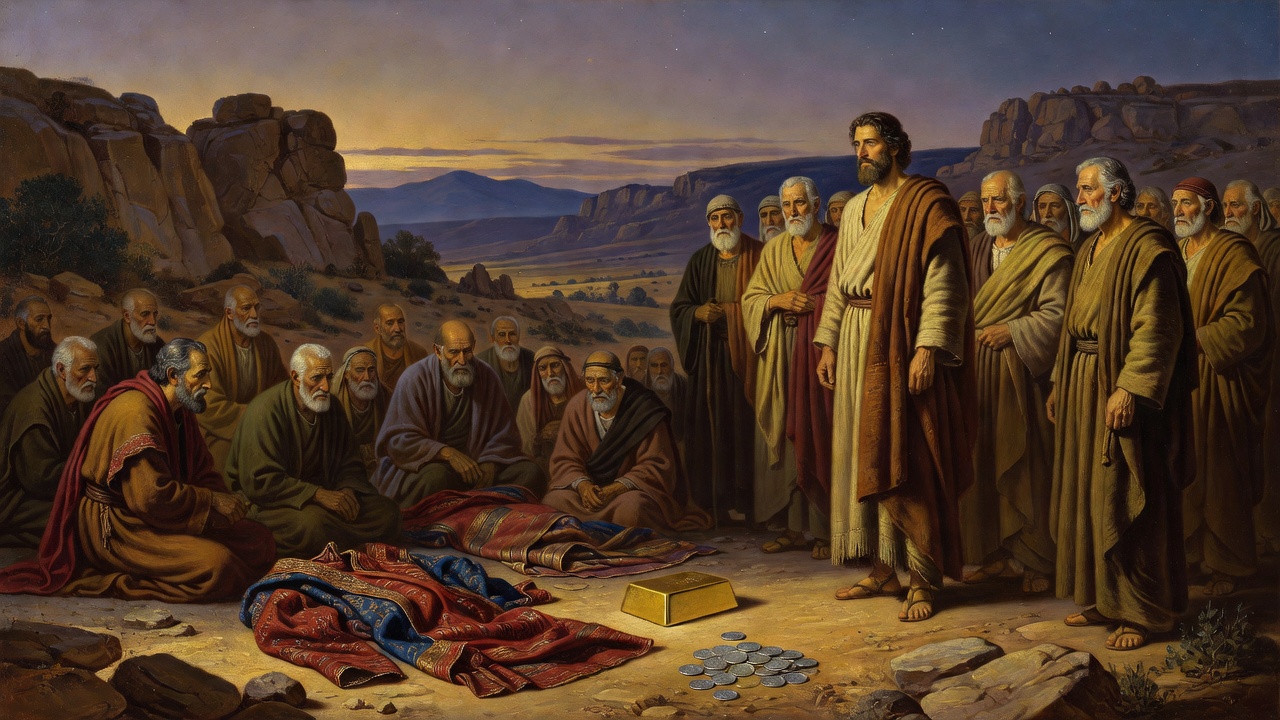
La derrota en Hai y el pecado de Acán
- Hai era una ciudad real cananea situada al este de Betel y cerca de Bet-avén. Tras la toma de Jericó, fue la segunda ciudad a la que se dirigieron los israelitas, aunque una fuerza inicial de unos tres mil soldados fue inesperadamente derrotada en las laderas fuera de la ciudad.Fuentes: Ai · el propio texto bíblico
- Para descubrir la causa de la derrota de Israel en Hai, Josué presentó a la comunidad por etapas de tribu, clan, familia e individuo hasta que Acán, de la tribu de Judá, fue señalado. Acán confesó haber robado y escondido oro, plata y un manto babilónico que estaban consagrados a la destrucción.Fuentes: Achan · el propio texto bíblico
- El nombre del valle de Acor significa aflicción o desgracia, lo que refleja las palabras de Josué de que Acán había acarreado calamidad a Israel. Escritores bíblicos posteriores, como Oseas e Isaías, hicieron referencia a este valle de manera simbólica como un lugar donde el desastre se transforma en esperanza y bendición.Fuentes: Achan · Valley of Achor · el propio texto bíblico
Notas escritas con ayuda de IA a partir de fuentes abiertas (Theographic Bible Metadata, CC BY-SA 4.0; Easton’s Bible Dictionary, dominio público) y revisadas antes de publicarse.
Lugares de este capítulo
- Jericho · Hoy: Tell es Sultan · 31.872, 35.445 · versículo 2
- Jordan · Hoy: Jordan River · 31.761, 35.558 · versículo 7
- Shinar · Hoy: Babylonia · 32.543, 44.422 · versículo 21
Solo aparecen lugares identificados con alta confianza (90 % o más según las fuentes académicas reunidas por OpenBible). Mapa de la época: DARE (Digital Atlas of the Roman Empire), CC BY 4.0; mapa actual: © colaboradores de OpenStreetMap; lugares: OpenBible.info (CC BY 4.0).
Créditos y licencia de esta traducción
Bibiri Kuyie Nnɑ́ɑǹtì Pɑ́tíri
The Holy Bible in the Ditammari language of Benin
copyright © 2001 SIM International
Language: Ditammari
Translation by: SIM
This translation text is made available to you under the
terms of the Creative Commons License: Attribution-Noncommercial-No Derivative Works.
( http://creativecommons.org/licenses/by-nc-nd/3.0/ )
In addition, you have permission to port the text to different file formats, as long as you
do not change any of the text or punctuation of the Bible.
You may share, copy, distribute, transmit, and extract portions
or quotations from this work, provided that you include the above copyright
information:
You must give Attribution to the work.
You do not sell this work for a profit.
You do not make any derivative works that change any of the actual words or punctuation of the Scriptures.
Permissions beyond the scope of this license may be
available if you contact
us with your request.
This translation is made available to you under the terms of the
Creative Commons Attribution-No Derivatives license 4.0.
You may share and redistribute this Bible translation or extracts from it in any format, provided that:
You include the above copyright and source information.
You do not make any derivative works that change any of the actual words or punctuation of the Scriptures.
Pictures included with Scriptures and other documents on this site are licensed just for use with those Scriptures and documents.
For other uses, please contact the respective copyright owners.
2022-05-31
Fuente: http://ebible.org/tbzsim/ · eBible.org