2 Samuel 2
Bibiri Kuyie Nnɑ́ɑǹtì Pɑ́tíri · Toca un versículo para ver sus referencias cruzadas.
Sudɑɑ kɔbɛ pĩ̀ḿmɛ̀ Dɑfiti tikpɑ̀tì Ebunɔɔ
1Mɛm̀mɛ kɛ̀ Dɑfitii beé nti Yiɛ̀ nKuyie nkɛ dɔ̀: N dò nkɛ́kɔtɛ Sudɑɑ kɔbɛ ɛkɛ̀ kó dìmɑrɑ̀ɑ̀? Kɛ̀ ti Yiɛ̀ nKuyie ndɔ̀: Ɛ̃ɛ̃. Kòò dɔ̀: Ɔ̃̀ndi? Kɛ̀ kù dɔ̀: Ebunɔɔ.
2Kɛ̀ Dɑfitii nɛinɛ̀ o pobɛ̀ bɛdɛ́ Ainɔɑmmu Sisedɛɛdi ɛì kou nɛ̀ Abikɑyɛɛdi Nɑbɑɑdi Kɑdimɛɛdi ɛì kou do po wè kɛ kú, kòo ò tùótɛ́. 3Dɑfiti kɔbɛ nɛ̀ bɛ cɛ̃́ĩ kɔbɛ kɛ̀ bɛ̀ múnkɛɛ ò nɛinɛ̀ kɛ̀ bɛ̀ɛ kɔtɛ kɛ́mbo Ebunɔɔ ɛì nɛ̀ yɛ̀ɛ̀ dì tɔ̀kɛ́nɛ̀. 4Kɛ̀ Sudɑɑ kɔbɛɛ kɔtoo Ebunɔɔ kɛ́pĩ́ nDɑfiti tikpɑ̀tì kóò còú mmɛkùɔ̀ nkòò bo mbɛ̀ bɑkɛ́.
Kɛ̀ bɛ̀ɛ nɑ́kɛ́ Yɑbɛsi Kɑdɑsii tenkɛ̀ kɔbɛ sòò kũnnɛ́mɛ̀ Sɑuri. 5Kòo tɔ̃ nkɛ̀ bɛ̀ɛ bɛ̀ nɑ̀kɛ́ kɛ dɔ̀: Ti Yiɛ̀ nKuyie ndi dɔɔ̀ mɛsɑ̀ɑ̀ ndí kũnnɛ́ mɛ̀ɛ̀ kpɛ́í nhokpɑ̀ɑ̀tì Sɑuri kɛ bɛnkɛ di ò dɔ́mɛ̀. 6Ti Yiɛ̀ nKuyie ndí yietí mɛsɑ̀ɑ̀ ndi dɔ̀ɔ̀ mɛ̀, m mɔ́mmuɔ m múnkɛ yóó mɛ̀ ndi dɔɔ̀mu, di mɛ̀ dɔ̀ɔ̀ mɛ̀ɛ̀ botí. 7Di mmɔ̀nnì yɑ́úkùnnɛ di kɔ̃̀ntì, ntúnɛ̀ yɛkɔ̃m̀bɔ̀ yɛmbɛ̀, okpɑ̀ɑ̀tì Sɑuri kumu, mí nwe Sudɑɑ nɑɑ̀mùnkù kɔbɛ còúmmɛ̀ mɛkùɔ̀ kɛ m pĩ ntikpɑ̀tì kɛ̀ m bo mbɛ̀ bɑkɛ́.
Bɛ̀ pĩ̀ḿmɛ̀ Isibosɛti tikpɑ̀tì
8Diyiè mɑrì kɛ̀ Nɛɛ birɛ Abunɛɛ Sɑuri ɑ̃ɑ̃pɔ̀mbɛ̀ kóo kótìi tɔ Sɑuri birɛ Isibosɛti kɛ́kɔtɛnɛ̀ Mɑɑnɑimmu, 9kóò pĩ ntikpɑ̀tì kòò bo mbɑkɛ́ Kɑdɑɑdi nɛ̀ Asɛɛ nɛ̀ Sisedɛɛdi nɛ̀ Efɑdɑimmu nɛ̀ Bɛnsɑmɛɛ Isidɑyɛɛribɛ tenkɛ̀ kɛmɔu. 10Isibosɛti do mɔkɛ yɛbie nsipísìnɑ̀ɑ̀ ndi kɛ di tikpɑ̀tì, kɛ́mbɑkɛ́ Isidɑyɛɛribɛ kɛ dɔ̀ yɛbie nyɛ̀dɛ́ɛ̀. Sudɑɑ kó kunɑɑ̀mùnkù kɔbɛ bɛɛ̀ mɑ́ɑ̀ do tũ nDɑfiti. 11Dɑfiti do bɑkɛ́ Sudɑɑ kɔbɛ mɑ́ɑ̀ ndi kɛ bo Ebunɔɔ kɛ dɔ̀ yɛbie nyɛ̀yiekɛ̀ nɛ̀ bɛtɑ̃̀ɑ̃̀bɛ̀ bɛ̀kuɔ̀.
Sudɑɑ kɔbɛ nɛ̀ Isidɑyɛɛribɛ bɛ̀ kpɑmmɛ̀ Kɑbɑɔ̃ɔ̃
12Nɛɛ birɛ Abunɛɛ nɛ̀ Sɑuri birɛ Isibosɛti ɑ̃ɑ̃pɔ̀mbɛ̀ bɛ̀ɛ̀ ò bɑ̀ɑ kɛ̀ bɛ̀ɛ ítɛ́ Mɑɑnɑimmu kɛ́nwetí Kɑbɑɔ̃ɔ̃. 13Kɛ̀ Seduyɑ birɛ Soɑbu nɛ̀ Dɑfiti ɑ̃ɑ̃pɔ̀mbɛ̀ bɛ̀ɛ̀ ò bɑ̀ɑ kɛ̀ bɛ̀ múnkɛɛ pĩ́ nkucɛ kɛ̀ dɛ kó yɛtĩ̀rɛ̀ɛ mɑ́ɑ́ Kɑbɑɔ̃ɔ̃ binku kɛ́bɑ́tɛ́ biɛ ku mpíkù bɛtɔbɛ̀ kutɛkù. 14Kɛ̀ Abunɛɛ nɑ́kɛ́ Soɑbu kɛ dɔ̀: Yóu kɛ̀ bɛhɑ̃ɑ̃pɔ̀mbɛ̀ɛ yɑ́ɑ́kɛ́ bɛtɔbɛ̀ bɛ̀dɛ́bɛ̀ dɛ́bɛ̀ ti ììkɛ̀. Kɛ̀ Soɑbu dɔ̀: Dɛ̀ wenni, bɛ̀ɛ kpɑ.
15Kɛ̀ bɛhɑ̃ɑ̃pɔ̀mbɛ̀ɛ ítɛ́ kɛ́cómmú kɛ̀ bɛ̀ɛ kɑɑ mBɛnsɑmɛɛ nɑɑ̀mùnkù kou Isibosɛti kɔbɛ kɛ̀ bɛ̀ mbo tɛpíítɛ̀ nɛ̀ bɛ̀dɛ́bɛ̀, kɛ̀ Dɑfiti kɔbɛ mbo tɛpíítɛ̀ nɛ̀ bɛ̀dɛ́bɛ̀. 16Kɛ̀ bɛhɑ̃ɑ̃pɔ̀mbɛ̀ɛ pĩ́ mbɛtɔbɛ̀, bɑ́ wè kòo kṹṹ o nɛ́po píkù disiè, kɛ̀ bɛ̀ɛ duó bɛmɔu dimɔ̀nnì dìmɑ́ɑ̀ miɛkɛ kɛ̀ bɛ̀ɛ yú dɛborɛ̀ kɛ dɔ̀ Kɑbɑɔ̃ɔ̃ (dɛ̀ɛ̀ tu Yɛse kó dikpɑ́ɑ̀).
17Kɛ̀ mudoò bintɛ́ dɛ yiè kɛ̀ Dɑfiti kó bɛhɑ̃ɑ̃pɔ̀mbɛ̀ɛ nɑ Abunɛɛ kɔbɛ. 18Kɛ̀ Seduyɑ bí itɑ̃ɑ̃ti dɛ kɔkɛ́ Soɑbu nɛ̀ Abikɑii nɛ̀ Asɑyɛɛdi. Asɑyɛɛdi do cɑ̃ɑ̃ muceé mmu kɛ dò ntɛhontɛ̀. 19Kòo bɛti Abunɛɛ kóò fɛ̃nnɛ́ fɛ̃nfɛ̃. 20Kɛ̀ Abunɛɛ wɛ̃ɛ̃tɛ kóò bekɛ kɛ dɔ̀: Asɑyɛɛdi fɔ̃́ nweɑ̀? Kòò dɔ̀: Ɛ̃ɛ̃, mí nwe. 21Kɛ̀ Abunɛɛ ò nɑ̀kɛ́ kɛ dɔ̀: Wɛ̃ɛ̃tɛ ɑ bɑkù yoú yoo kucɑ̃̀nku kɛ́bɛti bɛhɑ̃ɑ̃pɔ̀mbɛ̀ kóò mɔù kɛ́fietɛ o nɛntì.
Asɑyɛɛdi mɛ nyí nyie nkɛ yóu ò bo nhò bɛ̀timɛ̀. 22Kɛ̀ Abunɛɛ yíɛ́ kɛ dɔ̀: Asɑyɛɛdi bɑ́ nni mbɛti, bɑ́ɑ́ duɔ́ nkɛ̀ n dɑ kuɔ bɑ́ nɛ̀ ɑ kóo kótì Soɑbu ti nuɔ mbɑ́ɑ́ mɑ́ɑ́.
23Asɑyɛɛdi mɛ nyí nyie nkɛ bo ò yóu mubɛ̀tìmù. Mɛm̀mɛ kɛ̀ Abunɛɛ ò tɑ̃ dikpɑ̃nnì o pɔutì kɛ̀ dìi yɛ̀roo o fɔ̃nkúò kòo do kɛ́kú. Bɛ̀ɛ̀ kó dimɑ̀ɑ̀ keriní kɛ̀ bɛ̀ ncommu ò duɔ́ dɛ̀.
24Soɑbu nɛ̀ Abikɑii kɛ̀ bɛ̀ mɛ ntó fɛ̃nnɛ́ Abunɛɛ fɛ̃nfɛ̃. Kɛ̀ diyiè nyóó tɑ kɛ̀ bɛ̀ berínɛ̀ Kibeɑ Ammɑ Kiyɑɑ donfũ̀ɔ̃̀ kucɛ kùù yìɛ̀nɛ̀ Kɑbɑɔ̃ɔ̃ kpɑ́ɑ̀ bíɛ́kɛ̀ ku borɛ̀. 25Kɛ̀ Abunɛɛ Bɛnsɑmɛɛ botí kou ɑ̃ɑ̃pɔ̀mbɛ̀ nhò kɛ̀rí ditɑ̃rì ĩ́nkɛ̀. 26Kɛ̀ Abunɛɛ yú Soɑbu kɛ dɔ̀: Ti yó nsɔkɛ́ kɛ kɔùmu titɔbɛ̀ nɛ̀ yɛseɑ̀? A í yɛ̃́ kɛ dò ndɛ̀ bo ti dentɛnɛ̀ mɛyɛinɑɑ̀? A bɑɑ bɑ? Nɑ́kɛ́ ɑ nìtìbɛ̀ kɛ̀ bɛ̀ɛ yóu bɛ̀ bo nkɔùmɛ̀ bɛ tebìí. 27Kɛ̀ Soɑbu dɔ̀: Kuyie mbomu, kɑ̀ɑ do í bɛ́i n kɔbɛ nɑ nsɔkɛ́ kɛ di bɛtìmu bɑ́ wè o tebitɛ nɛ̀ nɑnkoo dikṹnweńnì.
28Kɛ̀ Soɑbuu eé ditɑ̃tɛheù kòo ɑ̃ɑ̃pɔ̀mbɛ̀ɛ kṹnnɛ́ bɛ̀ bo mbɛtìmɛ̀ Isidɑyɛɛribɛ kɛ̀ dikpɑ̀nnìi deè. 29Abunɛɛ nɛ̀ o kɔbɛ kɛ̀ bɛ̀ nyié nkɛ kérí kɛyènkɛ̀ kɛmɔu Suditɛ̃ɛ̃ kó kubiriku, kɛ́séntɛ́ kukó nkɛ́pɛ̃ɛ̃tɛ́ Bitinɔɔ kɛ́tuɔkɛ Mɑɑnɑimmu. 30Soɑbu yóu dìì mɔ̀nnì ò bo mbɛtìmɛ̀ Abunɛɛ kɛ́tíí nho ɑ̃ɑ̃pɔ̀mbɛ̀ kɛ́mɔ́ntɛ́ Dɑfiti kó bɛhɑ̃ɑ̃pɔ̀mbɛ̀ miɛkɛ tɛpíítɛ̀ nɛ̀ bɛ̀wɛi kɛ́yíɛ́nɛ̀ Asɑyɛɛdi. 31Kɛ̀ Dɑfiti kó bɛhɑ̃ɑ̃pɔ̀mbɛ̀ mɛ nkùɔ Bɛnsɑmɛɛ botí kó bɛhɑ̃ɑ̃pɔ̀mbɛ̀ nɛ̀ Abunɛɛ kɔbɛ sikɔusìtɑ̃ɑ̃ti nɛ̀ sipísìkuɔ̀ (360). 32Kɛ̀ bɛ̀ɛ túótɛ́ Asɑyɛɛdi kɛ́ntɔ kɛ bií kũnnɛ́ o cicɛ fɔ̃ti Bɛtideɛmmu. Soɑbu nɛ̀ o kɔbɛ kɛ̀ bɛ̀ɛ sɔɔtɛ́ kɛ́nyié nkɛ kérí kɛ́tuɔkoo Ebunɔɔ kukṹnwentóo kɛ̀ diyiè yɛ̀tìní.
¿Sabías que…?
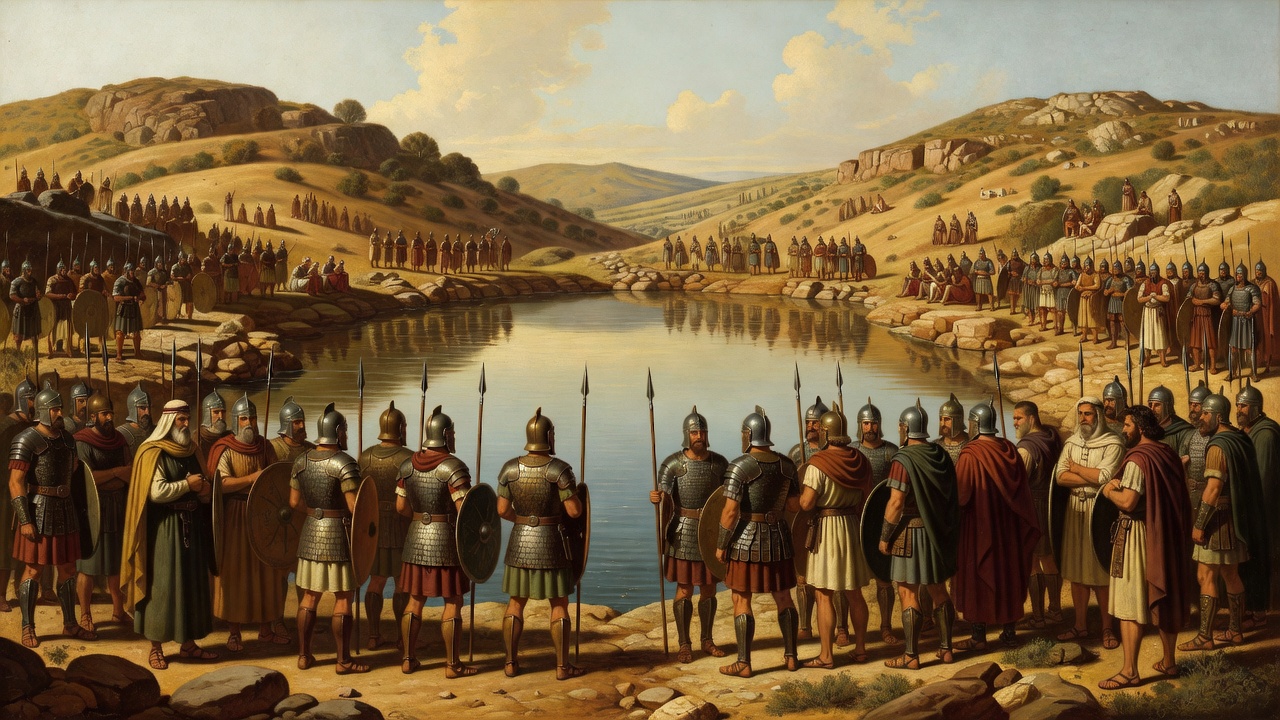
Dos reyes y el enfrentamiento en Gabaón
- Tras la muerte de Saúl, la nación se dividió en dos reinos rivales. La tribu de Judá ungió a David como rey en la ciudad de Hebrón, al sur, mientras que Abner, general de Saúl, estableció a Is-boset, hijo sobreviviente de Saúl, para gobernar a las tribus del norte desde Mahanaim, al este del río Jordán.Fuentes: el propio texto bíblico · Abner · Ish-bosheth · Mahanaim
- Los principales comandantes militares de David —Joab, Abisai y Asael— eran hijos de Sarvia, hermana de David. Este estrecho lazo familiar colocó a los sobrinos de David al frente de las tropas de Judá durante las hostilidades contra la casa de Saúl.Fuentes: el propio texto bíblico · Joab · Zeruiah · Asahel
- El conflicto civil se intensificó junto al estanque de Gabaón mediante un combate representativo entre doce guerreros de Benjamín y doce del bando de David. Debido a que los veinticuatro combatientes murieron juntos en la lucha, el lugar fue llamado Helcat-hazurim antes de desatarse la batalla campal.Fuentes: el propio texto bíblico · Gibeon
Notas escritas con ayuda de IA a partir de fuentes abiertas (Theographic Bible Metadata, CC BY-SA 4.0; Easton’s Bible Dictionary, dominio público) y revisadas antes de publicarse.
Lugares de este capítulo
- Hebron · Hoy: Tel Rumeida · 31.525, 35.102 · versículos 1, 3, 4, 11, 32
- Gilead · Hoy: Gilead 1 · 32.187, 35.692 · versículo 9
- Gibeon · Hoy: El Jib · 31.847, 35.183 · versículos 12, 13, 16, 24
- Helkath-hazzurim · Hoy: within 500 m of El Jib · 31.847, 35.183 · versículo 16
- Arabah · 30.417, 35.151 · versículo 29
- Jordan · Hoy: Jordan River · 31.761, 35.558 · versículo 29
- Bethlehem · 31.704, 35.208 · versículo 32
Solo aparecen lugares identificados con alta confianza (90 % o más según las fuentes académicas reunidas por OpenBible). Mapa de la época: DARE (Digital Atlas of the Roman Empire), CC BY 4.0; mapa actual: © colaboradores de OpenStreetMap; lugares: OpenBible.info (CC BY 4.0).
Créditos y licencia de esta traducción
Bibiri Kuyie Nnɑ́ɑǹtì Pɑ́tíri
The Holy Bible in the Ditammari language of Benin
copyright © 2001 SIM International
Language: Ditammari
Translation by: SIM
This translation text is made available to you under the
terms of the Creative Commons License: Attribution-Noncommercial-No Derivative Works.
( http://creativecommons.org/licenses/by-nc-nd/3.0/ )
In addition, you have permission to port the text to different file formats, as long as you
do not change any of the text or punctuation of the Bible.
You may share, copy, distribute, transmit, and extract portions
or quotations from this work, provided that you include the above copyright
information:
You must give Attribution to the work.
You do not sell this work for a profit.
You do not make any derivative works that change any of the actual words or punctuation of the Scriptures.
Permissions beyond the scope of this license may be
available if you contact
us with your request.
This translation is made available to you under the terms of the
Creative Commons Attribution-No Derivatives license 4.0.
You may share and redistribute this Bible translation or extracts from it in any format, provided that:
You include the above copyright and source information.
You do not make any derivative works that change any of the actual words or punctuation of the Scriptures.
Pictures included with Scriptures and other documents on this site are licensed just for use with those Scriptures and documents.
For other uses, please contact the respective copyright owners.
2022-05-31
Fuente: http://ebible.org/tbzsim/ · eBible.org