1 Samuel 9
Bibiri Kuyie Nnɑ́ɑǹtì Pɑ́tíri · Toca un versículo para ver sus referencias cruzadas.
Sɑuri wɑntimɛ̀ o cicɛ sɑ̃mmɑrímúbɛ̀
1Onìtì mɔù weè do bo Bɛnsɑmɛɛ kó dihɛì kɛ tú Bɛnsɑmɛɛ kó kuwuɔ kou, kòo yètìrì tu Afiyɑ kòo pɛitɛ́ Bekodɑ, kòo pɛitɛ́ Sedo, kòo pɛitɛ́ Abiyɛɛdi, kòo pɛitɛ́ Kiisi, kòo mmɔkɛ o kpɛrɛ kɛ̀ bɛ̀ ò dé, kòo pɛitɛ́ o birɛ kɛ́ dɛ̀ yu kɛ dɔ̀: Sɑuri, kɛ̀ dɛ̀ ntú odɑsɑ́ɑ́tì, òmɔù do í wenni Isidɑyɛɛribɛ miɛkɛ kɛ tùɔ̀kɛ Sɑuri, kòo mpɛ̃nkù bɛnìtìbɛ̀ bɛmɔu mɛokùmɛ̀.
3Diyiè mɑrì kɛ̀ Kiisi sɑ̃mmɑrímúbɛ̀ɛ feti kòo nɑ́kɛ́ o birɛ Sɑuri kɛ dɔ̀: Túótɛ́ otɔ̃ntì òmɑ́ɑ̀ kɛ̀ dí kɔtɛ kɛ́wɑmmú sɑ̃mmɑrímúbɛ̀. 4Sɑuri nɛ̀ o tɔ̃ntì kɛ̀ bɛ̀ɛ kɔtɛ kɛ́ketɛ́nɛ̀ Efɑdɑimmu tɑ̃rɛ̀, kɛ́deè kɛ́tɑ Sɑdisɑɑ tempɛ̃ mbɛ̀ mɛ nyí nyɑ̀ mùmɑmù, kɛ́pɛ̃ɛ̃tɛ́ kɛ́tɑ Sɑdimmu kɔku kɛ́mɔ́ntɛ́ kɛ́tɑ Bɛnsɑmɛɛ kɔku bɛ̀ mɛ mbɑɑ í nyɑ̀ mùmɑmù. 5Bɛ̀ tùɔ̀kɛ dìì mɔ̀nnì Sufu tempɛ̃ nkɛ̀ Sɑurii nɑ́kɛ́ o tɔ̃ntì kɛ dɔ̀: Ti kò ntɛcĩ́ɛ̃̀tɛ̀ n cicɛ yɑ̀ɑ̀ bo ti mɔ́ntɛ́ kɛ́yɛ̃̀ nsɑ̃mmɑrímúbɛ̀ kpɛ́í kɛ́nyĩɛ̃̀kù tíì kpɛ́í.
6Kòo tɔ̃ntìi ò tɛ̃̀ńnɛ́ kɛ dɔ̀: Dihɛì dìì mɛ̀ mbo ti ììkɛ̀ Kuyie nkóo nìtì mɔù weè kɛ̀ bo, kòo yètìrì feí, kòò bɛ́i ntì tìi dɔɔ̀, yóu kɛ̀ tí kɔtɛ kóò yɑ̀, kɛ̀ dɛ̀ yɛ̀mmɛ̀ ò ti nɑ́kɛ́ ti bo kɔtɛ kɛ̀ɛ̀ bíɛ́kɛ̀ muwɑmmù. 7Kɛ̀ Sɑuri dɔ̀: Kɛ̀ ti nɛ́ kɔri ti bo ntɔ bɑ kóò pɑ̃? Ntɛ pɛ̃́ɛ̃̀ í kpɑɑ́ ti yɔ̀rɛ̀ miɛkɛ. Ti mɛ nyí mɔkɛ dɛtɛrɛ̀ mɑrɛ̀ kɛ bo ò pɑ̃. 8Kòo tɔ̃ntìi ò tɛ̃̀ńnɛ́ kɛ dɔ̀: M mɔkɛmu fɛdífɛ̀ diɛ nti bo fɛ̀ nhò duɔ́ nkòò ti bɛnkɛ ti bo cuó nkɛ̀.
9Kɛ̀ Sɑurii ò tɛ̃̀ńnɛ́ kɛ dɔ̀: Dɛ̀ wenni, tí kɔtɛ. Kɛ̀ bɛ̀ɛ kétɛ́ kɛ́nkɔri dihɛì Kuyie nkóo nìtì bo dì, kɛ́conɛ̀ bɛsɑpɑ̀mbɛ̀ kɛ̀ bɛ̀ tɑti kukó mmudúò kɛ̀ bɛ̀ɛ bɛ̀ bekɛ kɛ dɔ̀: Oyuwúoǹtì bo diɛnɑɑ̀? (Dɛ mɔ̀nnì Isidɑyɛɛribɛ do ɔ̃ nkɛ̀ bɛ̀ dɔ́ kɛ́beé ntìmɑtì ti Yiɛ̀ nKuyie mbɛ̀ do ɔ̃ɔ̃ yĩ́: Ti kɔtɛnɛ̀ oyuwúoǹti borɛ̀. Ti yu wè yíe nKuyie mpɑ̃ɑ̃ nɑ́ɑǹtì nɑ́ɑǹtò, bɛ do we ntú oyuwúoǹtì.)
12Kɛ̀ bɛsɑpɑ̀mbɛ̀ɛ bɛ̀ nɑ̀kɛ́ kɛ dɔ̀: Ò bo kɛ tuɔ̀kùnímu, ò kɔ̀tɛní ti ciɛ nkɛ yíe nkɛ yɛ̃́ yíe ntumɛ̀ diyiè ndi bɛnìtìbɛ̀ ɔ̃ɔ̃ fíé dì iwũɔ̃ ditɔ̀nnì ĩ́nkɛ̀. Cɑ̃rikɛnɛ̀ mɛcɑ̃ɑ̃. 13Di yóó ò yɑ̀mu, di bo ntɑti dihɛì kòò mu nyí tùɔ̀kɛ ditɔ̀nnì bɛ̀ yóó di dɛ̀. Òmɔù í yóó di kòò mu nyí tùɔ̀koo. Weè ɔ̃ɔ̃ mɔɔ ti Yiɛ̀ nKuyie nkó mɛsɑ̀ɑ̀ mbɛ̀ kù fìé ìì wũɔ̃ ĩ́nkɛ̀ kɛ̀ bɛnìtìbɛ̀ nɛ́ nɑ kɛ́di. Kɔtɛnɛ̀ miɛ mbɑ̀mbɑ̀ ndi yóó ò yɑ̀mu.
Sɑuri mɑ̀ɑ́nɛ̀mɛ̀ Sɑmmuyɛɛri
14Kɛ̀ bɛ̀ɛ sɔɔtɛ́ bɛ cɛ, bɛ̀ tɑtoo dìì mɔ̀nnì dihɛì kɛ sɔ̃́ nSɑmmuyɛɛri yɛ̀nní kɛ kɔri ditɔ̀nnì borɛ̀ kɛ́ bɛ̀ conɛ̀.
15Kɛ mɛ nsɔ̃́ ti Yiɛ̀ nKuyie nwee nɑ̀kɛ́ Sɑmmuyɛɛri kɛ dɔ̀: 16Dɛ̀ nɑɑ bo nkɑ̃́ɑ̃́kɛ́ miɛ nkɛ̀ n duɔ́ nkɑ̀ɑ mɑ́ɑ́nɛ̀ onìtì mɔù Bɛnsɑmɛɛ kó kuwuɔ kou, ɑ ò pĩ ntikpɑ̀tì kòo mbɑkɛ́ n kó bɛnìtìbɛ̀ Isidɑyɛɛribɛ, kɛ́ bɛ̀ dɛɛtɛ́nɛ̀ Fidisitɛ̃ɛ̃bɛ, bɛ̀ n kuɔ̀nnɛ̀mu kɛ̀ n yɑ̀ bɛ sémmɛ̀. 17Sɑmmuyɛɛri yɑ̀ dìì mɔ̀nnì Sɑuri kɛ̀ ti Yiɛ̀ nKuyie nhò nɑ̀kɛ́ kɛ dɔ̀: Ntɛ onìtì n wee dɑ nɑ́ɑ́ nwèè kpɛ́í, weè yó mbɑkɛ́ n nìtìbɛ̀ Isidɑyɛɛribɛ.
18Kɛ̀ Sɑurii tɔ́ɔ́nko Sɑmmuyɛɛri borɛ̀ dihɛì kó dibòrì borɛ̀ kóò bekɛ kɛ dɔ̀: N dɑ bɑ́ɑ́mmu n nɑ́kɛ́ oyuwúoǹtì borɛ̀? 19Kɛ̀ Sɑmmuyɛɛrii ò tɛ̃̀ńnɛ́ kɛ dɔ̀: Míì tú ɑ wɑnti wè ti kɔtɛ ditɔ̀nnì borɛ̀, yíe nti yóó wɛ̃nnɛ́ kɛ́dimu, nɑnkɛ dikṹnweńnì kɛ̀ n dɑ nɑ́kɛ́ tìì dɑ tɔ, kɑ̀ɑ kò. 20Sɑ̃mmɑrímúbɛ̀ bɛ̀ɛ̀ feti kɛ̀ dɛ̀ mɔ̀kɛ yíe nyɛwè yɛ̀tɑ̃ɑ̃ti, ɑ bɑ́ nyĩɛ̃̀kù, bɛ̀ bɛ̀ yɑ̀mu. Dɛ̀mɑrɛ̀ nɛ́ bomu dɛ̀ɛ̀ pɛ̃ɛ̃tɛ́ mɛmmɛ, Isidɑyɛɛribɛ bùɔ́ fɔ̃́ nwe nɛ̀ ɑ cĩ́ɛ̃̀tɛ̀.
21Kɛ̀ Sɑuri dɔ̀: Mí nwèè tu Bɛnsɑmɛɛ kó kuwuɔ kunɑɑ̀mùnkù sɑ́m̀pɔ́kù kou, kɛ̀ n cĩ́ɛ̃̀tɛ̀ tu tɛsɑ́m̀pɔ́tɛ̀. Dɛ̀ yĩmɛ kɑ̀ɑ n nɑ̀ɑ́nnɛ̀ dɛ kó tinɑ́ɑǹtì?
22Mɛm̀mɛ kɛ̀ Sɑmmuyɛɛrii túótɛ́ Sɑuri nɛ̀ o kóo tɔ̃ntì kɛ̀ bɛ̀ɛ tɑ kucɑdiitidieku, kòo bɛ̀ kɑ̀nnɛ yɛkotikɑ̀rɛ̀ nɛ̀ bɛtɔbɛ̀ ò yu bɛ̀ sipísìtɑ̃ɑ̃ti. 23Kòo deè kɛ́nɑ́kɛ́ ocɑbénníwè kɛ dɔ̀: Túótɛ́ní kumɑɑ n do dɑ duɔ́ nkù kɑ̀ɑ cɑ̃́nnɛ́. 24Kòo kɔtɛ kɛ́túótɛ́ní dikpèrì nɛ̀ kudiiku kɛ́ĩ́nnɛ́ Sɑuri ììkɛ̀, kɛ̀ Sɑmmuyɛɛrii nɑ́kɛ́ Sɑuri kɛ dɔ̀: Ntɛ kumɑɑ nti dɑ sùɔ́ nkù yíe nkó diyiè kpɛ́í, túótɛ́ ku kɛ̀ dí cɑ́ɑ́kɛ́ fɔ̃́ nnɛ̀ n yu bɛ̀.
Mɛm̀mɛ kɛ̀ Sɑurii wɛ̃nnɛ́nɛ̀ Sɑmmuyɛɛri kɛ̀ bɛ̀ɛ di dɛ yiè. 25Kɛ̀ bɛ̀ɛ deè kɛ́ítɛ́ ditɔ̀nnì borɛ̀ kɛ́konní dihɛì. Bɛ̀ kɑ̀ri dìì mɔ̀nnì kudɑ̀nkù, Sɑmmuyɛɛri nɛ̀ Sɑuri kɛ̀ bɛ̀ nnɑ́ɑ́.
Sɑmmuyɛɛri pĩ̀ḿmɛ̀ Sɑuri tikpɑ̀tì
26Mɛm̀mɛ kɛ̀ dɛ̀ɛ wentɛ́ Sɑuri nɛ̀ o kóo tɔ̃ntì kɛ̀ bɛ̀ɛ pikɛ́ entɛ. Diyiè yɛ̀nní dìì mɔ̀nnì kɛ̀ Sɑmmuyɛɛrii yú Sɑuri kudɑ̀nkù ĩ́nkɛ̀ kɛ dɔ̀: Kétɛ́! N dɔ́ kɛ́ dɑ cíemmu.
Mɛm̀mɛ kɛ̀ bɛ̀ɛ nɛí kɛ́kétɛ́. 27Bɛ̀ tùɔ̀kɛ dìì mɔ̀nnì dihɛì mɑ̀nku kɛ̀ Sɑmmuyɛɛrii nɑ́kɛ́ Sɑuri kɛ dɔ̀: Duɔ́ nkɑ̀ɑ kóo tɔ̃ntìi niitɛ́.
Kòo tɔ̃ntìi niitɛ́ kɛ̀ Sɑmmuyɛɛri dɔ̀: Fɔ̃́ nni nkpɑɑ́ diɛ̀ nkɛ̀ n dɑ tuo ti Yiɛ̀ nKuyie nní n nɑ̀kɛ́ tì.
¿Sabías que…?
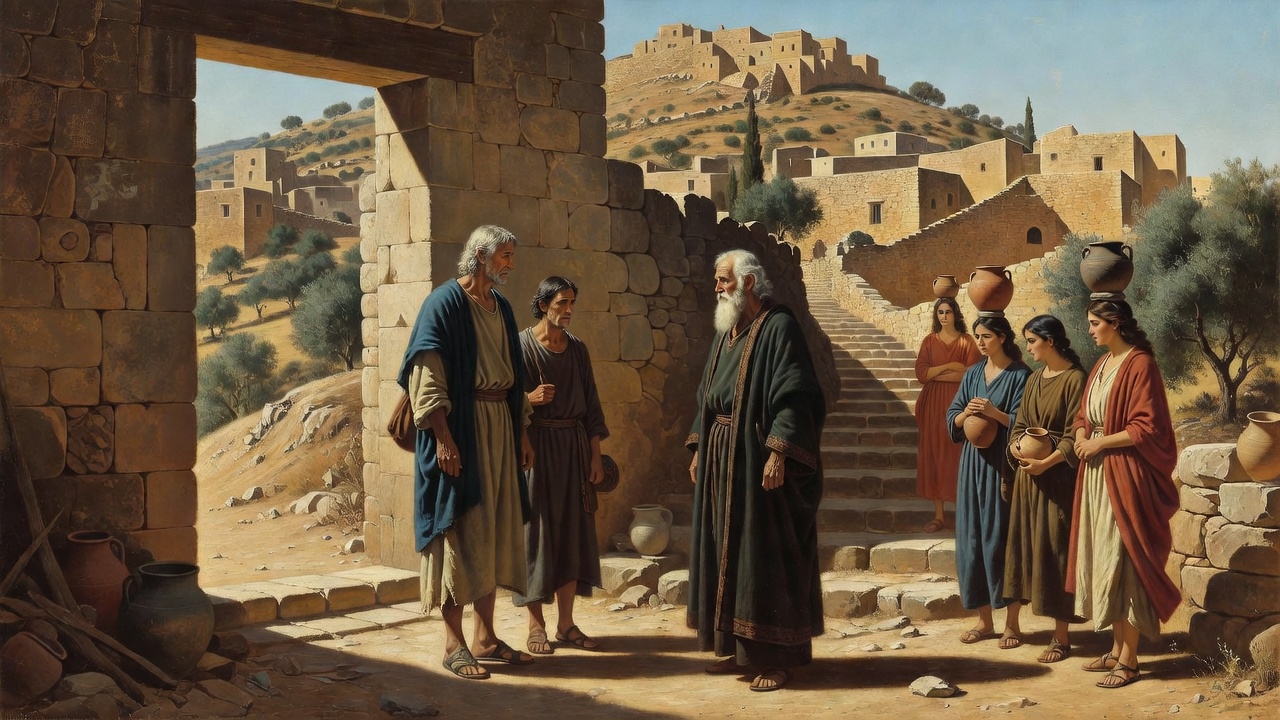
La búsqueda de Saúl y el encuentro con Samuel
- El recorrido de Saúl en busca de las asnas perdidas de su padre lo llevó por la región montañosa de Efraín, la tierra de Salisa, la región de Saalim y finalmente al distrito de Zuf, donde se encontraba Ramá, la ciudad natal de Samuel.Fuentes: el propio texto bíblico · Saul · Zuph
- El relato aclara que el término 'profeta' reemplazó al más antiguo 'vidente' con el paso del tiempo. Consultar a un hombre de Dios solía incluir la entrega de un modesto presente de cortesía, como el cuarto de siclo de plata que ofreció el siervo de Saúl.Fuentes: el propio texto bíblico
- En los banquetes sacrificiales locales celebrados en los lugares altos, era costumbre que el sacerdote o profeta bendijera la comida antes de que los invitados comieran. Samuel honró a Saúl sentándolo en el lugar de honor entre unos treinta invitados y sirviéndole una porción selecta reservada.Fuentes: el propio texto bíblico
Notas escritas con ayuda de IA a partir de fuentes abiertas (Theographic Bible Metadata, CC BY-SA 4.0; Easton’s Bible Dictionary, dominio público) y revisadas antes de publicarse.
Créditos y licencia de esta traducción
Bibiri Kuyie Nnɑ́ɑǹtì Pɑ́tíri
The Holy Bible in the Ditammari language of Benin
copyright © 2001 SIM International
Language: Ditammari
Translation by: SIM
This translation text is made available to you under the
terms of the Creative Commons License: Attribution-Noncommercial-No Derivative Works.
( http://creativecommons.org/licenses/by-nc-nd/3.0/ )
In addition, you have permission to port the text to different file formats, as long as you
do not change any of the text or punctuation of the Bible.
You may share, copy, distribute, transmit, and extract portions
or quotations from this work, provided that you include the above copyright
information:
You must give Attribution to the work.
You do not sell this work for a profit.
You do not make any derivative works that change any of the actual words or punctuation of the Scriptures.
Permissions beyond the scope of this license may be
available if you contact
us with your request.
This translation is made available to you under the terms of the
Creative Commons Attribution-No Derivatives license 4.0.
You may share and redistribute this Bible translation or extracts from it in any format, provided that:
You include the above copyright and source information.
You do not make any derivative works that change any of the actual words or punctuation of the Scriptures.
Pictures included with Scriptures and other documents on this site are licensed just for use with those Scriptures and documents.
For other uses, please contact the respective copyright owners.
2022-05-31
Fuente: http://ebible.org/tbzsim/ · eBible.org