Salmos 81
De Heilige Schrift, Petrus Canisiusvertaling, 1939 · Toca un versículo para ver sus referencias cruzadas.
1Voor muziekbegeleiding; op de gittiet. Van Asaf. Jubelt voor God, onze sterkte, Juicht den God van Jakob ter eer; 2Stemt lofzangen aan, slaat de pauken, Met lieflijke citer en harp; 3Steekt deze maand de bazuinen, Bij volle maan voor de dag van ons feest! 4Want dit is een voorschrift aan Israël, En een bevel van Jakobs God: 5Een gebod, aan Josef gegeven, Na zijn tocht uit het land van Egypte, Toen hij een woord vernam, Dat hij nooit had gehoord: 6Ik heb de last van uw schouders genomen, En uw handen werden van de draagkorf bevrijd. 7Gij riept in de nood, En Ik heb u verlost, In donderwolken u verhoord, Bij de wateren van Meriba u beproefd. 8Hoor, mijn volk, Ik ga het u plechtig verkonden; Israël, ach, luister naar Mij: 9Geen andere god mag er onder u zijn; Geen vreemden god moogt gij aanbidden! 10Ik ben Jahweh, uw God, die u uit Egypte heb geleid, En die uw mond heb gevuld, toen hij wijd was geopend! 11Maar mijn volk luisterde niet naar mijn stem, En Israël gehoorzaamde niet; 12Toen gaf ik ze prijs aan verstoktheid des harten, En iedereen ging zijn eigen weg. 13Ach, had mijn volk naar Mij toch geluisterd, En Israël mijn wegen bewandeld! 14Hoe snel had Ik dan zijn vijand vernederd, Mijn hand op zijn verdrukkers doen komen; 15Al hadden Jahweh’s haters Hem nog zo gevleid, Hun tijd was voor eeuwig gekomen! 16Maar u zou Ik spijzen met de bloem van de tarwe, En verzadigen met honing uit de rotsen.
¿Sabías que…?
Un llamado festivo y memoria de la liberación
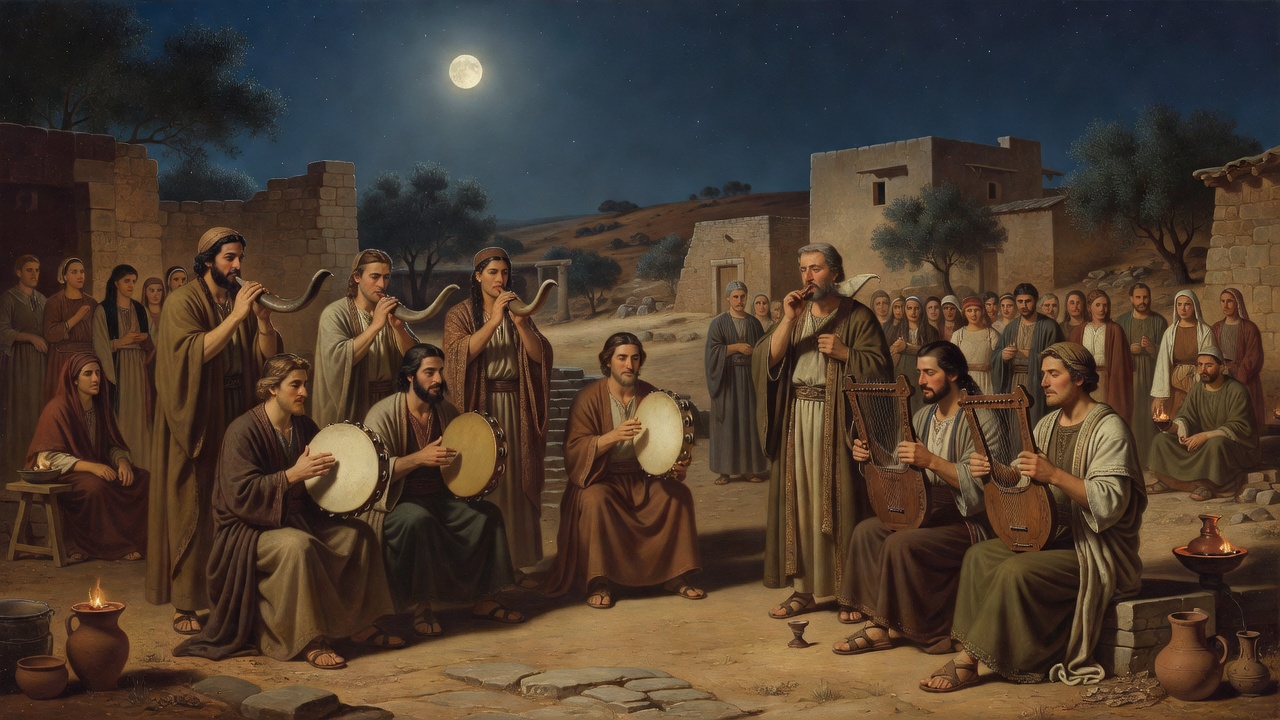
- El Salmo 81 convoca a celebrar en las fiestas señaladas —específicamente en la luna nueva y en la luna llena— con instrumentos como el cuerno de carnero, panderos, arpas y liras, recordando los mandatos instituidos tras la liberación de Egipto.Fuentes: el propio texto bíblico · Egypt
- La imagen de descargar el hombro de los fardos y librar las manos del canasto evoca el duro trabajo forzado de construcción y alfarería experimentado durante la esclavitud en Egipto.Fuentes: el propio texto bíblico · Egypt
- El salmo alude a las aguas de Meriba, un manantial en el desierto de Zin cerca de Cades vinculado a las travesías de Israel, donde Dios probó al pueblo y respondió a su angustia.Fuentes: el propio texto bíblico · Meribah (of Kadesh)
Notas escritas con ayuda de IA a partir de fuentes abiertas (Theographic Bible Metadata, CC BY-SA 4.0; Easton’s Bible Dictionary, dominio público) y revisadas antes de publicarse.
Lugares de este capítulo
- Egypt · 30.129, 31.308 · versículos 5, 10
- Meribah · Hoy: Ain el Qudeirat · 30.648, 34.422 · versículo 7
Solo aparecen lugares identificados con alta confianza (90 % o más según las fuentes académicas reunidas por OpenBible). Mapa de la época: DARE (Digital Atlas of the Roman Empire), CC BY 4.0; mapa actual: © colaboradores de OpenStreetMap; lugares: OpenBible.info (CC BY 4.0).
Créditos y licencia de esta traducción
De Heilige Schrift, Petrus Canisiusvertaling, 1939
The Holy Bible in Dutch, Petrus Canisius translation, 1939
Public Domain
Language: Nederlandse taal (Dutch)
Eerste uitgave: Het Spectrum, Utrecht, Brussel, 1939
De Petrus Canisiusvertaling is een Nederlandse rooms-katholieke bijbelvertaling, waarvan de eerste complete uitgave verscheen in 1939. De volledige naam luidt: "De Heilige Schrift, vertaling uit de grondtekst met aantekeningen, in opdracht van de Apologetische Vereniging 'Petrus Canisius' ondernomen met goedkeuring van de hoogwaardige bisschoppen van Nederland". De Petrus Canisiusvertaling is de eerste Nederlandse katholieke vertaling die gebaseerd is op de grondteksten in hun oorspronkelijke taal. Andere vertalingen gingen uit van de Vulgaat. Het taalgebruik van de uitgave is naar hedendaagse normen licht archaïsch te noemen, maar nog steeds vlot verstaanbaar.
Verantwoording in verband met de auteursrechten
In verband met de auteursrechten is contact opgenomen met de oorspronkelijke uitgever (1), de Katholieke Vereniging voor Oecume (2) en de Katholieke Bijbelstichting (3) en werden geen bezwaren gevonden tegen deze publicatie. Rekening houdend met de wettelijke termijnen, kan deze uitgave beschouwd worden als vrij van auteursrechten.
First publication: Het Spectrum, Utrecht, Brussel, 1939
The translation "Petrus Canisius" is a dutch roman catholic bible translation, that was first published in 1939. Its full title is "The Holy Scripture, translation of the original texts with annotations, commissioned by the Apologetical Society 'Petrus Canisius' and executed with the approval of the most reverend bishops of the Netherlands". The translation "Petrus Canisius" is the first dutch catholic translation that was based on the scripture texts in their original language. Other translations were based on the Vulgate. The language of this edition is to current standards moderately archaic, but still easily understood.
Accountability in relation to copyright
Concerning the copyright contacts have been made with the original publisher (1), the Katholieke Vereniging voor Oecumene (Catholic Society for Ecumenism) (2) and the Katholieke Bijbelstichting (Catholic Bible Foundation) (3) and no objections have been found against this publication. Taking into account the legal terms, this edition can be considered to be in the public domain.
UITGEVERIJ UNIEBOEK|HET SPECTRUM BV, HOUTEN, THE NETHERLANDS
KATHOLIEKE VERENIGING VOOR OECUMENE, 'S HERTOGENBOSCH, THE NETHERLANDS
KBS, HOEVEN, THE NETHERLANDS
2024-08-06
Fuente: http://ebible.org/nld1939/ · eBible.org