Salmos 65
De Heilige Schrift, Petrus Canisiusvertaling, 1939 · Toca un versículo para ver sus referencias cruzadas.
1Voor muziekbegeleiding. Een psalm van David; een lied. U komt een lofzang toe In Sion, o God! U moet een dankoffer worden gebracht, In Jerusalem, Heer! 2Gij verhoort het gebed, Alle vlees komt tot U; 3En al drukt onze schuld ons nog zo zwaar, Gij vergeeft onze zonden. 4Gelukkig, dien Gij uitverkiest en aanneemt, Om in uw voorhof te wonen: Die ons laven aan het goede van uw huis, Van uw heilige tempel! 5Met wonderen verhoort Gij ons in uw trouw, O God van ons heil; Gij, de hoop van alle grenzen der aarde, En ongenaakbare zeeën! 6Gij, die de bergen door uw kracht hebt gegrond, En met macht zijt omgord; 7Die het bulderen der zeeën bedaart, En het gebruis van haar golven. Ontsteld staan de volken, 8Vol vrees, die de grenzen der aarde bewonen: Voor uw tekenen daar, waar de morgen gloort, En waar Gij de avond doet juichen. 9Gij draagt zorg voor de aarde, En drenkt ze volop; Gij stort er een rijke zegen op uit, Gods vloed heeft altijd water genoeg. Gij maakt haar gereed voor haar koren, Zó maakt Gij ze klaar: 10Gij drenkt haar voren, bevochtigt haar kluiten, En maakt ze door regenslag week. Dan zegent Gij haar kiemen, 11En zet de kroon op het jaar van uw goedheid: Uw voetstappen druipen van vet, 12Zelfs de vlakten der steppen druipen er van. De heuvels zijn met gejubel omgord, 13De weiden met kudden bekleed, De dalen met koren getooid: Ze juichen en zingen!
¿Sabías que…?
Alabanza por el cuidado y la cosecha de Dios
- El salmo comienza con alabanzas en Sion, la colina al sureste de Jerusalén conquistada por el rey David. El lugar se convirtió en su ciudadela y palacio, así como en una designación poética central para el templo y la presencia de Dios.Fuentes: Zion · el propio texto bíblico
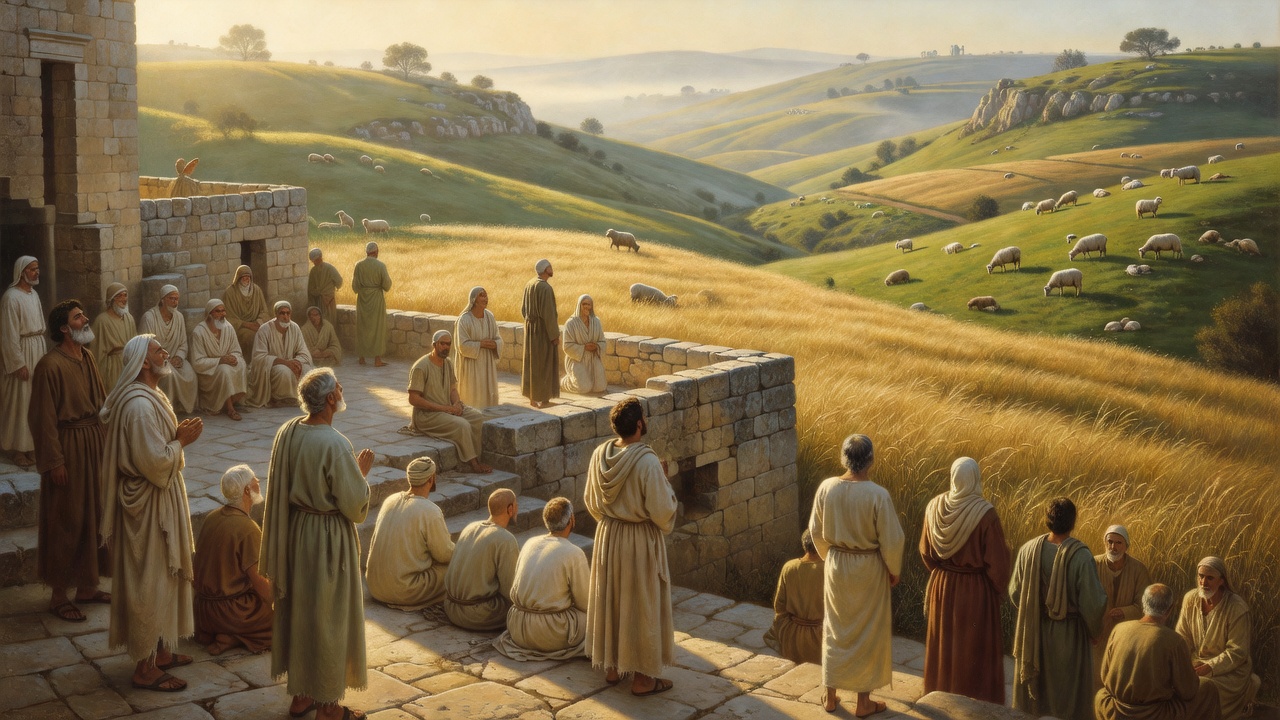
- La última parte del salmo celebra la provisión divina a través de las lluvias de la temporada. Describe vívidamente la vida agrícola, mostrando cómo las lluvias suaves ablandan los surcos arados para producir grano abundante, pastos fértiles y rebaños prósperos.Fuentes: el propio texto bíblico
Notas escritas con ayuda de IA a partir de fuentes abiertas (Theographic Bible Metadata, CC BY-SA 4.0; Easton’s Bible Dictionary, dominio público) y revisadas antes de publicarse.
Lugares de este capítulo
- Zion · Hoy: Jerusalem · 31.777, 35.234 · versículo 1
Solo aparecen lugares identificados con alta confianza (90 % o más según las fuentes académicas reunidas por OpenBible). Mapa de la época: DARE (Digital Atlas of the Roman Empire), CC BY 4.0; mapa actual: © colaboradores de OpenStreetMap; lugares: OpenBible.info (CC BY 4.0).
Créditos y licencia de esta traducción
De Heilige Schrift, Petrus Canisiusvertaling, 1939
The Holy Bible in Dutch, Petrus Canisius translation, 1939
Public Domain
Language: Nederlandse taal (Dutch)
Eerste uitgave: Het Spectrum, Utrecht, Brussel, 1939
De Petrus Canisiusvertaling is een Nederlandse rooms-katholieke bijbelvertaling, waarvan de eerste complete uitgave verscheen in 1939. De volledige naam luidt: "De Heilige Schrift, vertaling uit de grondtekst met aantekeningen, in opdracht van de Apologetische Vereniging 'Petrus Canisius' ondernomen met goedkeuring van de hoogwaardige bisschoppen van Nederland". De Petrus Canisiusvertaling is de eerste Nederlandse katholieke vertaling die gebaseerd is op de grondteksten in hun oorspronkelijke taal. Andere vertalingen gingen uit van de Vulgaat. Het taalgebruik van de uitgave is naar hedendaagse normen licht archaïsch te noemen, maar nog steeds vlot verstaanbaar.
Verantwoording in verband met de auteursrechten
In verband met de auteursrechten is contact opgenomen met de oorspronkelijke uitgever (1), de Katholieke Vereniging voor Oecume (2) en de Katholieke Bijbelstichting (3) en werden geen bezwaren gevonden tegen deze publicatie. Rekening houdend met de wettelijke termijnen, kan deze uitgave beschouwd worden als vrij van auteursrechten.
First publication: Het Spectrum, Utrecht, Brussel, 1939
The translation "Petrus Canisius" is a dutch roman catholic bible translation, that was first published in 1939. Its full title is "The Holy Scripture, translation of the original texts with annotations, commissioned by the Apologetical Society 'Petrus Canisius' and executed with the approval of the most reverend bishops of the Netherlands". The translation "Petrus Canisius" is the first dutch catholic translation that was based on the scripture texts in their original language. Other translations were based on the Vulgate. The language of this edition is to current standards moderately archaic, but still easily understood.
Accountability in relation to copyright
Concerning the copyright contacts have been made with the original publisher (1), the Katholieke Vereniging voor Oecumene (Catholic Society for Ecumenism) (2) and the Katholieke Bijbelstichting (Catholic Bible Foundation) (3) and no objections have been found against this publication. Taking into account the legal terms, this edition can be considered to be in the public domain.
UITGEVERIJ UNIEBOEK|HET SPECTRUM BV, HOUTEN, THE NETHERLANDS
KATHOLIEKE VERENIGING VOOR OECUMENE, 'S HERTOGENBOSCH, THE NETHERLANDS
KBS, HOEVEN, THE NETHERLANDS
2024-08-06
Fuente: http://ebible.org/nld1939/ · eBible.org