Salmos 28
De Heilige Schrift, Petrus Canisiusvertaling, 1939 · Toca un versículo para ver sus referencias cruzadas.
1Van David. Tot U roep ik, Jahweh, mijn Rots! Ach, houd U voor mij niet doof: Opdat ik, als Gij blijft zwijgen, Niet gelijk word aan hen, die in het graf zijn gedaald. 2Hoor, Jahweh, mijn zuchten, Nu ik tot U smeek, En mijn handen hef Naar uw heilige woning. 3Werp mij niet weg met de bozen, Niet weg met de zondaars, Die lief doen tegen hun naaste, Maar met venijn in het hart. 4Zet ze hun werken betaald, En hun schandelijk gedrag; Vergeld ze het werk hunner handen, En geef hun wat ze verdienen. 5Want ze begrijpen niets van Jahweh’s daden, Niets van wat door zijn hand werd verricht; Daarom breekt Hij ze af, En bouwt ze niet op! 6Geprezen zij Jahweh! Want Hij heeft mijn smeken gehoord; 7Jahweh is mijn schuts en mijn schild. Als mijn hart op Hem hoopt, word ik zeker geholpen; Daarom jubelt mijn hart, en zegen ik Hem met mijn lied! 8Jahweh is een schuts voor zijn volk, En voor zijn Gezalfde een machtige hulp. 9Red dus uw volk en zegen uw erfdeel; Weid hen en leid hen voor eeuwig!
¿Sabías que…?
Un Clamor por Misericordia y un Cántico de Confianza
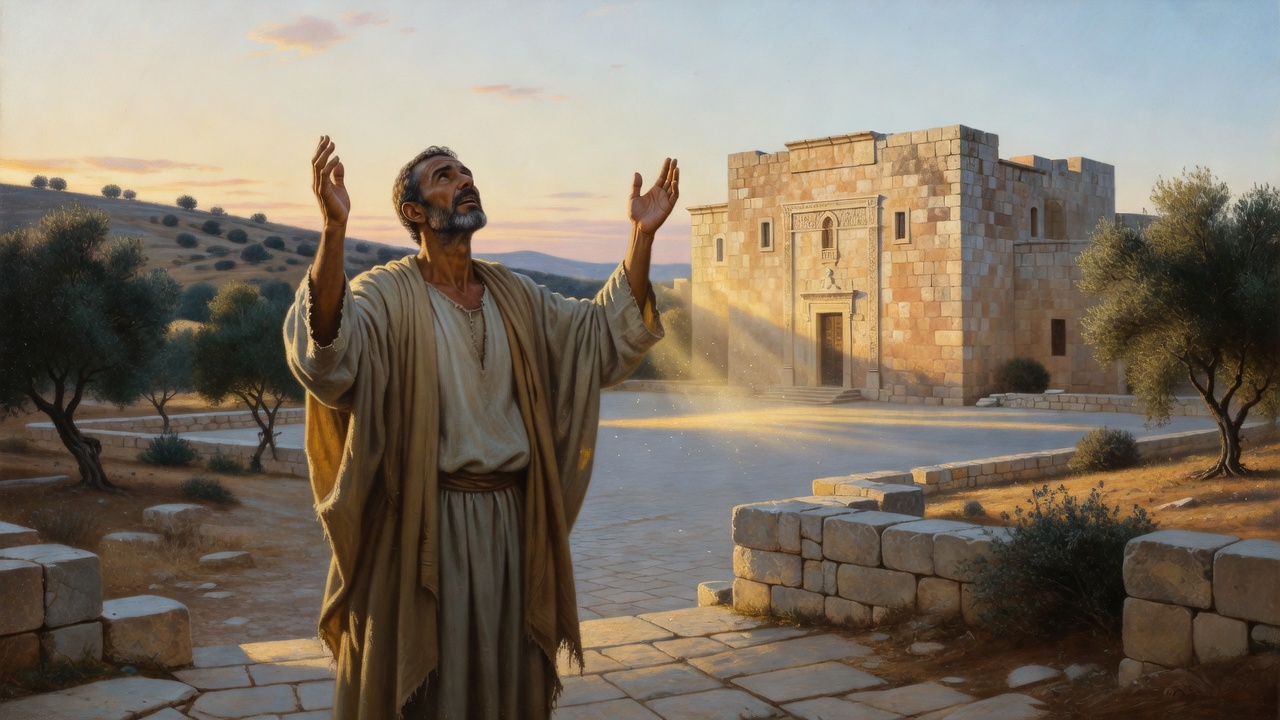
- Alzar las manos hacia el santuario era una postura habitual de oración fervorosa en el antiguo Israel, reflejando visiblemente súplica, humildad y total dependencia de Dios.Fuentes: el propio texto bíblico
- El salmo pasa de manera notable de una súplica desesperada para no perecer junto a los malvados a una gozosa acción de gracias, concluyendo con una imagen pastoral donde se pide a Dios que pastoree y sostenga a Su pueblo para siempre.Fuentes: el propio texto bíblico
Notas escritas con ayuda de IA a partir de fuentes abiertas (Theographic Bible Metadata, CC BY-SA 4.0; Easton’s Bible Dictionary, dominio público) y revisadas antes de publicarse.
Lugares de este capítulo
- Most Holy Place · Hoy: on Mount Moriah · 31.778, 35.236 · versículo 2
Solo aparecen lugares identificados con alta confianza (90 % o más según las fuentes académicas reunidas por OpenBible). Mapa de la época: DARE (Digital Atlas of the Roman Empire), CC BY 4.0; mapa actual: © colaboradores de OpenStreetMap; lugares: OpenBible.info (CC BY 4.0).
Créditos y licencia de esta traducción
De Heilige Schrift, Petrus Canisiusvertaling, 1939
The Holy Bible in Dutch, Petrus Canisius translation, 1939
Public Domain
Language: Nederlandse taal (Dutch)
Eerste uitgave: Het Spectrum, Utrecht, Brussel, 1939
De Petrus Canisiusvertaling is een Nederlandse rooms-katholieke bijbelvertaling, waarvan de eerste complete uitgave verscheen in 1939. De volledige naam luidt: "De Heilige Schrift, vertaling uit de grondtekst met aantekeningen, in opdracht van de Apologetische Vereniging 'Petrus Canisius' ondernomen met goedkeuring van de hoogwaardige bisschoppen van Nederland". De Petrus Canisiusvertaling is de eerste Nederlandse katholieke vertaling die gebaseerd is op de grondteksten in hun oorspronkelijke taal. Andere vertalingen gingen uit van de Vulgaat. Het taalgebruik van de uitgave is naar hedendaagse normen licht archaïsch te noemen, maar nog steeds vlot verstaanbaar.
Verantwoording in verband met de auteursrechten
In verband met de auteursrechten is contact opgenomen met de oorspronkelijke uitgever (1), de Katholieke Vereniging voor Oecume (2) en de Katholieke Bijbelstichting (3) en werden geen bezwaren gevonden tegen deze publicatie. Rekening houdend met de wettelijke termijnen, kan deze uitgave beschouwd worden als vrij van auteursrechten.
First publication: Het Spectrum, Utrecht, Brussel, 1939
The translation "Petrus Canisius" is a dutch roman catholic bible translation, that was first published in 1939. Its full title is "The Holy Scripture, translation of the original texts with annotations, commissioned by the Apologetical Society 'Petrus Canisius' and executed with the approval of the most reverend bishops of the Netherlands". The translation "Petrus Canisius" is the first dutch catholic translation that was based on the scripture texts in their original language. Other translations were based on the Vulgate. The language of this edition is to current standards moderately archaic, but still easily understood.
Accountability in relation to copyright
Concerning the copyright contacts have been made with the original publisher (1), the Katholieke Vereniging voor Oecumene (Catholic Society for Ecumenism) (2) and the Katholieke Bijbelstichting (Catholic Bible Foundation) (3) and no objections have been found against this publication. Taking into account the legal terms, this edition can be considered to be in the public domain.
UITGEVERIJ UNIEBOEK|HET SPECTRUM BV, HOUTEN, THE NETHERLANDS
KATHOLIEKE VERENIGING VOOR OECUMENE, 'S HERTOGENBOSCH, THE NETHERLANDS
KBS, HOEVEN, THE NETHERLANDS
2024-08-06
Fuente: http://ebible.org/nld1939/ · eBible.org