Salmos 108
De Heilige Schrift, Petrus Canisiusvertaling, 1939 · Toca un versículo para ver sus referencias cruzadas.
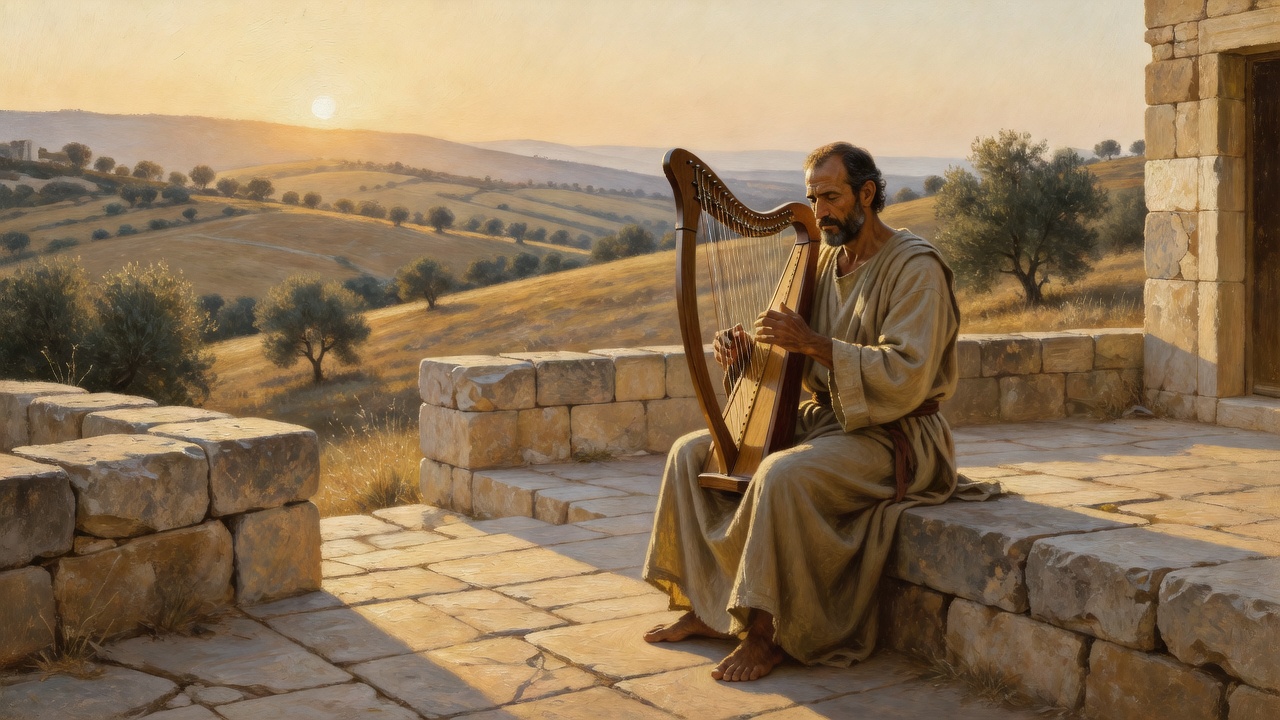
1Een lied; een psalm van David. Mijn hart is gerust, o mijn God; Ik wil zingen en spelen: 2Word wakker, mijn lofzang; harp en citer ontwaak; Ik wil het morgenrood wekken! 3Ik wil U loven onder de volken, o Jahweh, U verheerlijken onder de naties; 4Want uw goedheid reikt tot de hemel, En tot de wolken uw trouw. 5Verhef U boven de hemelen, o God; Uw glorie vervulle de aarde! 6Wil uw geliefden dan redden, Strek uw rechterhand uit, en verhoor ons! 7Bij zijn heiligheid heeft God het beloofd: Juichend zal ik Sikem verdelen, En het dal van Soekkot meten; 8Mij behoort Gilad, van mij is Manasse. Efraïm is de helm van mijn hoofd, Juda mijn schepter, 9Moab is mijn voetenbekken; Op Edom werp ik mijn schoeisel, Over Filistea hef ik mijn zegekreet aan. 10Maar wie brengt mij nu binnen de vesting, Wie zal mij naar Edom geleiden; 11Moet Gij het niet zijn, die ons hebt verstoten, o God, En niet langer met onze heirscharen optrekt, o God? 12Ach, help ons dan tegen den vijand, Want hulp van mensen is ijdel. 13Maar met God zijn wij sterk; Hij zal onze verdrukkers vertrappen!
¿Sabías que…?
El gobierno divino sobre las naciones
- El salmo nombra territorios clave a ambos lados del río Jordán, desde Siquem y el valle de Sucot hasta Galaad, Manasés, Efraín y Judá. Estas referencias geográficas presentan toda la región bajo la posesión y el cuidado divinos.Fuentes: el propio texto bíblico · Shechem · Valley of Succoth · Gilead
- Entre las regiones vecinas mencionadas figuran Moab al este del mar Muerto, la montañosa tierra de Edom al sur y Filistea en la costa. El texto recurre a metáforas elocuentes, como arrojar la sandalia sobre Edom o llamar a Moab jofaina de lavado, para afirmar el dominio sobre estos rivales históricos.Fuentes: el propio texto bíblico · Edom · Moab · Philistia
Notas escritas con ayuda de IA a partir de fuentes abiertas (Theographic Bible Metadata, CC BY-SA 4.0; Easton’s Bible Dictionary, dominio público) y revisadas antes de publicarse.
Lugares de este capítulo
- Shechem · Hoy: Tell Balatah · 32.214, 35.282 · versículo 7
- Valley of Succoth · 32.197, 35.621 · versículo 7
- Gilead · Hoy: Gilead 1 · 32.187, 35.692 · versículo 8
- Edom · 30.746, 35.604 · versículos 9, 10
- Moab · Hoy: Moab 1 · 31.181, 35.701 · versículo 9
- Philistia · 31.664, 34.546 · versículo 9
Solo aparecen lugares identificados con alta confianza (90 % o más según las fuentes académicas reunidas por OpenBible). Mapa de la época: DARE (Digital Atlas of the Roman Empire), CC BY 4.0; mapa actual: © colaboradores de OpenStreetMap; lugares: OpenBible.info (CC BY 4.0).
Créditos y licencia de esta traducción
De Heilige Schrift, Petrus Canisiusvertaling, 1939
The Holy Bible in Dutch, Petrus Canisius translation, 1939
Public Domain
Language: Nederlandse taal (Dutch)
Eerste uitgave: Het Spectrum, Utrecht, Brussel, 1939
De Petrus Canisiusvertaling is een Nederlandse rooms-katholieke bijbelvertaling, waarvan de eerste complete uitgave verscheen in 1939. De volledige naam luidt: "De Heilige Schrift, vertaling uit de grondtekst met aantekeningen, in opdracht van de Apologetische Vereniging 'Petrus Canisius' ondernomen met goedkeuring van de hoogwaardige bisschoppen van Nederland". De Petrus Canisiusvertaling is de eerste Nederlandse katholieke vertaling die gebaseerd is op de grondteksten in hun oorspronkelijke taal. Andere vertalingen gingen uit van de Vulgaat. Het taalgebruik van de uitgave is naar hedendaagse normen licht archaïsch te noemen, maar nog steeds vlot verstaanbaar.
Verantwoording in verband met de auteursrechten
In verband met de auteursrechten is contact opgenomen met de oorspronkelijke uitgever (1), de Katholieke Vereniging voor Oecume (2) en de Katholieke Bijbelstichting (3) en werden geen bezwaren gevonden tegen deze publicatie. Rekening houdend met de wettelijke termijnen, kan deze uitgave beschouwd worden als vrij van auteursrechten.
First publication: Het Spectrum, Utrecht, Brussel, 1939
The translation "Petrus Canisius" is a dutch roman catholic bible translation, that was first published in 1939. Its full title is "The Holy Scripture, translation of the original texts with annotations, commissioned by the Apologetical Society 'Petrus Canisius' and executed with the approval of the most reverend bishops of the Netherlands". The translation "Petrus Canisius" is the first dutch catholic translation that was based on the scripture texts in their original language. Other translations were based on the Vulgate. The language of this edition is to current standards moderately archaic, but still easily understood.
Accountability in relation to copyright
Concerning the copyright contacts have been made with the original publisher (1), the Katholieke Vereniging voor Oecumene (Catholic Society for Ecumenism) (2) and the Katholieke Bijbelstichting (Catholic Bible Foundation) (3) and no objections have been found against this publication. Taking into account the legal terms, this edition can be considered to be in the public domain.
UITGEVERIJ UNIEBOEK|HET SPECTRUM BV, HOUTEN, THE NETHERLANDS
KATHOLIEKE VERENIGING VOOR OECUMENE, 'S HERTOGENBOSCH, THE NETHERLANDS
KBS, HOEVEN, THE NETHERLANDS
2024-08-06
Fuente: http://ebible.org/nld1939/ · eBible.org