Jonás 2
De Heilige Schrift, Petrus Canisiusvertaling, 1939 · Toca un versículo para ver sus referencias cruzadas.
1En in de buik van de vis bad Jonas tot Jahweh, zijn God. 2Hij sprak: In mijn angst riep ik tot Jahweh, En Hij heeft mij verhoord; Uit de schoot der onderwereld riep ik om hulp, En Gij hebt naar mijn smeken geluisterd. 3Gij hebt mij in de diepte geworpen, In het midden der zee; De vloed hield mij gevangen, Uw kolken en baren sloegen over mij heen. 4Ik sprak bij mijzelf: Ik ben verstoten uit uw oog; Hoe zal ik ooit nog aanschouwen Uw heilige tempel? 5Het water steeg me tot de lippen, De afgrond hield me gevangen; Het zeewier omkranste mijn hoofd Met een blijvende tooi. 6Tot de grondvesten der bergen daalde ik af, Naar het gewest met zijn eeuwige grendels; Maar Gij hebt mij uit het graf doen verrijzen, Jahweh, mijn God! 7Toen mijn ziel in mij versmachtte, Dacht ik aan Jahweh; En mijn gebed drong tot U door, In uw heilige tempel. 8Afgodendienaars weigeren hun hulde; 9Maar ik wil U lofzangen brengen, En wat ik beloofd heb, vervullen: Van Jahweh komt redding! 10Toen spuwde de vis, op Jahweh’s bevel, Jonas uit op de kust.
¿Sabías que…?
La oración y liberación de Jonás
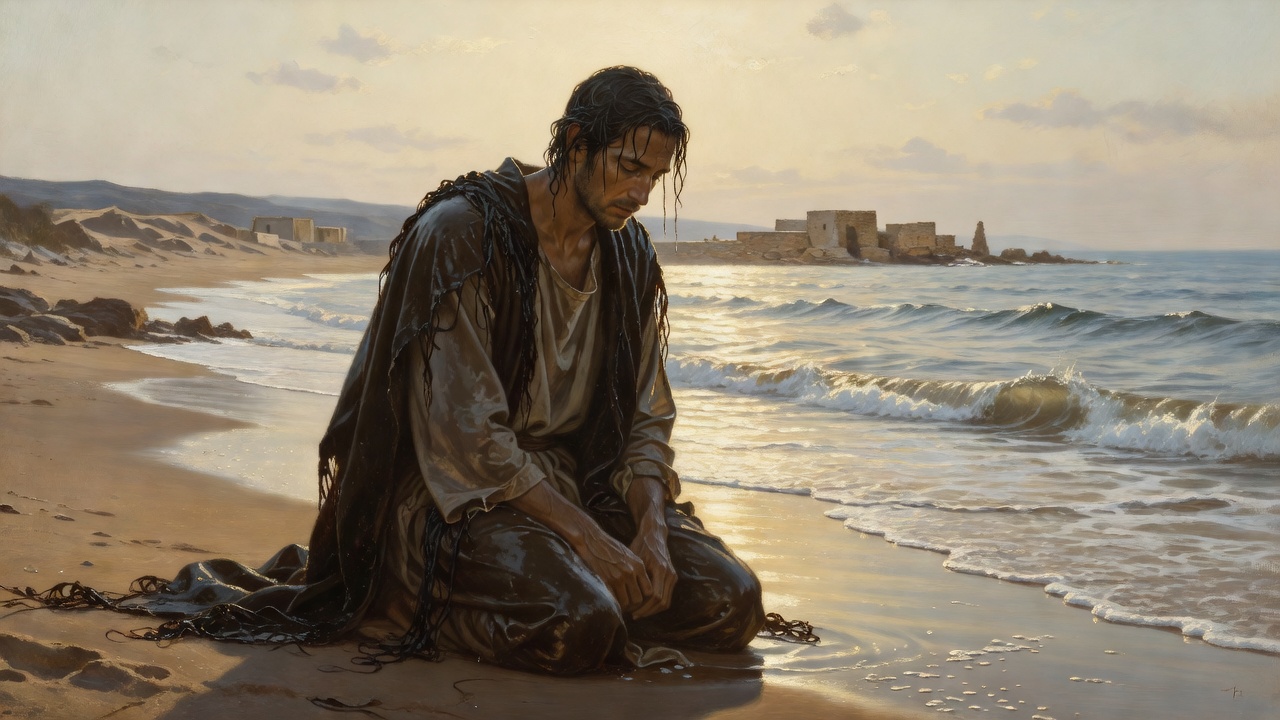
- La oración de Jonás utiliza imágenes poéticas para describir su experiencia cercana a la muerte, retratando las profundidades marinas como el 'vientre del Seol', donde descendió hasta los 'cimientos de los montes' con algas enredadas en su cabeza.Fuentes: el propio texto bíblico
- Incluso estando sumergido en las profundidades dentro del pez, Jonás dirige sus pensamientos hacia el santo templo de Dios, prometiendo cumplir sus votos y ofrecer sacrificios de alabanza.Fuentes: el propio texto bíblico
- Según los registros bíblicos, el profeta Jonás era hijo de Amitai, natural de Gat-hefer, y ejerció su ministerio durante el reinado de Jeroboam II en Israel.Fuentes: Jonah
Notas escritas con ayuda de IA a partir de fuentes abiertas (Theographic Bible Metadata, CC BY-SA 4.0; Easton’s Bible Dictionary, dominio público) y revisadas antes de publicarse.
Créditos y licencia de esta traducción
De Heilige Schrift, Petrus Canisiusvertaling, 1939
The Holy Bible in Dutch, Petrus Canisius translation, 1939
Public Domain
Language: Nederlandse taal (Dutch)
Eerste uitgave: Het Spectrum, Utrecht, Brussel, 1939
De Petrus Canisiusvertaling is een Nederlandse rooms-katholieke bijbelvertaling, waarvan de eerste complete uitgave verscheen in 1939. De volledige naam luidt: "De Heilige Schrift, vertaling uit de grondtekst met aantekeningen, in opdracht van de Apologetische Vereniging 'Petrus Canisius' ondernomen met goedkeuring van de hoogwaardige bisschoppen van Nederland". De Petrus Canisiusvertaling is de eerste Nederlandse katholieke vertaling die gebaseerd is op de grondteksten in hun oorspronkelijke taal. Andere vertalingen gingen uit van de Vulgaat. Het taalgebruik van de uitgave is naar hedendaagse normen licht archaïsch te noemen, maar nog steeds vlot verstaanbaar.
Verantwoording in verband met de auteursrechten
In verband met de auteursrechten is contact opgenomen met de oorspronkelijke uitgever (1), de Katholieke Vereniging voor Oecume (2) en de Katholieke Bijbelstichting (3) en werden geen bezwaren gevonden tegen deze publicatie. Rekening houdend met de wettelijke termijnen, kan deze uitgave beschouwd worden als vrij van auteursrechten.
First publication: Het Spectrum, Utrecht, Brussel, 1939
The translation "Petrus Canisius" is a dutch roman catholic bible translation, that was first published in 1939. Its full title is "The Holy Scripture, translation of the original texts with annotations, commissioned by the Apologetical Society 'Petrus Canisius' and executed with the approval of the most reverend bishops of the Netherlands". The translation "Petrus Canisius" is the first dutch catholic translation that was based on the scripture texts in their original language. Other translations were based on the Vulgate. The language of this edition is to current standards moderately archaic, but still easily understood.
Accountability in relation to copyright
Concerning the copyright contacts have been made with the original publisher (1), the Katholieke Vereniging voor Oecumene (Catholic Society for Ecumenism) (2) and the Katholieke Bijbelstichting (Catholic Bible Foundation) (3) and no objections have been found against this publication. Taking into account the legal terms, this edition can be considered to be in the public domain.
UITGEVERIJ UNIEBOEK|HET SPECTRUM BV, HOUTEN, THE NETHERLANDS
KATHOLIEKE VERENIGING VOOR OECUMENE, 'S HERTOGENBOSCH, THE NETHERLANDS
KBS, HOEVEN, THE NETHERLANDS
2024-08-06
Fuente: http://ebible.org/nld1939/ · eBible.org