Job 35
De Heilige Schrift, Petrus Canisiusvertaling, 1939 · Toca un versículo para ver sus referencias cruzadas.
1Elihoe vervolgde, en sprak: 2Houdt ge dit voor behoorlijk, Noemt ge dit “mijn rechtvaardiging voor God”, 3Als ge vraagt: Wat baat het mij, Wat voordeel heb ik, als ik niet zondig? 4Ik zal u antwoord geven op uw vraag, En aan uw vrienden met u. 5Blik naar de hemel op, en zie, Aanschouw de wolken, hoog boven u uit! 6Wanneer ge zondigt, wat deert het Hem; Zijn uw misdrijven talrijk, wat doet het Hem; 7Zijt ge rechtschapen, wat schenkt ge Hem, Of wat ontvangt Hij van u? 8Uw boosheid raakt enkel den mens, als gij, Uw gerechtigheid het mensenkind! 9Men klaagt wel over allerhande verdrukking En jammert onder de macht der tyrannen, 10Maar men zegt niet: Waar is God, die ons schiep, Die ons visioenen geeft in de nacht, 11Die ons onderricht door de dieren der aarde Door de vogels in de lucht ons wijsheid leert. 12Zo roept men wel, maar Hij antwoordt niet, Om de hoogmoed der bozen. 13Maar als God niet luistert naar ijdel geroep, De Almachtige er geen aandacht aan schenkt, 14Hoeveel te minder, als ge beweert, dat ge Hem niet bespeurt, Dat ge een proces met Hem aangaat, en gij op Hem wacht; 15Of zelfs, dat zijn gramschap niet straft, En dat Hij niet eens de misdaad kent! 16Job opent zijn mond tot ijdel gezwets, Spreekt grote woorden in onverstand.
¿Sabías que…?
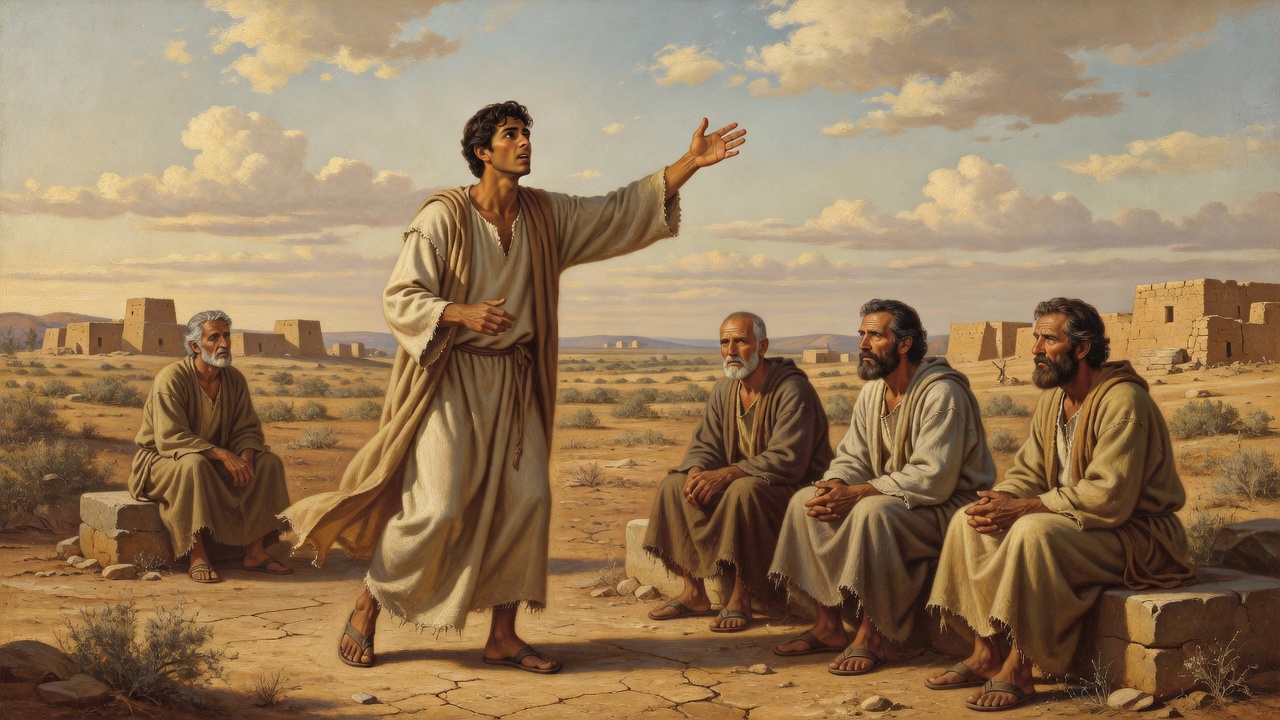
Eliú sobre la Independencia de Dios y el Clamor Humano
- Eliú interviene después de que el debate entre Job y sus tres compañeros ha concluido, ofreciendo una serie de discursos a lo largo de los capítulos 32 al 37.Fuentes: Elihu · el propio texto bíblico
- En este capítulo, Eliú defiende la trascendencia de Dios al pedirle a Job que contemple los cielos y las nubes, argumentando que el pecado humano no perjudica a Dios ni la rectitud humana lo enriquece.Fuentes: el propio texto bíblico
- Eliú también explica por qué los clamores de auxilio bajo la opresión a veces no reciben respuesta, sosteniendo que las personas a menudo claman solo por alivio del sufrimiento en lugar de buscar con humildad a Dios, su Hacedor.Fuentes: el propio texto bíblico
Notas escritas con ayuda de IA a partir de fuentes abiertas (Theographic Bible Metadata, CC BY-SA 4.0; Easton’s Bible Dictionary, dominio público) y revisadas antes de publicarse.
Créditos y licencia de esta traducción
De Heilige Schrift, Petrus Canisiusvertaling, 1939
The Holy Bible in Dutch, Petrus Canisius translation, 1939
Public Domain
Language: Nederlandse taal (Dutch)
Eerste uitgave: Het Spectrum, Utrecht, Brussel, 1939
De Petrus Canisiusvertaling is een Nederlandse rooms-katholieke bijbelvertaling, waarvan de eerste complete uitgave verscheen in 1939. De volledige naam luidt: "De Heilige Schrift, vertaling uit de grondtekst met aantekeningen, in opdracht van de Apologetische Vereniging 'Petrus Canisius' ondernomen met goedkeuring van de hoogwaardige bisschoppen van Nederland". De Petrus Canisiusvertaling is de eerste Nederlandse katholieke vertaling die gebaseerd is op de grondteksten in hun oorspronkelijke taal. Andere vertalingen gingen uit van de Vulgaat. Het taalgebruik van de uitgave is naar hedendaagse normen licht archaïsch te noemen, maar nog steeds vlot verstaanbaar.
Verantwoording in verband met de auteursrechten
In verband met de auteursrechten is contact opgenomen met de oorspronkelijke uitgever (1), de Katholieke Vereniging voor Oecume (2) en de Katholieke Bijbelstichting (3) en werden geen bezwaren gevonden tegen deze publicatie. Rekening houdend met de wettelijke termijnen, kan deze uitgave beschouwd worden als vrij van auteursrechten.
First publication: Het Spectrum, Utrecht, Brussel, 1939
The translation "Petrus Canisius" is a dutch roman catholic bible translation, that was first published in 1939. Its full title is "The Holy Scripture, translation of the original texts with annotations, commissioned by the Apologetical Society 'Petrus Canisius' and executed with the approval of the most reverend bishops of the Netherlands". The translation "Petrus Canisius" is the first dutch catholic translation that was based on the scripture texts in their original language. Other translations were based on the Vulgate. The language of this edition is to current standards moderately archaic, but still easily understood.
Accountability in relation to copyright
Concerning the copyright contacts have been made with the original publisher (1), the Katholieke Vereniging voor Oecumene (Catholic Society for Ecumenism) (2) and the Katholieke Bijbelstichting (Catholic Bible Foundation) (3) and no objections have been found against this publication. Taking into account the legal terms, this edition can be considered to be in the public domain.
UITGEVERIJ UNIEBOEK|HET SPECTRUM BV, HOUTEN, THE NETHERLANDS
KATHOLIEKE VERENIGING VOOR OECUMENE, 'S HERTOGENBOSCH, THE NETHERLANDS
KBS, HOEVEN, THE NETHERLANDS
2024-08-06
Fuente: http://ebible.org/nld1939/ · eBible.org