Isaías 15
De Heilige Schrift, Petrus Canisiusvertaling, 1939 · Toca un versículo para ver sus referencias cruzadas.
1De godsspraak over Moab. Ach, in één nacht is Ar overweldigd, Moab verwoest, Ach, in één nacht is Kir overmeesterd, Moab vernield! 2De dochter van Dibon heeft de hoogten beklommen, Om er te wenen, En over Nebo en Medeba Heft Moab zijn klaagzangen aan. Alle hoofden zijn kaal, Alle baarden geschoren; 3Men draagt de rouwzak op straat, En treurt op de daken. Alles jammert op zijn pleinen, Barst uit in geween; 4Chesjbon en Elale snikken, Tot Jáhas hoort men ze schreien. De lenden van Moab rillen er van, En zijn ziel is onthutst; 5Moab snikt het uit in zijn hart, Ontredderd, tot Sóar en Eglat. Ach, de bergpas van Loechit Bestijgt men al schreiend; Ach, op de weg van Choronáim Stoot men een jammerklacht uit! 6Want de wateren van Nimrim Zijn een steppe geworden: Het gras is verdroogd, het kruid is verdord, Het groen is verdwenen. 7Ja, wat men gespaard En opgelegd had, Brengt men in veiligheid De Wilgenbeek over! 8Ach, het gejammer trekt rond Door de landen van Moab; Geklaag tot Egláim, Tot Beër-Elim gehuil. 9Want de wateren van Dimon staan al vol bloed, Over Dimon breng Ik nieuwe rampen; Ik zal er de rest van Moab mee drenken, En vernielen wat er overschiet!
¿Sabías que…?
La Profecía sobre Moab
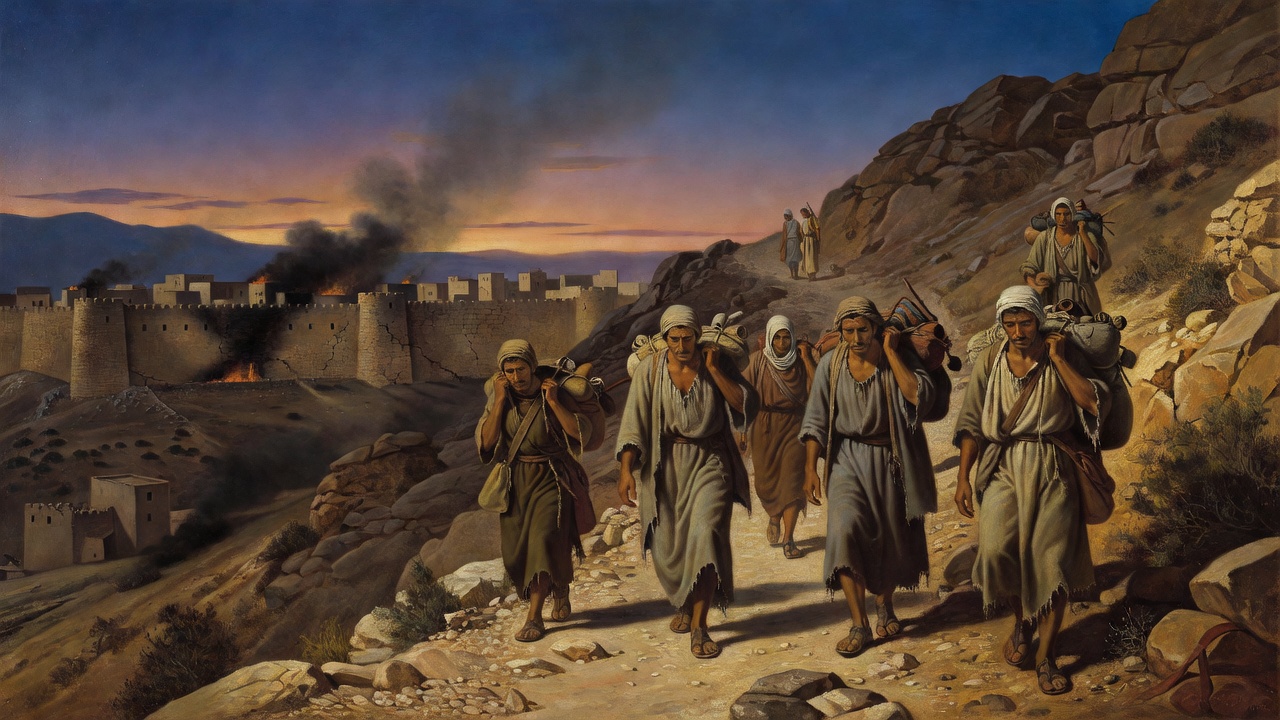
- Moab era una región ubicada al este del Mar Muerto y del río Jordán, que incluía antiguos asentamientos como Ar, Quir y Medeba. En este capítulo, el profeta lamenta la repentina destrucción nocturna y el llanto que recorre las ciudades y los lugares altos moabitas.Fuentes: Moab · Medeba · el propio texto bíblico
- El texto retrata rituales tradicionales de duelo practicados en la región en tiempos de calamidad. Ante la devastación, los habitantes de Moab se rapan la cabeza, se cortan la barba y se visten de cilicio mientras lloran en las plazas y sobre las azoteas.Fuentes: el propio texto bíblico
- La ciudad de Dibón, situada al norte del río Arnón y al este del Mar Muerto, también recibe el nombre de Dimón en Isaías 15:9. El oráculo ilustra la gravedad de la invasión al describir las aguas de Dimón llenas de sangre mientras los fugitivos huyen.Fuentes: Dibon · el propio texto bíblico
Notas escritas con ayuda de IA a partir de fuentes abiertas (Theographic Bible Metadata, CC BY-SA 4.0; Easton’s Bible Dictionary, dominio público) y revisadas antes de publicarse.
Lugares de este capítulo
- Moab · Hoy: Moab 1 · 31.181, 35.701 · versículos 1, 2, 4, 5, 8, 9
- Dibon · Hoy: Tall Dhiban · 31.502, 35.777 · versículo 2
- Medeba · Hoy: Madaba · 31.716, 35.795 · versículo 2
Solo aparecen lugares identificados con alta confianza (90 % o más según las fuentes académicas reunidas por OpenBible). Mapa de la época: DARE (Digital Atlas of the Roman Empire), CC BY 4.0; mapa actual: © colaboradores de OpenStreetMap; lugares: OpenBible.info (CC BY 4.0).
Créditos y licencia de esta traducción
De Heilige Schrift, Petrus Canisiusvertaling, 1939
The Holy Bible in Dutch, Petrus Canisius translation, 1939
Public Domain
Language: Nederlandse taal (Dutch)
Eerste uitgave: Het Spectrum, Utrecht, Brussel, 1939
De Petrus Canisiusvertaling is een Nederlandse rooms-katholieke bijbelvertaling, waarvan de eerste complete uitgave verscheen in 1939. De volledige naam luidt: "De Heilige Schrift, vertaling uit de grondtekst met aantekeningen, in opdracht van de Apologetische Vereniging 'Petrus Canisius' ondernomen met goedkeuring van de hoogwaardige bisschoppen van Nederland". De Petrus Canisiusvertaling is de eerste Nederlandse katholieke vertaling die gebaseerd is op de grondteksten in hun oorspronkelijke taal. Andere vertalingen gingen uit van de Vulgaat. Het taalgebruik van de uitgave is naar hedendaagse normen licht archaïsch te noemen, maar nog steeds vlot verstaanbaar.
Verantwoording in verband met de auteursrechten
In verband met de auteursrechten is contact opgenomen met de oorspronkelijke uitgever (1), de Katholieke Vereniging voor Oecume (2) en de Katholieke Bijbelstichting (3) en werden geen bezwaren gevonden tegen deze publicatie. Rekening houdend met de wettelijke termijnen, kan deze uitgave beschouwd worden als vrij van auteursrechten.
First publication: Het Spectrum, Utrecht, Brussel, 1939
The translation "Petrus Canisius" is a dutch roman catholic bible translation, that was first published in 1939. Its full title is "The Holy Scripture, translation of the original texts with annotations, commissioned by the Apologetical Society 'Petrus Canisius' and executed with the approval of the most reverend bishops of the Netherlands". The translation "Petrus Canisius" is the first dutch catholic translation that was based on the scripture texts in their original language. Other translations were based on the Vulgate. The language of this edition is to current standards moderately archaic, but still easily understood.
Accountability in relation to copyright
Concerning the copyright contacts have been made with the original publisher (1), the Katholieke Vereniging voor Oecumene (Catholic Society for Ecumenism) (2) and the Katholieke Bijbelstichting (Catholic Bible Foundation) (3) and no objections have been found against this publication. Taking into account the legal terms, this edition can be considered to be in the public domain.
UITGEVERIJ UNIEBOEK|HET SPECTRUM BV, HOUTEN, THE NETHERLANDS
KATHOLIEKE VERENIGING VOOR OECUMENE, 'S HERTOGENBOSCH, THE NETHERLANDS
KBS, HOEVEN, THE NETHERLANDS
2024-08-06
Fuente: http://ebible.org/nld1939/ · eBible.org