Oseas 11
De Heilige Schrift, Petrus Canisiusvertaling, 1939 · Toca un versículo para ver sus referencias cruzadas.
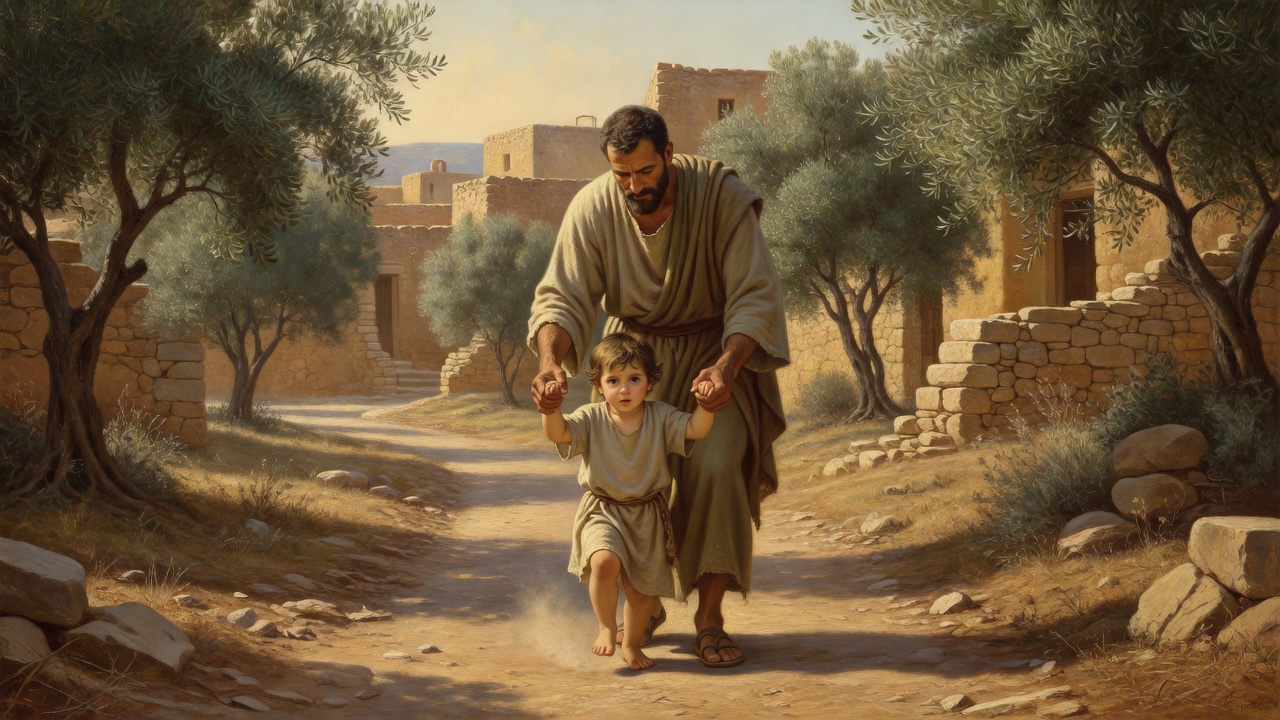
1Toen Israël een kind was, had Ik het lief, Uit Egypte heb Ik mijn zoon geroepen. 2Maar nauwelijks had Ik ze geroepen, of ze liepen van Mij heen, Offerden aan Báals, brandden wierook voor beelden! 3Ik was het, die Efraïm leerde lopen, En hem op mijn arm heb gedragen; Maar zij erkenden niet, Dat Ik ze verpleegde. 4Ik bond ze aan Mij met mensen-banden En koorden der liefde; Ik drukte ze aan mijn wang als een min, Boog Mij over hen heen, om ze te voeden. 5Maar nu moet hij terug naar Egypte, Assjoer zal zijn koning zijn, omdat ze niet willen bekeren; 6Het zwaard zal in zijn steden woeden, En zijn zonen verslinden. Hun vestingen worden verteerd, 7Mijn volk wordt aan zijn woningen opgehangen, En niemand, die opgaat naar zijn steden, Haalt hen er af. 8Efraïm, hoe kon Ik toch zo met u doen, U overleveren, Israël; Hoe heb Ik u aan Adma gelijk kunnen maken, Als met Seboïm met u gehandeld? Eens zal mijn hart zich vertederen, Eens mijn ontferming worden gewekt! 9Neen, Ik zal mijn laaiende gramschap niet koelen, Efraïm niet opnieuw vernielen! Want Ik ben God, En geen mens! Ik ben de Heilige in uw midden, Die uw vernieling niet wil! 10Dan zullen zij Jahweh willen volgen, En als een leeuw zal Hij brullen! Maar wanneer Hij dan brult, Snellen de kinderen toe uit het westen! 11Als vogels snellen zij toe uit Egypte, Uit het land van Assjoer als duiven; Dan breng Ik ze naar hun woonsteden terug: Is de godsspraak van Jahweh! 12Efraïm heeft Mij met leugens omringd, Het huis van Israël met bedrog; Ook Juda liegt altijd tegen zijn God, Tegen den Heilige, den Waarachtige!
¿Sabías que…?
El Amor y la Compasión Paternal de Dios
- El capítulo presenta a Dios como un padre devoto que llamó a Israel desde Egipto en su niñez, enseñó a caminar a Efraín, les quitó el yugo del cuello y se inclinó para alimentarlos.Fuentes: el propio texto bíblico · Ephraim · Egypt
- Cuando el texto pregunta '¿Cómo podría hacerte como a Adma? ¿Cómo podría tratarte como a Zeboim?', alude a dos ciudades de la llanura del valle de Sidim que fueron destruidas junto con Sodoma y Gomorra.Fuentes: el propio texto bíblico · Admah · Zeboiim
- Aunque Oseas advirtió que Israel sería gobernado por Asiria por no arrepentirse, también profetizó un retorno futuro donde el pueblo vendría temblando como palomas desde Egipto y Asiria para habitar de nuevo en sus hogares.Fuentes: el propio texto bíblico · Assyria · Egypt
Notas escritas con ayuda de IA a partir de fuentes abiertas (Theographic Bible Metadata, CC BY-SA 4.0; Easton’s Bible Dictionary, dominio público) y revisadas antes de publicarse.
Lugares de este capítulo
Solo aparecen lugares identificados con alta confianza (90 % o más según las fuentes académicas reunidas por OpenBible). Mapa de la época: DARE (Digital Atlas of the Roman Empire), CC BY 4.0; mapa actual: © colaboradores de OpenStreetMap; lugares: OpenBible.info (CC BY 4.0).
Créditos y licencia de esta traducción
De Heilige Schrift, Petrus Canisiusvertaling, 1939
The Holy Bible in Dutch, Petrus Canisius translation, 1939
Public Domain
Language: Nederlandse taal (Dutch)
Eerste uitgave: Het Spectrum, Utrecht, Brussel, 1939
De Petrus Canisiusvertaling is een Nederlandse rooms-katholieke bijbelvertaling, waarvan de eerste complete uitgave verscheen in 1939. De volledige naam luidt: "De Heilige Schrift, vertaling uit de grondtekst met aantekeningen, in opdracht van de Apologetische Vereniging 'Petrus Canisius' ondernomen met goedkeuring van de hoogwaardige bisschoppen van Nederland". De Petrus Canisiusvertaling is de eerste Nederlandse katholieke vertaling die gebaseerd is op de grondteksten in hun oorspronkelijke taal. Andere vertalingen gingen uit van de Vulgaat. Het taalgebruik van de uitgave is naar hedendaagse normen licht archaïsch te noemen, maar nog steeds vlot verstaanbaar.
Verantwoording in verband met de auteursrechten
In verband met de auteursrechten is contact opgenomen met de oorspronkelijke uitgever (1), de Katholieke Vereniging voor Oecume (2) en de Katholieke Bijbelstichting (3) en werden geen bezwaren gevonden tegen deze publicatie. Rekening houdend met de wettelijke termijnen, kan deze uitgave beschouwd worden als vrij van auteursrechten.
First publication: Het Spectrum, Utrecht, Brussel, 1939
The translation "Petrus Canisius" is a dutch roman catholic bible translation, that was first published in 1939. Its full title is "The Holy Scripture, translation of the original texts with annotations, commissioned by the Apologetical Society 'Petrus Canisius' and executed with the approval of the most reverend bishops of the Netherlands". The translation "Petrus Canisius" is the first dutch catholic translation that was based on the scripture texts in their original language. Other translations were based on the Vulgate. The language of this edition is to current standards moderately archaic, but still easily understood.
Accountability in relation to copyright
Concerning the copyright contacts have been made with the original publisher (1), the Katholieke Vereniging voor Oecumene (Catholic Society for Ecumenism) (2) and the Katholieke Bijbelstichting (Catholic Bible Foundation) (3) and no objections have been found against this publication. Taking into account the legal terms, this edition can be considered to be in the public domain.
UITGEVERIJ UNIEBOEK|HET SPECTRUM BV, HOUTEN, THE NETHERLANDS
KATHOLIEKE VERENIGING VOOR OECUMENE, 'S HERTOGENBOSCH, THE NETHERLANDS
KBS, HOEVEN, THE NETHERLANDS
2024-08-06
Fuente: http://ebible.org/nld1939/ · eBible.org