Hechos 17
Abware̱se̱ŋ Wo̱re̱-ɔ · Toca un versículo para ver sus referencias cruzadas.
Ke̱tɔ ne̱ Pɔɔl na Silas a waa Tisalonikaa maŋ‑nɔ‑ɔ
1Ne̱ Pɔɔl na Silas a bo̱rɔ Amfipolis na Apoloniya e̱maŋ‑nɔ, ne̱ baa ba Tisalonikaa maŋ‑nɔ. 2Fe̱yɛ ane̱ŋ ne̱ Pɔɔl kyɔ ɔ waa saŋ ke̱maa‑ɔ, ɔɔ yɔ ke̱bware̱ko̱re̱kyaŋ ne̱ Yudaa awuye ne̱ bo̱ te mfe̱ŋ‑ɔ de‑o‑ro. Ne̱ ɔɔ kaapo̱ bamo̱ abware̱se̱ŋ, na ɔ po̱pɔre̱ bamo̱ fe̱yɛ bo̱ kɔɔre̱ mò̱ ase̱ŋ‑ɔ gyi. Ne̱ baa sa mò̱ kpa nkyureke nsa bo̱ gya abɛɛ se̱. 3Ne̱ ɔɔ kaapo̱ bamo̱ fe̱yɛ baa kyo̱rɛɛ waa abware̱se̱ŋ wo̱re̱‑ɔ‑rɔ fe̱yɛ ɔko̱ ne̱ ba te̱e̱ mò̱ ɛ Kristoo ne̱ Wuribware̱ yɛ o suŋ Yudaa awuye ase̱‑ɔ tiri fe̱yɛ o gyi awo̱re̱fɔɔ, na o wu, na o kyiŋŋi le̱e̱ lowi‑ro. Ne̱ ɔɔ tɔwe̱ Yeesuu ase̱ŋ gywii bamo̱. Ne̱ ŋkee ɔɔ tɔwe̱ gywii bamo̱ fe̱yɛ, “Yeesuu mɔ e̱ gye̱ Kristoo amo̱ ne̱ Wuribware̱ a suŋ ane̱ ase̱‑ɔ.”
4Ne̱ Yudaa awuye bo̱ko̱ a kɔɔre̱ gyi, ne̱ baa tii Pɔɔl na Silas si. Ane̱ŋ dɛɛ ne̱ akye̱e̱ agye̱ŋkpɛɛpo̱ bo̱ko̱ na Griiki awuye ne̱ ba suŋ Wuribware̱‑ɔ bwe̱e̱tɔ a tii Pɔɔl na Silas si. 5Ne̱ Yudaa awuye‑o bo̱ko̱ mɔ a le̱e̱ ba ka Pɔɔl na Silas ko̱kwe̱e̱, ne̱ baa kpɔwe̱ ase̱sɛ ne̱ bo̱ naa mbo̱re̱ se̱, ne̱ bo̱ mo̱ŋ bo̱ ko̱ko̱rɔ‑ɔ bo̱ gyaŋŋe̱. Ne̱ baa le̱e̱ ba waa e̱lawo̱ na kusuŋ bɔye̱ maŋ‑ɔ‑rɔ. Bamo̱ a nyi fe̱yɛ Pɔɔl na Silas a bo̱ so̱we̱ ɔnyare̱ ko̱ ne̱ ba te̱e̱ mò̱ ɛ Yasɔŋ a lɔŋ‑ɔ‑rɔ‑ɔ se̱‑ɔ, ne̱ baa tii lɔŋ amo̱ ba kpa bamo̱, na bo̱ lee bamo̱ baa lamaŋ‑ɔ‑rɔ. 6Amaa bamo̱ a mo̱ŋ ŋu bamo̱ lɔŋ‑ɔ‑rɔ, ne̱ baa gyiiri Yasɔŋ na bamo̱ ne̱ baa kɔɔre̱ Yeesuu gyi‑o bo̱ko̱ yaa maŋ‑ɔ abre̱sɛ akatɔ‑rɔ, na ba fɛɛ‑rɔ fe̱yɛ, “Anyare̱ ko̱ a ba ane̱ maŋ mɔ‑rɔ, ne̱ baa waa ase̱ŋ bɔye̱ to̱ŋ ke̱maa ne̱ baa bo̱rɔ‑ɔ. 7Ne̱ Yasɔŋ a kɔɔre̱ bamo̱ bo̱ waa mò̱ lɔŋ‑nɔ. Ba nye̱ra ane̱ mbraa ne̱ Roma owure dabe̱‑ɔ a sa ane̱‑ɔ ne̱e̱, a le̱e̱ fe̱yɛ bo̱ yɛ owure ko̱ be̱e̱ ɔ bo̱‑rɔ ne̱ ba te̱e̱ mò̱ ɛ Yeesuu.” 8Bamo̱ a tɔwe̱ faanɛɛ‑ɔ, ne̱ aa tɔɔraa ase̱sɛ pɛɛɛ ne̱ baa gyaŋŋe̱ a bo̱ nu ase̱ŋ‑ɔ na maŋ‑ɔ abre̱sɛ‑ɔ, ne̱ baa le̱e̱ ba waa e̱lawo̱. 9Ne̱ ŋkee maŋ‑ɔ abre̱sɛ‑ɔ a sa ne̱ Yasɔŋ na mò̱ bɛɛko̱‑ana a taa atanne̱ ko̱ bo̱ be̱ya bamo̱ ase̱ na ke̱tɔ kaapo̱ fe̱yɛ ase̱ŋ ya be̱e̱ ba, bo̱ ma lɛɛ nya bamo̱ atanne̱‑ɔ. Ne̱ baa yɔwe̱ bamo̱ bo̱ kyo̱ŋwe̱.
Pɔɔl na Silas ko̱yɔ Beroya‑o
10Kanye a de̱ŋ fo̱‑ɔ, ne̱ bamo̱ ne̱ baa kɔɔre̱ Yeesuu gyi‑o a ba Pɔɔl na Silas bo̱ kyo̱ŋwe̱ Beroya maŋ‑nɔ. Bamo̱ a fo̱‑ɔ, ne̱ baa yɔ Yudaa awuye a ke̱bware̱ko̱re̱kyaŋ‑ɔ‑rɔ. 11Mfe̱ŋ a ase̱sɛ‑ɔ gye̱ ase̱sɛ timaa bo̱ kyɔ bamo̱ ne̱ bo̱ bo̱ Tisalonikaa maŋ‑nɔ‑ɔ. Bamo̱ a nu abware̱se̱ŋ bo̱ le̱e̱ Yeesuu kuŋu si‑o, ne̱ baa kpa ane̱ ase̱ŋ bwe̱e̱tɔ, ne̱ baa pee akatɔ suye abware̱se̱ŋ wo̱re̱‑ɔ‑rɔ ase̱ŋ kake ke̱maa na bo̱ ke̱e̱ fe̱yɛ ase̱ŋ ne̱ Pɔɔl e̱ tɔwe̱‑ɔ gye̱ kase̱ŋtiŋ aaa! 12Ne̱ Yudaa awuye bwe̱e̱tɔ na Griiki akye̱e̱ agye̱ŋkpɛɛpo̱ ko̱ na Griiki anyare̱ bwe̱e̱tɔ a kɔɔre̱ ase̱ŋ‑ɔ gyi.
13Amaa saŋ ne̱ Yudaa awuye ne̱ bo̱ bo̱ Tisalonikaa‑o a nu fe̱yɛ Pɔɔl a kaapo̱ abware̱se̱ŋ‑ɔ Beroya gbaa‑ɔ, ne̱ baa sa ne̱ ase̱sɛ ne̱ bo̱ mo̱ŋ bo̱ ko̱ko̱rɔ‑ɔ a baa ase̱ŋ maŋ‑ɔ‑rɔ bo̱ kye Pɔɔl. 14Puri amo̱‑rɔ, ne̱ bamo̱ ne̱ baa kɔɔre̱ Yeesuu gyi‑o a yaa Pɔɔl ɔpo̱o̱ kɛɛ, amaa Silas na Timotii fe̱raa a sii Beroya mfe̱ŋ. 15Ne̱ bamo̱ ne̱ baa yaa Pɔɔl ɔpo̱o̱ kɛɛ‑ɔ a yaa mò̱ ya bo̱ fo̱ hare̱e̱ Atɛnis maŋ‑nɔ,† ne̱ baa kiŋŋi ba Beroya, ne̱ baa taa ŋkra le̱e̱ Pɔɔl ase̱ baa Silas na Timotii fe̱yɛ bo̱ waa me̱naŋ ba mò̱ ase̱ mfe̱ŋ ne̱ ɔ bo̱‑ɔ.
Ke̱tɔ ne̱ Pɔɔl a waa Atɛnis‑o
16Pɔɔl saŋ o gywii Silas na Timotii Atɛnis maŋ‑nɔ‑ɔ, mò̱ kakpo̱nɔ‑rɔ a nye̱ra bo̱ le̱e̱ ane̱ŋ ne̱ oo ŋu ikisi bwe̱e̱tɔ maŋ amo̱‑rɔ‑ɔ se̱. 17Amo̱se̱ se̱‑ɔ ne̱ mò̱ aa Yudaa awuye na bamo̱ ne̱ bo̱ mo̱ŋ gye̱ Yudaa awuye, ne̱ bo̱ bo̱ mfe̱ŋ, ne̱ ba suŋ Wuribware̱‑ɔ e̱ gyaŋŋe̱ bamo̱ ke̱bware̱ko̱re̱kyaŋ‑ɔ‑rɔ, ne̱ Pɔɔl e̱ kaapo̱ bamo̱ abware̱se̱ŋ ɔ po̱pɔre̱ bamo̱ na bo̱ kɔɔre̱ mò̱ ase̱ŋ‑ɔ gyi. Ne̱ ŋkee kake ke̱maa ɔ naa ko̱lɔŋde̱ ne̱ ke̱ maa ke̱gya‑rɔ‑ɔ ɔ tɔwe̱ abware̱se̱ŋ o gywii bamo̱ ne̱ ɔ to̱ mfe̱ŋ‑ɔ. 18To, akaapo̱po̱ ko̱ mɔ bo̱ mfe̱ŋ. Bamo̱ bo̱ko̱ gye̱ Ipikurus‑o† awuye (ne̱ bo̱ gya ke̱tɔ ne̱ Ipikurus‑o, ɔnyare̱ ko̱ ne̱ ɔɔ dɛɛ kye̱na‑ɔ, a kaapo̱‑ɔ se̱‑ɔ). Bo̱ko̱ mɔ gye̱ Stowaa awuye (ne̱ bo̱ gya ke̱tɔ ne̱ Senoo ne̱ mò̱ gbaa a dɛɛ kye̱na Ipikurus a mbe̱e̱‑ɔ se̱‑ɔ a kaapo̱‑ɔ se̱). Ne̱ baa le̱e̱ ba gyiiri Pɔɔl ikii, ne̱ bo̱ko̱ yɛ, “Nte̱tɔ ne̱ adabe̱dabe̱se̱ŋ wuye mɔ e̱ tɔwe̱ ne̱e̱?” Ne̱ bo̱ko̱ mɔ yɛ, “A waa to̱ŋ ko̱ ikisi po̱pwɛɛ ko̱ ase̱ŋ ne̱ ɔ tɔwe̱‑ɔ.” Ke̱tɔ se̱ ne̱ baa tɔwe̱ ane̱ŋ‑ɔ e̱ gye̱ fe̱yɛ Pɔɔl e̱ kaapo̱ Yeesuu ase̱ŋ, na ɔ kaapo̱ fe̱yɛ ase̱sɛ i kyiŋŋi a bo̱ le̱e̱ lowi‑ro. 19Amo̱se̱‑ɔ ne̱ baa yaa Pɔɔl bamo̱ se̱ŋgyikpa ko̱ ne̱ ba te̱e̱ mò̱ ɛ Ariyopagus‑o. Ne̱ bo̱ yɛ, “Ane̱ e̱ kpa fe̱yɛ fo̱ kaapo̱ ane̱‑rɔ ke̱kaapo̱ po̱pwɛɛ mɔ ne̱ fo̱ e̱ kaapo̱‑ɔ. 20Ase̱ŋ amo̱ ako̱ ne̱ ane̱ i nu fe̱yɛ fo̱ e̱ tɔwe̱‑ɔ gye̱ ase̱ŋ po̱pwɛɛ ane̱ ase̱. Ane̱ mɔ ane̱ e̱ kpa fe̱yɛ ane̱ nu amo̱ kaase̱.”
21Mbe̱yɔmɔ Atɛnis maŋ agyi‑o na afɔ ne̱ bo̱ te mfe̱ŋ‑ɔ, a mo̱ŋ tiri bamo̱ fe̱yɛ bo̱ ba bamo̱ saŋ pɛɛɛ ba tɔwe̱ ase̱ŋ, na ba nu ase̱ŋ po̱pwɛɛ ne̱ aa ba‑ɔ.
22Ne̱ Pɔɔl a ko̱so̱ ye̱re̱ se̱ŋgyikpa‑ɔ mfe̱ŋ, ne̱ ɔ yɛ, “Abre̱sɛ, mo̱ a ŋu fe̱yɛ kpa ke̱maa se̱ mo̱ne̱ Atɛnis awuye mo̱ne̱ akatɔ i gyi ikisi bwe̱e̱tɔ kusuŋ si. 23Bo̱ le̱e̱ fe̱yɛ mo̱ a nare̱ mo̱ne̱ maŋ‑ɔ‑rɔ, ne̱ mo̱ a de̱e̱re̱ mfe̱ŋ ne̱ mo̱ne̱ i suŋ mo̱ne̱ ikisi‑o. Ne̱ mo̱ a ŋu fe̱yɛ bo̱ le̱e̱ ane̱ŋ ne̱ mo̱ne̱ maa kpa fe̱yɛ mo̱nꞌ paŋ kisi ko̱ kusuŋ‑o si‑o, mo̱ne̱ a pwɛɛ lɔŋŋɔkpa ko̱ bo̱ ye̱ra. Ne̱ mo̱ne̱ a kyo̱rɛɛ bo̱ dɔŋŋɔ afo̱re̱ ne̱ mo̱ne̱ a bo̱ pwɛɛ mò̱ bo̱ ye̱ra‑ɔ se̱ fe̱yɛ, ‘Lɔŋŋɔkpa mɔ gye̱ ɔko̱ ne̱ ane̱ i suŋ, ne̱ ane̱ mo̱ŋ nyi mò̱ ke̱nyare̱‑ɔ lee‑o.’ To, mò̱ ne̱ mo̱ne̱ i suŋ mò̱, na mo̱ne̱ mo̱ŋ nyi mò̱‑ɔ, ne̱ mbe̱yɔmɔ mo̱ e̱ tɔwe̱ mò̱ ase̱ŋ a n gywii mo̱ne̱‑ɔ. “Lɔŋŋɔkpa mɔ gye̱ ɔko̱ ne̱ ane̱ i suŋ, ne̱ ane̱ mo̱ŋ nyi mò̱ ke̱nyare̱‑ɔ lee‑o”|src="CN01998b.tif" size="span" ref="Ayaa‑rɔ aye̱re̱po̱‑ɔ asuŋ 17.23" 24Mò̱ ke̱nyare̱ e̱ gye̱ Wuribware̱. Mò̱ e̱ gye̱ ne̱ ɔɔ twe̱e̱ kaye̱ na ke̱tɔ ke̱maa ne̱ ke̱ bo̱ kamo̱‑rɔ‑ɔ. Mò̱ e̱ gye̱ ke̱tɔ ke̱maa nyaŋpe̱, so̱so̱ na kaase̱. Amo̱se̱‑ɔ ɔ mo̱ŋ te isuŋkpa akyaŋ ne̱ ase̱sɛ a pwɛɛ‑ɔ‑rɔ. 25Mò̱‑ɔ mò̱ maa kpa ko̱tɔko̱ bo̱ le̱e̱ ane̱ kusuŋ ne̱ ane̱ a waa‑ɔ‑rɔ, a le̱e̱ fe̱yɛ mò̱ e̱ gye̱ ne̱ ɔ sa ɔke̱maa mɔ ŋkpa na ŋe na ke̱tɔ ke̱maa. 26Ne̱ ɔɔ twe̱e̱ se̱sɛ dimaadi, ne̱ ɔɔ bo̱rɔ se̱sɛ ko̱ŋko̱ amo̱ se̱ bo̱ waa nsuro ase̱sɛ pɛɛɛ, ne̱ ɔɔ sa ne̱ baa kye̱na kaye̱‑rɔ pɛɛɛ. Na pwɛɛ ne̱ ɔɔ dɛɛ twe̱e̱ se̱sɛ‑ɔ, ɔɔ kyɔ tɔwe̱ saŋ na mfe̱ŋ ne̱ ɔke̱maa e̱ kye̱na‑ɔ. 27Wuribware̱ a waa faanɛɛ ne̱e̱ a bo̱ nya buwi kpa mò̱, na saŋse̱ bo̱ ŋu mò̱ saŋ ne̱ ba buwi ba kpa mò̱‑ɔ. Kase̱ŋtiŋ mò̱ aa ɔke̱maa ase̱ mo̱ŋ bo̱ e̱fɔ. 28Fe̱yɛ ane̱ŋ ne̱ mo̱ne̱ aliŋwaapo̱‑ɔ ɔko̱ a kyo̱rɛɛ‑ɔ,
‘Mò̱ ya sa ne̱ ane̱ te, ne̱ ane̱ naa,
ne̱ ɔɔ waa ane̱ ke̱tɔ ne̱ ane̱ gye̱‑ɔ.’
Ne̱ mo̱ne̱ aliŋwaapo̱‑ɔ bo̱ko̱ mɔ a kyo̱rɛɛ fe̱yɛ,
‘Ane̱ gbaa ane̱ gye̱ mò̱ gyi‑ana‑ɔ ne̱e̱.’
29Ane̱ a tɛɛ ane̱ gye̱ Wuribware̱ mò̱ gyi‑ana‑ɔ fe̱raa, ane̱ ma fa fe̱yɛ mò̱ kudugyi du ne̱e̱ fe̱yɛ kisi ne̱ nyiŋkpasɛ ne̱ o nyi‑ro‑o a ba atanne̱ pipee bɛɛɛ afufuri bɛɛɛ ke̱fo̱re̱ bo̱ waa‑ɔ. 30Wuribware̱ a nyite ke̱tɔ ne̱ baa waa saŋ ne̱ bo̱ mo̱ŋ nyi Wuribware̱ na mò̱ e̱kpa‑ɔ. Amaa mbe̱yɔmɔ saŋ a fo̱ fe̱yɛ ɔ sa to̱ŋ ke̱maa ase̱sɛ kanɔ fe̱yɛ bo̱ nu bamo̱ e̱ye̱e̱, na bo̱ kiŋŋi le̱e̱ bamo̱ e̱bɔye̱‑rɔ. 31A le̱e̱ fe̱yɛ ɔɔ sa kake na ɔnyare̱ ko̱ ne̱ oo lee‑o bo̱ gyi kaye̱‑rɔ ase̱sɛ pɛɛɛ ase̱ŋ nɛɛnɛɛ‑ɔ. Ɔɔ ba ɔnyare̱ amo̱ a kikyiŋŋi le̱e̱ lowi‑ro‑o bo̱ kaapo̱ ɔke̱maa amo̱‑ɔ.”
32Saŋ ne̱ baa nu Pɔɔl a tɔwe̱ kikyiŋŋi le̱e̱ lowi‑ro ase̱ŋ‑ɔ, ne̱ bamo̱ bo̱ko̱ a mɔse̱ mò̱, ne̱ bamo̱ bo̱ko̱ mɔ yɛ, “Ane̱ e̱ kpa fe̱yɛ fo̱ be̱e̱ tɔwe̱ amo̱ gywii ane̱ saŋ ko̱.” 33Ne̱ Pɔɔl a le̱e̱ ngyaŋŋe̱ amo̱‑rɔ mfe̱ŋ. 34Ne̱ bamo̱ bo̱ko̱ a bo̱ tii Pɔɔl si, ne̱ baa kɔɔre̱ Wuribware̱ gyi. Bamo̱‑rɔ bo̱ko̱ e̱ gye̱ Diyonisiyus ne̱ ɔ gye̱ Ariyopagus ase̱ŋgyipo̱‑ɔ ɔko̱, ne̱ oo nu Pɔɔl ase̱ŋ‑ɔ, na ɔkye̱e̱ ko̱ ne̱ ba te̱e̱ mò̱ ɛ Damaris‑o, na ase̱sɛ ko̱ be̱e̱.
¿Sabías que…?
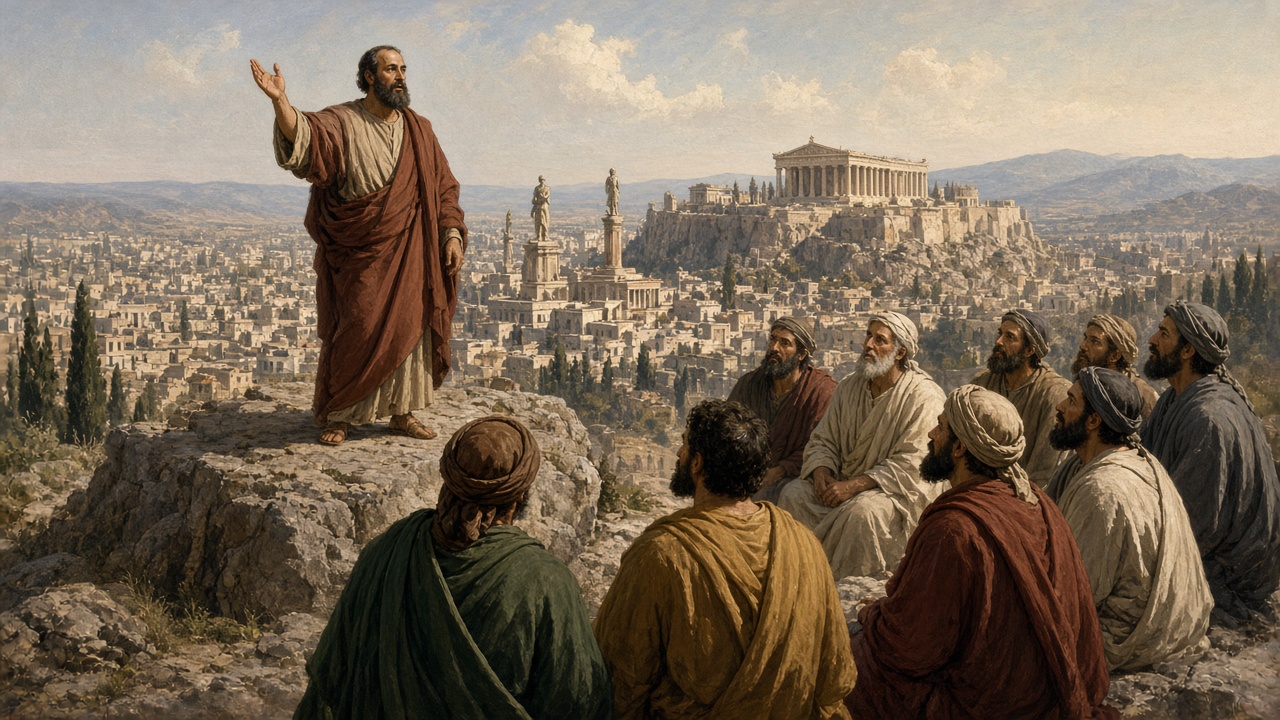
De la sinagoga al Areópago
- Tesalónica era una ciudad grande y populosa a orillas del golfo Termaico, capital de uno de los cuatro distritos romanos de Macedonia, gobernada por un pretor. Jasón hospedó allí a Pablo y a Silas; una multitud allanó su casa y, al no hallar a los dos, arrastraron a Jasón y a otros hermanos ante las autoridades de la ciudad. Los acusaron de acoger a hombres que desafiaban los decretos del César y hablaban de otro rey, Jesús, y las autoridades solo los soltaron después de tomar fianza.Fuentes: Thessalonica · Jason · el propio texto bíblico
- Atenas, capital del Ática, era celebrada como sede de la literatura y el arte griegos, y sus habitantes eran aficionados a la novedad y notables por su celo en el culto a los dioses. Un satírico romano decía que era más fácil encontrar un dios en Atenas que un hombre. El Areópago, una colina rocosa al noroeste de la Acrópolis, era el lugar donde funcionaban el tribunal supremo ateniense y el tribunal de las costumbres, y Pablo pronunció el discurso de este capítulo desde algún punto de esa colina.Fuentes: Athens · Areopagus · el propio texto bíblico
- Pablo y Silas llegaron a Tesalónica solo después de pasar por Anfípolis, ciudad macedonia y gran estación militar romana, a treinta y tres millas romanas de Filipos, y por Apolonia, a unas treinta y seis millas de Tesalónica. Cuando los disturbios los siguieron hasta Berea, otra ciudad de Macedonia, los hermanos enviaron a Pablo a la costa, y quienes lo escoltaron lo llevaron hasta Atenas. Silas y Timoteo se quedaron en Berea, con la instrucción de reunirse con Pablo tan pronto como pudieran.Fuentes: Amphipolis · Apollonia · Berea · el propio texto bíblico
Notas escritas con ayuda de IA a partir de fuentes abiertas (Theographic Bible Metadata, CC BY-SA 4.0; Easton’s Bible Dictionary, dominio público) y revisadas antes de publicarse.
Lugares de este capítulo
- Amphipolis · 40.820, 23.847 · versículo 1
- Apollonia · 40.624, 23.470 · versículo 1
- Thessalonica · Hoy: Thessaloniki · 40.638, 22.946 · versículos 1, 11, 13
- Berea · Hoy: Veria · 40.518, 22.200 · versículos 10, 11, 13, 14, 15
- Athens · 37.972, 23.727 · versículos 15, 16, 21, 22
- Areopagus · 37.972, 23.724 · versículos 19, 22, 33
Solo aparecen lugares identificados con alta confianza (90 % o más según las fuentes académicas reunidas por OpenBible). Mapa de la época: DARE (Digital Atlas of the Roman Empire), CC BY 4.0; mapa actual: © colaboradores de OpenStreetMap; lugares: OpenBible.info (CC BY 4.0).
Créditos y licencia de esta traducción
Abware̱se̱ŋ Wo̱re̱-ɔ
New Testament in Chumburung (GH:ncu:Chumburung)
copyright © 2010 Wycliffe Bible Translators, Inc.
Language: Chumburung
Translation by: Wycliffe Bible Translators, Inc.
Copyright Information
© 2010, Wycliffe Bible Translators, Inc. All rights reserved.
This translation text is made available to you under the
terms of the Creative Commons License: Attribution-Noncommercial-No Derivative Works.
( http://creativecommons.org/licenses/by-nc-nd/3.0/ )
In addition, you have permission to port the text to different file formats, as long as you
do not change any of the text or punctuation of the Bible.
You may share, copy, distribute, transmit, and extract portions
or quotations from this work, provided that you include the above copyright
information:
You must give Attribution to the work.
You do not sell this work for a profit.
You do not make any derivative works that change any of the actual words or punctuation of the Scriptures.
Permissions beyond the scope of this license may be
available if you contact
us with your request.
The New Testament
in Chumburung
© 2010, Wycliffe Bible Translators, Inc. All rights reserved.
This translation is made available to you under the terms of the
Creative Commons Attribution-Noncommercial-No Derivatives license 4.0.
You may share and redistribute this Bible translation or extracts from it in any format, provided that:
You include the above copyright and source information.
You do not sell this work for a profit.
You do not change any of the words or punctuation of the Scriptures.
Pictures included with Scriptures and other documents on this site are licensed just for use with those Scriptures and documents.
For other uses, please contact the respective copyright owners.
2025-05-16
Fuente: http://ebible.org/ncuNT/ · eBible.org